The country's growing economic and social instability prompts request to delay meeting with Pope Leo XIV.
The Catholic Bishops of Cuba announced Thursday that they have asked Pope Leo XIV to postpone their upcoming visit to Rome due to the country's grave situation, which is generating "so much instability and uncertainty."
The bishops had been scheduled to meet Pope Leo XIV on Feb. 20 as part of their periodic adlimina visit, which was set to begin Monday, Feb. 16. During such visits, bishops also customarily pray at the four major papal basilicas and meet with various Vatican dicasteries.
However, in a statement on Feb. 12, the bishops' conference said that "given the worsening socio-economic situation in the country, which is generating so much instability and uncertainty, the Catholic bishops have asked the Holy Father, Pope Leo XIV, that the ad limina visit be postponed to a later date than originally planned."
"We continue praying for our homeland, and we renew our affection and communion with the pope and with the Apostolic See," the statement added.
Cuba's prolonged economic and social crisis has intensified in recent days, particularly after the United States government announced on Jan. 29 the imposition of tariffs on countries that send oil to the Caribbean nation, as a way of pressuring the communist regime.
In response, the Cuban government has introduced further restrictions beyond those already faced by the population. Last Sunday, the regime also reported that it no longer had fuel for commercial aircraft, a development that is affecting tourism, one of the government's principal sources of revenue.
At the same time, the Trump administration began sending containers of humanitarian aid in January for the Catholic Church to distribute to those affected by Hurricane Melissa. The assistance is being coordinated directly with Caritas Cuba, without the participation of the regime.
On Jan. 31, the Cuban bishops warned in a separate statement that the country risks falling into social chaos and violence if the structural changes it urgently needs are not implemented.
This story was first published by ACI Prensa, the Spanish-language sister service of EWTN News. It has been translated and adapted by EWTN News English.
The first season introduced viewers to James Little, a student fresh out of college desperate for a job.
The third season of the award-winning online EWTN series "James the Less" will be released on Saturday, Feb. 14, on the EWTN YouTube channel.
The first season introduced viewers to James Little, a student fresh out of college desperate for a job. James is an atheist. However, a "help wanted" sign on the church bulletin board catches his eye and entices him to interview for the position: handyman.
James accepts the position at St. James the Less Church and starts to encounter Catholicism. Soon, James finds his ideals challenged by the no-nonsense pastor Father Lambert Burns and through his romantic pursuit of parishioner Anne-Marie.
The second season showed James' growing interest in Catholicism and more questions were answered regarding Anne-Marie's mysterious past.
James is played by Catholic artist and missionary Tanner Kalina, who has participated in ministries such as FOCUS, Ascension Presents, NET, and others.
Kalina told EWTN News that in Season 3 viewers can "expect some closure in the story of James and what happens and all the open-ended questions that we have. I think you can find some very satisfying answers."
While filming these three seasons of the series, Kalina shared that the best part has been working with all those involved, "who put a lot of heart and creativity and fun and joy and prayer into it all and by the end everyone became a good, loving family."
He also pointed out that he has learned a lot from James while portraying him, including that the "faith is vibrant."
"It's just a good reminder that inside all of our hearts we're aching and longing for the Lord and we're longing for a guide to just invite us and to bring us to the Lord," he added. "So playing James has kind of reawakened that reality to me … and that when we just speak truth and when we just put someone in front of Jesus, then it awakens something very deep within someone."
Kalina also pointed out the recent growth in interest among Gen Z in the Catholic faith and the need to provide these individuals with "good content that is rooted in the truth of the faith, that's rooted in the joy of the faith, and that is something that actually not only feeds the intellect and feeds the time and feeds the scroll, but really feeds the heart."
"So, my hope is that as the younger generation stumbles upon this, it can be an avenue that they can find good content that really feeds them," he added.
He also said he hopes viewers are left "smiling" after watching the series.
"I hope that they're having fun and falling in love with these characters and recognizing that like, 'Oh yeah, our faith is a great treasure' and it's not just like another option amongst options, but we are sitting atop a mound of gold that needs to be shared with the world."
Manuel Nin Güell, newly appointed exarch of an ancient Byzantine monastery near Rome, explains the origins of Byzantine-rite Catholicism and its role in the search for Christian unity.
"Catholics of the Byzantine tradition are one of the various Churches that exist in the Christian East," explained Bishop Manuel Nin Güell, who was recently appointed by Pope Leo XIV as the new apostolic exarch of Santa Maria di Grottaferrata Monastery.
The Catholic Encyclopedia explains that "in Eastern Christendom an exarch is a bishop who holds a place between that of patriarch and that of ordinary metropolitan."
In an interview with ACI Prensa, the Spanish-language sister service of EWTN News, the prelate explained that the Byzantine Church developed in the context of the Byzantine Empire and the Greek language, having its own spiritual and liturgical tradition that over time adapted to multiple languages. Today, he noted, this heritage is lived in different parts of the world and, in the case of Byzantine Catholics, in full communion with the bishop of Rome.
These Catholics who live "the theology, spirituality, and liturgy of the Byzantine tradition are in full communion with the pope," Nin summarized.
Communion restored after the schism
The exarch noted that the rupture between Constantinople and Rome in 1054 profoundly impacted Christian history. However, since the 15th century, various groups of Byzantine tradition have reestablished full communion with the pope in regions such as Lebanon, Syria, and Central Europe.
He explained that the essential difference between Eastern Catholics and Eastern Orthodox today is "communion — or lack thereof — with the bishop of Rome," even though they share liturgy, theology, and spirituality.
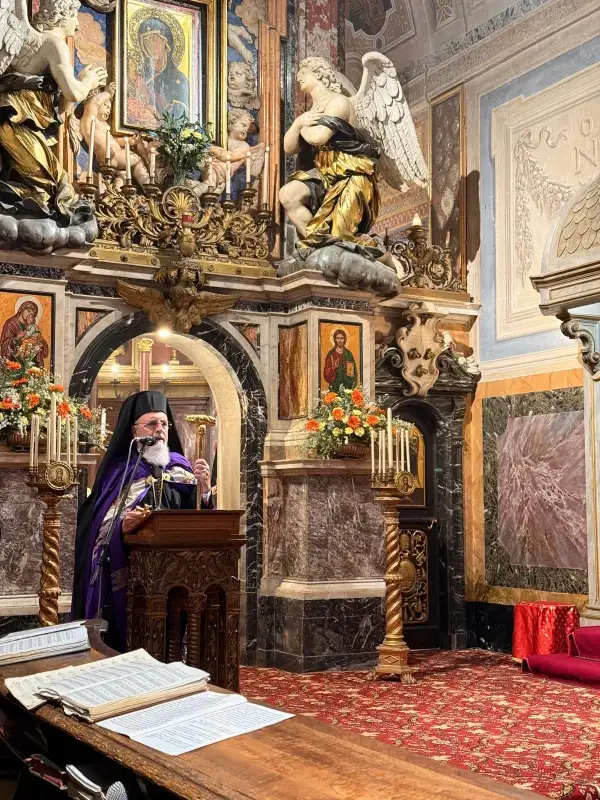
Exarch Manuel Nin Güell. | Credit: Photo courtesy of Exarch Manuel Nin Güell
The significance of Grottaferrata
It is within this historical and ecclesial context that the monastery of Santa Maria di Grottaferrata was founded by St. Nilus of Rossano in 1004, 50 years before the East-West Schism.
"This place can facilitate dialogue with the non-Catholic Eastern Churches. I am convinced that it is a place where this dialogue can be resumed," the new exarch stated.
The abbey, located about 18 highway miles from Rome and without an abbot since 2013 until Nin's recent appointment, has been for centuries a point of reference for the Byzantine rite in communion with the Holy See.
The prelate, a Benedictine monk who received his formation at Montserrat in Catalonia, Spain, has dedicated much of his life to the study and spreadingof Eastern Christianity. A specialist in Syriac and Greek patristics, he has worked with ancient manuscripts at institutions such as the British Library in London.
For 17 years, he was rector of the Pontifical Greek College in Rome, providing formation for dozens of Eastern Catholic seminarians, and he collaborated for over a decade with the L'Osservatore Romano newspaper on articles for which Benedict XVI and Pope Francis expressed their appreciation.
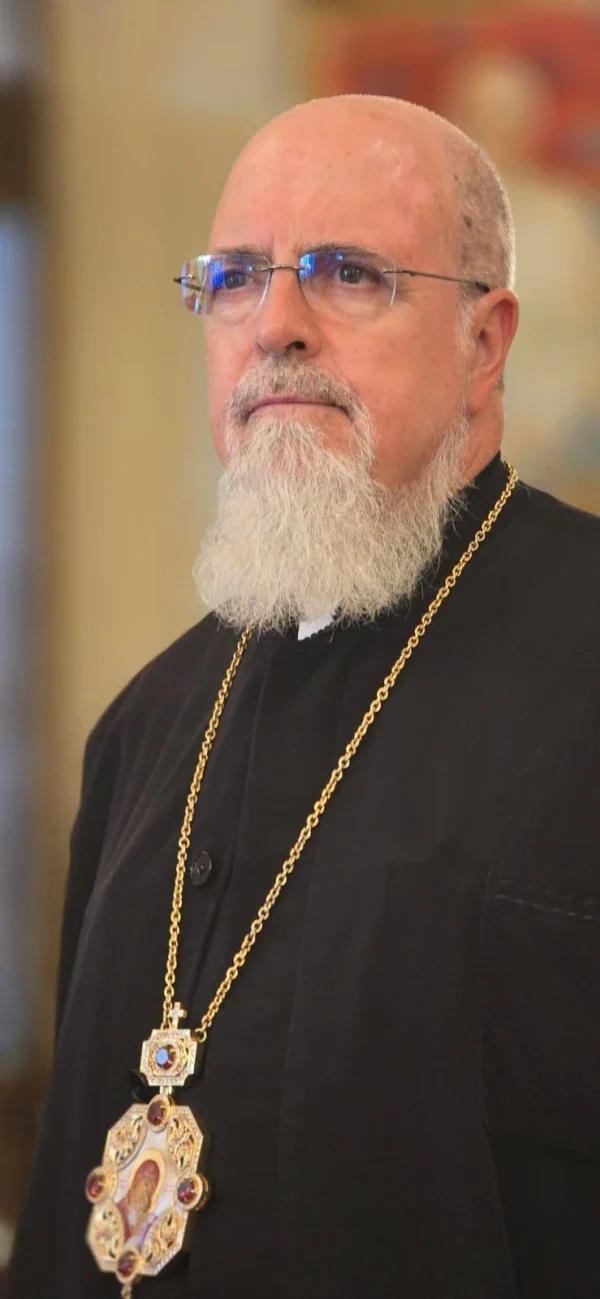
Exarch Manuel Nin Güell. | Credit: Photo courtesy of Exarch Manuel Nin Güell
Before his new assignment, he served for 10 years as apostolic exarch in Greece, leading a small but diverse community comprised of Greeks, Ukrainians, and Chaldeans from Iraq.
Regarding Grottaferrata's spiritual mission, Nin emphasized that the monks seek "to make known the beauty of Byzantine prayer, theology, and liturgy."
Every Sunday, some 60 or 70 people participate in the Divine Liturgy, some from the town and others from Rome.
The monastic life, he explained, maintains the cenobitic structure common to both East and West — prayer, communal meals, and manual labor — inspired by St. Basil and St. Benedict. Currently, the monastery is engaged in various activities, including the restoration of ancient books and writing icons.
Challenges to Christian unity
The new exarch arrives at a community of five monks with the desire for its resurgence "on a human, spiritual, and cultural level," resuming meetings, conferences, and opportunities for study, and offering witness to communion and fraternity.
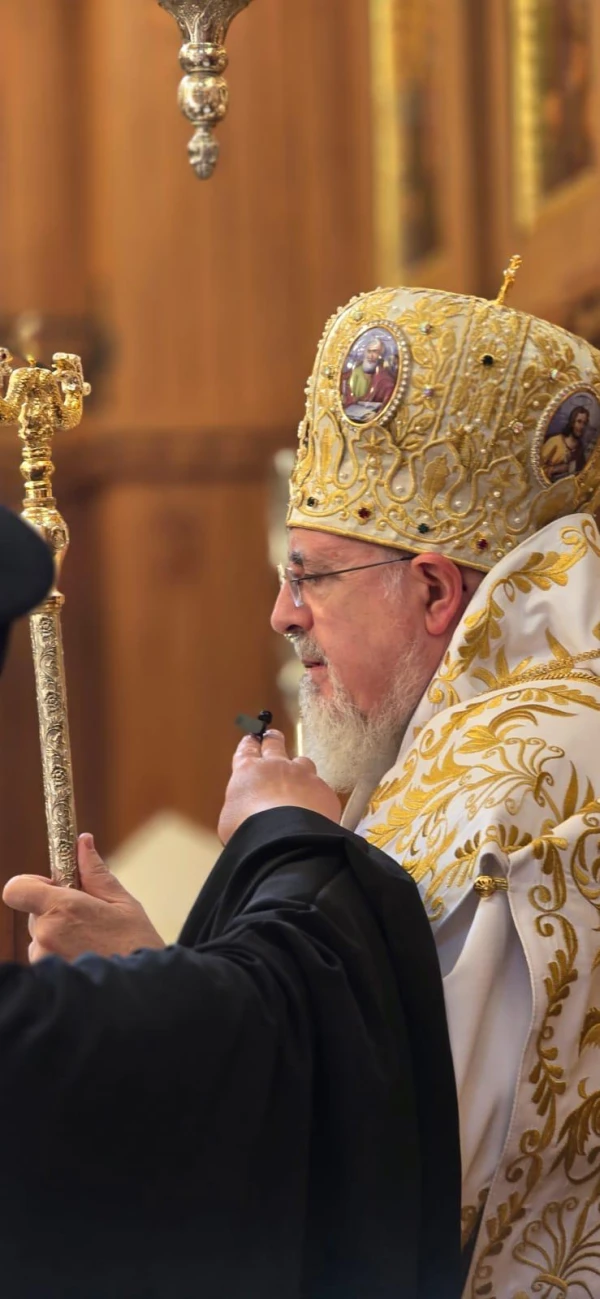
Exarch Manuel Nin Güell. | Credit: Photo courtesy of Exarch Manuel Nin Güell
Looking to the future, his dream is that Grottaferrata will once again be "a place of encounter and dialogue," that through prayer and daily life it will become a point of reference for Christians in Italy and around the world.
In this way, the ancient Byzantine abbey near Rome could renew its historical vocation: to build bridges between East and West on the path to Christian unity.
This story was first published by ACI Prensa, the Spanish-language sister service of EWTN News. It has been translated and adapted by EWTN News English.
The university has endured sustained backlash for nominating the outspoken abortion advocate to lead an academic department.
Nearly half a dozen more bishops have joined the growing backlash against the University of Notre Dame over its controversial appointment of an outspoken abortion advocate to lead a university department.
Fort Wayne-South Bend, Indiana, Bishop Kevin Rhoades on Feb. 11 issued a statement criticizing the university for appointing global affairs Professor Susan Ostermann as director of the school's Liu Institute for Asia and Asian Studies.
Three of Rhoades' fellow bishops quickly backed the prelate's remarks, voicing support on social media and calling on the university to drop Ostermann's nomination.
On Feb. 12, five more bishops commended Rhoades for his statement and expressed hope that the historic Catholic university would rescind the appointment.
Gallup, New Mexico, Bishop James Wall praised Rhoades for his stance, with the western U.S. prelate offering a quote attributed to Pope Leo XIV: "We cannot build a just society if we discard the weakest, whether the child in the womb or the old man in his fragility, for both are gifts from God."
Green Bay, Wisconsin, Bishop David Ricken, meanwhile, wrote: "I fully affirm and stand in solidarity with my brother bishop [Rhoades]." He said Rhoades spoke "with clarity, courage, and fidelity to the Church's mission."
"[L]et us turn with confidence to our Blessed Mother. Our Lady, pray for us! You are our loving Mother — we love you and entrust this to your Immaculate Heart," Ricken wrote.
The University of Notre Dame has continued to stand by its appointment of Ostermann, whose post is scheduled to take effect July 1. Rhoades on Feb. 11 said there is "still time [for the university] to make things right."
Ostermann, meanwhile, told the National Catholic Register in January that her role at the school "is to support the diverse research of our scholars and students, not to advance a personal political agenda."
The professor said she "respect[s] Notre Dame's institutional position on the sanctity of life at every stage" and described herself as "inspired by the university's focus on integral human development, which calls us to promote the dignity and flourishing of every person."
The aid has been coordinated between the Catholic Church in Cuba and the United States government, bypassing the communist regime.
Caritas Cuba reported that a ship carrying seven containers of humanitarian aid arrived at the port of Santiago de Cuba on Feb. 10. The aid, sent from the United States, will continue to assist those affected by Hurricane Melissa.
The commercial vessel docked at the port in eastern Cuba five days after the U.S. government announced a second aid package valued at $7 million. In January, the United States sent an initial aid package of $3 million.
The arrangements are being made directly between the Trump administration and the Catholic Church in Cuba, without the intervention of the communist regime.
On its website, Caritas Cuba reported that the shipment contains food and hygiene kits. "Once the supplies leave the port, their final destination will be the dioceses of Bayamo-Manzanillo, Holguín, and Santiago de Cuba, where they will be distributed with the usual organization, care, and respect for the recipients," Caritas stated.
"The Catholic Church, through its humanitarian arm Caritas Cuba, reaffirms with this work its commitment to accompany, serve, and support those most in need, especially during the most difficult times," the organization stated.
The chargé d'affaires of the United States Embassy in Cuba, Mike Hammer, reported on X that he was in Santiago de Cuba yesterday to verify the arrival of the aid and "see if we can continue sending it to alleviate suffering and improve the conditions of the people a bit."
The economic crisis in Cuba has been ongoing for several years, with shortages of food and medicine as well as prolonged power outages that sparked street protests in 2021.
In recent days, the situation has worsened with an oil shortage, following Trump's announcement that as a way to pressure the communist regime, he would impose tariffs on countries that send fuel to the island.
The Cuban government's response has been to enact even more restrictions on the population. One example is the notice published by the official newspaper Vanguardia that, for the time being, bread will only be guaranteed for children under 13 and adults over 65.
Likewise, the regime announced a few days ago that it no longer has fuel for commercial aircraft, so some airlines have indicated they will no longer be able to operate flights to the island, directly impacting tourism, one of the government's main sources of income.
This story was first published by ACI Prensa, the Spanish-language sister service of EWTN News. It has been translated and adapted by EWTN News English.
After a report found that nearly two-thirds of abortions are chemical, advocacy groups are pushing for national and local safeguards against mail-order abortion pill prescriptions.
About two-thirds of aborted babies lost their lives to abortion pills, according to a Feb. 10 report by the National Right to Life.
The 2026 "Status of Abortion in the United States" report, an analysis of developments in abortion policy, found that chemical abortions account for 63% of all reported abortions in the U.S. as of 2023.
Mail-order pills, which can be shipped into every state, even if they are illegal, make chemical abortion easily accessible. State safeguards designed to protect women — such as required in-person physician visits — can be easily sidestepped.
The Trump administration has pledged to review the dangers of the abortion drug but has not restored safeguards that the Biden administration removed.
National Right to Life looks to establish accountability on the state and local level through legislation.
"This is a moment of stark contrast in America," said Carol Tobias, president of National Right to Life. "Some states are racing to entrench abortion at any cost, while others are advancing compassionate policies that recognize the humanity of unborn children and provide real support to mothers."
The Abortion Pill Provider Liability and Education (APPLE) Act is "designed to hold abortion-pill providers accountable and give women legal recourse when harmed," according to the Feb. 10 press release.
The report calls the model legislation a "fresh approach."
"The APPLE Act empowers women to sue any party involved in the abortion pill supply chain — prescribers, sellers, manufacturers — when harm occurs," the report read. "The goal is accountability and transparency."
Dr. Christina Francis, CEO of the American Association of Pro-Life Obstetricians and Gynecologists, said the removal of safeguards around abortion pill prescriptions was "reckless."
"The abortion industry treats abortion pills like casual online purchases, though the reality is that they are far more dangerous," Francis told EWTN News. "Known complications for women include hemorrhage, severe infection, and the need for emergency surgery."
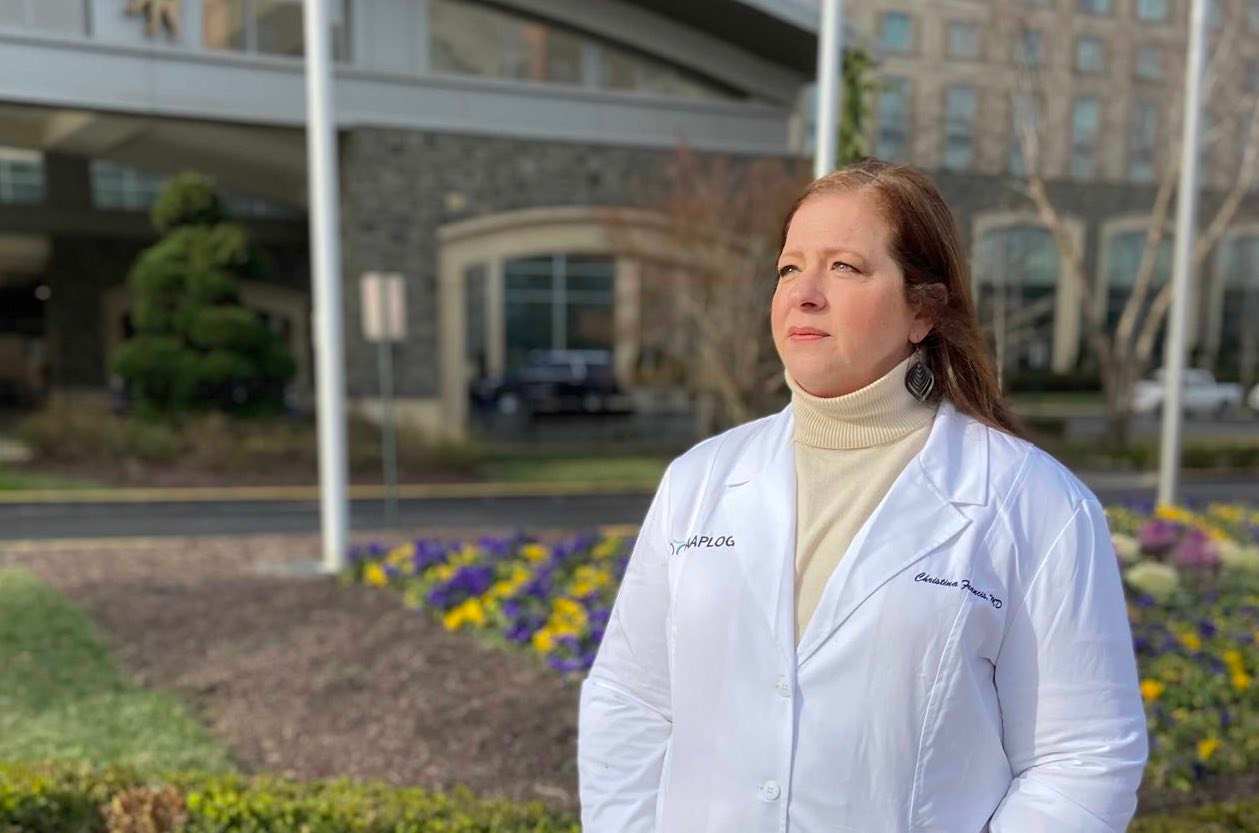
Dr. Christina Francis heads the American Association of Pro-Life Obstetricians and Gynecologists (AAPLOG). | Credit: AAPLOG
"Anyone can order them online — a woman, a minor, even an abuser — with no ID, no pregnancy verification, and zero medical supervision or follow-up," she continued.
The APPLE Act would ensure a public record of injuries and failures — something currently not in place, as abortion pill complications go underreported.
"This report makes clear that while Roe [v. Wade] is gone, the abortion industry has simply shifted tactics — relying heavily on dangerous mail-order pills and legal loopholes to avoid accountability," Tobias said.
"At the same time, we're seeing encouraging momentum in states working to protect both women and their unborn children," Tobias continued. "The APPLE Act is one important step toward restoring transparency and responsibility in an industry that has operated for too long without either."
So far, two states — Washington and Ohio — have introduced the APPLE Act.
"Because the APPLE Act is fundamentally consumer protection law, it has the potential to gain traction even in states that support abortion," the report read.
"The truth about chemical abortion is becoming harder to ignore," the report continued.
Francis urged the FDA to reinstate the safeguards.
"When the FDA recklessly scrapped the last remaining safeguards over these high-risk drugs, it opened the floodgates for extensive harm and abuse of both women and preborn children," Francis continued. "The result is widespread and reckless distribution of these pills, thousands of preborn lives lost, and more women harmed because they were never given truly informed consent or afforded basic medical care and support."
"This is medical malpractice, and it is time for the FDA to take this situation seriously and do its job by restoring essential safeguards," she said.
U.S. parishes and other Catholic groups are expected to participate in the initiative ahead of the Fourth of July.
The U.S. Conference of Catholic Bishops (USCCB) is asking Catholics to participate in an initiative to honor the 250th anniversary of the signing of the Declaration of Independence through Eucharistic adoration and works of mercy.
"All Catholics are encouraged to join the bishops in praying for the unity and healing of our country," a bishops' guideline on the initiative reads.
Leading up to July 4, the bishops are encouraging individuals and parishes to contribute to 250 collective hours of adoration and 250 collective works of mercy as Americans approach the anniversary of the country's formation.
The initiative also coincides with the lead up to the bishops' reconsecration of the United States to the Sacred Heart of Jesus on the June 12 solemnity. The consecration is set to happen during a Mass at the Basilica of the National Shrine of the Immaculate Conception in Washington, D.C.
Aaron Weldon, assistant director of the USCCB Committee for Religious Liberty, told EWTN News the initiative was born out of a desire "to do something to kind of celebrate in a prayerful way." He said the bishops also wanted to "give Catholics a way to participate in the consecration."
The USCCB published a guide with resources on how to participate, which suggests parishes can set up a Holy Hour with Eucharistic adoration on a weekly or monthly basis leading up to the Fourth of July.
"While 250 hours seems like a lot, each person present constitutes an hour prayed," the guide states.
It provides resources for setting up Holy Hours dedicated to specific intentions, such as a Holy Hour for life or a Holy Hour for peace. It adds that parishes can also incorporate the Litany of the Sacred Heart of Jesus into the Holy Hour to prepare for the consecration.
"You may have other ways to invite members of your community to spend some time in prayer for our country with Jesus truly present in the Blessed Sacrament," the guide adds.
For works of mercy, the USCCB guide states that individuals and groups can engage in existing activities in their parishes or start initiatives on a weekly or monthly basis leading up to the Fourth of July.
"Our works of mercy draw from the deep well of our faith and prayer, constantly reminding us that in tending to our brothers and sisters, we tend to Christ himself," it states.
Works of mercy can include a variety of activities, such as assisting women who face a crisis pregnancy, donating to food pantries, sponsoring a refugee family, or volunteering at homeless shelters, among other things, according to the USCCB guide.
Sister Betsy Van Deusen, CEO Catholic Charities of the Diocese of Albany, New York (right), talks with Elisabeth Espinosa, director of Outreach Programs at the Roarke Center Food Pantry, on April 4, 2025, at St. Anthony of Padua Church in Troy, New York. | Credit: Cindy Schultz for The Washington Post via Getty Images
The USCCB is asking parishes to document their communities' participation in the initiative and report to the bishops about ways in which people participated and fruits from the prayers and the actions.
Weldon said the bishops hope to "collect stories about the different ways that parishes … or small Catholic groups found a way to put these ideas into actions," adding that the suggestions are "flexible," so parishes and other Catholic groups can "do what works best for them."
"I hope that we can start to hear back from people the different ways that people are putting some of these ideas into action," Weldon said.
In September 2025, the White House launched the "America Prays" initiative, which also asks people to pray for the United States and its people leading up to the 250th anniversary of the signing of the Declaration of Independence.
Weldon said the USCCB initiative is separate and independent from that. He said the bishops' consecration and the adoration and works of mercy offer "distinctly Catholic ways of celebrating" the 250th anniversary launched by the bishops.
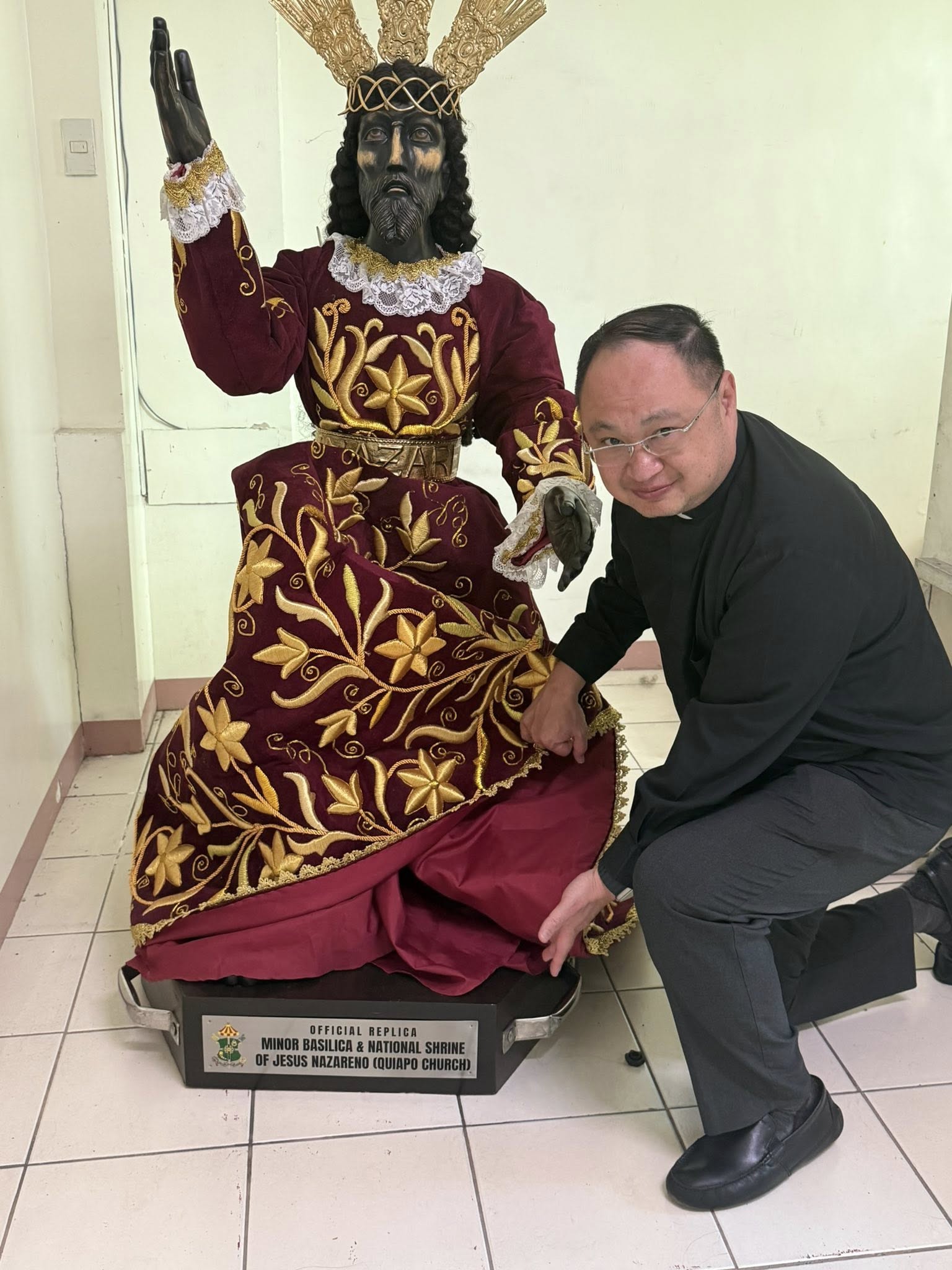
An official replica of Manila's centuries-old Jesús Nazareno image has been entrusted to Holy Family Parish in Artesia, California, bringing one of the world's largest Catholic devotions to the U.S.
The centuries-old devotion to Nuestro Padre Jesús Nazareno of Quiapo, Manila, in the Philippines has formally reached the U.S. West Coast as an official replica of the revered image was turned over to the Archdiocese of Los Angeles and entrusted to Holy Family Parish in Artesia and the archdiocese's Filipino ministry.
The replica, gifted by the Minor Basilica and National Shrine of Jesús Nazareno in Manila, will be enthroned at Holy Family Parish and serve as a pilgrim image, visiting parishes across the archdiocese's five pastoral regions as part of a broader evangelization initiative.
Father John Cordero displays the official replica of the Jesús Nazareno from Manila's Quiapo Church in 2025. | Credit: Holy Family Catholic Church Artesia
The arrival of the image marks the fruit of an evangelization effort spearheaded by then-rector of Quiapo Church, now Bishop Rufino Sescon of Balanga, Bataan. According to Father John Cordero of the Marian Missionaries of the Holy Cross, pastor of Holy Family Parish, the development unfolded providentially.
"The real starting point of this development was the evangelization initiative of the National Shrine of Jesús Nazareno in Manila, spearheaded by then-rector and now bishop of Balanga, Rufino 'Jun' Sescon," Cordero told EWTN News.
The replica was initially offered to the Archdiocese of Los Angeles through Father Rodel Balagtas, priest liaison to the Filipino Ministry. Although another parish had first expressed willingness to host the image, no final arrangements had been made.
Months later, Sescon personally contacted Cordero — a former graduate school classmate — to reestablish communication between Quiapo Church and a receiving parish. What seemed at first a closed matter reopened, and Cordero discerned that the parish could accommodate the image by converting a religious goods store in the vestibule into a shrine.
"I noticed something that had slipped my attention: We have space," Cordero said. After consultation with Filipino Ministry leaders, including its president and parishioner Noel Motus, the parish agreed to receive the image. "It is a gift from the national shrine, and our parish was merely chosen to be the caretakers."
Formal reception and Mass
Sescon will celebrate the Mass marking the official arrival and reception of the replica in Los Angeles on Feb. 14. Later this year, the image will also be brought to the annual Religious Education Congress, further expanding its exposure to thousands of catechists and ministry leaders.
Bishop Oscar Solis of Salt Lake City — the first Filipino-born bishop to lead a diocese in the United States — is also scheduled to celebrate a Mass in connection with the image's visit.
While there was no prior organized clamor among parishioners for a Nazareno image, Cordero said the parishioners' response after learning that their parish will be the home of the replica has been one of "sheer joy," with Filipino and Hispanic faithful alike rallying around the new shrine.
"As a pastor explaining this new devotion to my multicultural parish, I would like to point to our mutual interconnectedness with this image," he said. "This is primarily an image of Jesus, the focal point of our Christian unity."
Historical connections
The original image of the Jesús Nazareno, which arrived in Manila from Mexico in 1606, bears deep historical ties to both the Philippines and the Americas. California itself was once part of Mexico, and devotion to Jesús Nazareno has long-standing roots throughout Latin America.
"The image, touched by hundreds of millions of pilgrims throughout its four centuries of devotional history, connects us with the everyday faith stories of all who identify with the suffering of Our Lord," Cordero said.
In a gesture underscoring that spiritual continuity, "like the Galileans who were content with touching the tassels of the cloak of Jesus for their healing," Cordero requested Father Jade Licuanan, the current Quiapo Basilica rector, to have the replica be touched to the original image in Quiapo before being shipped to the United States. Cordero described this as an "intimate act of blessing and sending."
Mass devotion in Manila
The devotion to the image once known as the "Black Nazarene" is among the largest Catholic expressions of popular piety in the world. Each January, millions of barefoot devotees join the Traslación procession in Manila, accompanying the dark wooden image of Christ carrying the cross through the streets of Quiapo.
Cordero, who recently visited the basilica, described the scale of devotion as "mind-boggling," noting that even hourly Masses draw thousands of worshippers.
Now, he believes, the image comes to Los Angeles at a providential moment.
"Amid a sociopolitical climate marked by fear and division, this symbol of our connection in the Lord and with one another, embodied in this rustic image of Jesus carrying the cross, offers us consolation and mission," he said.
Citing the U.S. bishops' pastoral letter "A Treasured Presence," which describes Filipino Catholics as a vital but often unseen minority in the United States, Cordero said the Nazareno highlights the "prophetic resiliency and joy" they bring to the Church.
"The Jesús Nazareno reassures us that we are not alone in bearing our crosses," he said. "In this strange new world, our Catholic faith has been our familiar refuge of connection, support, and strength."
Revitalizing faith
Balagtas said he hopes the popular Filipino icon that has a rich tradition in Latin America will help revitalize the faith of the people of the largest and most ethnically diverse archdiocese in the United States, thanks to the vibrant devotion of Filipino Catholics.
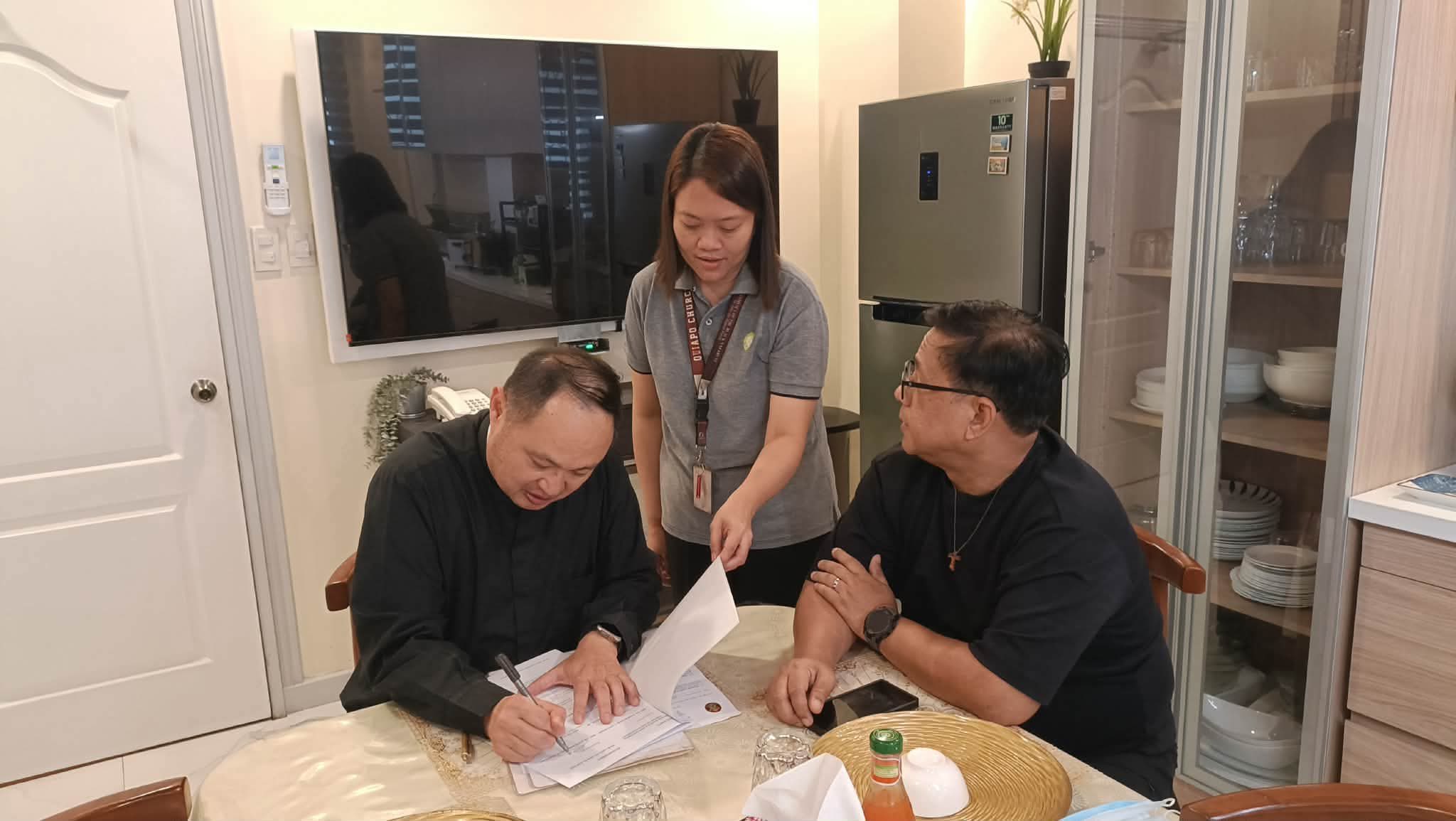
Father John Cordero, MMHC, signs the "Memorandum of Agreement" formalizing Holy Family Parish's reception of the official replica of the Jesús Nazareno on behalf of the Filipino Ministry of the Archdiocese of Los Angeles, as Father Jade Licuanan, rector of the Basilica and National Shrine of Jesús Nazareno in Manila, looks on in 2025. | Credit: Holy Family Catholic Church Artesia
"The people who are filling the pews of the churches in the Archdiocese of Los Angeles, as in other dioceses, are Filipino Catholics."
From Quiapo, Manila's narrow streets, where millions gather each year for the Traslación, to the sprawling parishes of Southern California, the cross-bearing Christ now stands in a new land — inviting the faithful not only to venerate but also to follow him.
Communion and Liberation's annual cultural event, the New York Encounter, will begin Friday in the heart of New York City.
The annual three-day cultural event hosted by Communion and Liberation, a movement within the Church founded by Father Luigi Giussani, begins this Friday evening with a video message from Cardinal Pierbattista Pizzaballa.
This year's New York Encounter will center on the theme "Where Everything Is Waiting for You," focusing on "the reemerging human desire for authentic belonging amid global isolation, emphasizing how freedom, truth, forgiveness, and dignity foster certainty and openness in true community."
The event is set to take place Feb. 13–15 at the Metropolitan Pavilion in New York City's Chelsea neighborhood. Several of the presentations will be livestreamed, but for those who wish to attend in person, the event is free and open to all.
Holly Peterson, one of the event's moderators, told "EWTN News Nightly" on Feb. 10 that amid life's challenges and "the angst of the world we live in," the New York Encounter is "a place to go where everything is waiting for you."
"We'll have amazing speakers who will be able to address some of the challenges that we have today, whether it be social media or AI or whatnot," she said. "But it's a place where everyone is welcome."
Peterson said the Latin patriarch of Jerusalem has recorded a "phenomenal" video that will be aired at the event. She further highlighted several panels and discussions set to take place at the event, including one on just war theory and another featuring Bishop Earl Fernandes of Columbus, Ohio, who will be interviewing two Ukrainian bishops about the situation on the ground in Ukraine.
Dialogue and reflection will focus on urgent questions shaping common life, according to the event's website. The Encounter plans to bring together leading voices from culture, academia, faith, and the arts to explore how human flourishing is possible in today's world.
Peterson said she hopes participants will leave the event with "curiosity" and motivated to ask "deep questions and not necessarily find answers, but to be able to address some of the topics that are discussed with friends and family."
"There'll be thousands of people there, but it's all free and everyone will be welcome," she said.
A sitting mayor attended the past five archbishop installations in New York dating back to 1939.
Mayor Zohran Mamdani broke a long-standing New York tradition when he missed the Feb. 6 installation Mass for Archbishop Ronald Hicks at St. Patrick's Cathedral and met with the archbishop four days later.
Joseph Zwilling, director of communications for the Archdiocese of New York, told EWTN News that "the mayor and the archbishop were together at a [New York Police Department] event" Feb. 10 and "then spoke by phone later in the day."
The archdiocese confirmed that Mamdani was invited to the installation Mass. Prior to Hicks' installation, a sitting mayor was present for at least the past five archbishop installations, which were in 2009, 2000, 1984, 1968, and 1939. Hicks replaced Cardinal Timothy Dolan following his retirement.
In Mamdani's absence, Helen Arteaga, deputy mayor for Health and Human Services, attended the Feb. 6 installation Mass. Prior to the meeting and phone call, Mamdani congratulated Hicks on social media.
"Congratulations to Archbishop Ronald Hicks on today's installment and welcome to New York City," Mamdani said in a post on X. "I know that Archbishop Hicks and I share a deep and abiding commitment to the dignity of every human being and look forward to working together to create a more just and compassionate city where every New Yorker can thrive."
The mayor's press office did not immediately respond to a request for comment.
Mamdani became the first Muslim and first democratic-socialist mayor of the city on Jan. 1.
Bill Donohue, president of the Catholic League, a Catholic advocacy group, criticized Mamdani for missing the Mass, saying in a statement that Mamdani "ghosted the event."
"He could easily have been there," Donohue said. "Instead, he attended to business as usual."
"One in 3 New Yorkers are Catholic, making them the largest faith community in the city," he added. "Mamdani's professed interest in diversity and inclusion obviously hits a brick wall when it comes to Catholics. He wants nothing to do with them."
Donohue also criticized some of Mamdani's policy positions, which he said includes "rabid support for abortion, gay marriage, and transgenderism (including the child abuse inherent in sex-reassignment surgery for minors)."
During his campaign, Mamdani vowed to increase public funding for abortion, hormone therapy drugs, and surgeries designed to make a person appear like the opposite sex.
Mamdani defeated two candidates with nearly 51% of the vote in the November 2025 election. His plans include free buses, city-owned grocery stores, no-cost child care, raising the minimum wage to $30 per hour, and freezing the rent for people in rent-stabilized apartments.
"Mamdani has been in office for just over a month, and already he is signaling to Catholics that they are not welcome," Donohue said.