The pontiff is expected to travel to Africa in April, visit Peru later this year, and make a summer stop in Spain.
Pope Leo XIV will not travel to the United States in 2026, the director of the Holy See Press Office, Matteo Bruni, said Sunday, denying circulating reports that the pontiff might make an apostolic trip to his native country.
A U.S. visit had been anticipated by some American Catholics ahead of the country's 250th anniversary of independence on July 4, 2026.
At the same time, papal travel elsewhere is taking shape. Local church authorities in Africa have said Leo will visit several countries on the continent — with Angola and Equatorial Guinea among the destinations publicly confirmed by local authorities, and Cameroon also widely anticipated as part of the itinerary — with timing broadly described as after Easter.
In South America, Peruvian bishops have said the pope will visit the country — where he previously served as a bishop — later this year, with local church leaders pointing to a timeframe in November or early December.
A visit to Spain is also expected this summer, with Spanish church authorities indicating stops including Madrid, Barcelona, and the Canary Islands.
Popes have visited the United States multiple times, beginning with Pope Paul VI's October 1965 trip, which included a visit to the United Nations.
St. John Paul II traveled to the U.S. on several occasions, first visiting in October 1979 with stops in Boston, New York, Philadelphia, Des Moines, Chicago, and Washington, where he met then-President Jimmy Carter. Among his later visits, he returned in 1995 for the 50th anniversary of the United Nations and made his final U.S. trip to St. Louis, Missouri, in 1999.
Pope Benedict XVI also visited the United States, traveling in April 2008. During that trip, he marked his 81st birthday on April 16 at the White House with President George W. Bush, and he later visited New York, including a time of prayer at Ground Zero in remembrance of the victims of the Sept. 11, 2001 attacks.
The most recent pope to visit the United States was Pope Francis, who traveled there from Sept. 22–27, 2015. During the visit, he went to Washington, D.C., where he canonized Junípero Serra and addressed the U.S. Congress. He then traveled to New York, speaking at the United Nations General Assembly, before concluding the trip in Philadelphia, where he presided over events marking the close of the Eighth World Meeting of Families.
"Little Nellie" was a 4-year-old child from Cork, Ireland, whose piety and closeness to God led in part to the lowering of the age at which children could receive their first holy Communion.
Nellie Organ — affectionately known as "Little Nellie" — was a 4-year-old child from Cork, Ireland, whose piety and closeness to God led in part to the lowering of the age at which children could receive their first holy Communion.
In 1910, a decree was promulgated by the Sacred Congregation of the Discipline of the Sacraments under Pope Pius X on the subject. Quam Singularistates: "The age of discretion, both for confession and for holy Communion, is the time when a child begins to reason, that is about the seventh year, more or less. From that time on begins the obligation of fulfilling the precept of both confession and Communion."
One of the pope's intentions of the decree was to encourage frequent, even daily, Communion among all the faithful, starting from a young age. It was a transformative moment for the Catholic Church.
According to John Donovan from the Little Nellie of Holy God Foundation, a factor that helped convince Pope Pius about this was the story of Little Nellie, whose virtue and intense relationship with God, up until her death at the age of 4 1/2, astonished the Good Shepherd sisters who cared for her as well as the priests and the local bishop of Cork.
An unwavering desire to receive 'Holy God'
From an early age, Little Nellie exhibited signs of a deep spirituality to her parents. Her experiences included visions of Jesus and Mary as well as intense reverie in the presence of the Eucharist.
Although the little girl was not named in the decree, her faith and longing for the Eucharist resonated deeply within the Church and were mentioned by Pope Pius on several occasions.
Little Nellie captured the hearts of many with her unwavering devotion to Christ and her story spread widely, illustrating that children could possess a genuine faith and desire for Communion irrespective of their age.
Pope Pius X's decree emphasized that a basic understanding and reverence were sufficient for children to receive Communion, rejecting the notion that advanced theological knowledge was necessary.
Donovan told EWTN News: "Nellie's story is very much a story of the Eucharist. The essence, I guess, of why we are here years later talking about her and why she has been known for all of that time is that Nellie received the Blessed Sacrament at the very young age of just 4 years old. And that is something that was unheard of at the time."
"Nelly had a tough time. She died of tuberculosis, which she had contracted from her mother, Mary, who died not too long previously," Donovan explained. "She died in an orphanage in the Good Shepherd convent in Sunday's Well in Cork. She was placed there, along with her sister Mary, and there were also two brothers who were sent to other religious institutions because, at that time, her father William was in the army. While there, she was frail from the start. But the one thing she never asked at all, or questioned at all, was Jesus, or as she preferred to refer to him, 'Holy God.'"
For Nellie, the Child of Prague statue was an image of Holy God. Donovan explained: "She related to Jesus and had a personal relationship with Jesus as 'Holy God.' From the age of 3 onwards, she was asking and beseeching to be allowed to receive holy Communion. Even at that young age, she was offering up all of this suffering. She said, 'You know, Jesus, my suffering is nothing to what you suffered on the cross for me.'"
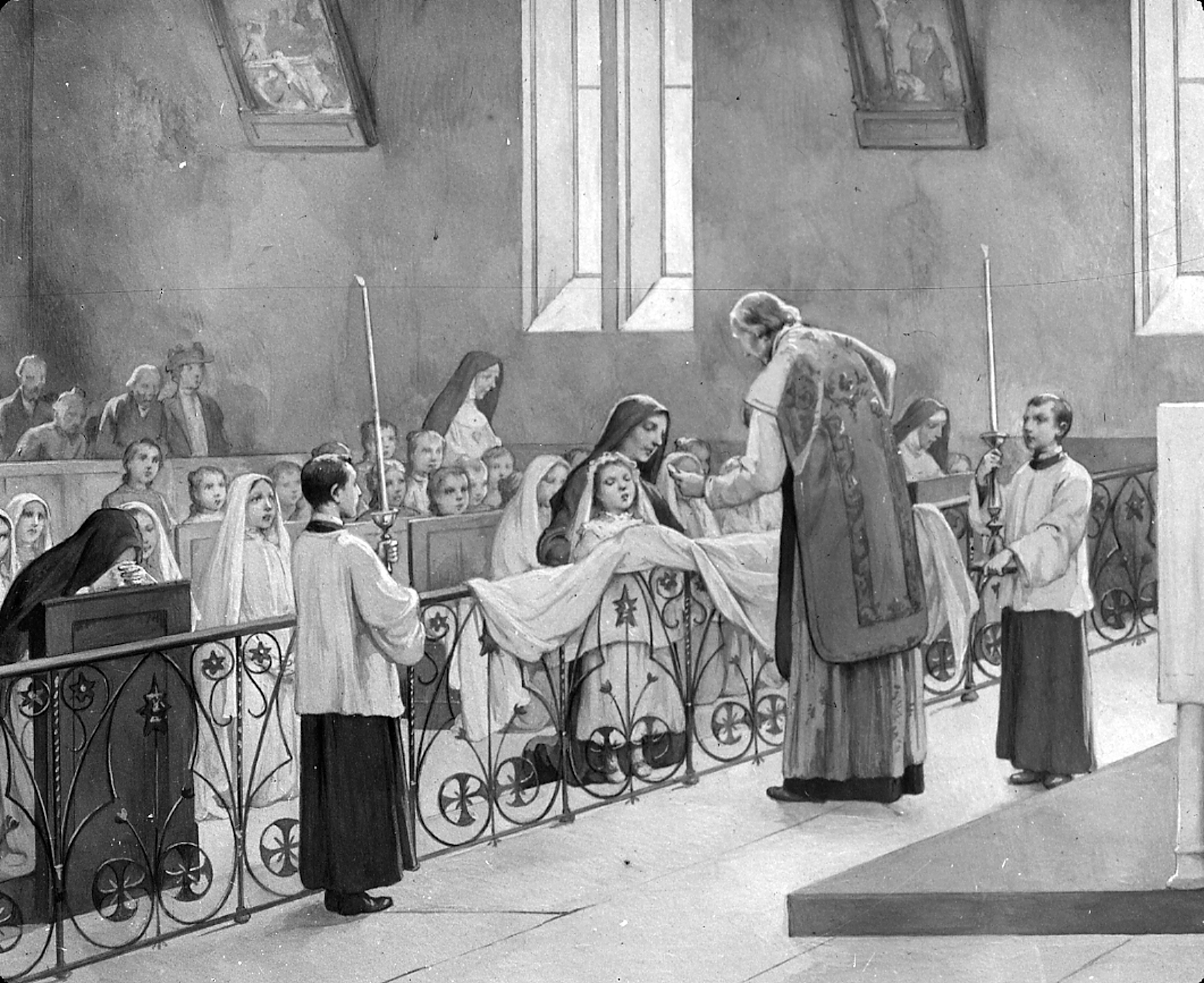
An illustration of Little Nellie's first holy Communion. | Credit: Photo courtesy of John Donovan, Little Nellie of Holy God Foundation
Development of Communion guidelines
Before Pius X's decree, the Catholic Church had adopted increasingly strict guidelines regarding first Communion — primarily influenced by two significant factors: In the wake of the Protestant Reformation, the Church sought to underscore the sacredness of the Eucharist, resulting in a more cautious approach. Church leaders preferred that individuals receive Communion less frequently but with greater worthiness.
Additionally, Jansenism affected the age at which children could receive Communion. Children were often required to demonstrate an adult-like understanding and moral seriousness, pushing the age of first Communion to 10 to 12 years.
Donovan told EWTN News: "Little Nellie's spirituality was cradled in her mother's bed, and because her mother was [sick] for a lot of that time, Nellie was in the bed with her, and it was there she learned the rosary and her prayers, and she prayed to Holy God from a very young age."
Remarkably, Nellie could sense when Christ was not in the tabernacle. And if someone had visited her after receiving Communion, she could sense the presence of Christ. Knowing the person had recently been to Communion, often kissing them to be close to her Holy God.
The young girl became a symbol of innocence and spiritual intuition, reinforcing the idea that holiness transcends age and education. The long-term effects of Quam Singulari reshaped Catholic life worldwide, making first Communion a regular part of early childhood and fostering a more pastoral approach to religious education.
Such was her deep understanding and desire for the Eucharist that it repeatedly impressed the Good Shepherd religious sisters. During a convent retreat, a Jesuit priest from Dublin named Father Bury met Nellie and spoke with her extensively to gauge her understanding and devotion.
"He was impressed immensely, and she gave deep answers to questions in terms of her understanding of the Real Presence. And so he heard her first confession," Donovan said.
Bury wrote to the bishop of Cork, Thomas O'Callaghan, stating that Nellie was endowed to an extraordinary degree with ardent love of God and the desire to be united to him in holy Communion. As a result, episcopal consent was given for Nellie to receive her first Communion on Dec. 6, 1907. Her joy at receiving "Holy God" was immense.
Not too long after Nellie's death, accounts of her life began to appear, including one by Dean Scanlan, published in Roma, an Italian journal.
Donovan explained: "It is recorded that Pope Pius X was at his desk one day, and this account of little Nellie's life came in front of him. He read it with great interest, and he is recorded as saying to Cardinal Merry del Val: 'There, there it is, that is the sign for which I have been waiting.'"
Vatican representatives are in the process of reviewing the life of Pedro Ballester, a British university student who died of cancer in 2018, to gauge whether his canonization cause should be opened.
A young man from Manchester, England, who "committed himself totally to God" could one day be included among the ranks of Sts. Carlo Acutis and Pier Giorgio Frassati as calls continue for him to be named a saint.
Pedro Ballester died on Jan. 13, 2018, at the age of 21 of bone cancer after a life of prayer, sacrifice, and virtue. Vatican representatives are now in the process of interviewing his family and friends to gauge whether a cause should be formally opened for the former university student.
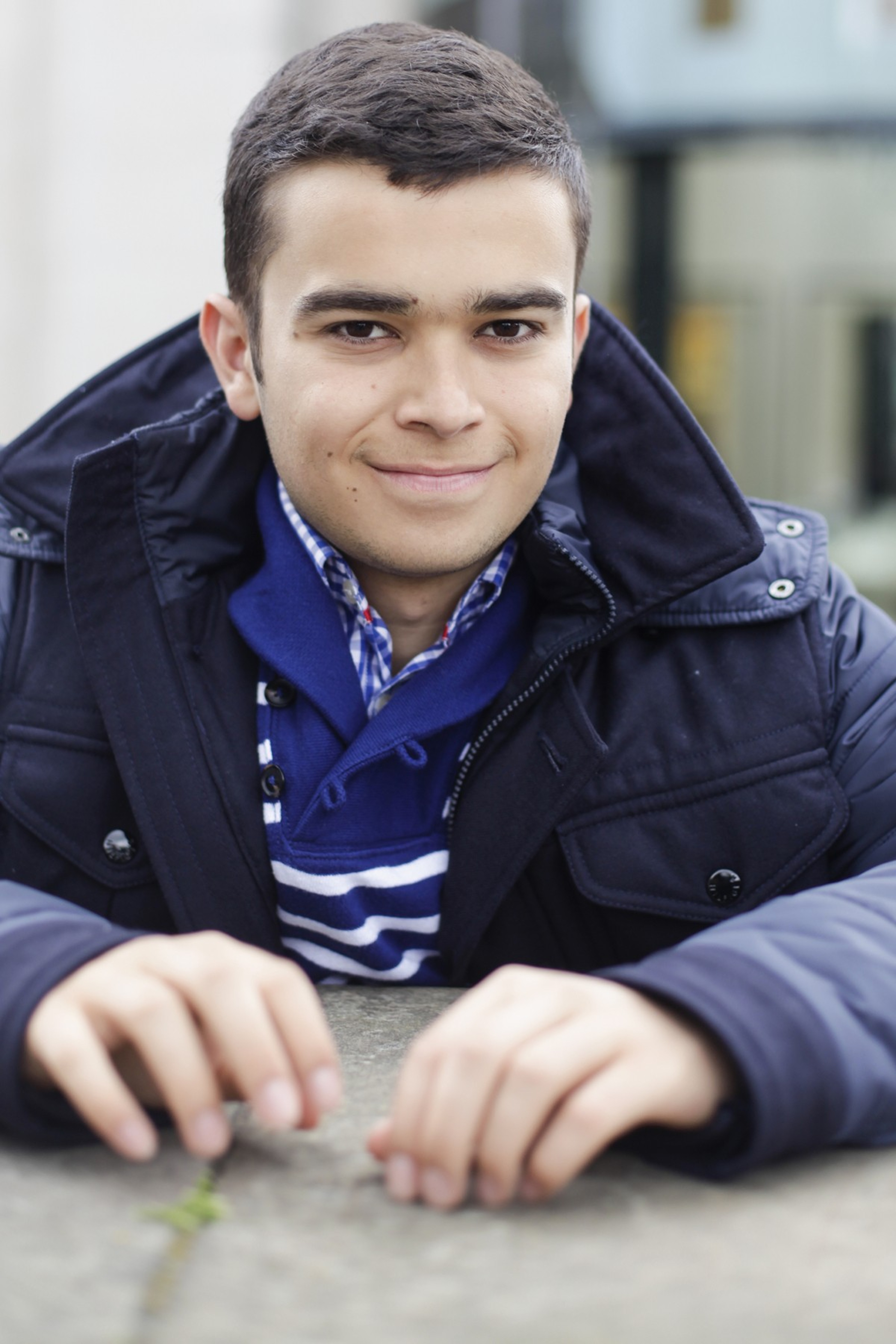
Through his illness, Pedro Ballester "was uniting himself to the suffering of Christ," Father Joseph Evans, who accompanied Ballester, told EWTN News. | Credit: Photo courtesy of Opus Dei Communications Office
Father Joseph Evans, chaplain of Greygarth Hall, Manchester, who accompanied Ballester during the last year of his life, told EWTN News: "People like Pedro and Carlo Acutis, they didn't keep their options open. They committed themselves totally to God. They found happiness in deep self-giving and deep suffering."
Carlo Acutis, a 15-year-old Italian, died in 2006 and was canonized a saint in 2025.
Evans told EWTN News that "young people are attracted to self-giving and self-sacrifice and practice because of our soft, consumerist world."
A gift for friendship and commitment to God
Ballester was born into a Catholic family and his Spanish parents are married members of Opus Dei, a personal prelature of the Catholic Church founded in Spain by St. Josemaría Escrivá in 1928. Ballester himself joined Opus Dei in 2013 as a "numerary" member — meaning he made a commitment to celibacy for life and living out the charism of Opus Dei in the world.
After winning a place at Imperial College in London to study chemical engineering, Ballester experienced intense back pain during his first semester, after which he was diagnosed with advanced cancer of the pelvis.
During his illness, he would often go to Christie's Hospital in Manchester for cancer treatment where his holiness and kindness were noted by many. He befriended his fellow patients and the nurses, showing a deep interest in their lives outside the hospital.
"He made really good friends with them," Evans told EWTN News. "He was genuinely interested in you. He really inspired people in a very, very natural way. He got through to people and spoke to them about God."
On one occasion, Ballester wrote a card to Pope Francis, signed by his fellow cancer patients, and delivered it in person to the pontiff in Rome in November 2015. His father, also named Pedro, recounted how his son told Pope Francis: "I just wanted to let you know that I got cancer, and I offer all the sufferings for you and for the Church."
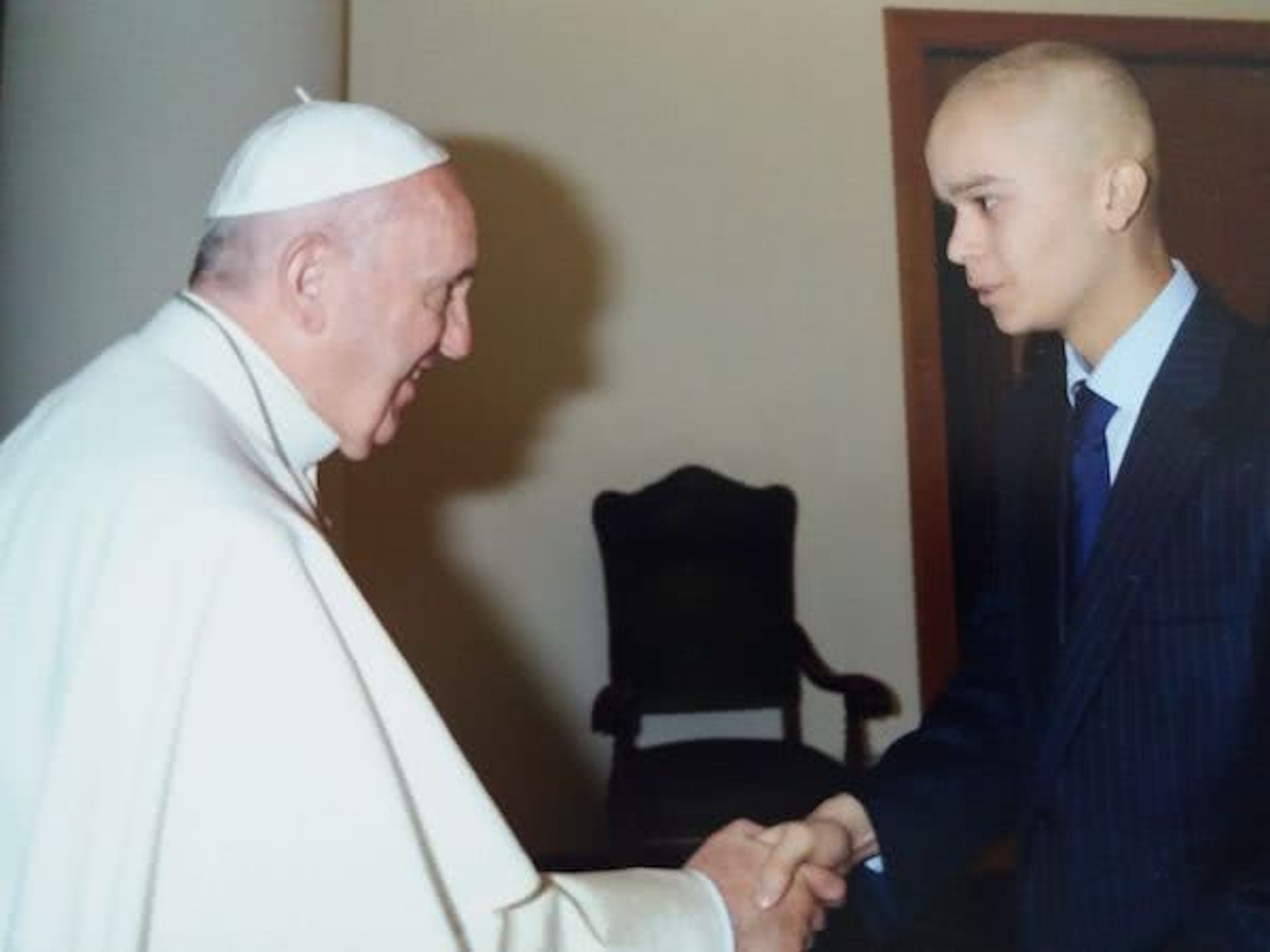
Pedro Ballester met Pope Francis in 2015 and told him: "I just wanted to let you know that I got cancer, and I offer all the sufferings for you and for the Church." | Credit: Photo courtesy of Opus Dei Communications Office
From that point on, the young man's suffering worsened and he regularly experienced acute pain leading up to his death.
Paying tribute to the way Ballester responded to his disease, Evans said: "He was uniting himself to the suffering of Christ. The pain he was going through was a much bigger share in the passion of Christ, offering that suffering to Christ for souls, for salvation. Above all, he would say the best form of prayer was offering up our suffering."
Opus Dei, which is promoting Ballester's cause for sainthood, is hoping the impressive young adult will follow in the footsteps of Carlo Acutis and Pier Georgio Frassati, who was famous for serving the poor in Milan.
Speaking to EWTN News about the impact of such young people, Jack Valero from Opus Dei said: "There seems to be a whole collection of people, [a] new generation of Catholics who are going to lead the way. God is saying that, now in the 21st century, 'I'm going to give you a whole load of people that are going to be models for the young.'"
He added: "[Pedro] could be somebody who can teach us to be happy with whatever our circumstances are, and that to be close to God is to be happy."
Valero also described Ballester as a "special" person who was "a really friendly guy throughout his life, and he continued to be a very friendly guy in his sickness."
Pinpointing Ballester's "ability to make friends" as a strong evangelistic tool, he said: "He realized that he didn't have much long to live. So he asked people: 'Are you going to Mass? Are you OK with God? Are you being good to people?' This ability to make friends was directed to bring them close to God."
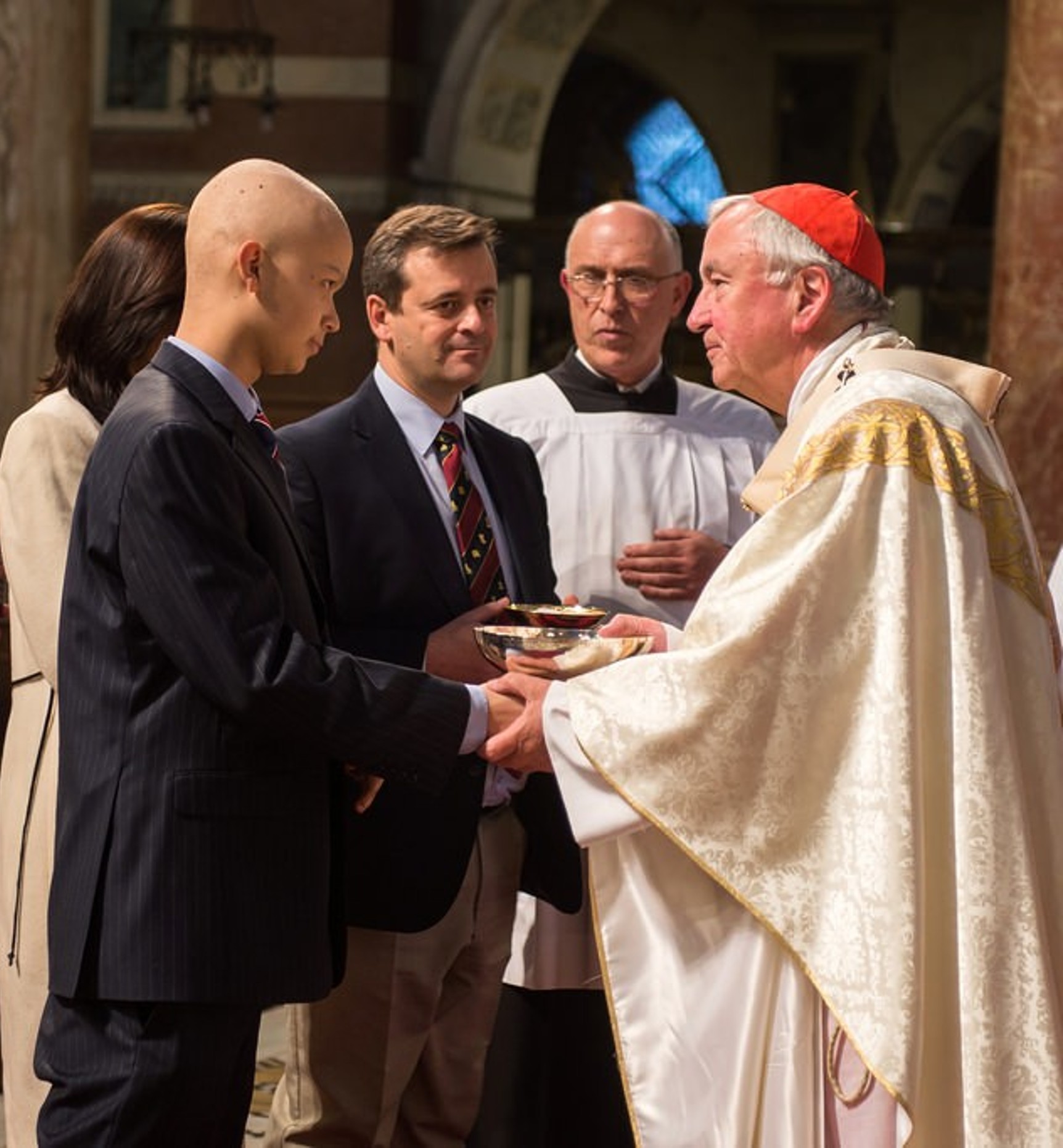
Pedro Ballester is greeted by the former archbishop of Westminster, Cardinal Vincent Nichols. | Credit: Photo courtesy of Opus Dei Communications Office
Accounts of Ballester's impact on people have spread around the world to places such as Mexico, Spain, and Kenya, while a prayer card asking for his intercession has now been translated into 28 languages.
Additionally, a documentary called "A Friend in Heaven" has been released that highlights the impact of Ballester's short life, describing him as a "student with a gift of friendship and a love for God."
Looking to the future, Evans urged caution while the Church "makes its mind up" about Ballester becoming a saint, but he told EWTN News: "He loved chatting with people. He was very generous. There's a tremendous spontaneous phenomenon of devotion to him in all sorts of places throughout the world."
The Holy Father accepted the resignation of Archbishop Samuel Aquila, the Holy See announced on Feb. 7.
Denver Archbishop-designate James Golka on Feb. 7 said his agenda as archbishop will consist of "tak[ing] time to intentionally listen to God's will" and then doing it.
The newly named leader of the archdiocese addressed the faithful at a press conference in Denver hours after the Vatican announced that he would be taking over after Archbishop Samuel Aquila steps down from the post.
Upon being named as bishop of Colorado Springs in 2021, Golka said he aimed to help the faithful "become fascinated by the Lord" and that he himself has been "fascinated by Jesus Christ" for his entire life. On Feb. 7 he said he was "still fascinated" by the Lord.
"When you're fascinated by someone, you want to know more about him," he said. "You cannot help but fall in love with him, and when you fall in love with our Lord you want to spend your entire life for him."
Golka's installation is scheduled for March 25th, the Solemnity of the Annunciation.
'I cannot wait to see what God has in store for us'
Aquila — who at 75 has reached the customary retirement age for prelates — has led the Colorado archdiocese since 2012, when he was appointed by Pope Benedict XVI. He was ordained in that archdiocese in 1976 and previously served as the bishop of Fargo, North Dakota.
At the Feb. 7 press conference, the outgoing archbishop described Golka as "a man of prayer, with a deep love for Jesus and the Blessed Mother."
"He understands well many of the challenges that we face today in our country and world, with immigration, the precarious global situation, and all of the challenges undermining the dignity of human life," Aquila said. "He approaches all of these through the lens of the Gospel."
Golka described himself as "equally excited and equally sad" to come to Denver, citing both his eagerness to lead the metropolitan archdiocese and his love for the Diocese of Colorado Springs.
"Over four-and-a-half years of being there, I fell in love with the people, the parishes, the priests, the diocese," he said. "I will miss them dearly."
He said a priest asked him earlier in the week what his "agenda" would be as archbishop.
"I have no idea why God made me a bishop, but God knows," he said. "So our agenda is we're going to take time to intentionally listen to God's will, and then we're going to do it."
The archbishop-designate spoke briefly in fluent Spanish at the press conference while tearing up. "Whenever I talk in Spanish I cry," he admitted.
He also introduced his father to the crowd, joking that his family thought they were coming to have lunch with him in Denver before he revealed the major announcement.
"I cannot wait to see what God has in store for us, together," he said.
In a "farewell thank you" letter published on Feb. 7, Aquila said his heart was "filled above all with gratitude" as he prepares to enter retirement.
"From the beginning of my ministry here, I have been convinced that the Lord is at work among us, calling us ever more deeply to conversion, communion, and mission," the archbishop told the archdiocese.
Aquila prayed that Golka would be "strengthened by your prayers, encouraged by your collaboration, and sustained by the grace of the office he will receive."
Golka lead the Colorado Springs Diocese starting in 2021 after being appointed there by Pope Francis.
Born Sept. 22, 1966, in Grand Island, Nebraska, Golka obtained philosophy and theology degrees at Creighton University. He served as a Jesuit lay missionary volunteer for the Native American Missions in South Dakota before attending St. Paul Seminary in Minnesota.
After obtaining master's degrees in divinity and sacramental theology, he was ordained in the Diocese of Grand Island on June 3, 1994.
During his time in the Grand Island Diocese he served in various capacities, including as director of diocesan youth, chair of the personnel board, director of ongoing formation of clergy, and on the presbyteral council.
The Canadian bishops issued a statement Feb. 5 supporting Bill C-218, which would prevent persons whose sole medical condition is mental illness from accessing physician-assisted suicide.
Two legislative efforts to limit Canada's medical aid in dying (MAID) framework converged Thursday, with Conservative member of Parliament (MP) Garnett Genuis announcing a bill focused on MAID coercion and the Catholic bishops supporting legislation to prohibit assisted dying for mental illness.
Genuis introduced a private member's bill Feb. 5 that would amend the Criminal Code to prohibit any federal or provincial government employee in a position of authority, other than a doctor or nurse, from initiating a discussion about medical aid in dying.
Genuis said Bill C-260, "An Act to amend the Criminal Code (medical assistance in dying — protection against coercion)," comes in response to numerous stories of counselors suggesting MAID to persons such as military veterans or disabled men and women who are seeking support, not death.
Meanwhile, the Canadian Conference of Catholic Bishops (CCCB) issued a statement the same day strongly supporting Langley MP Tamara Jansen's private member's Bill C-218, which would prevent persons whose sole medical condition is mental illness from accessing euthanasia and physician-assisted suicide (MAID).
The statement from the CCCB's permanent council, its most authoritative body between annual plenary assemblies, said Bill C-218 "would be a constructive step" toward limiting euthanasia and protecting individuals with mental illness.
The bishops noted the U.N. Committee on the Rights of Persons with Disabilities has called on Canada to rescind "Track 2 MAID," which allows euthanasia for those whose natural death is not reasonably foreseeable, and to permanently exclude MAID for persons whose sole underlying medical condition is a mental illness.
The bishops also called on the federal government "to allow free conscience voting on this matter, given its profound moral and social implications."
They said current research indicates mental illness is "not necessarily irremediable" and called for improved access to mental illness treatment and palliative care.
At a news conference in Ottawa, Genuis said his Bill C-260 would clarify MAID laws by explicitly covering coercive situations such as counseling sessions.
The member of Parliament for Sherwood Park-Fort Saskatchewan said the bill is aimed at countering the "discrimination and coercion" that "undermine the experience of persons trying to access supports that they are entitled to."
He cited the example of Nicolas Bergeron, a 46-year-old Quebec man who was not interested in medically-facilitated death. "But a social worker, who came to his house for an entirely different reason, repeatedly tried to push him to change his mind," Genuis said.
Genuis said the counselor presented Bergeron with "a very bleak, worst-case scenario for his illness and told him that sometimes you just have to stop fighting ... This is wrong and this is not a one-off. This MAID coercion by nonexperts in positions of authority is part of a troubling pattern."
The bill states: "Every person who, being an officer or employee of the government of Canada or of a province, other than a medical practitioner or a registered nurse, including a nurse practitioner, initiates a discussion with a person about the availability to that person of medical assistance in dying is guilty of an offense punishable on summary conviction if they (a) by virtue of their profession, are in a position of trust or authority towards that person; and (b) know that the person has not specifically requested to have such a discussion with them."
While current law requires that a request for MAID be voluntary and free from external pressure, supporters of the bill argue that consent can be compromised when individuals feel they have no meaningful alternatives to relieve their suffering. Supporters say inadequate access to palliative care, disability supports, mental health treatment, or stable housing amounts to "systemic coercion."
The Criminal Code in Canada currently requires that individuals requesting MAID give informed consent and be advised of available means to relieve suffering, including palliative care. Proponents of Bill C-260 argue that explicitly naming coercion in the MAID context would make it a more enforceable criminal consideration rather than relying primarily on administrative checks and professional judgment.
Genuis has repeatedly argued that MAID cannot be considered a genuine choice when people lack access to life-affirming supports. That concern was underscored during a House of Commons committee exchange last fall with Krista Carr, chief executive officer of Inclusion Canada.
Appearing before the House of Commons Standing Committee on Finance, Carr told MPs that people with disabilities are already being placed at a disadvantage by public policy decisions that erode supports. Asked by Genuis whether people with disabilities would be "net worse off" as a result of proposed changes to disability tax credits, Carr replied: "Yes. I think it's an unintended consequence of a bill meant to make life more affordable for Canadians. As a consequence of that, yes, in a net position they will be worse off than they are now."
The bill is being introduced amid ongoing debate over the scope and safeguards of Canada's MAID regime, particularly for people whose natural death is not reasonably foreseeable. Disability advocates and organizations, including Inclusion Canada, have repeatedly warned that the expansion of MAID has outpaced the development of adequate social supports, placing people in precarious living situations at risk.
As a private member's bill, Bill C-260 must pass second reading in the House of Commons before proceeding to committee study.
This story was first published by The B.C. Catholic on Feb. 5, 2026, and is reprinted here with permission.
"The Church is not and must never be a mouthpiece for any political party or candidate," the Zambian bishops stated. Read more in this roundup of world news that you may have missed this past week.
Here is a roundup of world news you may have missed this past week:
Zambia bishops instruct clergy and faithful to stay out of partisan politics
Catholic bishops in Zambia issued a pastoral letter this past week telling priests to refrain from engaging in party politics as preparations for the country's August presidential and general elections begin.
"The Church is not and must never be a mouthpiece for any political party or candidate. Our duty is to form consciences, promote the common good, and speak truth to power," the letter stated, adding that "clergy who align themselves with political interests risk compromising their sacred vocation."
The bishops further emphasized that Church property should never be used for political campaigns or meetings, that priests should never accept political donations in exchange for influence, and that preaching from the pulpit remain centered on the Gospel rather than politics.
Vietnam has an abundance of priests, lack of missionaries, report says
The Catholic Church in Vietnam is facing a critical lack in missionaries despite having massive vocational growth, a report this week said.
There is "a dire shortage of the missionary spirit required to reach the 'peripheries'" in Vietnam, according to a UCA News article on Tuesday by Catholic commentator Petrus Po.
Though the country in January welcomed 76 new transitional deacons, who are all expected to be ordained in the next year to the priesthood, Po observed that Vietnam's clergy are heavily concentrated in urban centers, leaving areas such as the Central Highlands and northwestern areas to "wait months for a single Mass."
Amid shortages in rural areas, Po said the local Church should "embrace" the Vietnamese bishops' designation of 2026 as the year of "Every Christian as a Missionary Disciple" by sending more priests to live in rural areas rather than merely "lending" them.
Rising violence in Pakistan prompts increased worry among Christians
Catholics in Pakistan are experiencing heightened anxiety as conflict between armed militant separatist groups and Pakistan's security forces continues to strike closer to home.
Amar Mansoor Bhatti, a 35-year old Catholic man, told UCA news that he awoke to the sound of gunfire and explosions this past week from the armed clash that has left more than 190 people dead including civilians.
"The firing continued for more than eight hours until late afternoon. We stayed inside. We were afraid to step outside the house until Sunday morning [Feb. 1]," he said.
The ongoing violence has included suicide bombing attacks, grenade strikes, gunfire, and more. A Christian woman, Maria Shamoon, was abducted from her home in Balochistan by separatists before being later rescued, the report noted.
Kenya bishop cautions politicians against disrespecting places of worship
The auxiliary bishop of the Catholic Diocese of Wote, Bishop Simon Peter Kamomoe, has cautioned politicians against showing disrespect to places of worship, warning that such actions amount to mocking God and undermining the sanctity of the churches in Kenya, ACI Africa, the sister service of EWTN News in Africa, reported Wednesday.
Kamomoe issued a stern rebuke of political figures during his homily on Sunday following an attack on former Deputy President Rigathi Gachagua during a Sunday church service at St. Peter's Anglican Church in Othaya, Nyeri County, saying: "The leaders of this country don't respect the sanctuaries of the Lord ... That is mocking God, that is contempt, which is very unfortunate, and if they don't change, they will see the results."
Filipino priest tapped to serve as new auxiliary bishop for Perth Archdiocese
Pope Leo XIV has appointed Philippine-born priest Father Nelson Po to serve as an auxiliary bishop to the Archdiocese of Perth.
"It was a big surprise to me. It was overwhelming and surreal because I have never dreamed of becoming a bishop. I went straight to the chapel and became very emotional. I felt so inadequate and unworthy, but I know that God's strength will carry me through," Nelson said regarding the news of his appointment, according to a Feb. 2 press release.
Australian Catholic Bishops' Conference president Archbishop Timothy Costelloe, SDB, welcomed the announcement, saying Nelson is "greeted with great joy and excitement by the whole Catholic community of the archdiocese."
Shifts in Syria's Jazira region: Calm returns, crises remain
The entry of Syrian security forces into Qamishli, following similar deployments in Hasakah and Ayn al-Arab, marks a tangible step in implementing understandings between Damascus and the Syrian Democratic Forces under international pressure, ACI MENA, the Arabic-language sister service of EWTN News, reported Wednesday.
For local Christians and other communities, the move has brought cautious relief, particularly with the end of compulsory service previously imposed under the label of "self-defense duty." Yet stability on paper contrasts sharply with daily realities.
Church sources report that around 12% of Jazira's Christians emigrated in 2025, driven by insecurity and crushing costs, while those who remain face severe water shortages, near-total groundwater depletion, prolonged power cuts, environmental pollution, and persistent security incidents.
Eastern Christian youth thrive in the Australian diaspora
From Melbourne to Auckland, young people from Eastern Churches are finding creative ways to live their faith far from their ancestral homelands, ACI MENA recently reported.
The Syriac Catholic youth festival in Australia combined prayer, theater, and open discussion on anxiety, technology, and Christian identity, drawing strong participation.
Meanwhile, Chaldean youth gatherings in Australia and New Zealand focused on strengthening communion, daily liturgical life, and reflection on faith within multicultural societies. These initiatives show that, even in the diaspora, Eastern Christian youth are not merely preserving tradition but actively reshaping it for new contexts.
The country's bishops will travel to Rome from Feb. 16–20 to present to Pope Leo XIV "the vicissitudes, sorrows, joys, and hopes of the Church in Cuba."
Cuba's bishops are scheduled to travel to Rome later this month to meet with Vatican dicasteries and present Pope Leo XIV with a report on the state of the dioceses on the island.
In a message that will be read at Masses this weekend, the bishops will announce that they have been "called to Rome during Feb. 16–20 to pray in the four major basilicas, to meet for the first time with the Holy Father Leo XIV, and to share with him and with the heads of the Holy See's dicasteries the vicissitudes, sorrows, joys, and hopes of the Church in Cuba."
The Cuban Conference of Catholic Bishops (COCC, by its Spanish acronym) states that the trip is part of the ad limina visit that bishops must make every five years to the See of St. Peter.
"Every five years, the diocesan bishop must have a personal meeting with the Holy Father, present him with a report on the state of his diocese, and make a pilgrimage to the tombs of the apostles Peter and Paul," the announcement states, citing the Code of Canon Law.
The COCC reports that the meeting with Leo XIV will take place on the morning of Friday, Feb. 20. "We are filled with anticipation to listen to and converse with someone who, in a way, knows us, since he visited our country twice when he was the superior general of the Augustinian Fathers," the announcement notes.
The trip comes as the Catholic Church is the sole distributor of humanitarian aid sent by the United States government to people affected by Hurricane Melissa — a distribution that is taking place without the intervention of the Cuban government.
This is in addition to the meetings that some bishops have held in recent days with the chargé d'affaires of the U.S. Embassy in Cuba, Mike Hammer.
On Sunday, Feb. 1, Pope Leo XIV expressed his concern over "reports of increased tensions between Cuba and the United States of America."
The pontiff expressed his support for the bishops' message of Jan. 31 and urged "all those responsible to promote a sincere and effective dialogue, to avoid violence and any action that could increase the sufferings of the dear Cuban people."
Prayer for their ad limina visit
On the occasion of their trip to the Vatican, the bishops have asked the faithful to accompany them with their prayers and have published the following prayer on their website:
Lord Jesus, Good Shepherd,
who guide your Church along the paths of history,
we pray for our bishops,
who are making a pilgrimage to Rome
to participate in the Ad Limina Apostolorum visit:
May this visit be for them a time of grace and renewal in faith,
of strengthening in communion with the successor of the Apostle Peter, Pope Leo XIV.
Lord, assist our bishops with your grace,
make this visit for them
a moment of attentive listening and sincere conversion,
of profound encounter with you and with their brothers
with Pope Leo and all his closest collaborators,
so that upon their return, they may continue to inspire our life of faith
and accompany the daily lives of our communities and people.
May they, as they kneel before the tombs of the holy apostles,
carry in their hearts the joys and sorrows,
the hopes and wounds of this Church on pilgrimage in Cuba,
and of all the Cuban people,
especially the weakest and most weary,
those who live in despair and poverty,
violence or loneliness.
Holy Mary, Virgin of charity,
Mother of the Church and queen of the apostles,
receive our bishops under your mantle
and accompany them on this pilgrimage to Rome,
so that, strengthened by the faith of Peter,
they may return to our Church with renewed apostolic and missionary zeal.
Amen.
This story was first published by ACI Prensa, the Spanish-language sister service of EWTN News. It has been translated and adapted by EWTN News English.
A Polish Jesuit used disguises and cunning to save Jews from the Holocaust, refusing three chances to escape his own execution to remain with those he served.
The 81st anniversary of the liberation of Auschwitz-Birkenau, a place more synonymous with depravity than probably any other corner of the earth, was marked in January.
Amid the horrors of World War II, there were sunbeams of Christian heroism.
One few have heard of is the Polish Jesuit martyr Father Adam Sztark (1907–1942), who used his wits and mastery of disguise to perform spiritual and corporal acts of mercy despite the persistent threat of death.
On Sept. 1, 1939, World War II broke out as Nazi Germany invaded Poland from the west, with the Soviet Union attacking from the east on Sept. 17. Both Hitler and Stalin wanted to destroy the Polish Church, and according to the research of Father Felicjan Paluszkiewicz, SJ, 83 Polish Jesuits — 11% of the Jesuits in the country — were murdered by the Germans and Soviets between 1939 and 1945.
In 1939, Sztark became the chaplain of the Sisters of the Immaculate Conception of the Blessed Virgin Mary in Slonim (present-day Belarus) and custodian of the Marian shrine in nearby Zyrowice.
After the Red Army invaded the city, the Soviets spread atheistic propaganda and tried to isolate priests from the people. Yet Sztark traveled tens of miles on his bicycle to bring consolation to hospital patients incognito as an elderly man visiting his ailing daughter or to nursing homes pretending to be a Jewish visitor.
In 1941, Hitler invaded the Soviet Union. Although the Soviets' injustices against Poland were a fresh wound, Sztark passed food and cigarettes to Russian officers in POW camps through barbed wire. He also cycled to the vicinity of Minsk to catechize Poles and offer them the sacrament of penance; many had not seen a priest since the Bolshevik Revolution.
As Slonim fell under Nazi German occupation, local Jews were shot by the "Einsatzgruppen" (mobile SS killing units); the survivors were confined to a ghetto. Unlike in Western Europe, the punishment for aiding Jews in occupied Poland was death, but this was no deterrent to Sztark.
Father Adam Sztark, SJ (1907–1942), martyred by the Nazis on Dec. 19, 1942, for helping Jews in Slonim, present-day Belarus. | Credit: Archives of the Greater Poland and Mazovia Province of the Society of Jesus
The priest had an unusual asset: Despite not being Jewish himself, he had a "Semitic" appearance. This allowed him to move freely in the Slonim Ghetto, where he gave food to starving people and from which he smuggled Jewish children, who were later hidden in convents and orphanages or placed with Christian families.
Escaping the ghetto's perimeter, however, could have resulted in death, which he once narrowly avoided by jumping from the second story of a building after being pursued by German soldiers.
Sztark also gave Jews backdated baptismal certificates and baptized Jews. In December 1942, this Jesuit scarlet pimpernel snuck into the Slonim prison dressed as a Polish policeman. Hours before a group of inmates — Poles, Jews, and Soviet partisans — was executed, he consoled them and offered them the sacraments of penance and baptism.
Because of the dangers of this activity, the local underground offered to safely transport the priest to the General Government in occupied central Poland. Yet Sztark declined, saying that "a good shepherd does not abandon his sheep but gives his soul for them." When a Belarusian informed Sztark that Belarusian collaborators had sentenced him to death, he likewise declined to escape.
On Dec. 18, Sztark and two Polish nuns, Sisters Ewa Noiszewska and Marta Wolowska — both beatified by St. John Paul II in 1999 — were arrested. They were escorted to the Gestapo headquarters and briefly imprisoned.
The next morning, they were brought by truck to Pietralewicka Hill to be shot.
In the final hours of his life, Sztark likewise baptized and heard the confessions of fellow inmates.
Used to seeing condemned prisoners panicking and screaming, the Nazi German hangmen were surprised that those awaiting their death were calm. Suspecting that this soothing effect was the work of the priest's consolation, they offered to spare him, yet once more Sztark declined.
Echoing fellow Jesuit martyr Blessed Miguel Pro of Mexico, Sztark's last words were: "Long live Christ the King! Long live Poland!" After the execution, a Belarusian took off his cassock, which was cut into pieces that many locals treated as relics.
In 2001, Yad Vashem, Israel's Holocaust memorial institute, declared Sztark as Righteous Among the Nations, while in 2003 his cause for beatification along with that of 16 other Polish Jesuit martyrs of World War II was launched.
The extreme cruelty of World War II made many ask where God was. Yet it was during this painful time that martyrs like Sztark, Blessed Bernhard Lichtenberg, or St. Maximilian Kolbe beautifully illustrated Jesus' words that there is no greater love than "to lay down one's life for one's friends" (Jn 15:13). As our world is once more torn by war, may their intercession aid those threatened by violence.
Amid the freezing temperatures hitting many parts of the U.S., one Knights of Columbus council is providing warmth to children in need through an initiative called "Hoodies from Heaven."
After retiring in 2021, Patrick McBee began subbing as an aide at local schools in Morgan County, West Virginia. He quickly realized that many children did not have the appropriate clothes to keep them warm during the winter months. Unable to wear their coats during the school day due to security reasons, McBee had an idea to help underprivileged children stay warm — hoodies.
A member of the Knights of Columbus for over 20 years, McBee turned to his council for help bringing his idea to fruition. The council at St. Vincent de Paul Catholic Church — the only Catholic Church in Morgan Country — loved the idea and began the Hoodies from Heaven initiative, which solicits donations of new or gently used hoodies to give to children in need at local schools.
Since its launch in 2024, Hoodies from Heaven has donated over 300 hoodies to children in six local schools. Each hoodie that is given to a child in need comes with a note that says "God loves you."
McBee told EWTN News that he knew something needed to be done after speaking with the school board and found out that over 1,000 families in Morgan County "identify as needy … and that's not even counting the ones that do not go to DHHR — Department of Health and Human Resources."
McBee's wife, Judy, added that "there wasn't anything specific to help the school-aged children. There's lots of support for unwed mothers or single mothers with babies and things, but there wasn't anything for elementary, middle, and high school kids."
She added that part of the Knights' mission is to "take care of children, widows, and orphans," and "we knew that the babies were being taken care of. We saw that there were older children suffering and wanted to help them out and let them know that they're not forgotten about by God."
The married couple explained that the hoodies are handed out by teachers and bus drivers "because they're the first line of defense. … They distribute them to the kids that they see need them," Judy said.
Despite serving primarily in their local area, Hoodies from Heaven has helped others outside of their county. In September 2025, southwestern West Virginia experienced severe flooding, with many neighborhoods severely damaged or wiped out. The McBees sent over 60 hoodies and some sweatpants that were donated to the Catholic church in the area to be handed out to families in need.
The McBees agreed that they would love to "plant the seeds in other Knights of Columbus councils — to do this is so easy," Judy said.
"The people, they just come forth with their generosity … I would say very rarely has a weekend passed that Patrick and I don't go to Mass and come home with a bag or two of hoodies. It's awesome how people just step up, but we think that if this word could get out to others, then they could start their own little programs and just specifically to help the older kids who get neglected sometimes."
Patrick shared a story he was told about a little boy who received one of the hoodies. When the boy received it, he asked if he had to give it back. When the teacher told him no and that it was for him to keep, he was "elated."
"When I heard that, that broke my heart," Judy added.
Judy shared that growing up in an affluent town in New Jersey, she "was very fortunate growing up and never wanted for anything as a kid. And I come here, here I am retired, and I see what I see and it just absolutely breaks my heart, but these children here are special."
"They're very appreciative. They're not spoiled. They're not entitled. They know that they don't come from an entitled background. They're very humble. The kids here are just extraordinary, just absolutely extraordinary."
As for their hope for Hoodies from Heaven, Judy said: "If we could just make just a couple of kids happy and warm, feel that they're that valued, and then the little note that goes with them telling them that God loves them too. We hope that that brings a message to them that plants a seed that as they grow older that they'll know to rely on God, because God provides everything we need."
The Holy Father accepted the resignation of Archbishop Samuel Aquila, the Holy See announced on Feb. 7.
Colorado Springs Bishop James Golka will lead the Archdiocese of Denver after Archbishop Samuel Aquila steps down from the post, the Vatican announced on Feb. 7.
Aquila — who at 75 has reached the customary retirement age for prelates — has led the Colorado archdiocese since 2012, when he was appointed by Pope Benedict XVI. He was ordained in that archdiocese in 1976 and previously served as the bishop of Fargo.
In a "farewell thank you" letter published on Feb. 7, Aquila said his heart was "filled above all with gratitude" as he prepares to enter retirement.
"From the beginning of my ministry here, I have been convinced that the Lord is at work among us, calling us ever more deeply to conversion, communion and mission," the archbishop told the archdiocese.
Aquila prayed that Golka would be "strengthened by your prayers, encouraged by your collaboration and sustained by the grace of the office he will receive."
Golka has lead the Colorado Springs diocese since 2021 after being appointed there by Pope Francis.
Born Sept. 22, 1966 in Grand Island, Nebraska, Golka obtained philosophy and theology degrees at Creighton University. He served as a Jesuit lay missionary volunteer for the Native American Missions in South Dakota before attending St. Paul Seminary in Minnesota.
After obtaining master's degrees in divinity and sacramental theology, he was ordained in the Diocese of Grand Island on June 3, 1994.
During his time in the Grand Island diocese he served in various capacities, including as director of diocesan youth, chair of the personnel board, director of ongoing formation of clergy and on the presbyteral council.
"I'm fascinated by Jesus Christ," Golka said at the time. "It's a gift that God gave me as a boy. I remember as a second-grader getting my first Children's Bible. I loved reading the stories of Jesus."