ROME — A Vatican-backed congress on infertility treatment in line with Catholic teaching was held in Rome last week.
Over the three-day gathering, specialists from various fields addressed the scientific, anthropological, and ethical challenges connected with sexuality and reproduction.
Pope Leo XIV was himself set to address the first day of the Oct. 16–18 conference, titled "The Splendor of the Human Person: Preserving Fertility, Healing Infertility," but the audience had to be canceled due to the pontiff's hospitalization Oct. 13–17.
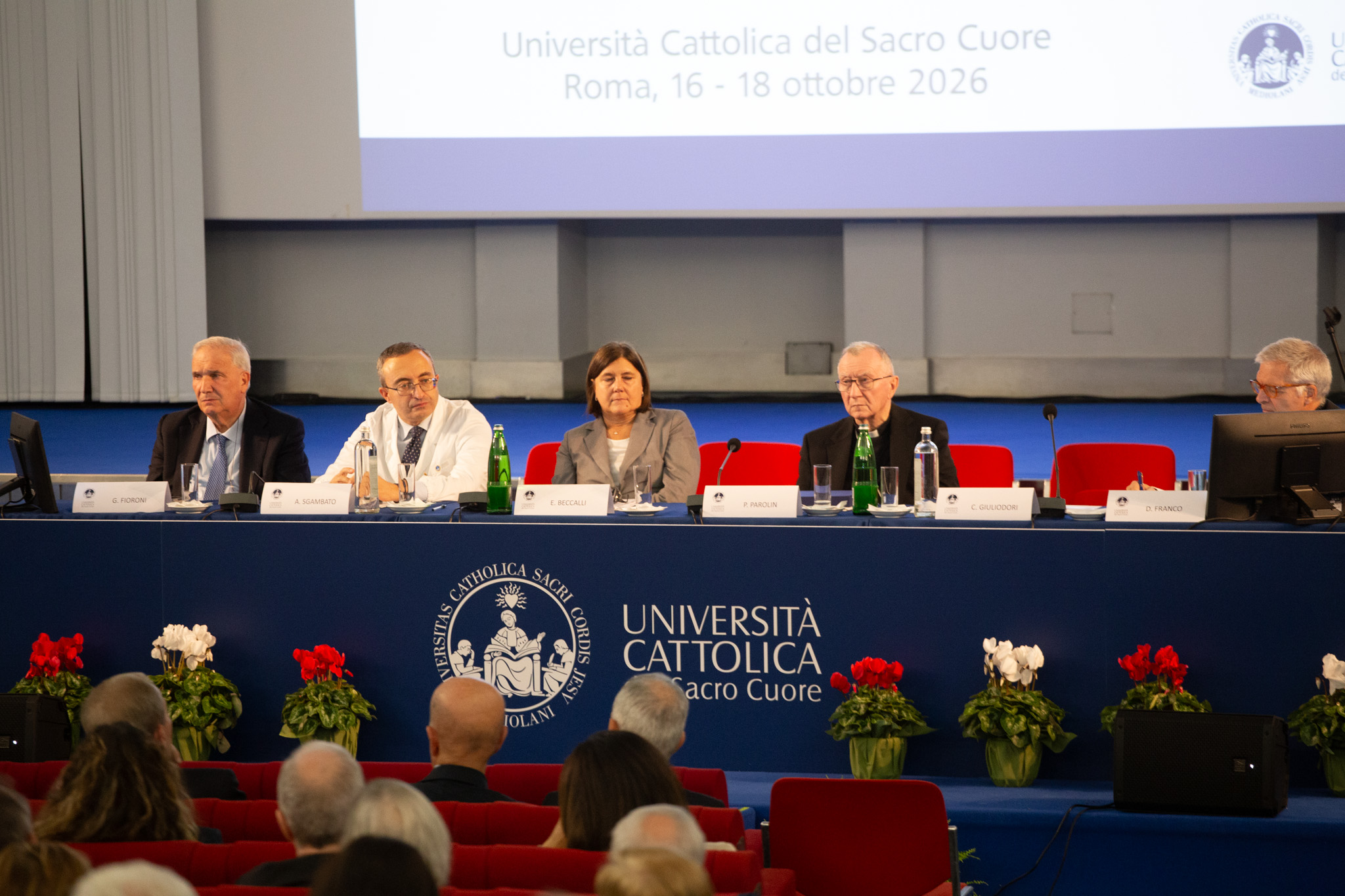
The congress, held at the Rome campus of the Catholic University of the Sacred Heart, opened with a lecture by Vatican Secretary of State Cardinal Pietro Parolin on "the dignity and beauty of procreation in the Church's magisterium."
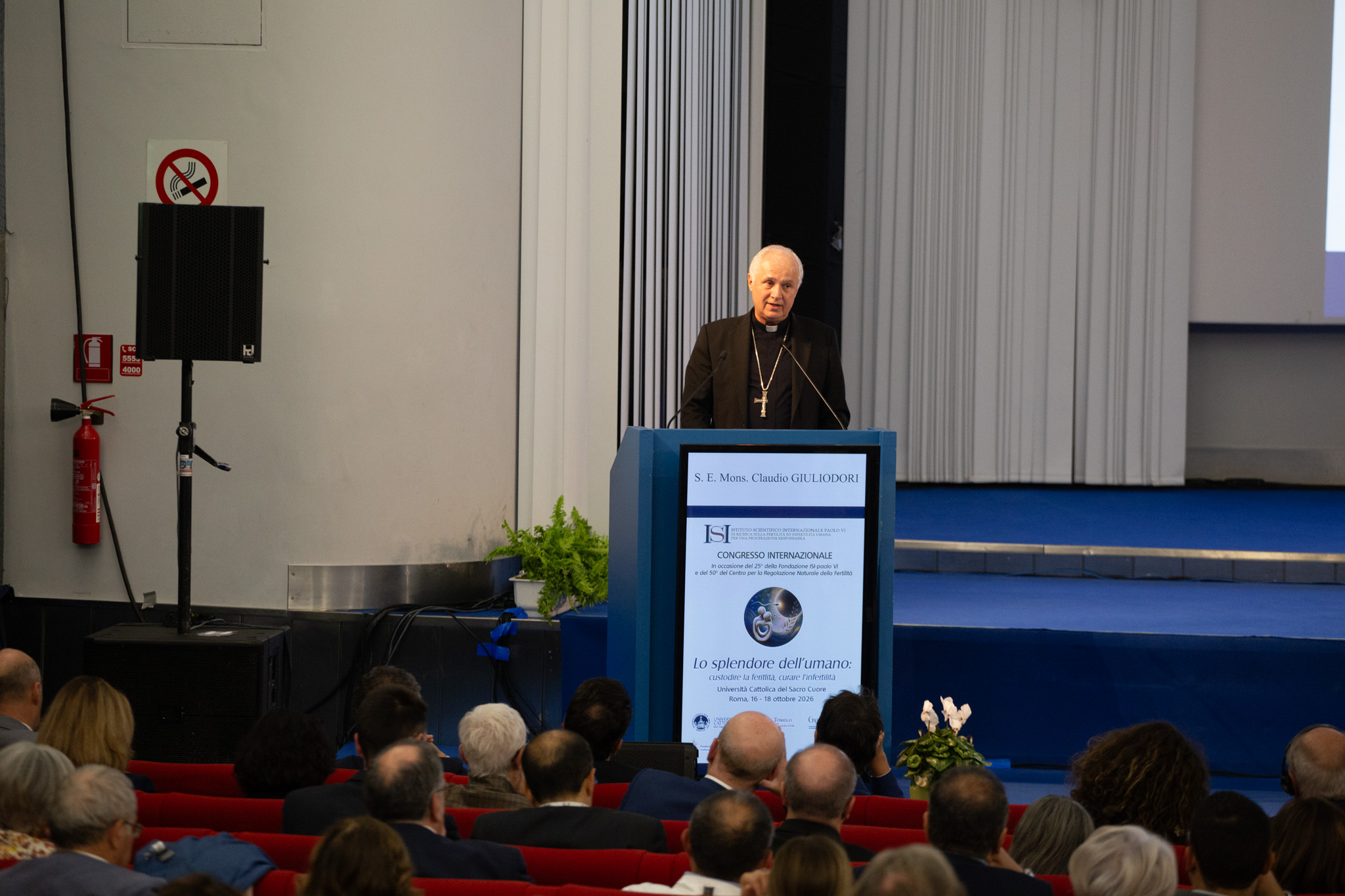
Bishop Claudio Giuliodori, president of the Italy-based Paul VI International Scientific Institute Foundation (ISI) and general ecclesiastical assistant of the Catholic University of the Sacred Heart, warned that the assisted reproductive technology in vitro fertilization (IVF) "removes the generative act from the responsibility of the spouses" and places it in the hands of "doctors and laboratory technicians."
"It raises no small number of ethical questions that, without any hesitation, we move from a procreative act rooted in the gift of mutual love, expressed in becoming one flesh in marriage, to a kind of delegation or subcontracting of the most relevant and meaningful human act, namely the begetting of a child, entrusting it to a process external to the couple and exclusively technical in nature," the prelate said.
Giuliodori also addressed the moral issues surrounding IVF and other assisted reproductive techniques, ranging from the collection of germ cells and AI-assisted selection of gametes to the production, freezing, and possible use of embryos for scientific research.
"We must consider the numerous and complex technical and ethical questions linked to obtaining germ cells, the selection of gametes today through artificial intelligence, the methods of producing embryos according to the various techniques, the number of those who, even after implantation, are subject to reduction or elimination, the cryopreservation of embryos that are not implanted, and their possible use for scientific research," he said.
The prelate emphasized that Italy is estimated to have between 30,000 and 100,000 frozen embryos, while noting that precise figures do not exist. "No one is able to produce exact data, and this is striking," he said, highlighting the "health, legal, economic, and above all ethical" implications of this reality.
According to Giuliodori, the central issue "from an anthropological and ethical, but also existential and social point of view" is that IVF transfers the generation of new life outside the marital relationship.
'Not produced in a laboratory'
On July 25, 1978, Louise Brown, the first child born through assisted reproductive technologies, came into the world. Giuliodori noted that many of these techniques were initially developed in the field of animal reproduction and argued that their application to human generation is morally unacceptable.
"[That] which may be justified in the context of livestock breeding appears wholly inappropriate and ethically unacceptable for human beings, who have the right to be conceived within the exclusive context of their parents' act of love, not produced in a laboratory," he said.
He also lamented that public debate focuses almost exclusively on adults' desire to have children.
"Unfortunately, there is much discussion about the right to have a child by whatever means, but very little about the right of the child to be conceived in a truly human way within the context of conjugal love," he said.
Leo XIV and Donum Vitae
During his remarks, Giuliodori recalled recent teachings from Pope Leo XIV on the dignity of every human life and the need to set ethical limits on technological development.
The president of the ISI Foundation also cited one of the central affirmations of the instruction Donum Vitae, published Feb. 22, 1987, by the then-Congregation for the Doctrine of the Faith and signed by Cardinal Joseph Ratzinger: "What is technically possible is not thereby morally admissible."
Clinical alternatives to artificial fertilization
In the second part of his speech, Giuliodori reviewed the history and mission of the ISI, which was created to offer clinical alternatives to artificial fertilization by treating the underlying causes of infertility.
He highlighted that the institute now operates within the Agostino Gemelli University Hospital Foundation, where it benefits from "all the support necessary for the most advanced research" and from an interdisciplinary approach that enables "highly precise and in-depth diagnoses."
According to Giuliodori, this method offers "the real possibility, already widely documented, of providing concrete answers for eliminating the causes of infertility."
He said that the experience accumulated over 25 years has made ISI an international reference point for couples seeking to address infertility without resorting to artificial fertilization techniques.
"The results achieved, including in terms of pregnancies, exceed in percentage terms those reported by medically assisted reproduction centers," he said.
'The infertility emergency'
Dr. Paola Pellicanò, a physician at the Center for Natural Fertility Regulation at Rome's Catholic University of the Sacred Heart, a consecrated member of the Ordo Virginum (Order of Virgins), and president of the association Donum Vitae, stressed the need to address "the infertility emergency in which we find ourselves" with responses that go beyond the technical or reproductive solutions usually proposed.
In this regard, she noted that recent World Health Organization (WHO) guidelines have begun to recognize the importance of fertility education, the promotion of healthy lifestyles, and respect for the personal convictions of couples.
According to Pellicanò, these recommendations point toward a greater appreciation of knowledge about fertile periods in the female cycle and educational outreach to the wider population.
The specialist recalled that in 1988 the WHO itself published a guide on natural fertility regulation services, defining them as "primarily educational," and emphasized that "the success of these programs depended on the training of qualified instructors."
Response to a cultural and social emergency
During her presentation, Pellicanò linked the work carried out by the Center for Natural Fertility Regulation in Italy with a broader vision of the person and the family.
Its origins date back to 1976, when gynecologist and missionary Dr. Anna Cappella, trained in natural fertility regulation through her collaboration with Drs. John and Evelyn Billings, took charge of a project promoted by the Catholic University of the Sacred Heart with the support of the Holy See and the Italian Bishops' Conference.
That work later led to the creation of a study and research center specializing in natural fertility regulation, which over the years became an international point of reference.
Pellicanò particularly highlighted the center's clinical experience, which has accompanied more than 8,000 couples.
She insisted that fertility should not be viewed solely through the lens of achieving pregnancy: "The passion is not limited to solving the problem of having or not having a child, but embraces the whole of life."
According to Pellicanò, "knowing and understanding fertility allows people to become protagonists of their own decisions" and helps them avoid "a merely passive attitude toward certain interventions or reproductive techniques."

Prevention, responsibility, and generosity
Pellicanò stressed that concepts such as prevention of infertility, responsibility, and generosity are fundamental not only for addressing infertility but also broader phenomena such as the demographic crisis.
"Words such as prevention, but also responsibility and generosity, take on value here, as they are important for addressing the cultural and emotional aspects of infertility and of the decline in birth rates itself," she explained.
She also highlighted the extensive training the network built over the decades, with more than 1,000 instructors of the Billings Ovulation Method in Italy, integrated into international organizations and connected with projects developed on different continents.
The president of Donum Vitae defended a scientific approach that does not lose sight of the human dimension of procreation and medicine.
"Preserving fertility is a scientific vision that places the human person at its center," she said.
In this regard, she recalled that the tradition developed by the center is rooted in the conviction that knowledge of female fertility is a reality inscribed in a woman's very nature and one that can be studied scientifically.
Pellicanò placed this vision in continuity with the teachings of the most recent pontiffs, from St. Paul VI and St. John Paul II to Benedict XVI, Francis, and Leo XIV, who in his encyclical Magnifica Humanitas presents openness to life as an expression of human beauty and dignity.
This story was first published by EWTN News Español, the Spanish-language sister service of EWTN News. It has been translated and adapted by EWTN News English.