ST. LOUIS — Families with young children, religious sisters and brothers, and pilgrims who had traveled to St. Louis filled the Cathedral Basilica of St. Louis Sept. 23 for evening prayer on the eve of the beatification of Archbishop Fulton J. Sheen.
More than 1,000 people gathered for the service, as the cathedral's schola sang the psalms and canticles and Archbishop Mitchell T. Rozanski of the Archdiocese of St. Louis presided. Bishop Robert Barron of Diocese of Winona-Rochester, Minnesota, preached.
Barron began by recalling Sheen's extraordinary influence as a preacher and communicator, including the millions who watched his television programs at the height of his career.
But Barron said he wanted to focus on a different question: What made Sheen "blessed, a saintly man of God"?
His answer, according to Barron, was friendship with Jesus Christ.
From the beginning of his own work in evangelization, Barron said, Sheen had been his "motto and inspiration." Sheen repeatedly insisted that Christianity was not an abstract philosophy or simply a set of moral convictions but a relationship with a living person — Jesus Christ, who told his apostles that he no longer called them servants but friends.
Barron found a window into that friendship in Sheen's autobiography, "Treasure in Clay," particularly in Sheen's reflection on the prophet Isaiah's encounter with God.
The passage offered a template for the spiritual journey, Barron said. It begins with an encounter with the holiness of God, moves through a recognition of one's own unworthiness and ends with a willingness to be sent on mission.
The first movement, he said, is grace.
"Sheen's life was marked through and through by signs of unmerited divine love," Barron said. That grace was closely connected to Sheen's devotion to Mary, whom Scripture describes as "full of grace."
"Mary, as it were, haunts the spiritual life of Fulton Sheen," Barron said.
He traced that devotion from Sheen's baptism at St. Mary Church in El Paso, Illinois, through his priestly ordination in the Cathedral of St. Mary of the Immaculate Conception in Peoria, his devotion to the rosary, and his more than 30 journeys to Lourdes. Sheen went there, Barron recalled, to visit "the woman I love."
For Sheen, Mary was the supreme example of a human being receiving the unmerited love of God.
That understanding of love for God also shaped Sheen's approach to the Eucharist. Barron pointed to Sheen's lifelong commitment to the Holy Hour, when he would spend an uninterrupted hour each day in prayer before the Blessed Sacrament.
Sheen saw the Holy Hour not as a task to be accomplished but as time spent in the presence of Christ. "Looking at the Eucharistic Lord for an hour transforms the heart in a mysterious way," he wrote.
Barron also recalled Sheen's image of the person who faithfully sits before the tabernacle as "like a dog at the master's door ready to see" where the master will send him.
That preparation would lead Sheen to radio and television, where he saw new opportunities to bring the Gospel to a much wider audience. His academic formation, Barron noted, was always directed toward that apostolic purpose. Sheen wanted to bring the Catholic intellectual tradition to bear on the questions of his time while communicating it in ways ordinary people could understand.
He repeatedly heard, Barron said, Christ's command to "go out into the deep."
Sheen answered that call through decades of preaching, writing, broadcasting, and missionary travel. Yet "Treasure in Clay" also reveals the fragility of the person carrying that treasure.
Sheen openly acknowledged his weaknesses, including his enjoyment of titles, prestige, and popularity. "I was popular," Sheen wrote. "I was sought after, I was a friend of both royalty and the masses." Then came the question: "How close was I to the cross?"
For Barron, that honesty was part of Sheen's holiness. The closer a person comes to the holiness of God, he said, the more clearly that person sees his own need for forgiveness and healing.
"God is holy. I am not. Woe is me," Barron quoted Sheen as saying.
Sheen's sufferings, including those that came from within and outside the Church, became part of that purification. As Sheen put it, "Since I would not take up the cross, the Lord would lay it on my back."
Through that process, Barron said, Sheen became more deeply conformed to Christ and more ready to be sent. Those themes were reflected in the way people at the cathedral spoke about Sheen and his continuing influence.
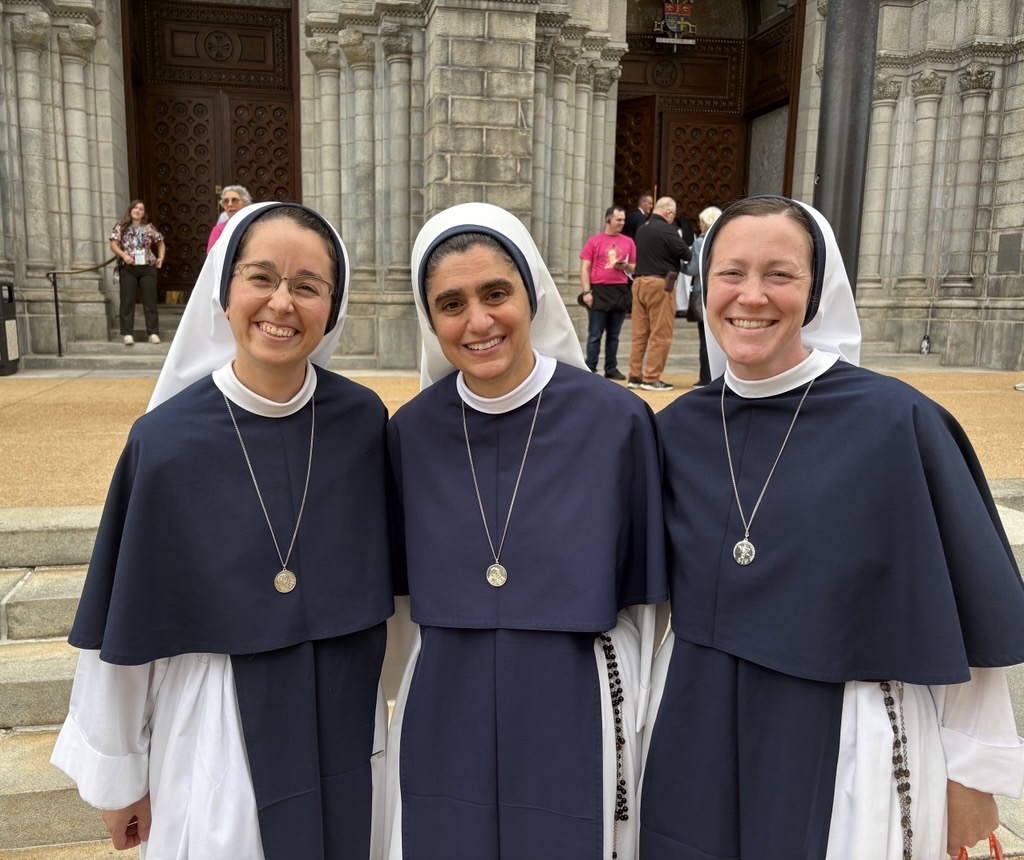
Sister of Life Maria Augustine, who traveled from New York with other members of her community, called Sheen "a great teacher and a great evangelist."
"We look to him for his inspiration and his intercession as we go out into the world," she said, "to proclaim the good news of human life and love."
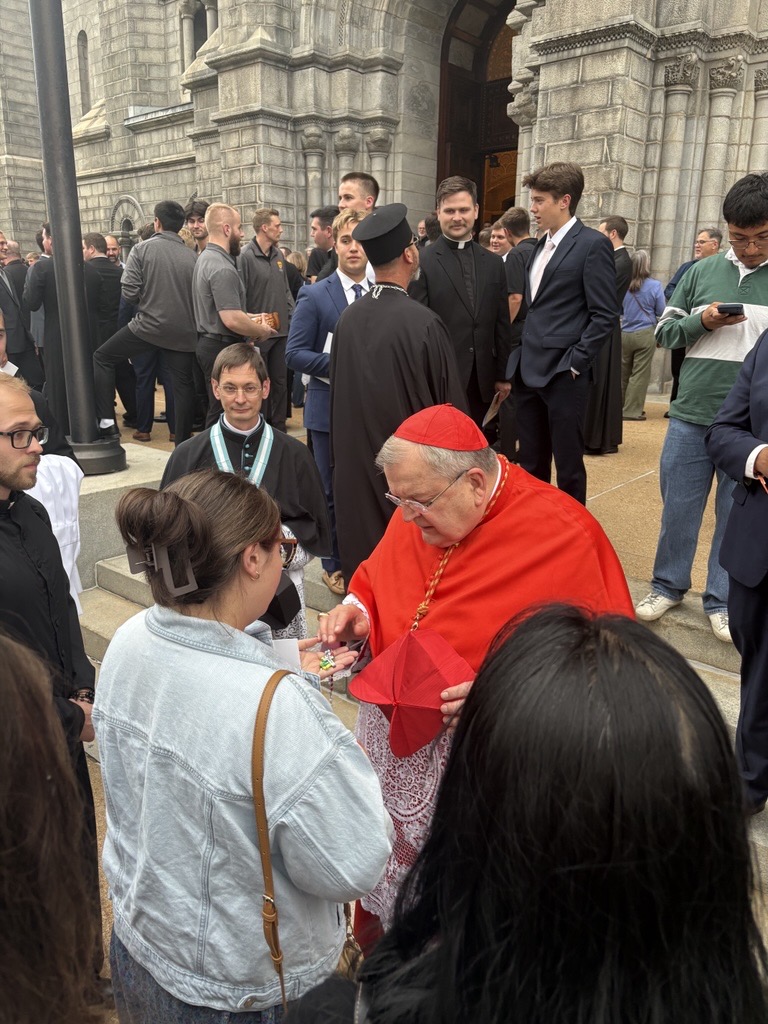
For Cardinal Raymond Burke, Sheen's example has particular significance for the priesthood. Burke said Sheen inspired his own priestly vocation, and he continues to read Sheen today to deepen his "knowledge and love of the holy priesthood."
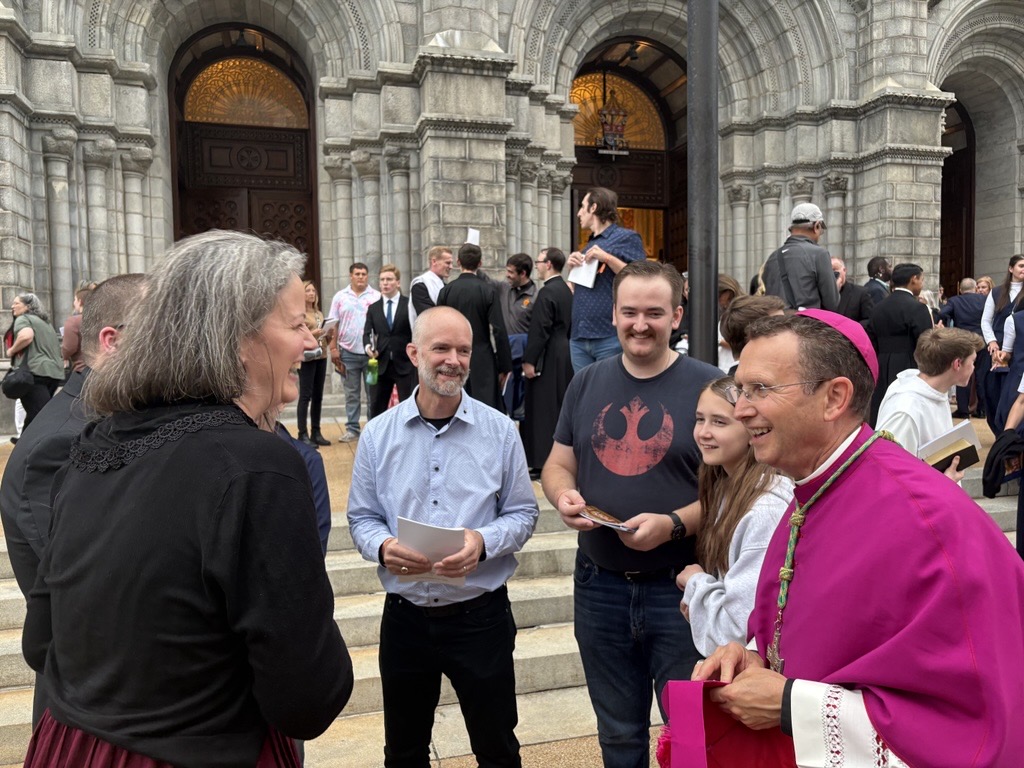
Bishop Andrew Cozzens of Crookston, Minnesota, pointed to Sheen's deep Eucharistic devotion as the source of his evangelizing work.
"To me, Fulton Sheen is a man who was so deeply in love with Jesus in the Eucharist, that he just let that shine out in everything that he does," Cozzens told EWTN News. "And that's what I try to do too."
Barron returned at the end of his homily to the Church's continuing work of evangelization. The beatification, he said, does not make Sheen any greater; rather, it brings him "in a powerful way before the attention of the world."
Those seeking "fresh language" to bring the Gospel to modern culture, Barron said, are indebted to Sheen. So are those who preach the "ancient faith with a heart on fire" and those willing to use the communications technologies available to them.
For them, Barron said, Sheen is "a powerful heavenly friend and intercessor."
EWTN will provide live coverage of the beatification of Archbishop Fulton Sheen on Sept. 24, with broadcast coverage beginning at 10 a.m. ET with a "Beatification Pre-Show" from The Dome at America's Center in St. Louis, followed by the "Mass of Beatification" at 2:30 p.m. ET. Live updates will also be available through the EWTN News live blog.