Bishop Fredrik Hansen of Oslo, Norway, has announced that he will open a canonization cause for Sigrid Undset, setting one of Scandinavia's most celebrated literary figures on the path toward possible sainthood and giving the Catholic Church in Norway a prolific native candidate for holiness.
Hansen made the announcement during Mass on the island of Selja, off the west coast of Norway, on July 8. As pilgrims gathered on Selja to celebrate the feast of St. Sunniva — 100 years after Undset herself first visited the island — Hansen presented her not simply as a Nobel laureate or one of Norway's greatest writers but as a Catholic convert whose life of faith, suffering, intellectual depth, and moral seriousness still speaks powerfully to the Church in a secular age.
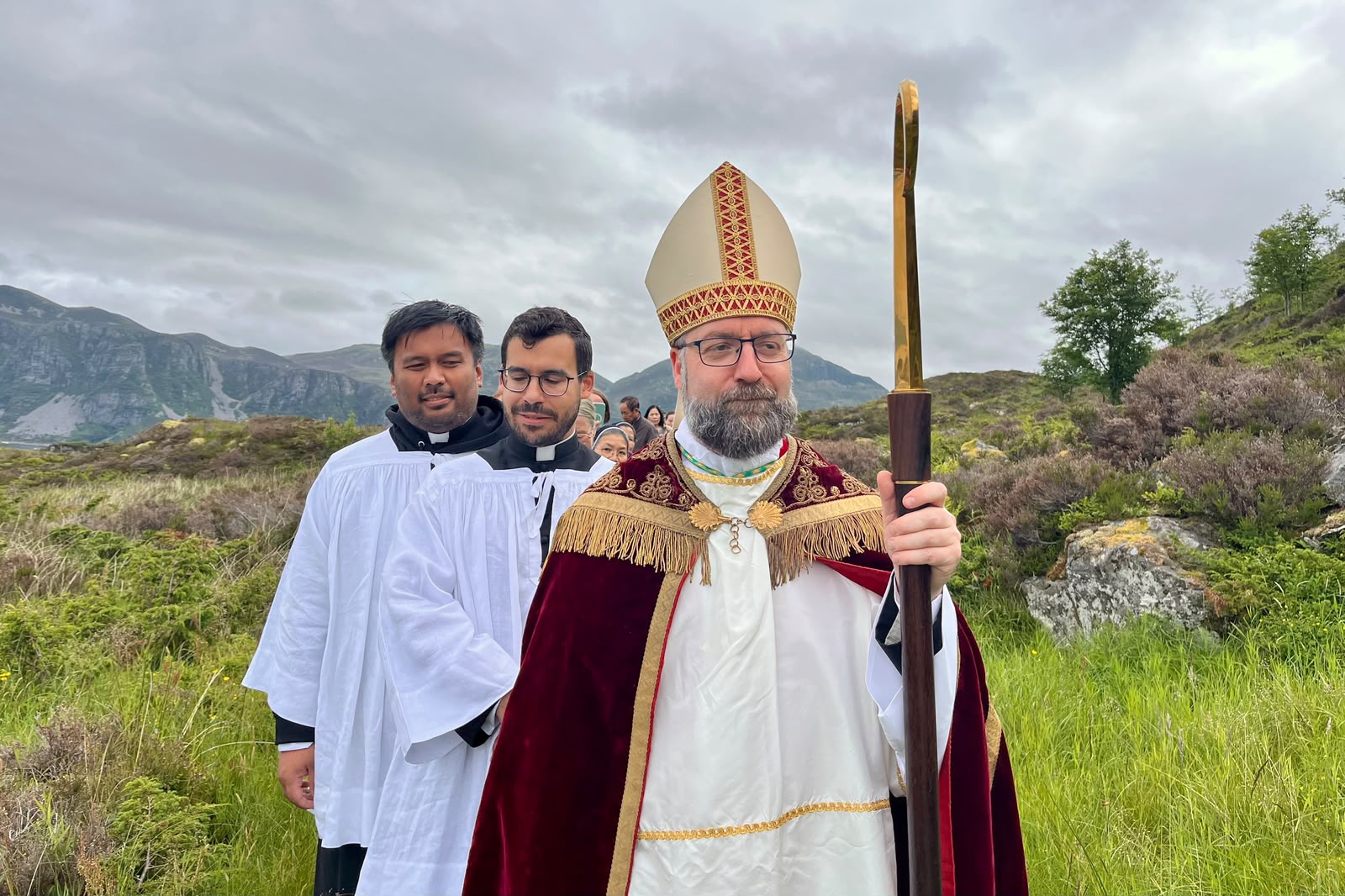
The move is a notable one for Norway's small Catholic minority. Undset, a literary giant of Scandinavian and Norwegian culture, lived a life of literary brilliance, personal turbulence reminiscent of St. Augustine, and opposition to totalitarianism — all while remaining an uncompromising witness to Catholicism.
Opening of her cause
Hansen framed Undset first and foremost not as a literary icon but as a model of Christian holiness. "She is far more than an author and Nobel Prize laureate," he said. "For us, she is a model of Christian faith, of a life lived in virtue, and of the pursuit of holiness."
Hansen situated the decision within the Church's broader teaching that holiness is the calling of every Christian, stressing that sanctity is not reserved to a select few.
In Undset, he suggested, the Catholic Church in Norway has a concrete example of that calling lived out in public life, suffering, motherhood, and conversion.
He pointed to several aspects of her witness: her defense of the Catholic faith, her opposition to Nazism and her work for Norway's freedom during the war, and her "constant and practical concern for the poor." He also highlighted her care for her disabled daughter, which he described as part of her "commitment to life and to the sanctity of life."
Undset's books, Hansen added, have shaped generations of believers, inspiring them to live in Christ and keeping alive the witness of Norway's medieval saints.
Observers have noted that Undset's early life does not fit a conventional image of sanctity. Her path was marked by personal turmoil, public controversy, and choices that drew social scandal. Yet supporters of the cause point precisely to that complexity as part of her witness.
She did not lead a life of moral perfection from the outset. Rather, she walked a path of gradual conversion, repentance, and a growing commitment to Catholicism.
In that sense her story reflects the conviction that holiness is not the absence of weakness or mistakes but the work of God's grace in a life, transforming it over time in the pursuit of holiness.
Undset's story
Born in Denmark in 1882 and raised in Norway by largely atheist parents, Undset went to work as a secretary at 16 after her father died and the family fell into financial hardship. She began writing during these years.
At 25 she made her literary debut with "Fru Marta Oulie," a novel about adultery whose opening line — "I have been unfaithful to my husband" — scandalized Norway even as it thrust her into the public eye.
Literary historians have noted that her life was unconventional for a woman of her time. Undset smoked, drank, swore, and was known for a sharp tongue and a strong personality.
While in Rome, she began a relationship with the painter Anders Castus Svarstad while he was still married, and later married him. Together they had three children, one of whom was disabled, and Undset also helped raise Svarstad's children from his first marriage.
In 1924, at the age of 42, Undset entered the Catholic Church, a decision that was controversial in overwhelmingly Lutheran Norway. Critics saw it as a step backward, but she embraced the faith publicly, later becoming a Lay Dominican and writing openly about her conversion in essays and fiction.
Some Norwegian critics dismissed her later works as "Catholic propaganda," reflecting unease that one of the country's most prominent writers had embraced Catholicism.
She also admired G.K. Chesterton; she reportedly met him and translated some of his work into Norwegian.
Four years after her conversion, in 1928, she won the Nobel Prize in literature, recognized for her depictions of medieval Scandinavia and best known for "Kristin Lavransdatter," the historical trilogy that secured her international reputation.
The novels were steeped in medieval Christianity and its themes of sin, grace, suffering, and repentance — concerns that increasingly mirrored her own spiritual journey.
Undset used her writing and her standing as one of Scandinavia's most prominent Catholic voices to defend Christian belief and to challenge the ideological currents reshaping Europe. An early critic of Adolf Hitler and Nazism, she fled Nazi-occupied Norway during the Second World War and eventually reached the United States, where she spoke out against totalitarianism and in defense of her homeland.
An inspiring figure for Norway's Catholic future
Hansen's decision also comes as the Catholic Church in Norway continues to grow through immigration and adult conversions, even as it seeks deeper roots in the country's own history.
If the cause advances, Undset could emerge not merely as a celebrated novelist under ecclesial study but as a singular model of holiness for the modern age: flawed, formidable, intellectually serious, and ultimately transformed by grace into a witness to Christ.
The diocesan phase of Undset's cause is expected to formally open this fall, a step Hansen said is driven by his conviction that her witness reaches far beyond Norway's literary history.
"I believe that Sigrid Undset's life and work have much to offer both the Church in Norway and the universal Church," he said — a judgment that now places Undset on the long path toward possible sainthood.