Despite a summer heat wave, about 500 Catholics from Pakistan's Punjab province traveled to the ancient city of Taxila to mark the feast of St. Thomas the Apostle at a site long associated with the apostle's mission in the Indian subcontinent.
The faithful from St. Francis Xavier Parish in Gujranwala arrived in eight buses on July 4 at the archaeological site of Sirkap, where Christian tradition holds that St. Thomas preached at the court of King Gondophares before continuing his mission to India.
"The Gospel reached the far corners of the world through the companions of Christ, and that same mission has been entrusted to us," Father Yousaf Yaqoob, the parish priest who celebrated the Mass, told the pilgrims.
He encouraged the faithful to visit Christian pilgrimage sites across Pakistan.
"The relics and even the air at pilgrimage sites are a source of blessing. In this digital age, people speak of the Gospel but have largely forgotten the great sacrifices and miracles behind it," he said. "A nation that forgets its history is forgotten by history."
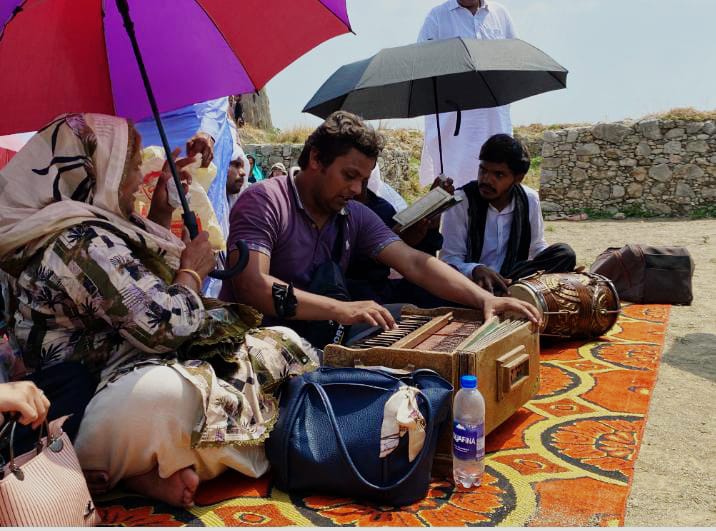
After the Mass, pilgrims toured the Taxila Museum and the sacred sites at Sirkap, through which, according to Christian tradition, St. Thomas passed in the first century while proclaiming the Gospel in the Indo-Parthian kingdom ruled by King Gondophares.
Why Taxila draws Christian pilgrims
The Acts of Thomas, an early Syriac Christian text, recounts that the king gave the apostle money to build a royal palace. Instead, Thomas distributed the money among the poor. Enraged, the king ordered his execution. However, after the king's brother, Gad, miraculously returned to life and described a heavenly palace built through the apostle's charity, Gondophares pardoned Thomas and, according to tradition, embraced Christianity along with many of his subjects.
The Punjab Archaeology Department also preserves a local tradition that St. Thomas built a 3-foot-high stone throne at Sirkap and preached there for four decades. Two brick baptismal basins near the throne are still used for infant and adult baptisms.
According to archaeology officials, more than 25,000 visitors had visited the site by July 4.
The parish charged each pilgrim 1,700 Pakistani rupees (about $6), covering transportation, refreshments, and visits to Sirkap and Shahdara Valley, a popular tourist destination in the Margalla Hills near Islamabad.
Braving the summer heat
Sagar Rahat, the parish choir leader, joined fellow pilgrims in collecting small twigs and stones from around the stone throne.
"We keep them as souvenirs and blessings. Our hearts are filled with pride, passion, and honor simply by standing at a place visited by one of Christ's apostles," the 34-year-old told EWTN News.
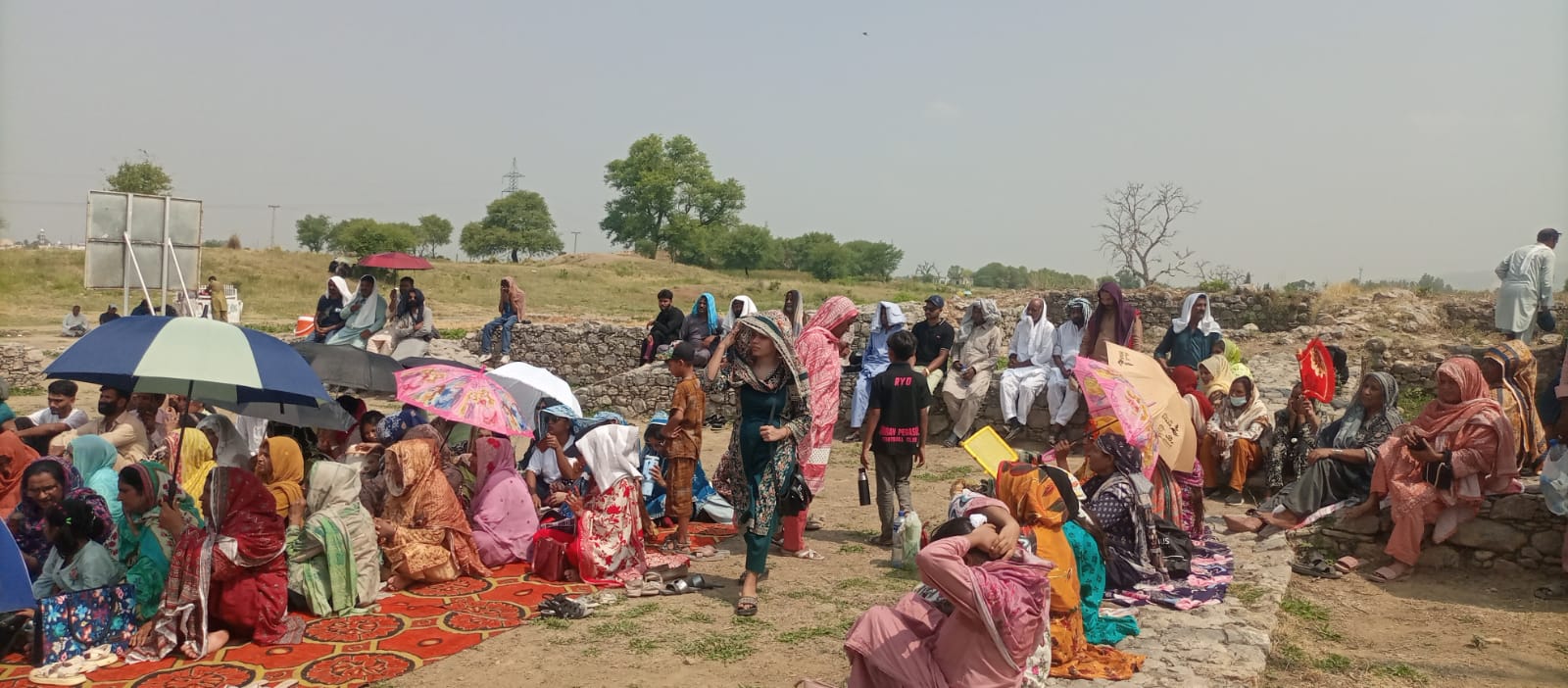
Rahat, who has made the pilgrimage annually for the past decade, said the lack of basic facilities continues to trouble visitors. With the mercury climbing to 99 degrees Fahrenheit (37 degrees Celsius), the water in pilgrims' bottles quickly turned warm under the blazing sun.
"There is no shade, so we have to bring umbrellas. There are no water coolers, and the water in our bottles becomes warm in the direct sunlight," he said.
In a July 2 message marking the feast, Archbishop Joseph Arshad of Islamabad-Rawalpindi said St. Thomas' witness continues to inspire Christians, especially young people and families, to remain courageous in bearing witness to Christ.
"The example of St. Thomas invites us to profess our faith courageously, remain committed to sincerity and sacrifice, continue proclaiming the good news, and persevere despite opposition and hardship," the archbishop said.
Taxila, a UNESCO World Heritage Site renowned for its Buddhist and Gandharan ruins, also occupies a unique place in Christian tradition because of its association with St. Thomas and King Gondophares.
Although historians continue to debate the historical details of the apostle's visit, the tradition remains an important part of South Asia's Christian heritage.
In 1935, a farmer plowing a field near the ruins discovered a cross that was later presented to the Anglican bishop of Lahore. The relic, known as the Taxila Cross, is now preserved in the Cathedral Church of the Resurrection in Lahore, the Punjab capital.