Sometimes clad in alb and chasuble, other times in a wrestling costume: Such was the life of the Mexican priest Sergio Gutiérrez Benítez, better known as "Fray Tormenta" ("Friar Storm"), a man who celebrated Mass by day and wrestled in a mask by night.
With the goal of sustaining an orphanage that provided a home for dozens of children, Gutiérrez decided to enter the world of freestyle wrestling, which combines sport and spectacle and is deeply rooted in Mexican popular culture.
< async defer crossorigin="anonymous" src="https://connect.facebook.net/en_US/sdk.js#xfbml=1&version=v18.0">The name of Friar Storm echoes through wrestling arenas from Mexico to Japan, but his story achieved global fame thanks to a 2006 film inspired by him: "Nacho Libre," starring Jack Black (though the priest has always been quick to clarify that the movie is not his biography, because, he said, "I never stalked a nun").
Today, at the age of 80, Friar Storm is waging a different kind of battle. He still celebrates Mass occasionally, and facing advancing blindness as well as the ailments typical of old age, he supports himself by selling wrestling-themed merchandise.
A life marked by violence
Gutiérrez was born in 1945 in a town in the state of Hidalgo, although he grew up in Mexico City near the Our Lady of Guadalupe Basilica. As he told ACI Prensa, the Spanish-language sister service of EWTN News, it was a neighborhood "of kicks and punches," a place where violence was a daily reality.
There he fell in with "gang kids" who introduced him to the world of drugs. That addiction, he confessed with sadness, led him to a life of crime; he was even arrested for homicide, but he managed to prove his innocence.
Upon reaching adulthood, he wanted to leave that life behind. He sought help at a church, and this led him to consider a priestly vocation. "I said to myself: 'If there weren't cool priests, good guys, really down-to-earth, how many of us wouldn't change?'"
Gutiérrez recounted that he found spiritual support in a religious brother from the Mercedarian order who took him to a detox clinic and subsequently helped him enter the Order of Poor Regular Clerics of the Mother of God of the Pious Schools, known as the Piarists, where he completed his novitiate around 1962.
Before professing the vows of poverty, chastity, and obedience, his formator asked the novices to share their life stories. Gutiérrez recalled feeling afraid that the others would discover who he truly was and he considered running away. Then his formator told him that he need not fear, because "it is precisely people like you that the Church needs."
While serving as a deacon in the port of Veracruz, where he taught classes and assisted at a parish, he recalled that the young people told him: "We don't want priests here." He won their friendship over time and was ordained a priest there on May 26, 1973.
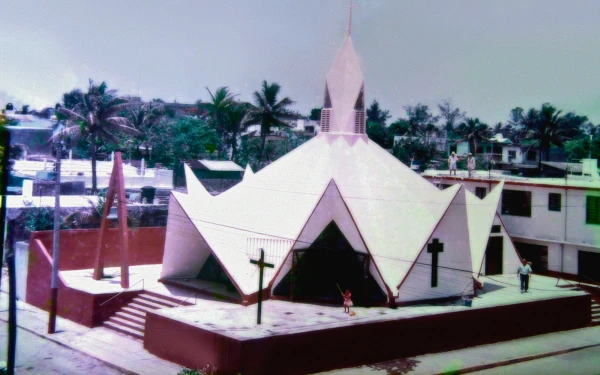
Thus began his ministry, marked by his work helping young people whom he affectionately called his "cubs," kids who accompanied him wherever he went. His bond with them was such that, even when he was transferred to other parishes, they would follow him, and he would take it upon himself to find them temporary homes.
Around 1976, acting on the suggestion of a Piarist superior, he decided to leave the order and seek out a bishop who would accept him "along with all my 'chamacos'" (as children are known in Mexico).
In the state of Mexico in the Diocese of Texcoco, he was welcomed by Bishop Magín C. Torreblanca Reyes, who gave him a chapel and the opportunity to embark on his dream of building a children's home, a project he began with 15 youths. "The most I ever had living with me at one time was 350," he noted.
From the altar to the ring: The origins of Friar Storm
With no money to build his orphanage, he recalled an old inspiration: the 1962 film "El Señor Tormenta" ("Mr. Storm"), in which a priest becomes a masked wrestler. He originally fantasized about becoming a boxer, fighting a couple of bouts, earning $2 million, and using that money to build the shelter.
He couldn't find anyone to teach him to box, however, but it was in that search that he met José Ramírez, "El Líder" ("The Leader"), an amateur wrestler who taught him how to do basic moves.
To launch his wrestling career, he adopted the name of the character who had inspired him. "Mr. Storm was a 'mister'; I'm a friar so I took the name Friar Storm," he recalled. He then went to see Ranulfo López, one of the most prominent mask-makers in the industry, who helped him design his mask.
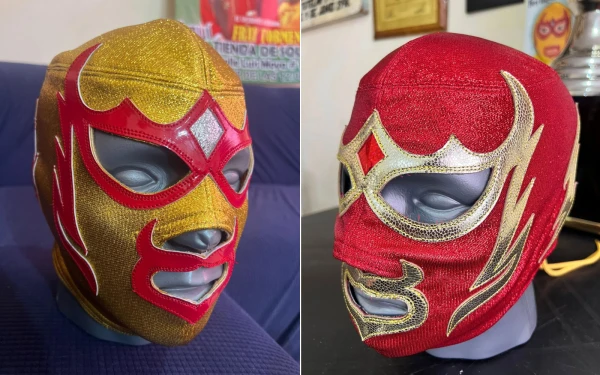
"The yellow signifies the quick reflexes that Friar Storm sought to display in the ring; the red signifies the blood which he is willing to shed for his orphans' home, and [at the center of the mask] the diamond, to attain eternal life," he recalled.
In his first fight in 1977, he earned a mere handful of pesos, yet he didn't hesitate to donate the entire sum to lay the foundations for the "Casa Hogar de los Cachorros" ("Home for the Cubs").
From modest neighborhood arenas, he gradually climbed the ranks to reach the most professional venues. His name began to spread by word of mouth, though his career did not truly take off until 1983, when the wrestler "Hurricane Ramírez" revealed his true identity, a secret he had kept guarded for six years.
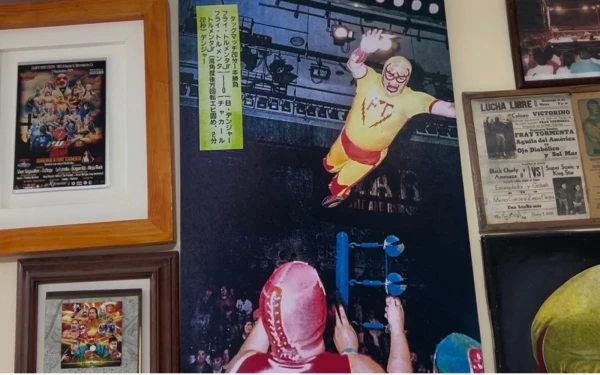
On one occasion "Hurricane" challenged Gutiérrez to a match, but he declined because he had to officiate a wedding. Much to Gutiérrez's disbelief, he showed up on the day of the religious ceremony, unmasked, among those in attendance.
"He winked at me, and I winked back. The wedding Mass ended; I went to the sacristy, and there he was. He said to me: 'You really are a priest — and those scoundrels [the wrestlers], look how they beat you up!'
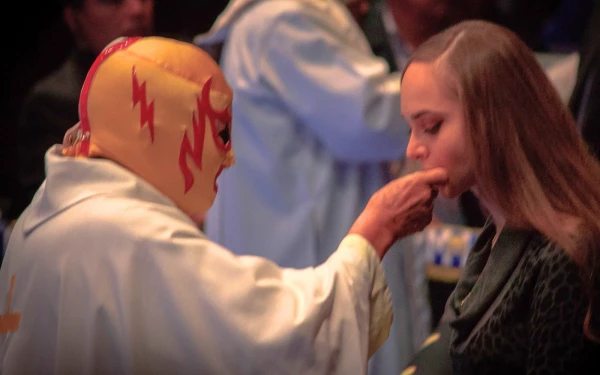
From then on, everyone wanted to see the man who, in addition to delivering homilies, delivered blows in the ring. His fame grew, and with it, so did his apostolate within the world of freestyle wrestling. "I began baptizing [the other wrestlers'] children; I began hearing their confessions and [giving them] their first Communions," he recalled.
"I would be leaving after a match, and even the wrestlers themselves would say to me: 'Won't you give me your blessing, Father? Where can I find you? I'd like to go to confession,'" the priest related.
Although inside the ring "they showed me no mercy since I was already among the stars — everyone wanted to beat Friar Storm," outside the ring, "they never once disrespected me."
A legacy that impacted lives
Although Gutiérrez admitted he did not understand how he managed to balance his life — juggling his wrestling career, the children's home, and the priesthood — he attributes it all to divine providence. "God helped me a great deal," he affirmed.
"It was very difficult for me because for instance I would finish wrestling at 10 or 11 o'clock at night, and then I would drive back from wherever I happened to be. I would arrive just in time to celebrate [Mass] on Monday morning."
With a smile, he declared: "No one can tell you that there was no Mass because I went off to wrestle."
Among the many children he helped was "Storm Jr.," who arrived at the orphanage when he was barely 12 years old, hailing from a small town in the state of Nayarit. In an interview with ACI Prensa, he recalled: "We would sleep three, four, or five to a room or sometimes on the floor."
Instagram post< async defer src="//www.instagram.com/embed.js">
He, too, wanted to dedicate himself to professional wrestling. In doing so, he gained not only a mentor but also a close friend, a bond that has endured ever since, as the two now live together: "Since he is getting on in years and is quite elderly, there is no one to look after him but me."
Currently, both men support themselves by selling official Friar Storm merchandise such as keychains, masks, and other items to attendees at wrestling events.
"Storm Jr." said he feels a great sense of responsibility "because I bear this name and have a godfather, a very famous mentor like Friar Storm."
From the orphanage, which Gutiérrez eventually sold to pay for the university studies of his "cubs," came three doctors, 16 teachers, two accountants, 20 computer technicians, 13 lawyers, and a priest. In addition, he sponsored several young wrestlers.
One of them is Father "Fuerza Divina" ("Divine Force"). Although he didn't live in the orphanage, he was inspired by the priest's example. Today, he combines his priestly ministry with professional wrestling. In the courtyard of his parish in Mexico City, he installed a small wrestling ring where young people train while simultaneously receiving spiritual formation.
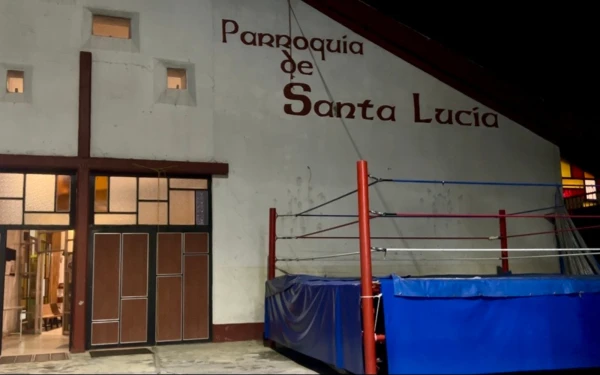
He shared with ACI Prensa that he uses that ring "not only to give them actual wrestling lessons but also to impart a message about values, a message of evangelization."
"Thanks to this, many are drawing closer to the parish. Many of them are leaving negative things behind. Many of them are behaving better, both with their families and in their own personal lives," Father "Divine Force" said.
The story of Friar Storm has inspired films, vocations, and hundreds of lives. Today, at 80 years old, the old wrestler lives an austere life, yet one with a heart full of gratitude. "I wrestled with a single objective: that everything I earned would go to the children's home... I never did get that $2 million, but I do want to say that I am proud."
And if he had to choose between the wrestling ring and the altar, his choice is clear: "Friar Storm would never have existed had I not been a priest."
This story was first published by ACI Prensa, the Spanish-language sister service of EWTN News. It has been translated and adapted by EWTN News English.