Religious Liberty commissioners met for the final scheduled meeting and urged that the commission continue to "persevere in monitoring" threats to religious liberty.
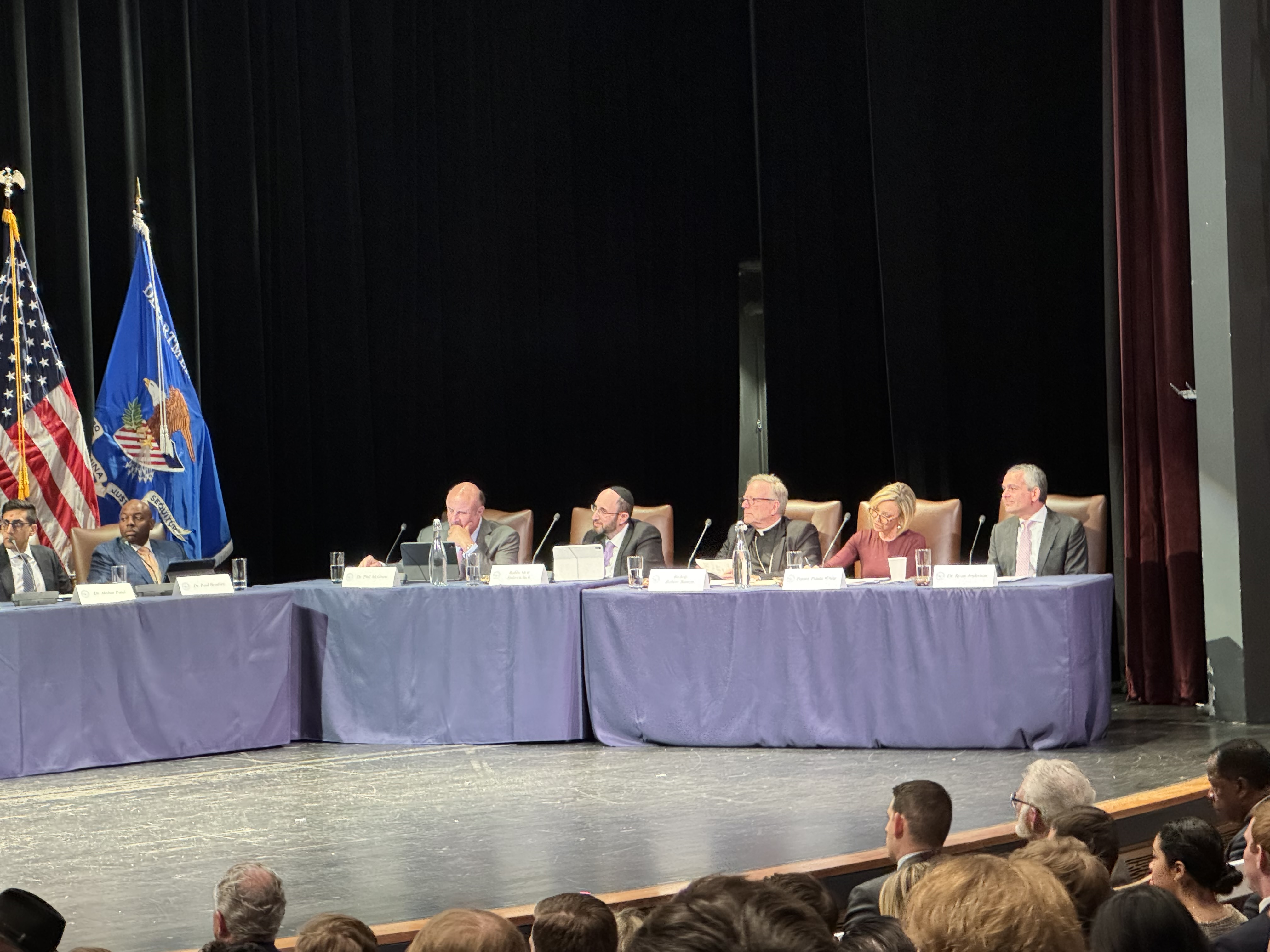
Chair Texas Lt. Gov. Dan Patrick and Vice Chair Ben Carson hosted the April 13 meeting with members Ryan Anderson; Bishop Robert Barron of Winona-Rochester, Minnesota; and Allyson Ho among others on the panel that was created by President Donald Trump to advocate for freedom of religious belief.
They discussed recommendations to Trump on how to protect religious freedom and reflected on the past year of sessions. While the hearing was the last scheduled meeting, many proposed that it continue to meet in some capacity as "threats to religious freedom both at home and abroad are not disappearing anytime soon," Barron said.
Reiterating a statement he said at the first hearing, Barron said: "The principal enemy of religious liberty in our country is what I call the ideology of self invention."
"This is the philosophical program that denies the objectivity of moral values and the stability of human nature, and which proposes consequently that individual choice alone is the determiner of purpose and meaning," he said.
"This dictatorship of relativism has taken hold in many of our institutions of government, education, and health care and its advocates correctly recognize that their most important intellectual opponents are precisely those who subscribe to traditional religion," he said.
"It's no exaggeration to say that the proponents of the culture of self invention want religion out of the pivotal institutions of our society," he said.
"This philosophical opposition manifests itself in a number of concrete ways," Barron said. He detailed "the anti-religious violence that's been increasing dramatically in our country over the past five to 10 years," including attacks on churches, statues, and religious peoples.
"In regard to health care, the culture of self invention expresses itself in an aggressive attitude toward those physicians and nurses who refuse on religious grounds to participate in certain medical procedures," he said.
It is seen in "mandates regarding abortion and contraception, IVF insurance mandates to which Catholics strenuously object, and the requirement to perform so-called gender transition surgeries," Barron said.
Also, "under this health care rubric, we should continue to advocate for pro-life demonstrators who simply want the right to pray at sites where abortions are being performed," Barron said. Criminalizing such righteous activity is a gross violation of religious liberty, he said.
Barron detailed the need to protect religious social service organizations, including Catholic Charities, promote parents as most important educators of their children, and never require priests to break the seal of confession because it is a "gross violation of the free exercise clause of the First Amendment."
Barron also noted the need to continue to work against the rise of antisemitism, which is "encouraged by figures on both the left and the right sides of the political spectrum."
The bishop concluded by addressing immigration, saying the Church "insists that those Catholics who are incarcerated in connection to immigration violations have a right to humane treatment and access to the sacraments," he said.
Catholics who are incarcerated in connection to immigration violations have a right to humane treatment and access to the sacraments.
Bishop Robert BarronMember, Religious Liberty Commission
"I … urge the president to allow this commission to continue in some form going forward," Barron said. He added: "I believe it's very much in the national interest to persevere in monitoring them."
"Yes, we would like to continue," Patrick said in agreement. "Our charter expires in a couple of months, and I think if we all sent a letter and signed it to the president, we'd like to continue to monitor the outcome and to continue to have hearings as needed as stories break and news breaks would be a great privilege."
Protection of faith-based organizations
At the final session, the commission also welcomed two panels of witnesses to discuss how religious liberty has facilitated human flourishing in American history and how faith communities help to combat problems facing the U.S. today.
The panel included testimony from Sister Mary Elizabeth, SV, a Sister of Life ministering to women and children in need, who spoke about the important work faith ministries accomplish and the threats facing them today.
"Ours is just one of thousands of religious ministries seeking to be such a light in the world to create a society in which people are cared for, valued, and protected," Sister Mary Elizabeth said.
The Sisters of Life engage "in a variety of works in order to share this love" through ministering to women and children in need, helping women facing crisis pregnancies, and assisting those who are recovering from abortion, she said.
She detailed legal issues the sisters have faced including in 2022, when "the state of New York passed a law targeting our ministry to pregnant women," she said. "It allowed government officials to force pregnancy centers, but only those that do not perform abortion, to turn over internal documents, including sensitive information about the women we serve."
She also addressed the "dangerous" situation facing the Dominican Sisters of Hawthorne in New York who have provided comfort and nursing for patients with incurable cancer for 125 years, but the government is warning them about restricting rooms and bathrooms to one sex and failing to use preferred personal pronouns for transgender patients.
"Jesus said, 'Whatsoever you do to the least of these, you do to me.' So our religion actually impels us forth to charitable service to others," she said.