Pope Leo XIV wants to travel to Jerusalem in 2033 to commemorate the 2,000th anniversary of the passion, death, and resurrection of Christ. The Jubilee of Redemption is an event that is shaping up to be a historic opportunity to advance toward the full and visible unity of Christians.
However, the main obstacle to this goal remains the rift between the Russian Orthodox Patriarchate and the Patriarchate of Constantinople, an expert told ACI Prensa, the Spanish-language sister service of EWTN News.
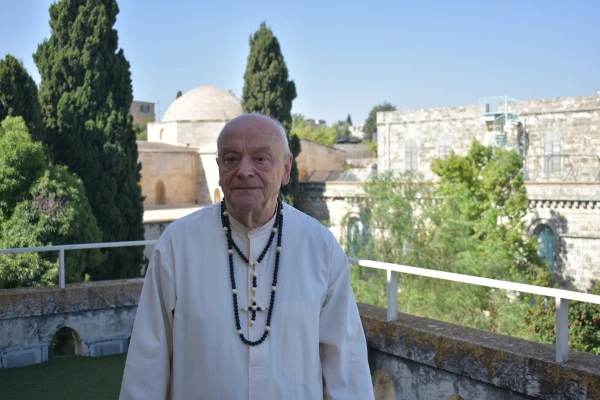
Father Frans Bouwen, a missionary of the Society of Missionaries of Africa — known as the White Fathers — and an expert in ecumenical dialogue, explained the complexity of the situation: "Moscow currently refuses to participate in ecumenical meetings where Constantinople is present, which also conditions its participation and that of the local churches aligned with it."
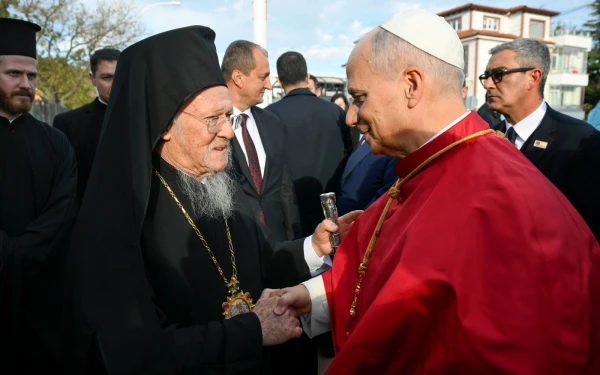
The future ecumenical event, framed within the bimillennial Jubilee of the Redemption, was announced by the Vatican after the ecumenical meeting in which the pontiff participated during his trip to Turkey held at Mor Ephrem Syriac Orthodox Church in Istanbul.
That meeting was also attended by representatives of the Eastern Orthodox Churches, the Oriental Orthodox Churches, and other Christian communions and ecumenical organizations. Among the participants were also envoys from the Anglican Communion, the Lutheran World Federation, the Baptist World Alliance, the World Evangelical Alliance, and the World Council of Churches.
However, the Russian Orthodox were absent. As revealed by Swiss Cardinal Kurt Koch, prefect of the Dicastery for Promoting Christian Unity, in an interview with Crux, the patriarchate of Constantinople did not invite the Russian Orthodox Church.
The decision, he explained, was to invite the oldest Orthodox churches, which include the patriarchates of Constantinople, Alexandria, Antioch, and Jerusalem.
"Catholics invite Catholics, and Orthodox invite Orthodox," he said. "The decision not to invite the largest Orthodox church in the world was theirs to make, and I respect the decision of the Orthodox."
There are still seven years until 2033, and many things can change, both in the ecumenical and geopolitical spheres. In any case, for Bouwen, for the 2033 pilgrimage to fulfill its objective and leave no one behind, the authentic participation of all the churches will be essential.
"The specific paths of preparation must be studied and decided together, ecumenically, following a synodal approach, seeking to actively involve as many churches as possible. It is essential that contacts be established between the churches as soon as possible, creating working groups at both the local and global levels. Perhaps a preparation in different stages, as the Catholic Church did for the Jubilee of the Year 2000, would be advisable," explained the priest, who has been in Jerusalem for over 40 years.
Ecumenical dialogue with Rome has progressed in recent years, but the situation within Orthodoxy is complicated.
New rift over Ukraine
The turning point came in 2018 when Bartholomew I granted autocephaly (self-governance) to the Orthodox Church of Ukraine, separating it from being under the Moscow Patriarchate. Patriarch Kirill considered the move meddling and broke off Eucharistic communion with Constantinople, opening a rift that persists to this day.
The conflict has intensified, in part, due to Kirill's support for the Russian invasion of Ukraine, prompting Russian warnings of potentially even more drastic measures.
For Bouwen, this rupture is not theological in nature but rather canonical and geopolitical, linked above all to the status of the Orthodox Church of Ukraine. "Russia considers Kyiv to be the place of its baptism and its birthplace, [with the baptism of Vladimir, Grand Prince of Kyivan Rus' and his subjects in 988] and does not accept that it should come under another jurisdiction without its consent. Moreover, the Russian position reflects a more general distrust of the West and its values, and a growing reluctance toward ecumenism itself," he noted.
"The interruption of communion has caused a major schism within the Orthodox communion and has repercussions for ecumenical relations worldwide," he explained when addressing the complications arising from the break in communion between Moscow and Constantinople, which currently condition the potential participation of Russian Orthodox Christians in the Jubilee of 2033.
'Let us have faith in the Spirit'
The missionary clarified that, from a Catholic perspective, the path is one of hope and patience. "Let us have faith in the Spirit who will accompany this pilgrimage and help us discern what is possible at each stage," he added.
"Perhaps opportunities will arise to collaborate in teaching, pastoral work, or even in the shared participation in certain sacraments. That in itself would constitute a powerful shared witness," he noted.
Furthermore, he said that given that the final destination of this pilgrimage is Jerusalem, "it is important to establish contact with the patriarchs and heads of the Churches there without delay." In this regard, he maintained that since the Greek Orthodox patriarch of Jerusalem is generally recognized as first among his brethren, "he must be involved from the very beginning."
Bouwen situated the significance of the 2033 Jubilee not only in the anniversary itself — 2,000 years since the Redemption — but also in the context in which it was announced: the ecumenical celebrations of the 1,700th anniversary of the Council of Nicaea (325), held first in Iznik and then in Istanbul.
"While we celebrate in the Nicene Creed, the foundations of the Christian faith common to all the churches, the call to a shared pilgrimage toward 2033 turns our gaze toward the saving events at the heart of this faith: the incarnation, life, passion, death, and resurrection of Jesus Christ," he noted.
From this perspective, Jerusalem emerges as the natural destination of this shared journey. "Jerusalem is the place where these events took place," the missionary reminded, insisting that the jubilee can only bear fruit if it is lived as a genuine ecumenical process.
Bouwen also linked this perspective to a key historical precedent: the pilgrimage of St. Paul VI to Jerusalem in January 1964. "His ardent desire was to firmly root the Second Vatican Council, and the Church itself, in the mysteries that lie at the origin of its foundation and mission," he explained.
During that journey, the historic meeting with Ecumenical Patriarch Athenagoras took place, sealed with a kiss of peace that, in the words of this priest, "became an icon and a promise of the shared rediscovery and joint journey of our churches toward full communion."
This story was first published by ACI Prensa, the Spanish-language sister service of EWTN News. It has been translated and adapted by EWTN News English.