The pope's personal security, the Pontifical Swiss Guard, has lengthened its training for new recruits amid increased concerns over optics in an age when everything can be filmed by anyone with a cellphone.
"For us it is very important to realize that the world is watching us," Sergeant Major Marco Radovinovic, a guard for 12 years, told EWTN News.
He said training for guards of the world's smallest and oldest active military force focuses on quickly stopping potentially dangerous people without "being brutal or over the top."
The Swiss Guard "are the first line of defense of the Vatican State," Radovinovic recalled, noting that even a seemingly normal interaction with someone can suddenly become "physical without any warning."
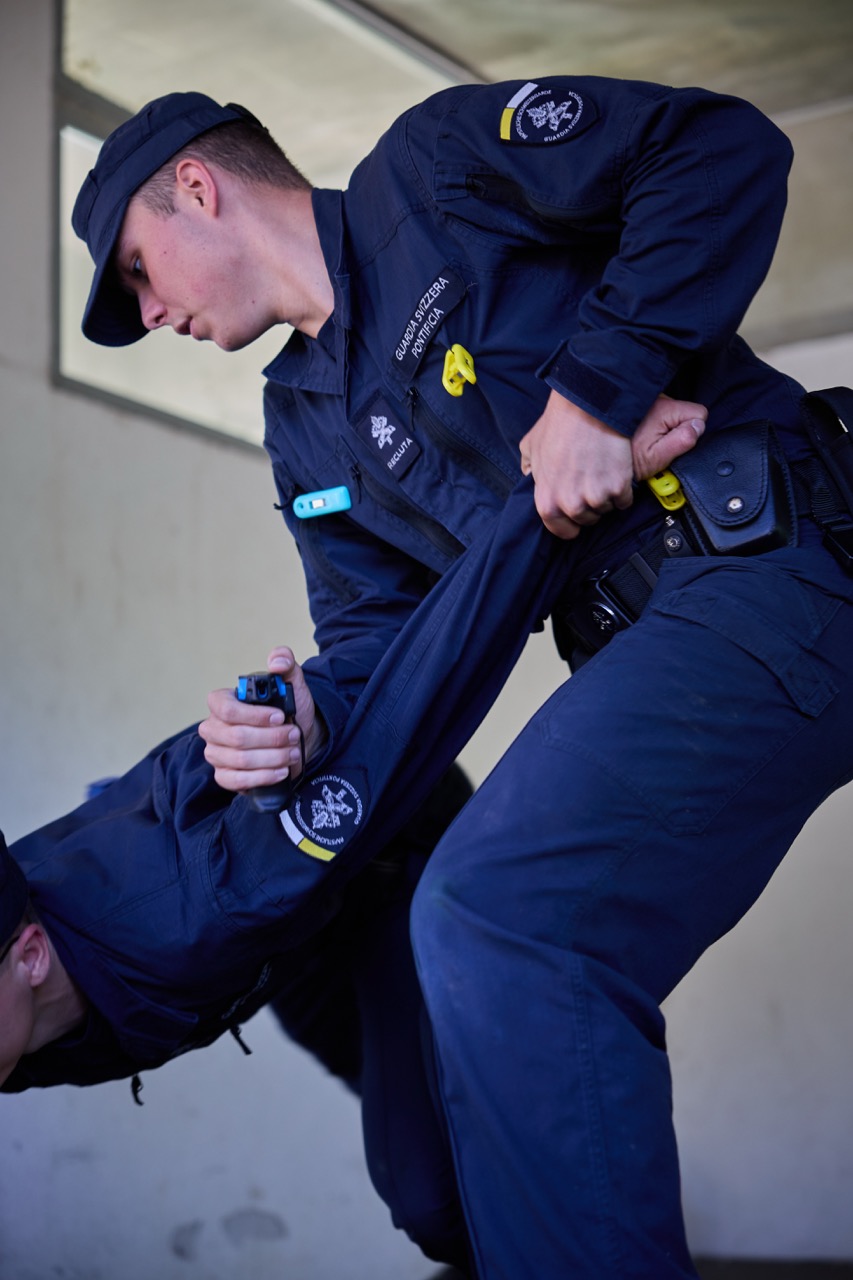
He emphasized the importance of good training on how to handle a wide array of situations in an appropriate manner.
"Being discreet is also a means to protect the guard himself, not only [in] … the physical fight, but also for the people around us that take photos and so on," he said.
Viral videos and increased security concerns
The sergeant major noted that following the COVID-19 pandemic, which also coincided with a steep uptick in tourists to Rome, they have noticed "more and more weird behaviors in people."
He said there has also been an increase in situations requiring them to put their training to practice at the various entrances to the Vatican City State.
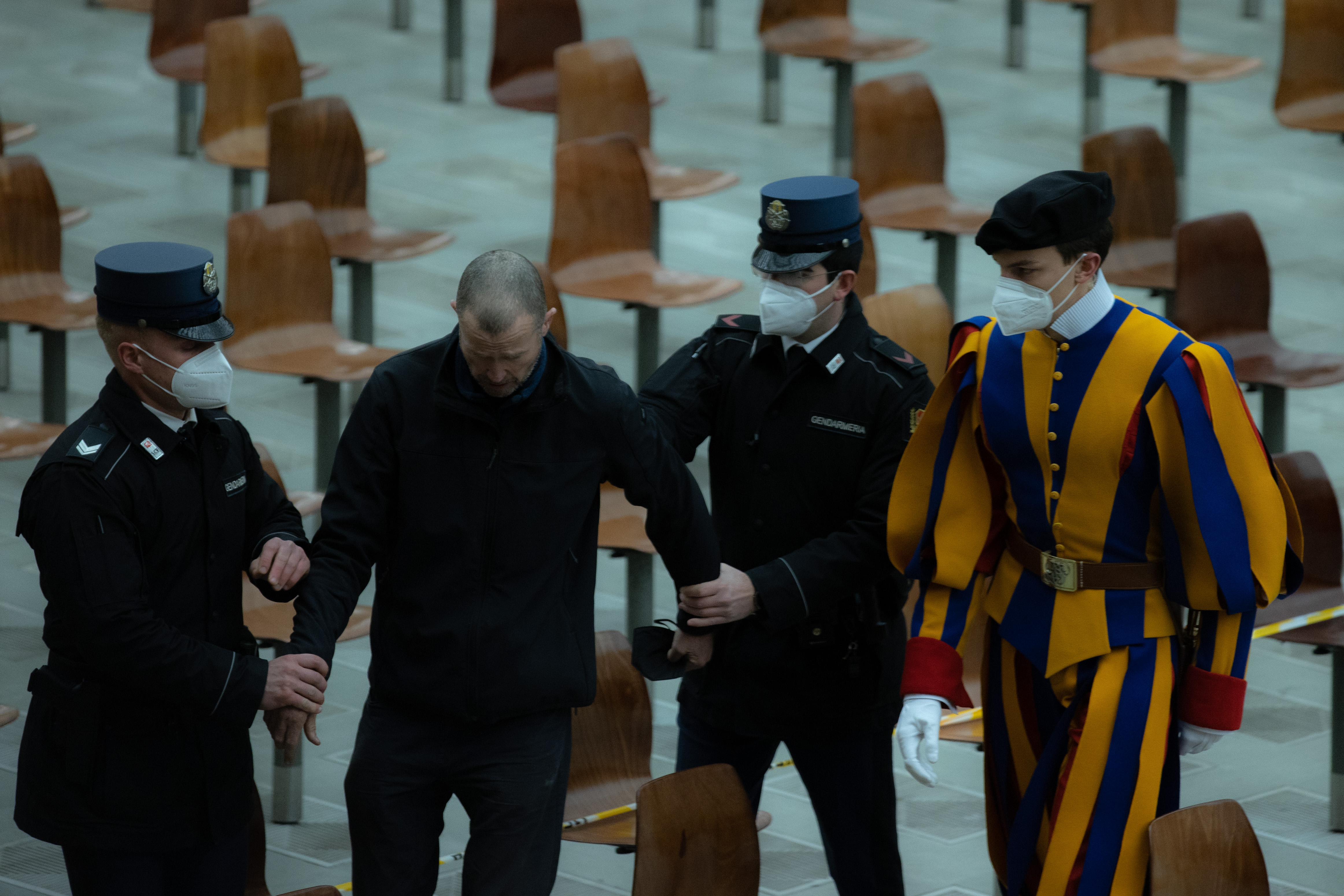
Some of these security issues have been caught on video. In June, two PETA activists tried to hop a fence during Pope Leo XIV's Wednesday general audience. The swift action of guards in response was caught on video.
In May 2023, a man in his 40s — described as being in psychological distress — attempted to storm a gate of the Vatican with his car before being stopped by Swiss Guards.
Multiple security incidents in St. Peter's Basilica have also been caught on camera, some even going viral. The basilica has separate security personnel, including the gendarmes. While Swiss Guards were not present during the episodes in 2025 — they assist with basilica security during liturgies with the pope — it demonstrates the ability of these moments to go viral on social media.
520 years of papal protection
The Pontifical Swiss Guard was established by Pope Julius II in 1506. It is responsible for Vatican security together with the Vatican gendarmes, which were formed in 1816.
Each of the 135 members of the Vatican military takes an oath at the beginning of his service "to faithfully, loyally, and honorably serve the reigning pontiff and his legitimate successors, to devote myself to them with all my strength, sacrificing, if necessary, even my life in their defense."

The swearing-in ceremony usually takes place on or around the May 6 anniversary of the 1527 battle known as the Sack of Rome, when 147 guards lost their lives defending Pope Clement VII from the mutinous army of the Holy Roman Empire. In 2027, the Swiss Guard will mark the 500th anniversary of that battle, the deadliest event in its history.
Training to serve the pope
But before promising to serve and protect the pope, each new recruit goes through a rigorous training. In 2026, this training was expanded from two to three months.
"We noticed that there were a lot of things that we had to do with recruits, and two months wouldn't suffice," explained Radovinovic, who has been responsible for the formation of new guards since February.
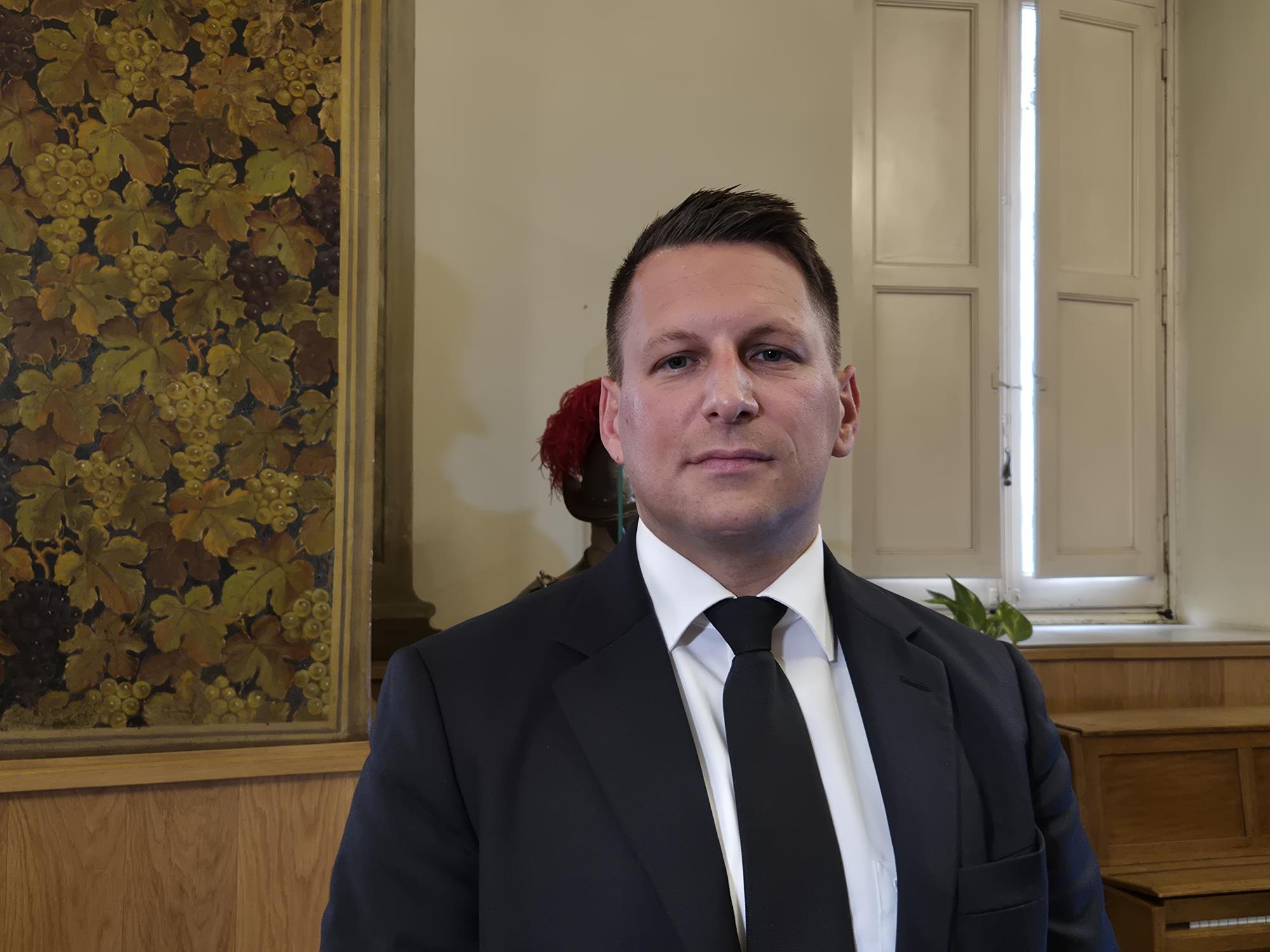
Young men who join the Swiss Guard — unmarried Swiss males between the ages of 19 and 30, at least 5 feet and 8 inches tall, and in good standing with the Catholic Church — start their training in Rome.
Now, instead of one month in Rome and a second month of physical training with police in Switzerland, recruits will have two months of formation at the Vatican.
"The first step is to come here" to the Vatican "to receive the equipment, the material, the introduction to life in the Vatican State," the sergeant major said.
He pointed out that new guards are coming to live in a new country with a new language and a different way of doing things. They study Italian and learn how the Vatican works.
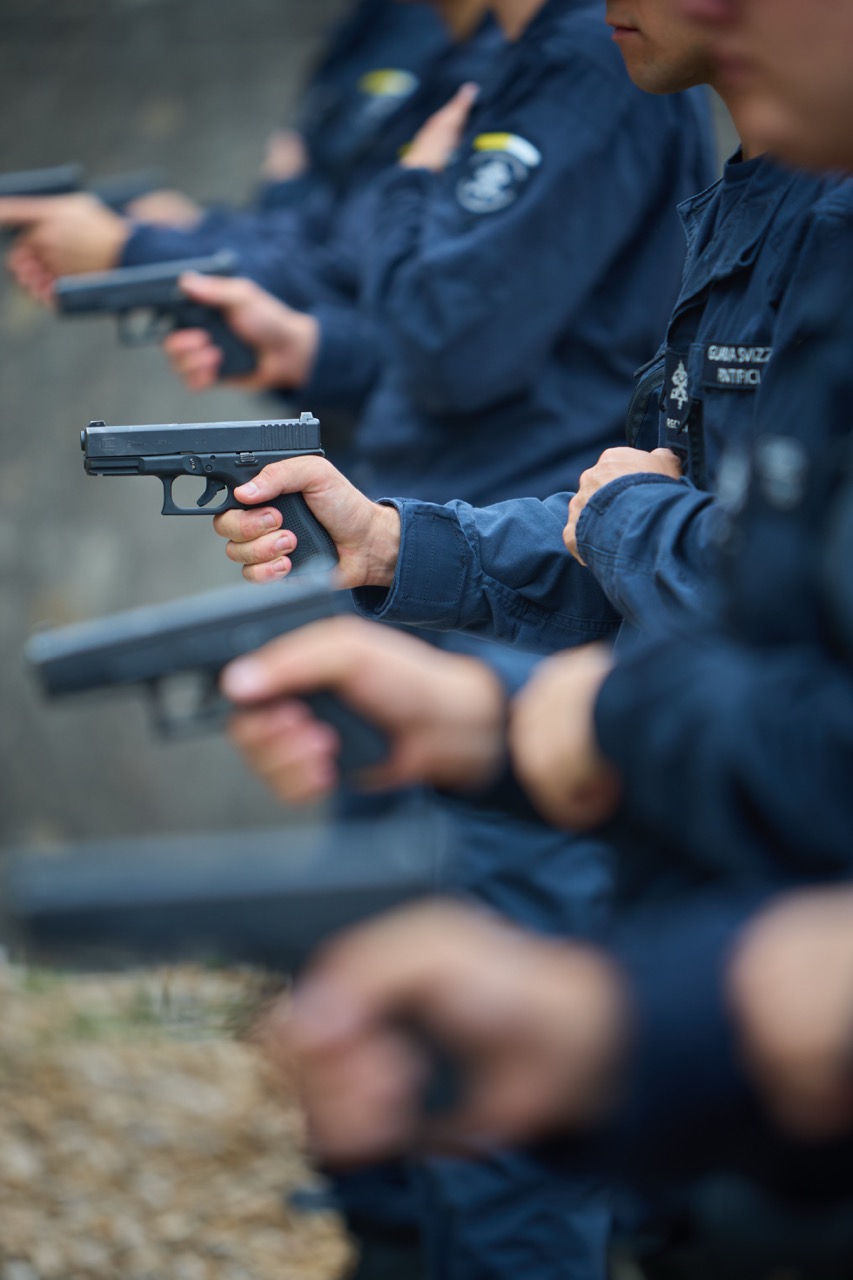
Then they spend a month doing martial training with the police in Switzerland, including self-defense, psychological training — like de-escalation tactics — and gun training as well as safe firearm handling.
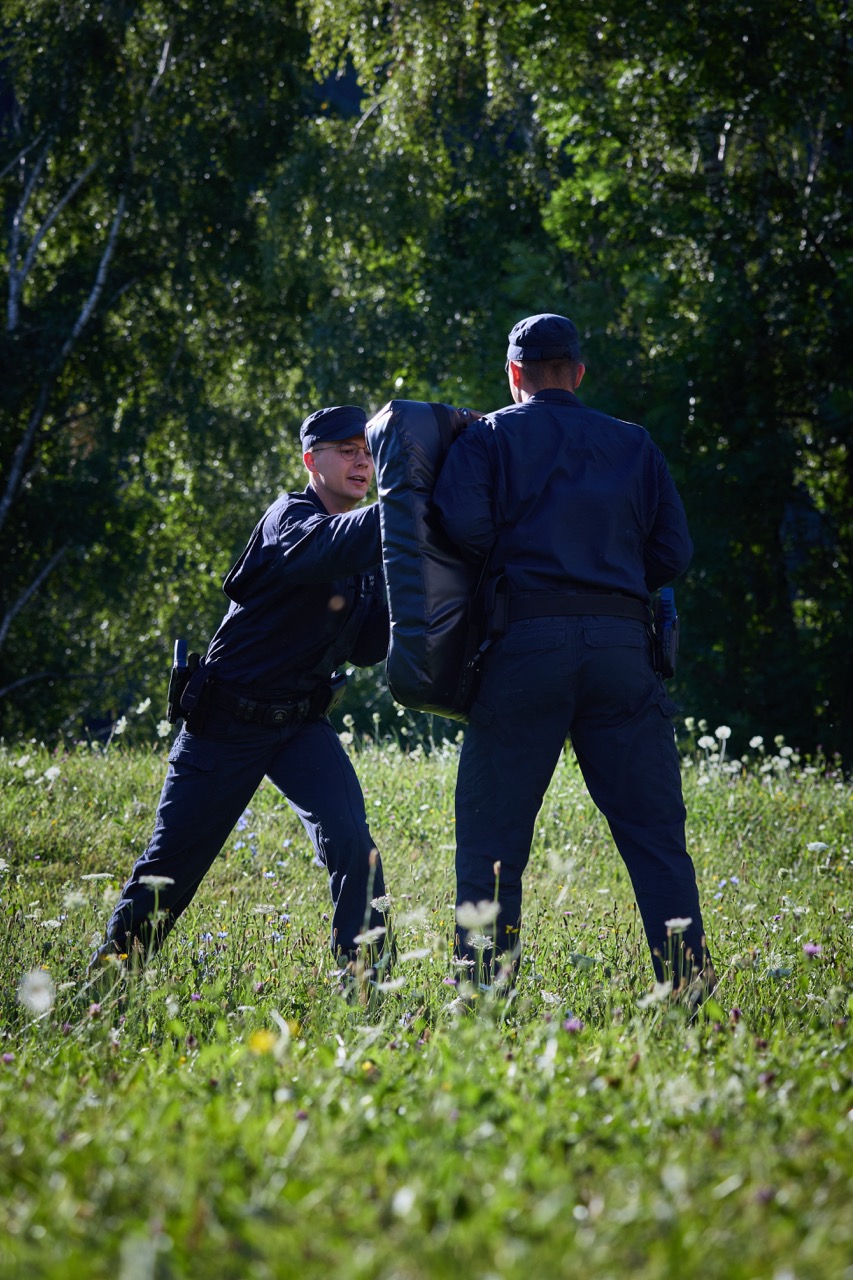
Guards are trained in the Monadnock Defensive Tactical System, which is rooted mostly in Japanese and Okinawa martial arts, including jujitsu, judo, and karate.
Radovinovic explained that this security defensive tactic is "not as stylistic or … theatrical as judo. It's more discreet, much more quick and efficient to block someone, to stop someone in a nonlethal way."
Swiss Guards don't carry guns and in general try to avoid the use of weapons.
"We are not trained for gunfights," the sergeant major said. "That's why the emphasis of our training is especially physical contact."
"It's so important for us to have a good training, and especially also mental training, to know what to do in what situations," he underlined.
Radovinovic noted that with their training they hope to avoid the situations that one sometimes sees in international media, where during stops or arrests, six or seven law enforcement officers may block a single person.
"That can have a negative impact" on the professional reputation of the Swiss Guard, he said.
"For us, certain techniques like wrist handling or arm handling, [are] very important. Once you do that and you immobilize someone, it can be very clean. It can be very fast. … The other person doesn't suffer too much," he said.
"Unfortunately, a little bit of suffering is needed, because it's a physical contact. But in that way, we know that the guard can handle situations very quickly and very discreet and very efficiently."