Pope Leo XIV, in his first private audience since undergoing surgery on Oct. 13, said the history of the world is inseparable from the history of the saints.
"The history of the world without saints would be immeasurably poorer; that is, less human," Leo said in his address.
The pontiff met on Wednesday with participants of the "Holiness in History" conference, held at the Patristic Institute Augustinianum center in Rome from Oct. 19–21. Organized by the Dicastery for the Causes of Saints, the conference explored the role of historical research in determining whether to declare someone a saint.
Rigor in canonization causes
In his remarks, Leo referenced Pope Pius XI, who established the dicastery's historical section in 1930, and emphasized that recent causes for canonization must continue to be carefully evaluated against historical evidence of one's holiness.
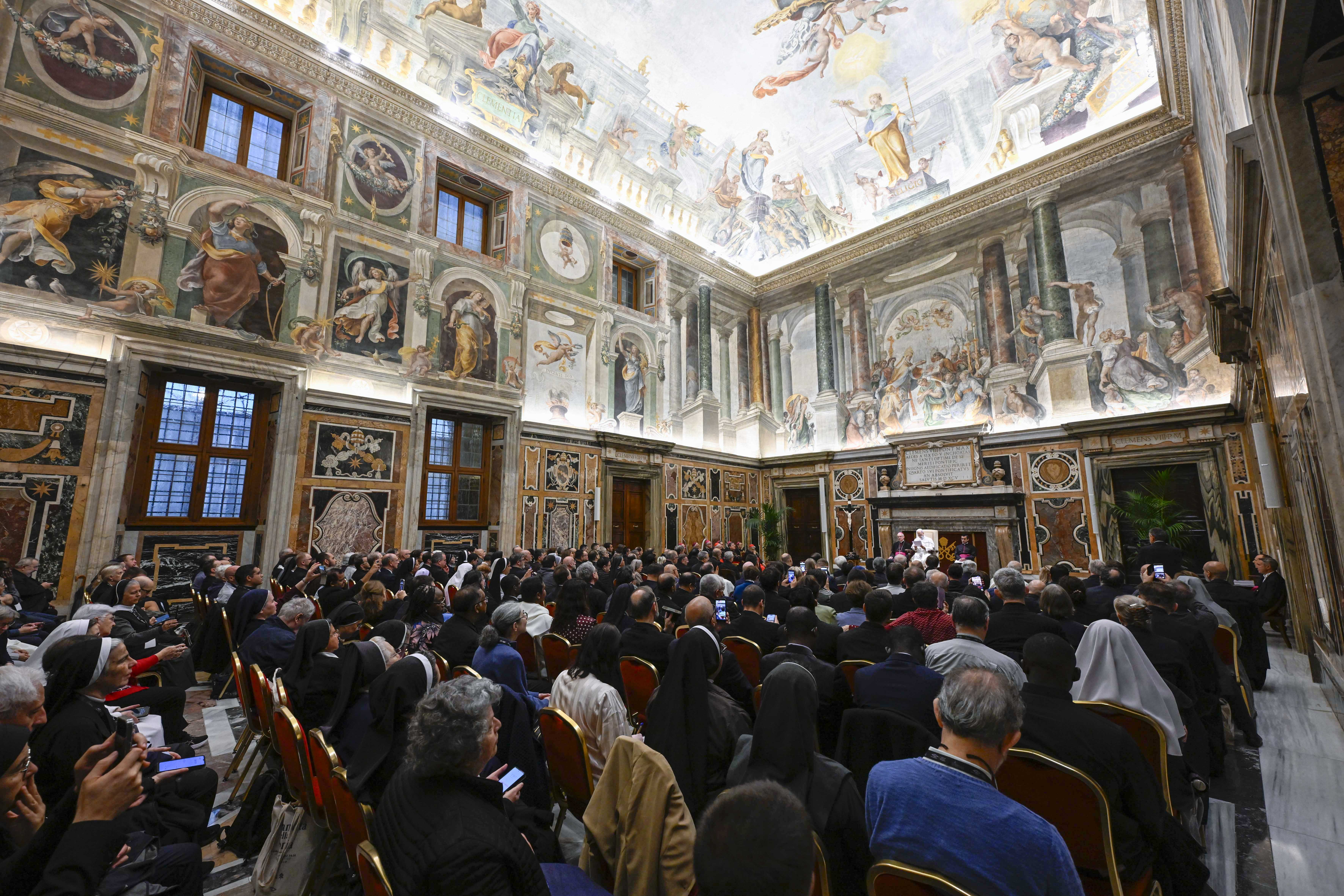
"The treatment of 'recent causes' likewise cannot dispense with a serious and rigorous examination of all the material collected," Pope Leo said. "Causes of saints make use of the tools proper to the study of history, even though their aim is not to produce historiography, but rather to bring to light the exemplary nature, spirituality, and reputation for holiness of those proposed for the altars."
Saints must be understood in context
Leo also explained the importance of placing canonized saints in the context in which they lived, eliminating stereotypes and misunderstandings.
"As the ages pass, even the profile of saints may undergo development: not to follow the stereotypes of the moment, but to interpret a particular experience through the categories of the Gospel lived out," Leo said.
"For this reason, placing the witness of a saint within the context in which he or she lived is very important. The people of God seek models for living in the present, intercessors who help members of the Church face today's challenges and recognize their opportunities."