A dinner conference in Rome on Wednesday brought together clergy, business leaders, journalists, and scholars to discuss how to communicate the truth amid distrust in the age of artificial intelligence (AI).
The Acton Institute, a faith-based think tank promoting free markets and limited government, held the "Communicating Truth in an Age of AI" convivium: a conversation among representatives of Catholic media and secular academia about the challenges AI poses to the communications industry.
Andreas Thonhauser, vice president and chief global officer at EWTN, and Jenn Lindsay, a communications professor at Rome's John Cabot University and CEO of So Fare Films, led the discussion.
Among those present was Yurash Andrii Vasyliovych, the Ukrainian ambassador to the Holy See.
Truth in the modern media era
Among the topics considered at the conference was the challenge of distinguishing truthful news from false information. In his opening remarks, Thonhauser, who joined EWTN in 2021, described the challenge as "cutting through the noise."
"In the age of AI, communication is truth, which is not so easy when we think about it, about how much noise is already out there, and AI is a wonderful instrument to create even more of that kind of communication and to add to the noise," Thonhauser said.
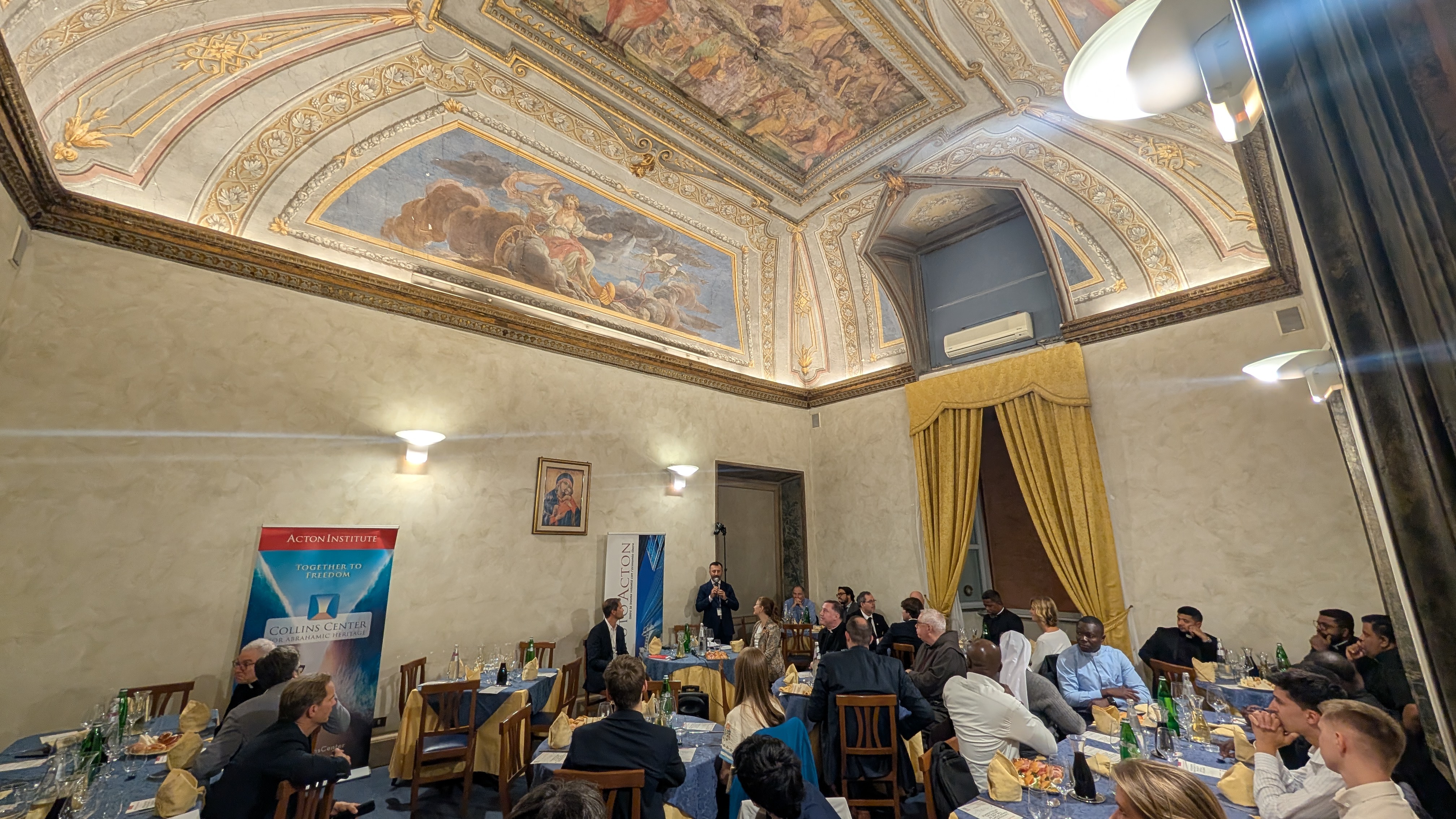
"AI might become a challenge for us, who are also the audience who are the recipients of communication," Thonhauser added.
Lindsay said truth-telling is central to storytelling in film, even amid AI manipulation.
"Truth already has an odd status in documentary storytelling," Lindsay said in her opening remarks. "In fact, it is the definition of documentary storytelling: the creative treatment of actuality."
"We are already dealing with many layers of strategy and manipulation. AI intensifies the questioning of that, but it is nothing new."
Optimism or pessimism in AI-driven future?
Another concern discussed at the conference was whether one ought to be optimistic or pessimistic in the age of AI.
Lindsay, who has taught at John Cabot since 2018, said she thought the world was "in a safer place" as individuals increasingly choose not to use AI to avoid effort, particularly students.
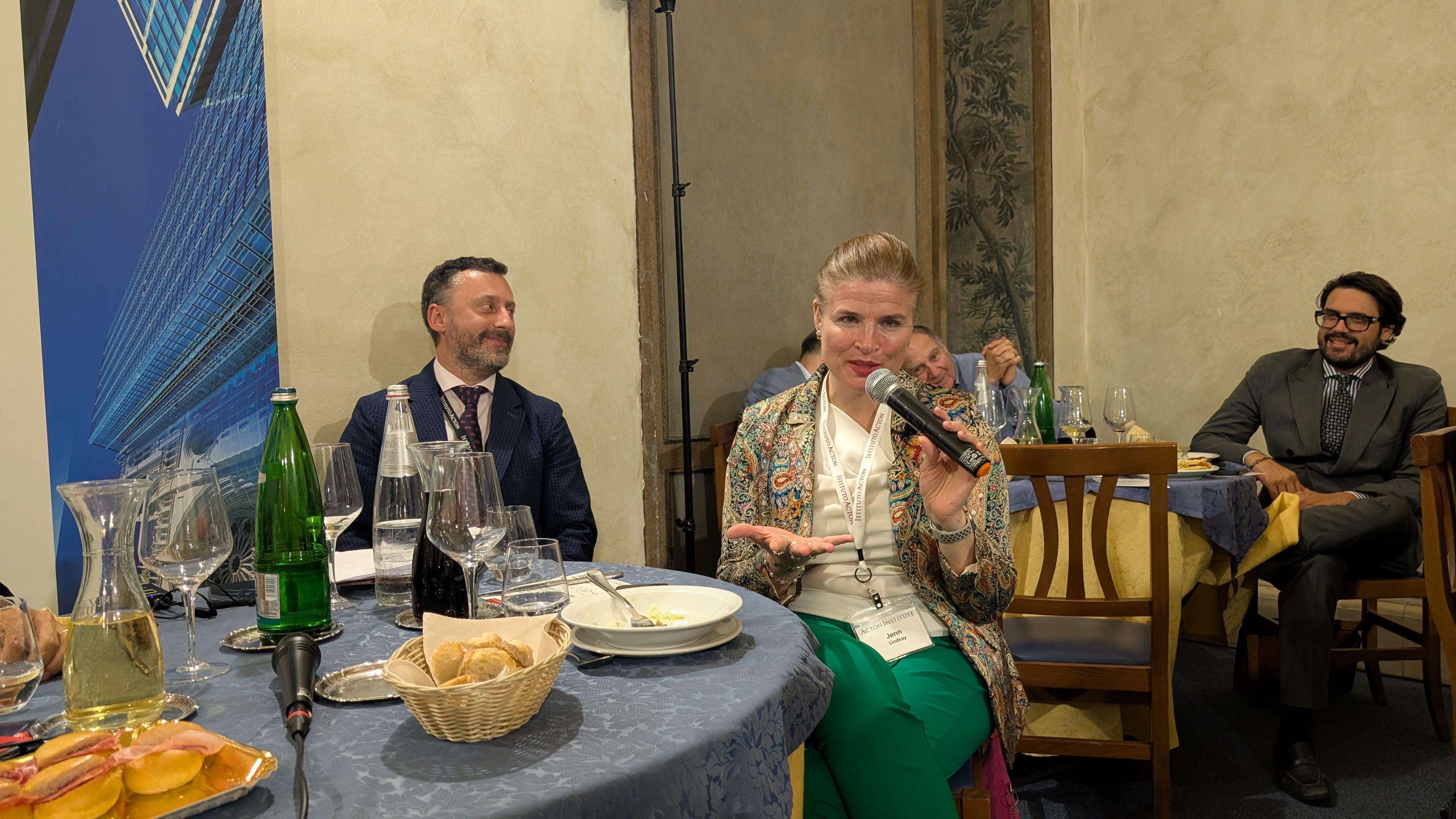
"I feel that we are in a safer place," Lindsay said. "A year ago, I was super pessimistic because, as a university professor, the rate of cheating and plagiarism [with AI] was sky-high. I am happy to report that it is going down; it seems like its popularity is cooling with the younger ones."
Thonhauser, in response, acknowledged AI's many benefits for global development while noting that the human experience will still matter, citing Pope Leo XIV's encyclical Magnifica Humanitas.
"AI is remarkable, and it is helping us greatly also in our work," Thonhauser said. "I do agree with Pope Leo that it is not neutral, but what is ever neutral? It is up to us to regulate this so that it is helpful for the human being as such and for the future."
"I really see that it will be important that the human element remains in communication and helps to guide us through what is relevant, what is meaningful, and ultimately also what is true."