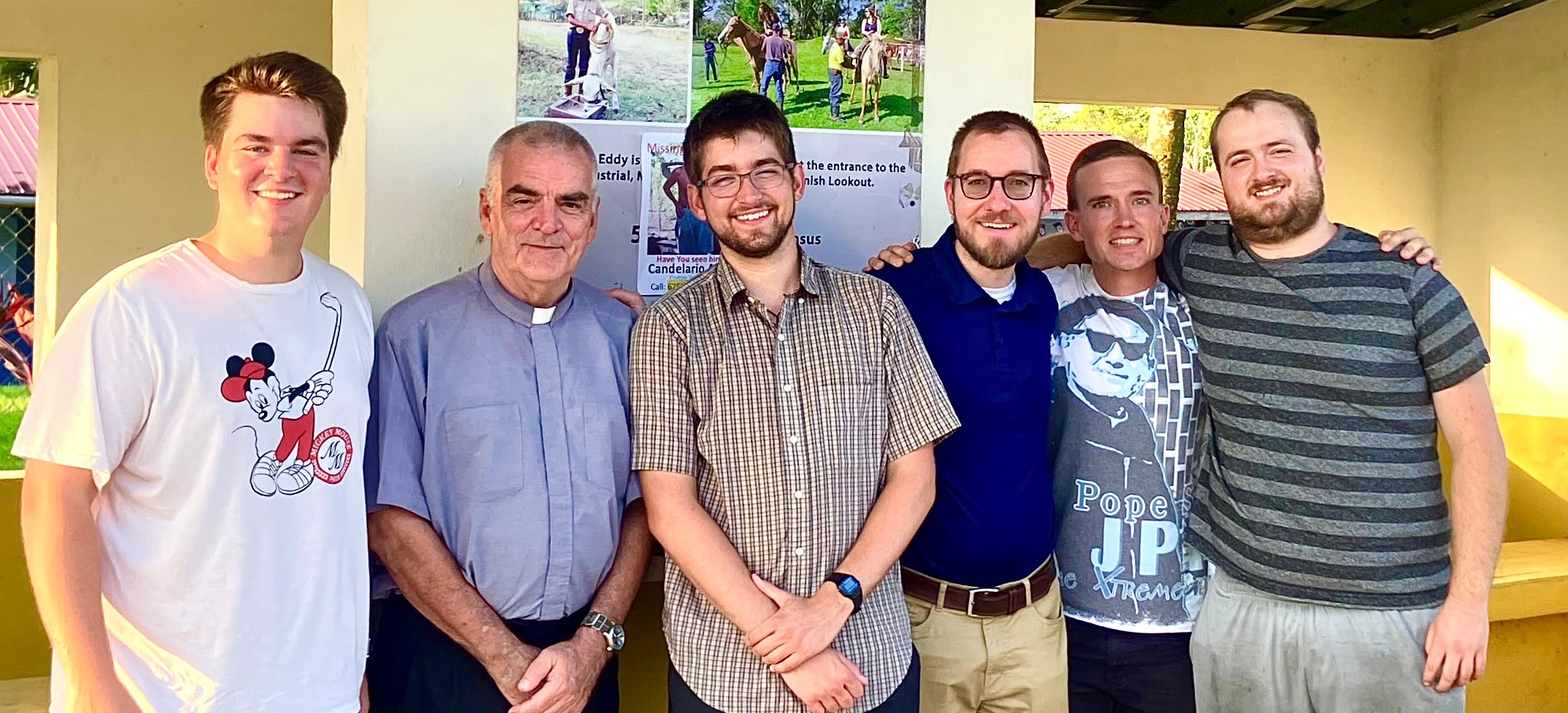
The General Chapter of the Clerical Branch of the Society of Our Lady of the Most Holy Trinity (SOLT) is embracing the traditional practice of ember days as a spiritual means of fostering and growing vocations.
Ember days — the Christian periods of prayer, fasting, and thanksgiving — take place for three days over the four seasons each year. The next ember days will be Sept. 16, 18, and 19.
"The Church, although it doesn't require it, still encourages it," Father Dave Brokke, SOLT priest and vocations director, told EWTN News.
"Even in terms of the [United States Conference of Catholic Bishops] document on fasting," he explained. "It encourages people to do the ember days, and you can find different canons about it still today."
The document clarifies that "Vigils and Ember Days, as most now know, no longer oblige to fast and abstinence."
"However, the liturgical renewal and the deeper appreciation of the joy of the holy days of the Christian year will, we hope, result in a renewed appreciation as to why our forefathers spoke of 'a fast before a feast,'" the bishops wrote.
While the prayer is not required, the SOLT chapter voted on the addition of ember days to create a more intentional way of asking God for vocations. It passed in 2023 and over the past three years, the community has seen almost as many men enter into formation as it had in the previous 10 years.
Ember days
The phrase "ember days" is an alteration of the Latin phrase "quatuor tempora," meaning "four seasons." Ember days are documented as being celebrated as early as the fifth century and are among the oldest traditions of the Church's liturgical calendar.
Their original purpose was to thank God for the gifts of nature, notably the crops used to make bread and wine for the Eucharist.
"Jesus said: 'Ask the master of the harvest to send laborers into the vineyard.'"
"With the master of the harvest, there's this understanding that we have the need to ask Our Lord for help in providing the grain and the wheat and the grapes," Brokke said.
In total, there are 12 ember days throughout the liturgical year.
"From an early time in the Church," it was established that the ember days "would be a Wednesday, Friday, and Saturday."
The "penitential days" were "Wednesday, because that was the day that Judas betrayed Jesus, Friday because of the Passion, and then Saturday because Our Lord was in the tomb."
"The way that I remember it is 'Lenty, Penty, Crucy, and Lucy,'" Brokke said.
"Lenty" is to indicate the full Wednesday, Friday, and Saturday of ember days that follow Ash Wednesday in the springtime, and "Penty" is the ember days after Pentecost in summer. The "Crucy" ember days then follow the Exaltation of the Holy Cross in fall, and "Lucy" is for the days after the memorial of St. Lucy in winter.
"They correspond to the time of both the sowing of the seeds and the reaping of the harvest of the wheat and the grape. So even then it is connected to the elements that is used for the Eucharist," he said.
The Church would "fast and pray not only for a good harvest but also for vocations, for laborers in the vineyard to the priesthood, and they would often ordain men on the Saturdays of ember days," Brokke said.
SOLT witnesses 'lots of good fruit'
Brokke and the General Chapter of the Clerical Branch of the SOLT began looking into embers days as a way of "community fasting and praying for vocations," Brokke said.
"We do have a prayer that we say every day for vocations," which "started from the very foundation of our community," Brokke said.
SOLT is "a community of priests, brothers, sisters, and members who work together to show the relationship of Our Lady with the most Holy Trinity," Brokke said.
The community reflects how "the Father, and the Son, and the Holy Spirit are distinct, but not separate. They're united."
"Similarly, the vocations are distinct, but they're not separate. So we strive to live with a united will of charity and our service to areas of deep need," Brokke said.
"We go where a bishop has identified his deepest need and serve as missionaries in the world, trying to bring that communion of the Most Holy Trinity in imitation of Our Lady, who leads us into those relationships because she was mother of the Son and daughter of the Father, spouse of the spirit."
For more vocations, SOLT wanted to add another act "specifically geared towards vocations," in addition to its daily prayer.
"I mentioned the ember days," which would "dedicate at least 12 days a year to fasting and praying and to be more intentional with it," he said. "When we started discussing it, we didn't focus so much on the agricultural aspect but the vocational aspect."
When the idea of incorporating the days of prayer was under discussion, Brokke looked up some of the prayers for ember days.
"We discovered that the prayer that we have prayed every day from our foundation of the community is actually one of the ember day prayers for vocations," he said.
Shortly after the community began the traditional prayer, vocation numbers began to rise.
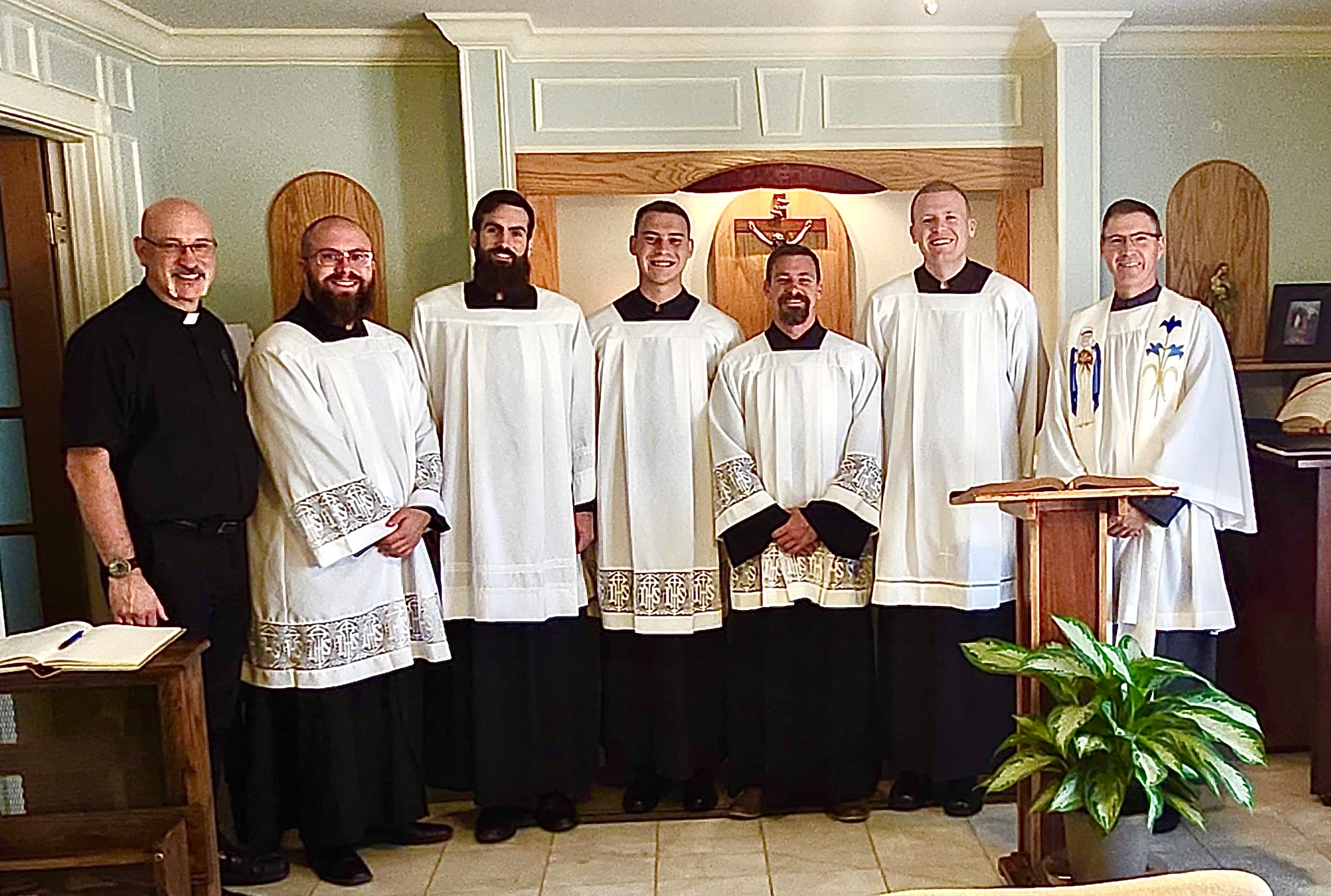
"The first September doing ember days … one guy showed up from a mission in Honduras at our mission in Belize and expressed his interest in the community. He is now a novice with our community."
"On the Saturday of that first ember days, we had 27 men from Franciscan University show up for the priestly discernment program to learn more about our community. The man who led that is now an aspirant with our community."
"The year that we started, we had seven men in formation. And in three years, we now have 18 men in formation," Brokke said. Before, "we were maybe averaging one or two to enter a year. In that very first year we had nine men."
"We've seen lots of good fruit," he said.
"I know there's a mystical body of Christ and we're all connected. The Lord is going to use it, like he'll use everything, and nothing goes to waste."