John Cuddeback, a professor of philosophy at Christendom College, says families today don't often know how to achieve what they desire in their homes and family life. As a remedy, drawing from both ancient and modern thinkers, he has released "The Intentional Household: Living as if People Matter," a book that outlines eight pillars for reclaiming the home as a place of human flourishing.
"Families today are struggling to achieve what they so badly want: to have the kind of relationships we're made for, beginning in the home, especially between spouses and between parents and children," Cuddeback said. "They know they want something different, something better, but they feel hamstrung. In a culture that works against them in many ways, they are frustrated because they lack clear vision and examples to pattern themselves after."
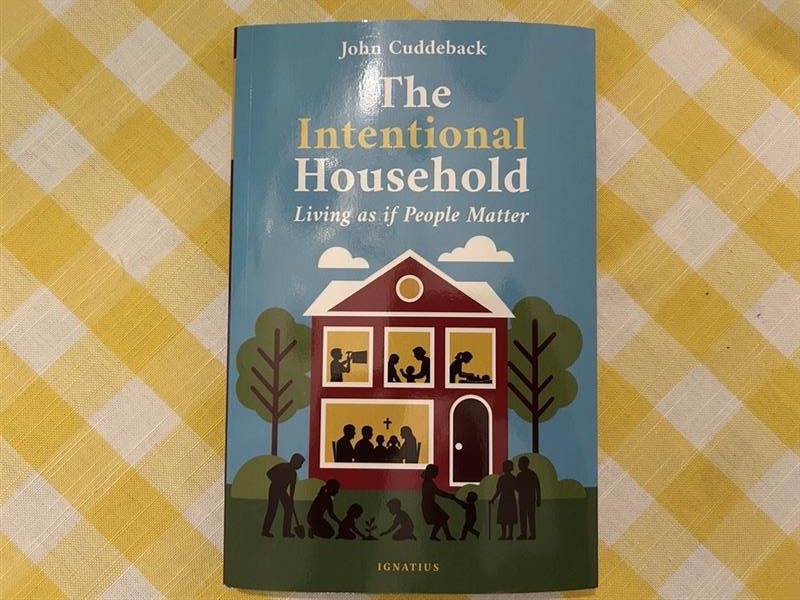
Cuddeback, who teaches a course on family and household and is also the author of "True Friendship," spoke to EWTN News about how he hopes his book conveys that "[a]nyone can choose to be intentional about their household and make real progress with dramatic fruits in the lives of those we love most."
EWTN News: What do you see as the biggest challenge to building and maintaining an intentional home?
Cuddebach: It all begins with priorities. As a society we have turned away from the intense focus that our household requires — and this is evident in how we struggle in marriage, raising children, and relating to the elderly. Even many traditionally-minded folks struggle to realize and enact the demanding, even while ordinary, aspects of God's plan for our homes.
Aristotle says that a society tends to produce the kind of people it honors. We do not honor those who prioritize home life — either women or men. This means that many of the structures, practices, and assumptions of our age are at odds with the real good of home life. This is especially evident in our obsession with the latest technologies.
This book is a call to all of us to do something radically different and profoundly better — while always recognizing we must be people of our time and place. It calls us to discover that looking first to what our children and our elderly really need is the high road to deeper fulfillment for all of us.
How has Pope Leo XIV's encyclical Magnifica Humanitas influenced your thought on how technology should be incorporated in the home?
Pope Leo makes clear that we have come to a crisis point. The time is now to be honest, serious, and persistent in examining our use of technology in view of real human flourishing. This must start in the home. No one else is going to do this for us.
But as the pope makes clear, right practice must flow from an understanding of who we are and what we're made for. "The Intentional Household" offers the rich and positive view of daily life in the home that grounds such an examination. It gives the "yes" that strengthens the "nos" we need to say. It gives direction for rising to the challenges of our age, including how to channel technology to true human flourishing.
Approaching homelife intentionally — especially attending to the ordinary in good work and true leisure as essential to our relationships — we can take real steps to become those biblical good stewards so honored by the Lord.
How does this apply to those across all walks of life, including single people, married couples without children, those who are divorced or separated?
The principles of a vibrant home life are both perennial and flexible. Wherever we find ourselves we can discover how the plan that God wrote into human nature is much better than we have realized.
Brokenness and suffering today are widespread. God's plan encompasses these realities. By the grace of God, anyone who is humble and willing to take an intentional approach can affect real, and indeed dramatic change by applying the book's eight principles. We can all take real steps to make our homes a place of vibrant life, with deep belonging, connection, and presence.
One of the thinkers you cite in your book is Wendell Berry. In light of his recent passing can you speak to his influence on your life and thinking?
Wendell Berry saw clearly how the loss of activities of work and leisure in the home has led to our experience of disconnection and isolation. Home should be a place of deep connection: between us and loved ones and neighbors, between soul and body, between us and the earth.
One of Berry's pivotal insights is the key role of a certain kind of work in the home. Berry has pointed out that the work of traditional home arts is much more important than we have realized. He argues that as the breakdown of home life came especially through the loss of good work, the renewal will likewise come through a rediscovery of work that connects us to one another as it connects us to our bodies and to the earth, and ultimately to God.
Wendell Berry was a prophet of the extraordinary beauty and importance of the ordinary. Making our home an intentional household means rediscovering the power of ordinary things, such as mealtimes with the whole household, shared work in the kitchen and other home arts, and "porch time" and other such leisure times. Attention to these things can transform our marriage, parenting, and other key relationships.