The Communion Project initiative hopes to repair polarization in the U.S. Church and aid the Church in offering a better and more joyful witness in a divided country, organizers said.
"Unfortunately, too often Catholics and Catholic leaders are acting more like thermometers instead of thermostats," Jonathan Lewis, mission strategy officer for the Paulist Fathers and co-director of the Communion Project, told EWTN News.
"We're reading the temperature of the room or the culture, instead of setting the temperature according to our values and the truths of the Church," he said.
"So, part of what this effort is aimed to do is to lower the temperature of division and distrust, starting with those of us Catholics who call ourselves brothers and sisters, who are a real spiritual family," Lewis said.
"As we approach any election season, there's always a need to help lower the temperature, have more thoughtful conversations, discern our Catholic values," he said.
The Catholic initiative hopes to heal toxic polarization in the Church by creating dialogue, providing resources, promoting unity through national communication methods, and by aiding local communities to create unification at their level, organizers said. Exact plans are still being formed.
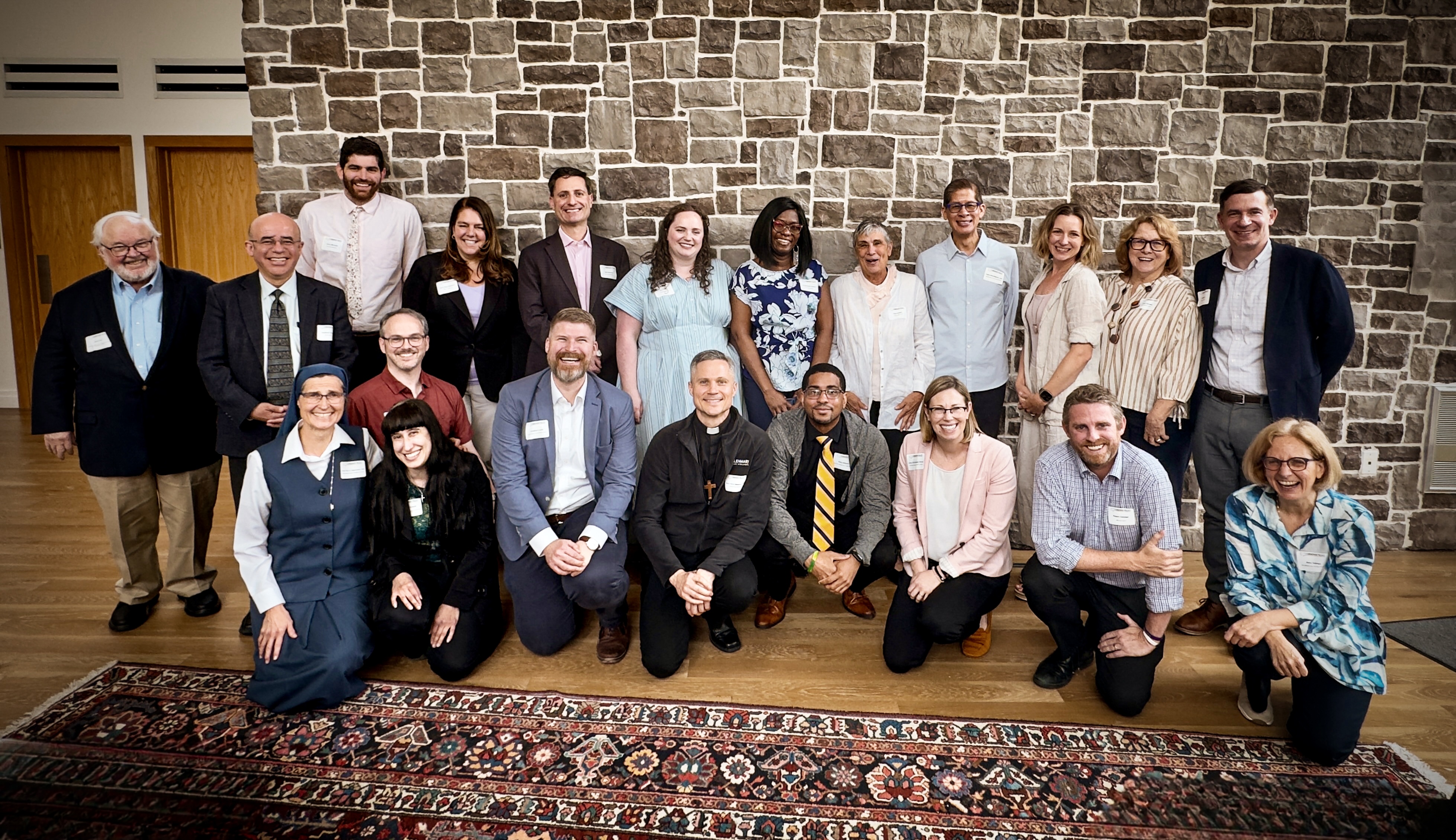
"We're just beginning … and trying to share," Lewis said. "We're starting with a lot of resources" and "adapting resources that already existed."
"Then we're planning, over the next year or two years, to develop programs for dioceses and organizations and religious communities, students in Catholic schools."
The movement to start the project began in 2022 at the Paulist Fathers' general assembly.
"One of the priorities of the Paulists is to read the signs of the times, like the Second Vatican Council tells us to do, so that we can respond in a spirit-filled way," Lewis said.
At the gathering, they discussed "the realities of the United States and the Church in the United States today that we need to respond to or engage," he said. "And that's when the topic of toxic polarization emerged."
"The polarization affecting the U.S. Catholic Church is not merely a matter of policy dispute or partisan loyalty," said Father Ricky Manalo, CSP, co-director of the Communion Project. "It is a deeply spiritual and relational rupture, shaping how Catholics imagine moral life, celebrate the sacraments, interpret tradition, and remain in communion amid difference."
"Within Catholic life, polarization is more than disagreement; it is the loss of our capacity to remain in relationship, even amid difference, as one body in Christ," he said.
Inspired by Pope Francis, the group founded The Paulist Initiative on Polarization as a national partnership of Catholic leaders committed to strengthening unity across political, theological, and cultural divisions.
In 2025, the effort was renamed the Communion Project following Pope Leo XIV's public commitment to building communion in the Church.
"This is really a priority of Pope Leo," Lewis said. "In his first inaugural Mass, Pope Leo said his first great desire would be for a unified Church in communion. We really see this as an initiative that is trying to live out the message and the priority of the Holy Father."
Polarization in the U.S.
When people think of polarization, they usually first think of "left and right politics, Republicans, Democrats," Lewis said. "And certainly that's one area, but I really see polarization showing up in a lot of different ways."
"This isn't only in public life or in politics, where one might expect, it's also in the Roman Catholic Church in the United States," Lewis said.
It can come up due to division surrounding the liturgy, or cultural or generational differences, but ultimately the goal is to remind Catholics of shared beliefs and values.
The project hopes to help the faithful "see that while people might prioritize different dimensions of our Catholic social teaching, there's unity within that work, and we need to bring people together," Lewis said.
For example, the Church has a mission to protect human dignity, and "some people focus on ending the death penalty," while "other people might focus on ending abortion and the work of the pro-life movement," Lewis explained. "Even if we're working in different areas, those areas are not in conflict."
Connection through communication
The initiative's resources and formation experiences are organized around three interconnected dimensions: the head, the heart, and the hands.
The project offers a "development of resources that impact our head, meaning our knowledge and our self-awareness," and "also our hearts in terms of our prayer and discernment," Lewis said.
There are also resources that impact "our hands," which focus on "building skills and building relationships," Lewis said.
"So we want to help organizations and churches work with leaders in particular, to equip them with the resources and programming to help them make a positive impact in their local community," he said.
The resources can be found in the Communion Project's "resource library" on its website, which offers a number of options for people to independently utilize or bring to a group. It also offers gatherings and workshops to aid its cause.
In the online library, people can find upcoming events, online courses, prayers for communion, articles, learning sessions to be used in small groups, and a Communion Project podcast.
It also has educational videos provided by outside organizations including Georgetown University, University of Notre Dame, and Boston College.
So far the podcast has included conversations with Archbishop William E. Lori of Baltimore on what happens when the faithful stop seeing one another as brothers and sisters, and University of Notre Dame's Tim O'Malley on liturgical division and what it means to live in communion with people.
The first episode featured a conversation "with Tim Busch, founder of Napa Institute, and Father James Martin from America Media, two people who speak to very different parts of the Church … but have developed a personal friendship," Lewis said.
"It was a great opportunity to put people in the same place to talk about their friendship, of their shared faith, realizing that what unites us is so much stronger than what divides us," he said.
"What matters most is gathering around a particular Eucharistic table and a particular family table and having hard conversations or sitting in discomfort, because love compels us to do hard things," Lewis said.
The initiative is only "just beginning in terms of programming and trying to share." But since starting, "there's a great interest" among local communities wanting to be involved.
"The path of healing begins not in dominating strength, but in shared vulnerability. When both Church and nation dare to move toward one another — wounded yet willing — they may discover that grace lives precisely in the places we thought were beyond repair," Manalo said.