Pope Leo XIV is a pope of several firsts: the first American pope, the first to be an Augustinian, and the first in modern times to have done overseas missionary work.
He is also the first pontiff in nearly 50 years to have studied and worked as a canon lawyer, holding a doctorate in canon law from the Pontifical University of St. Thomas Aquinas (the Angelicum) in Rome.
During his papacy, canon law has featured in some of the most important events of his reign. From the excommunication of four bishops consecrated for the SSPX to his recent appointments as Vatican judges, to the Marko Rupnik trial to his curial appointments, canon law has become a key aspect of understanding Leo's pontificate.
However, for many Catholics, canon law is more than merely a feature of Vatican administration. It is important to Catholics' relationship with the Church, especially in upholding justice — the very purpose of canon law.
Marriages, eligibility to receive the sacraments, and the allocation of Church property are among the most basic, often overlooked, uses of canon law.
Here are some important things to know about canon law and how it applies to Catholics.
What is canon law?
Canon law is the collection of all the laws that regulate the life of the Church. The word canon itself comes from the Greek word "kanon," which means to measure. Unlike civil law, however, canon law exists to uphold spiritual discipline, maintain relationships between the laity and the Church hierarchy, and protect rights. Ultimately, as stated in the 1983 code, the purpose of all Church laws is the salvation of souls.
Among the oldest legal systems
The Catholic Church's canon law system is the oldest continuously functioning legal system in the West. The Church's earliest laws were issued as decrees, or canons, by ecumenical councils, regulating the Church's daily life. After Christianity became more established in the Roman Empire, the popes also issued decrees influenced by Roman legal theory and traditions. By the 12th century, it had developed into a fully functioning legal system and has governed the Church ever since.
How does canon law affect Catholics?
Primarily, canon law contains rules about who can receive the sacraments. For example, the requirement to say "I baptize you" instead of "We baptize you" during baptism, the prohibition against using grape juice for holy Communion, and the seal of confession are all regulated by canon law.
Marriage annulments — the determination of whether a marriage is valid — are among its most common applications.
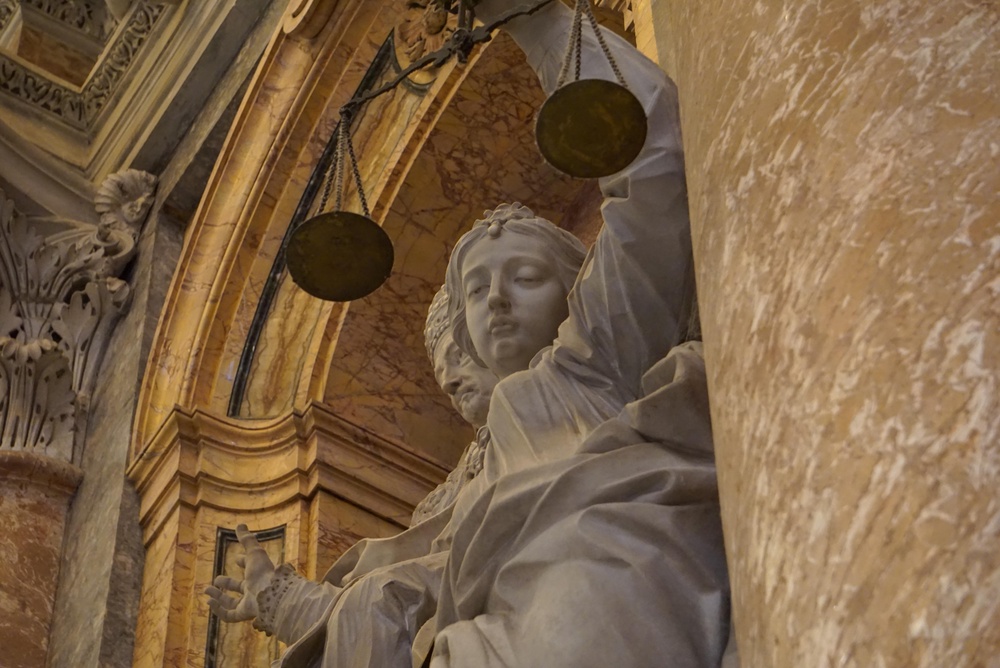
The 1983 code — a Catholic 'Bill of Rights'
Before the 20th century, the Church did not have a single legal code governing all Catholics. That changed when St. Pius X ordered a compilation of all Church laws into a single code, completed in 1917 by Pope Benedict XV. In 1983, St. John Paul II revised the code to incorporate the teachings of the Second Vatican Council. The 1983 Code of Canon Law — the current code in use — heavily emphasizes the rights and duties of laity and clergy, stating that "there exists among all the Christian faithful a true equality regarding dignity and action."
'Civil law punishes; canon law heals'
The quote "Civil law punishes; canon law heals" from 12th-century Byzantine canonist Theodore Balsamon highlights the distinct purposes of civil and canon law. Whereas civil law exists to maintain social order, canon law exists to facilitate salvation.
Officials are elected to uphold society's rules, while the pope — as the Church's supreme legislator — appoints bishops to dioceses to not only uphold Church law but also to teach, govern, and sanctify, as stated in paragraph 21 of Lumen Gentium, the dogmatic constitution on the Church.
Moreover, a diocesan bishop, according to canon 391 of the 1983 code, has "legislative, executive, and judicial power" over his diocese, meaning he can establish diocesan laws. Daily judicial matters of the diocese are usually handled by its tribunal, especially cases involving marriage, parish property, and abusive clergy.
The Church sometimes defers to civil law in nonreligious matters, such as contracts, labor laws, and certain criminal cases. For cases of clerical sexual abuse, however, the Church may conduct a separate internal canonical investigation, which could lead to restrictions on ministry or even dismissal from the clerical state.
How to become a canon lawyer
Clergy and laity worldwide study each year to practice canon law in the Church. To become a canon lawyer, usually one must first earn a licentiate of canon law (JCL). Before 1979, canonical studies were largely limited to clergy. Now, with adequate philosophical and theological education, any priest or layperson can be admitted to the licentiate program. Some of the most renowned schools for canon law are The Catholic University of America in Washington, D.C., and the Pontifical Gregorian University and the Pontifical University of the Holy Cross, both in Rome.
The role of the Vatican
The Holy See supervises all Church tribunals primarily through the Apostolic Signatura — the Church's highest court. Every diocese has a tribunal (court), and the Signatura oversees them on behalf of the pope, who is the Church's supreme judge. There are two other Vatican courts: the Roman Rota, which mainly handles appeals in marriage cases, and the Apostolic Penitentiary, which deals with indulgences and certain absolutions from sin reserved to the Holy See.
The Eastern churches have their own code
A separate code of canon law governs the more than 20 Eastern Churches in communion with Rome, including the Maronite, Ukrainian Greek Catholic, and Chaldean Catholic Churches. The Second Vatican Council affirmed the right of the Eastern churches to preserve their own traditions, including their legal traditions. St. John Paul II issued a code for those churches in 1990, reflecting the diversity of the Church's legal customs. Its full title is the Code of Canons of the Eastern Churches.
Leo's experience as a canon lawyer
Before becoming pope, Leo spent more than a decade studying and practicing as a canon lawyer. The then-Father Robert Prevost studied canon law at the Angelicum in Rome, earning a license in 1984 and a doctorate in 1987. During his missionary work in Peru, he taught canon law at the seminary level and served as a judge. His experience would serve him during his leadership of the Augustinians and as the head of the Vatican's Dicastery for Bishops.
During his papacy so far, Leo has chosen some of his collaborators within the Roman Curia for their legal experience, highlighting the importance of canon law for protecting the rights of the faithful and assisting them toward salvation.