Thousands of Christians in Pakistan marked National Minorities Day on Aug. 11 with protest rallies in three major Pakistani cities, calling for constitutional equality and religious freedom and urging the government to move beyond ceremonial celebrations to address long-standing discrimination.
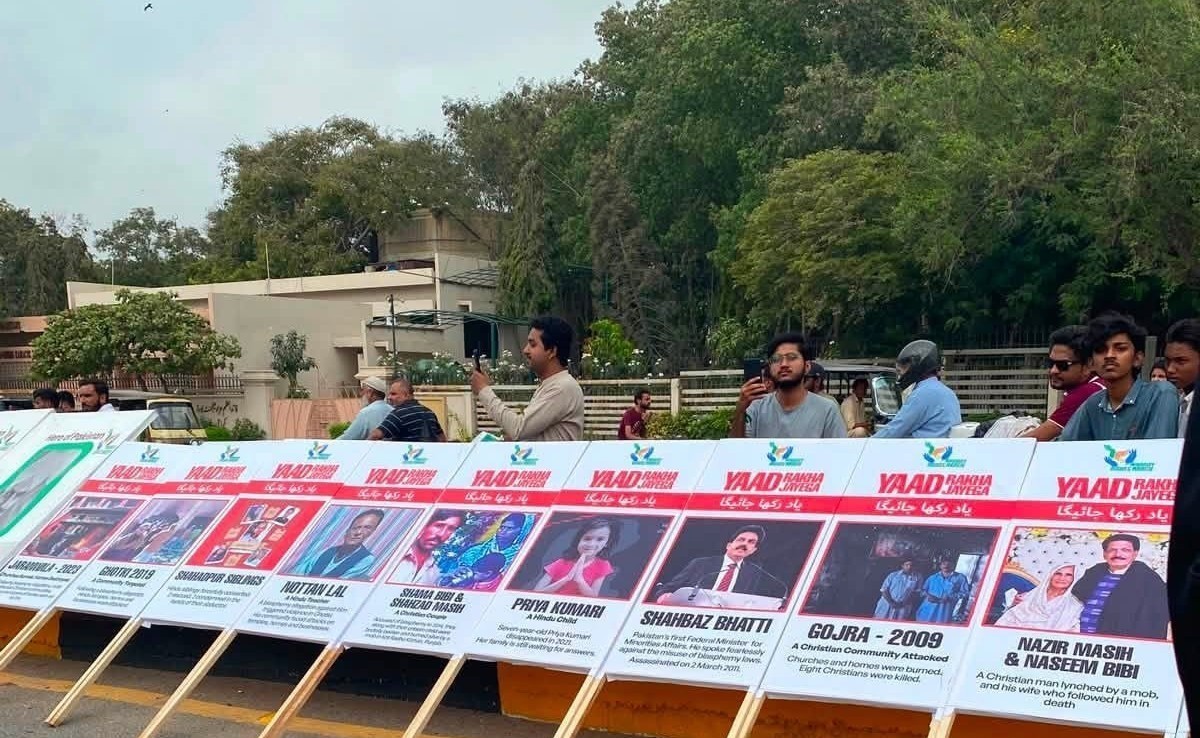
In Karachi, more than 2,000 protesters gathered at the mausoleum of Pakistan's founder, Muhammad Ali Jinnah, carrying placards reading "My religion, my will" and featuring photographs of victims of mob lynchings, forced conversions, blasphemy-related attacks, and assassinated Christian leaders.
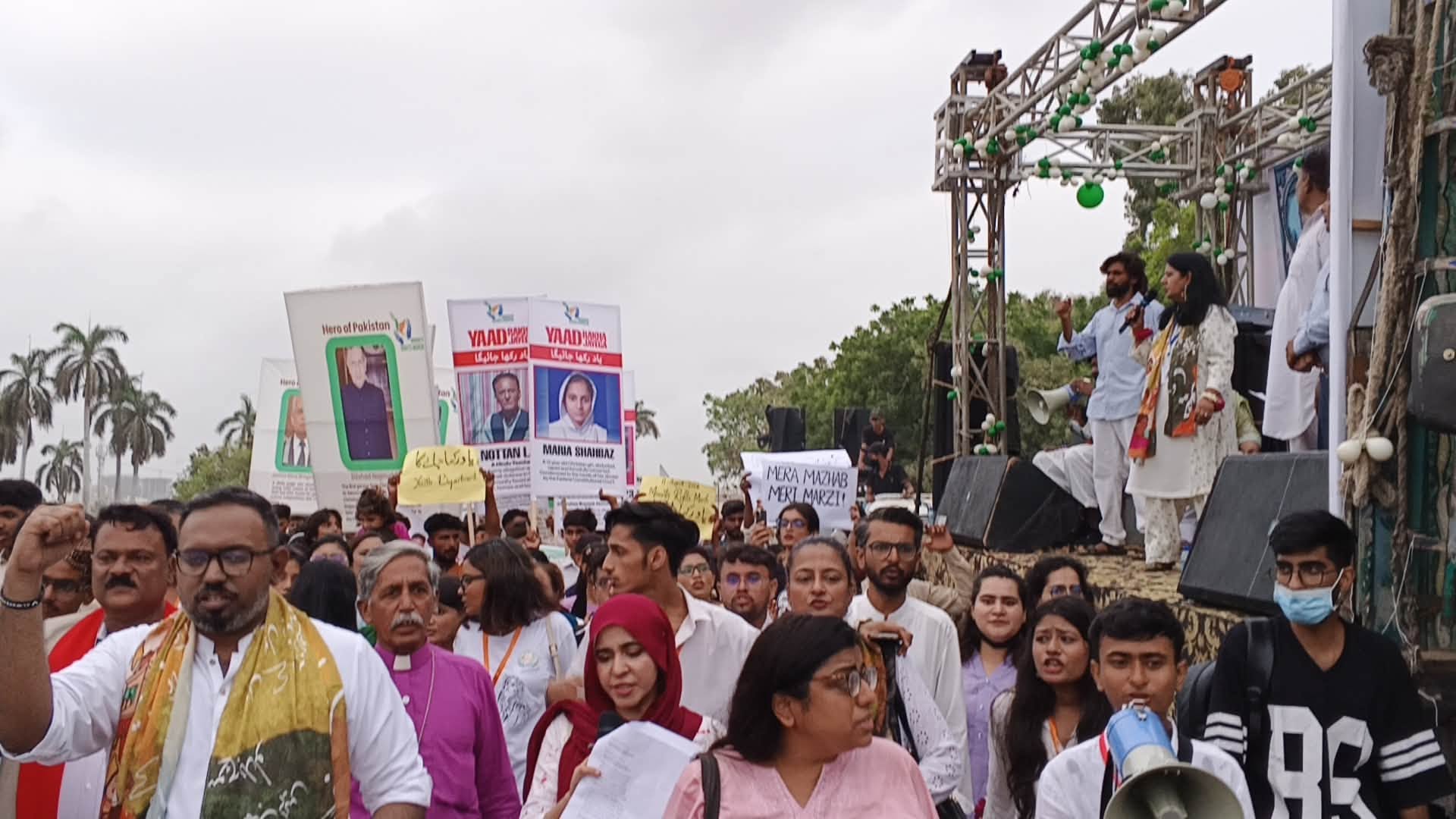
"Young people are saying: 'We shall snatch our freedom,'" Luke Victor, organizer of the Minority Rights March, told EWTN News.
Addressing the rally, speakers demanded an end to faith-based discrimination and violent extremism against religious minorities and called for changes to constitutional provisions they say deny minorities equal access to public office.
Victor said protesters wanted Articles 41 and 91 of the constitution amended to allow minorities to become president or prime minister on merit.
The Minority Rights March's 11-point charter called for stronger political representation, curriculum reforms, protection of minority property and worship places, safeguards against blasphemy-law abuse, and independent national and provincial minority rights commissions.
The groups said rising violence, discrimination, and attacks on minorities had fueled fear and insecurity, particularly among young people.
Official ceremonies
While activists took to the streets, the government marked the day with official ceremonies promoting religious freedom, equality, and interfaith harmony.
In Lahore, the Punjab government organized a weeklong program beginning Aug. 7 with an interfaith rally, cultural competitions, and welfare camps. Karachi and Peshawar, capital of Khyber Pakhtunkhwa province, also hosted official programs highlighting the contributions and rights of religious minorities.
Minority activists said such events should be accompanied by concrete legal and institutional reforms.
Aug. 11 was declared National Minorities Day in 2009 following a campaign led by Shahbaz Bhatti, Pakistan's first Catholic federal minister for minorities and a prominent advocate for religious freedom.
Bhatti was assassinated outside his Islamabad home in March 2011. Two gunmen sprayed his car with bullets before leaving pamphlets describing him as a Christian "infidel."
In his Minorities Day message, President Asif Ali Zardari recalled Jinnah's Aug. 11, 1947, address to the Constituent Assembly in which the country's founder said citizens were free to worship according to their religion and that religion, caste, and creed should have no bearing on the affairs of the state.
Faisalabad rally
In Faisalabad, Catholic lawyer Akmal Bhatti, a nephew of Shahbaz Bhatti, led a rally calling for greater protection of freedom of religion and belief.
Participants demanded a ban on the forced conversion of minors, a 5% quota for minorities in public services and educational institutions, direct elections for reserved seats, removal of religious qualifications for the president and prime minister, and the creation of a constitutional National Minority Rights Commission.
They also criticized the Ministry of Religious Affairs and Interfaith Harmony, which oversees the National Commission for Minorities, saying the commission has remained dysfunctional since completing its three-year term in May 2023.
Archbishop's appeal
Archbishop Joseph Arshad of Islamabad-Rawalpindi, in his Aug. 11 message, called for the protection of constitutional rights, religious freedom, and equality.
"Providing all citizens equal rights and equal opportunities for development without discrimination on the basis of religion or belief is a national responsibility," he said, urging collective efforts to eliminate hatred, prejudice, and intolerance.
He recalled Jinnah's emphasis on equal rights and religious freedom, saying the principles must be implemented "in their true spirit."
Non-Muslims accounted for about 14.2% of Pakistan's population in the country's first census in 1951. According to the 2023 Population and Housing Census, non-Muslims now constitute roughly 3.5% of the country's population of about 247.5 million.
Pakistan's religious minorities include Christians, Hindus, Sikhs, Ahmadis, Baha'is, Zoroastrians, Buddhists, and followers of the Indigenous Kalash faith.