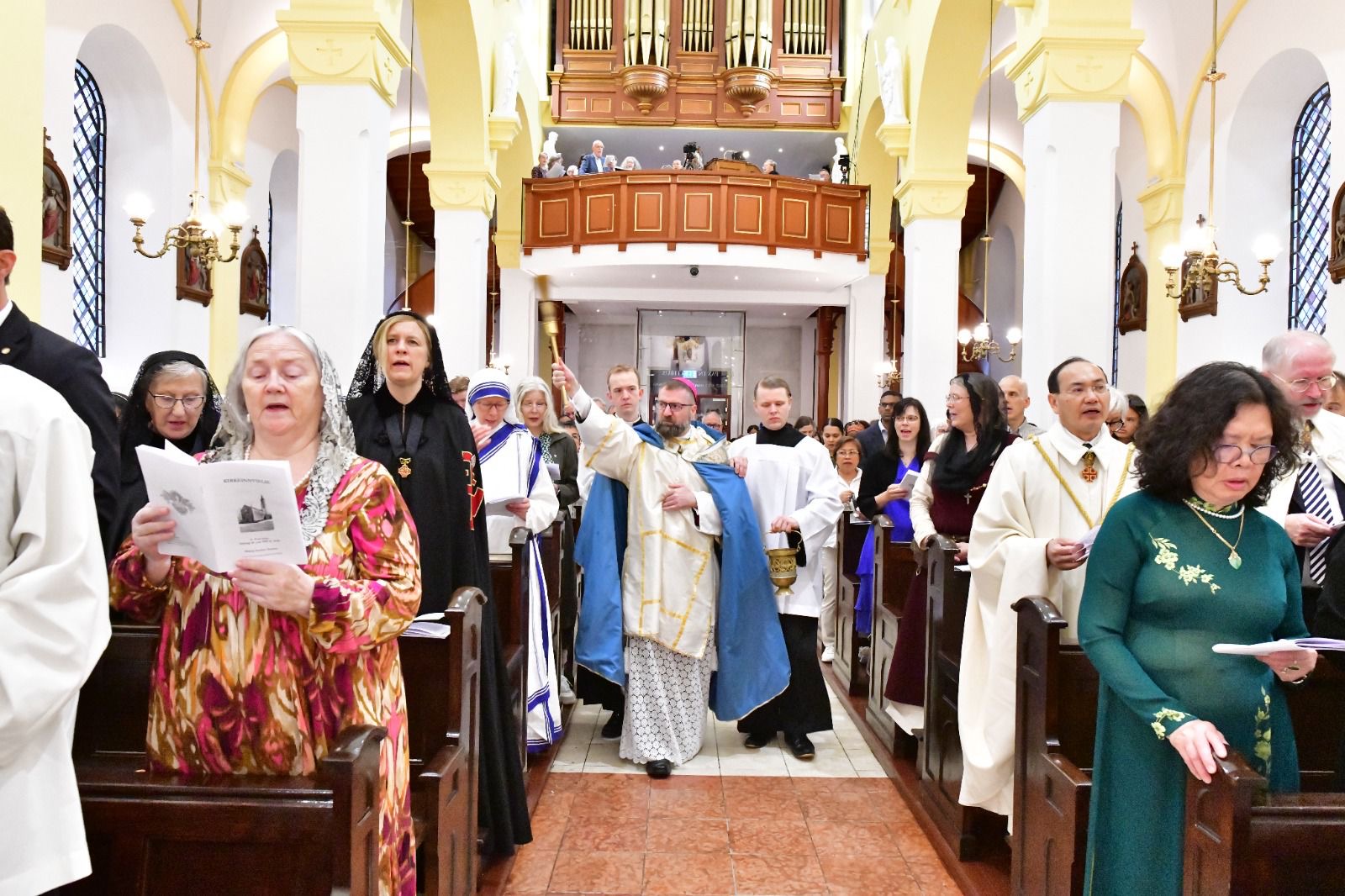
Before his conversion to Catholicism, EWTN Norway's editor-in-chief, Pål Nes, was a Freemason. But when he joined the Catholic Church, he left Freemasonry behind.
The Nordic bishops, as well as the Church's hierarchy, agree: A formal association with Freemasonry is incompatible with Catholicism.
But this issue, which has come up in public conversation among Catholics around the world, is often controversial in the Nordic countries of Denmark, Finland, Iceland, Norway, and Sweden, where some mistakenly believe that there is an exception to the Catholic Church's instruction.
This week, the Nordic Bishops' Conference clarified the teaching.
"We write to you at this time as shepherds to clarify a matter that for many years, if not decades, has generated uncertainty, speculation, and diverging opinions in our countries: the question of whether or not Catholic faithful in the Nordic countries may be Freemasons or belong to a Masonic lodge," the bishops wrote.
In the June 29 letter to parish priests signed by Nordic Bishops' Conference president Bishop Erik Varden of Trondheim and others, the bishops stated that there is "no exception" for Catholics in Nordic countries from the "universal law of the Church" regarding Freemasonry.
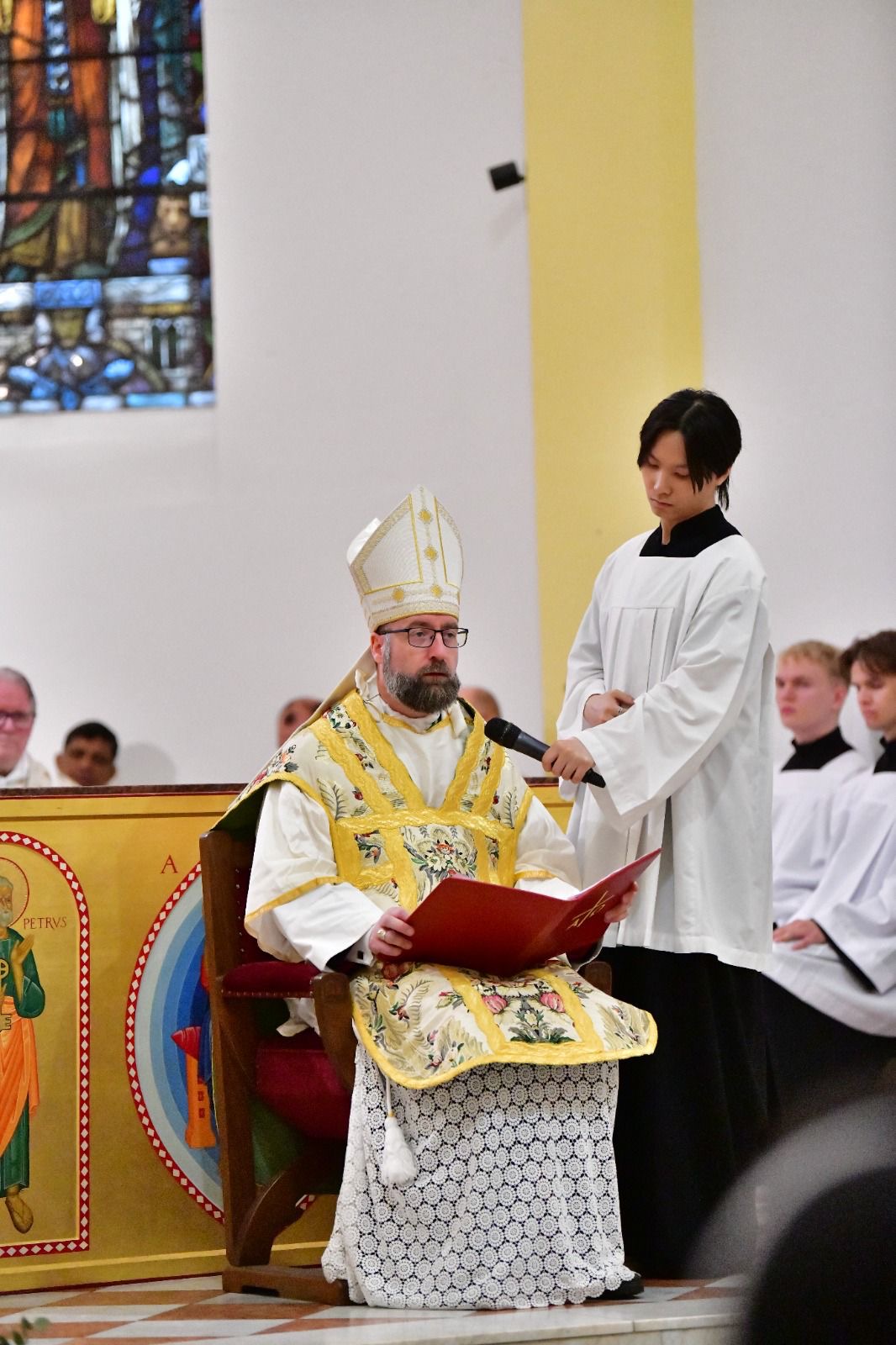
The Nordic bishops had met with officials from the Dicastery for the Doctrine of the Faith during a plenary assembly in Rome from Sept. 1–5, 2025, to discuss the matter. The dicastery's response was unequivocal.
The bishops said the Church's teaching applies "in full and without exception in the territory of the Nordic Bishops' Conference."
The letter is not to detract Freemasonry but rather a clarification that its principles clash with those of the Church, according to the bishops.
"We wish to stress that the Catholic Church's firmness on the question of adherence to Freemasonry is not a negative judgment on the goodwill or good works of individuals," the bishops wrote.
"The Church's position springs from awareness that the theological and philosophical principles of freemasonry are incompatible with confession of the Catholic faith," the bishops said.
Nes told EWTN News the bishops' statement helped give clarity on the issue in his home country of Norway.
"Their statement gives priests and lay faithful the clarity that many of us have needed for a long time," he said.
Nes has seen confusion in his home country, largely because of "a myth developed that the Scandinavian form of Freemasonry was somehow an exception, and that Catholics in the Nordic countries could belong to a lodge without contradicting the teaching of the Church."
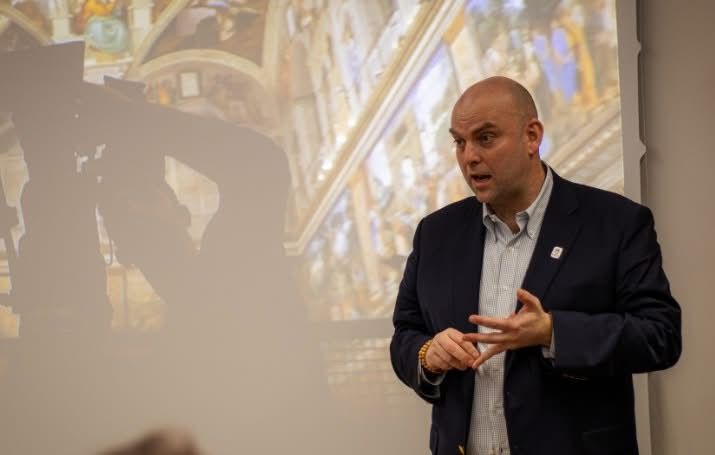
Many prominent Catholics in Norway "have been associated with Freemasonry, including laypeople and clergy," according to Nes.
"That has made the situation more confusing for ordinary Catholics," he said.
Meanwhile, "public statements and pastoral practice have sometimes contributed to uncertainty," Nes observed, citing a 2025 instance where Bishop Emeritus Bernt Eidsvig of Oslo, Norway, said "that he would not refuse holy Communion to Freemasons."
"Many understood this as a softening of the Church's position, even though the universal teaching of the Church had not changed," he said.
"The bishops' recent clarification is therefore very important," Nes said. "It makes clear that there is no Nordic exception: A Catholic cannot be a Freemason."
Why are Freemasonry and Catholicism incompatible?
Nes explained that Freemasonry is more than a social group because of its "religious character."
"In my experience, Freemasonry in Norway was not simply a social network or a charitable association," Nes told EWTN News. "It had a strong sense of fraternity but also a very clear spiritual profile. Its rituals, symbolism, and solemn ceremonies gave it something of a religious character. For that reason, I think Freemasonry must be treated as a religious and spiritual system, not merely as a club."
Nes found good in Freemasonry but was ultimately drawn to Catholicism.
"I eventually realized that I wanted the real thing," he said.
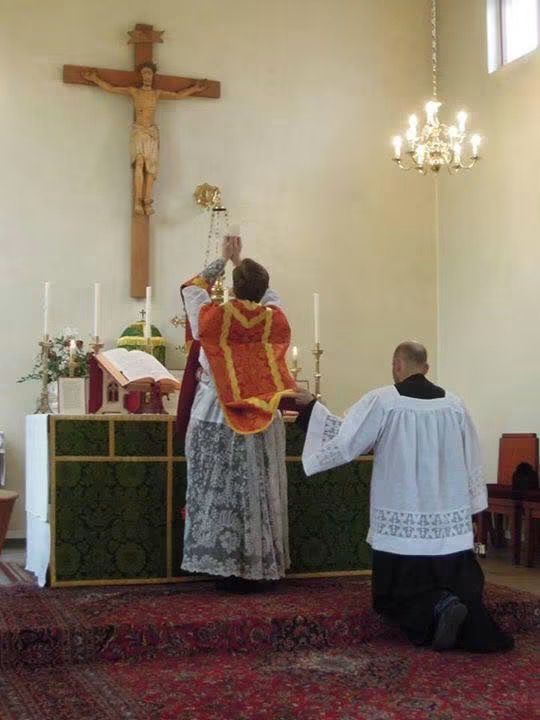
"There were elements in Freemasonry that I found beautiful: the seriousness, the brotherhood, the use of ritual and the sense of entering into something larger than oneself," Nes said. "But as I gradually came to know the Catholic Mass and the Catholic faith, I began to see that much of what had attracted me in Freemasonry — its solemnity, ritual, and symbolism — was only an echo of something fuller and truer in the Catholic faith."
Nes left Freemasonry behind with the help of a priest who mentored him.
"During my conversion process, the priest who guided me was very clear," Nes said. "I could not become Catholic and remain a Freemason. I am deeply grateful for his clarity, and also for his courage in saying it plainly. That clarity helped me make a clean and honest decision."
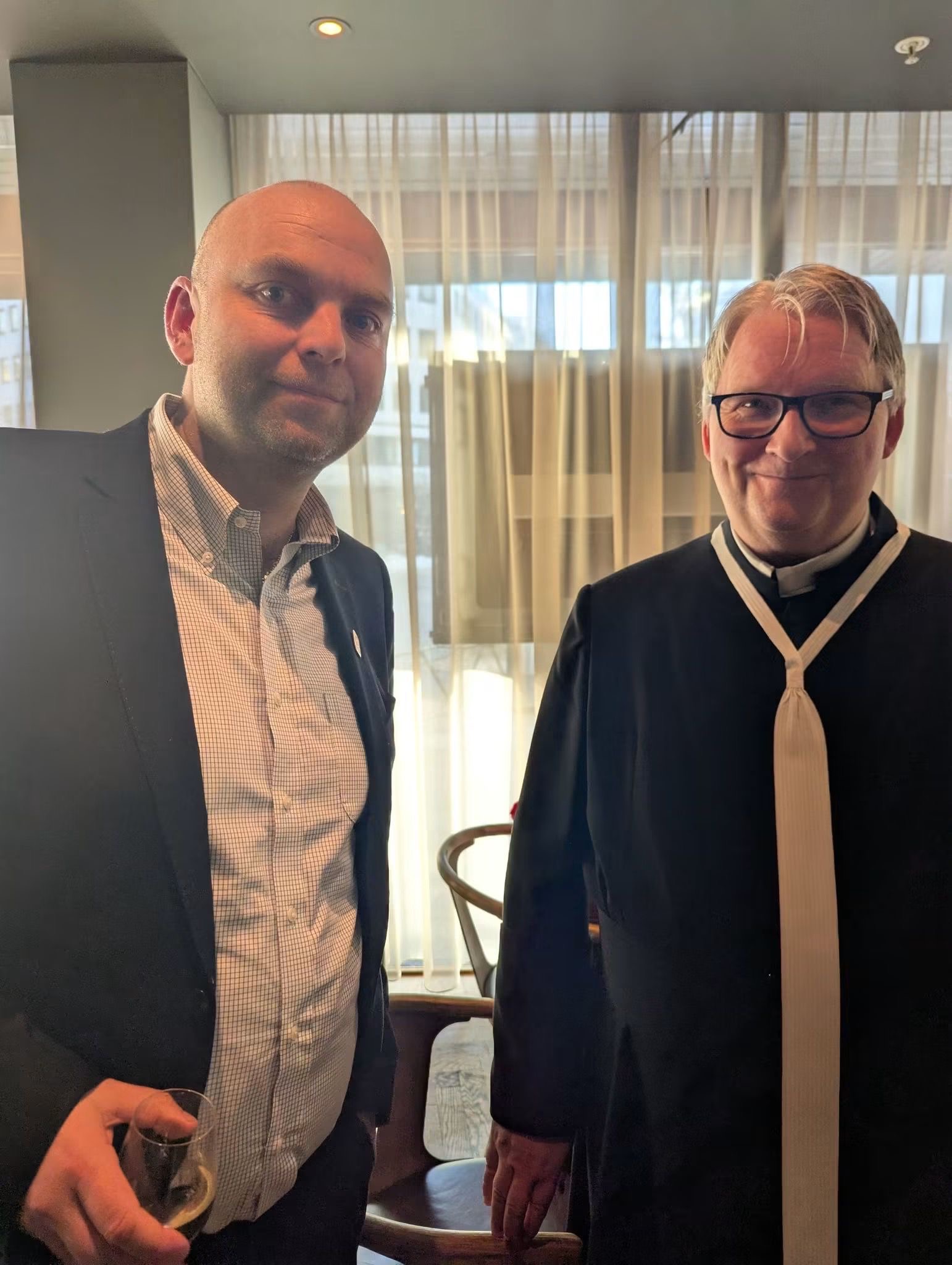
Now, Nes is spreading the word that the two groups are fundamentally irreconcilable.
"For the last seven or eight years, I have tried to explain publicly that one cannot be both a Catholic and a Freemason," Nes said. "I have never wanted to speak badly of Freemasonry or of individual Freemasons. My point has always been doctrinal: Catholicism and Freemasonry are two different religious and spiritual systems, and they cannot be reconciled."
In their letter to parish priests, the bishops provided several "pastoral and sacramental provisions" to be followed.
First, the bishops encouraged Catholics who are Freemasons to "relinquish this membership" with Masonic lodges and to abstain from the Eucharist and other sacraments until they do. Freemasons seeking to join the Catholic Church are instructed to "terminate this membership" first.
In addition, the bishops instructed Catholic groups not to collaborate with Masonic groups.
"No parish, no institute of consecrated life or society of apostolic life, no Catholic organization or institution in our local Churches is to enter into agreements of collaboration with Freemasons or Masonic lodges or make use of properties belonging to Masonic lodges," the bishops wrote.
The bishops encouraged the faithful to support one another in following Jesus.
"The call of Our Lord Jesus Christ, 'Come, follow me' (Mt 4:19), presupposes readiness to leave behind other attachments that stand in the way of wholehearted discipleship," the bishops wrote. "This has always been, and will always remain, a criterion of Christian authenticity. Let us help each other by word and example to live up to it, trusting in God's grace."