On June 9, as part of his apostolic journey to Spain, Pope Leo XIV is scheduled to visit Barcelona. There, he will inaugurate the Tower of Jesus Christ at the Basílica de la Sagrada Família and celebrate a Mass commemorating the 100th anniversary of the death of its first architect and designer, Antoni Gaudí.
Interest in Gaudí, whom Pope Francis proclaimed venerable in 2025, has grown recently alongside rumors of an imminent beatification.
Ahead of Leo's visit to Barcelona, two experts commented on Gaudí's legacy, which is not widely recognized beyond his architecture.
Gaudí's Sagrada Família: Representative of his vision?
One hundred forty-four years after construction began, Sagrada Família continues to spark debate. Gaudí saw only about 10% of the original project completed. This raises a key question for architecture, heritage conservation, and contemporary art history: To what extent does what is being built today remain faithful to the original project envisioned by "God's Architect"?
"Our obligation is to continue with the construction of Sagrada Família, faithfully following Gaudí's project," affirmed Jordi Faulí, the seventh architect of the church after Gaudí, in an interview with EWTN News.
While other buildings were completed after their creators' deaths, such as Le Corbusier's Saint-Pierre de Firminy church in France, Gaudí's situation is unique: he knew he would not live to see the work finished. For this reason, he devoted enormous effort to leaving a comprehensive roadmap for the future.
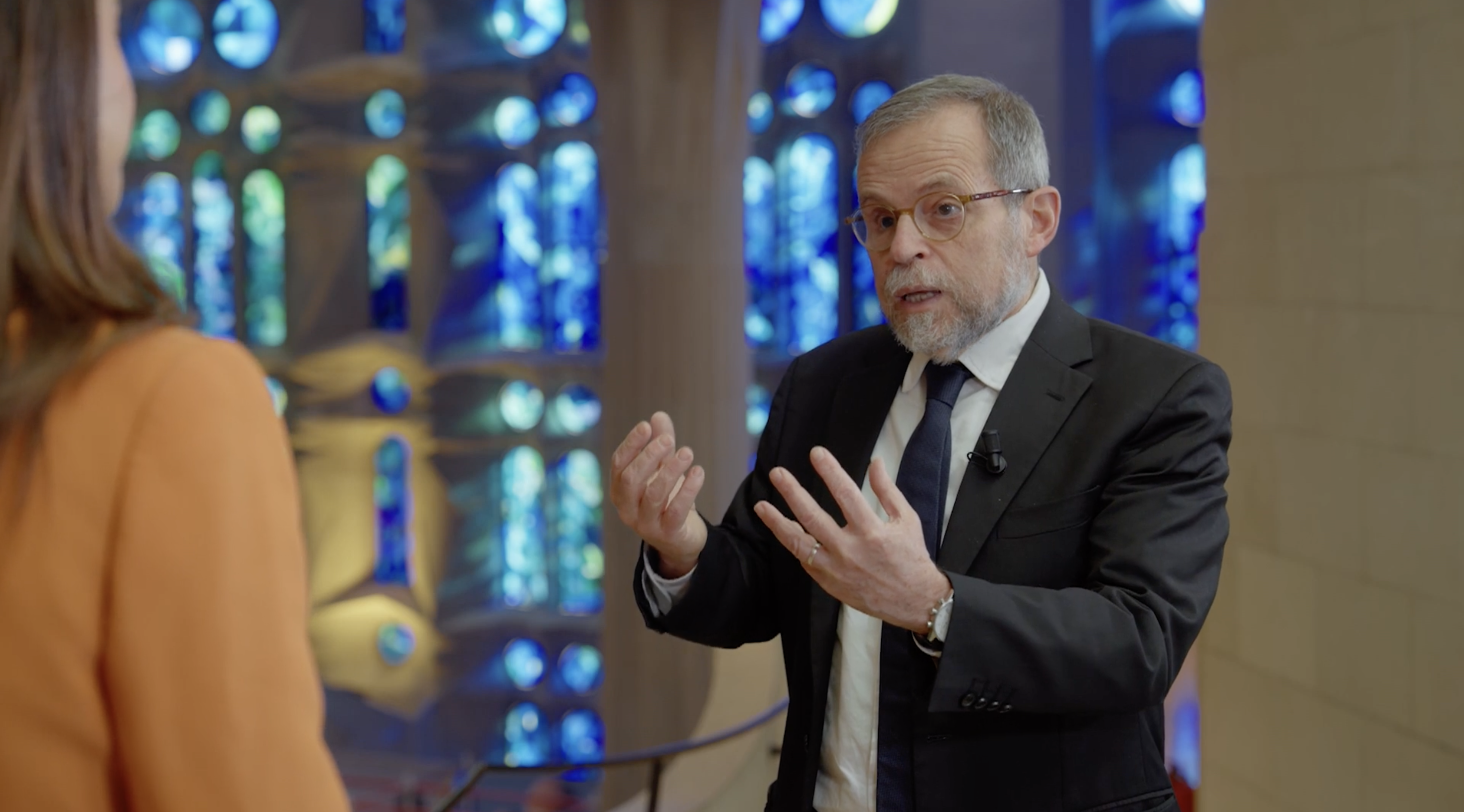
Faulí, who has directed the works since 2012, asserted that Gaudí left a conceptual and technical legacy solid enough to guarantee the basilica's continuity.
"Consider that Gaudí spent his last 12 or 14 years working exclusively on Sagrada Família, living poorly, thinking about the future, with hope and faith in the future," Faulí recounted. To ensure his vision survived him, the architect left behind a comprehensive theological-symbolic plan, detailed drawings, and large-scale models — including a massive 16.4-foot-high projection of the main nave.
More than an architectural project, Sagrada Família is, in Faulí's words, a catechesis sculpted in stone.
"He wanted to move people, to inspire them by seeing the facades, entering the interior, and seeing these treelike structures that rise upward into the space for the Eucharistic celebration, and for all this beauty to reach everyone's heart so they would think about their lives, think about the life of Christ and their own lives, and that this would lead them to feel loved, welcomed, and ready to love others," he stated.
Gaudí: A model of dialogue amid deep divisions in Spain
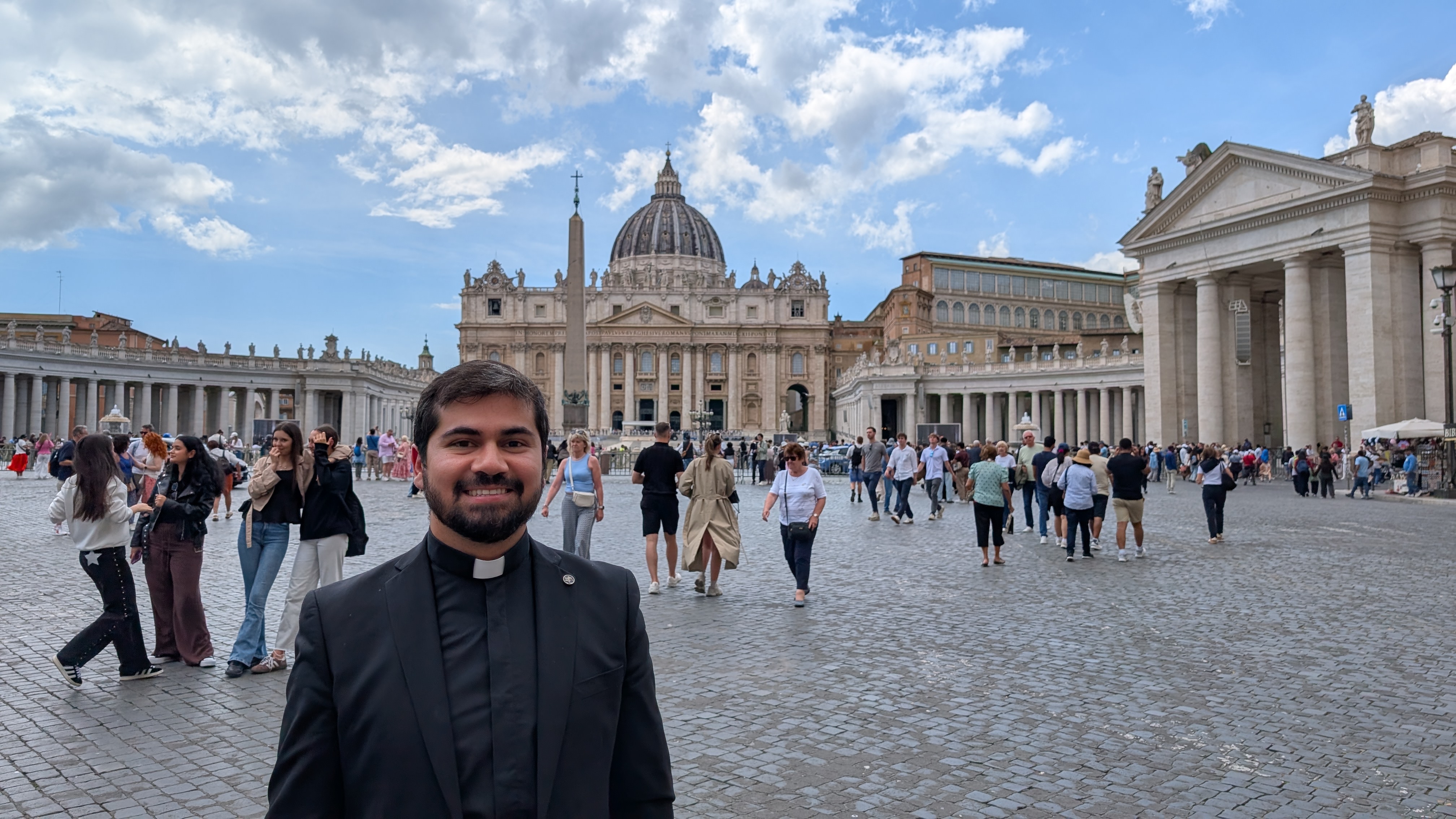
Gaudí's life and example of holiness have been highlighted in the run-up to Leo's trip to Barcelona. Father Reniel Ramírez Herrera, who has served as postulator of Gaudí's canonization cause since 2025, told EWTN News that although an imminent beatification for Gaudí is unlikely, it is impossible to understand him without faith.
"Surely the figure of Gaudí is incomprehensible without a vision of faith," Ramírez said to EWTN News. "Gaudí himself, during his architectural studies, did not conceive of architecture or even art in a broad sense without a vision of faith. Therefore, the transcendental element — and undoubtedly the element of holiness — is fundamental. And it is certainly a surprise for anyone who discovers, through small details, that the life of Gaudí is incomprehensible without a vision of faith; his genius cannot be understood except through faith."
Gaudí's example has earned him praise from Catholic leaders, including Pope Benedict XVI. During his 2010 apostolic journey to Spain, when he consecrated Sagrada Família, he described Gaudí as "a brilliant architect and devout Christian, whose faith burned brightly."
Discussing the likely impact of the pope's trip to Spain, Ramírez expressed hope that the visit would foster dialogue between the Catholic Church and the Spanish state, particularly given Spain's history of anticlericalism.
Gaudí lived through the intense violence against Catholic clergy in 1909, during the so-called Tragic Week, while still overseeing the construction of Sagrada Família. Ramírez expressed hope that renewed interest in Gaudí's life and the pope's visit would help heal the deep divisions that persist between Spain and the Church.
"Certainly, the context is marked by deep divisions and elements of an ideological nature. And yet the pope's visit brings hope," Ramírez said.
"Gaudí was convinced that Sagrada Família was a kind of courtyard of the gentiles (a place of dialogue between Christians and nonbelievers), in which even an unbeliever could not only raise their gaze but also open their heart toward the transcendent. This spirit of dialogue with which Gaudí lived his mission will certainly mark the pope's visit and will accompany the moments when the pope will encounter a society and culture in which Gaudí deeply rooted his faith."