When Pope Leo XIV warned diplomats this month that families face "progressive institutional marginalization" in global policy, he described a crisis that Eastern European leaders are confronting with particular urgency.
At a Jan. 14 conference in Lithuania's Parliament, experts and policymakers from across the region gathered to address what many called an existential demographic challenge — declining birth rates that threaten the future of European nations.
In his Jan. 9 address to the Diplomatic Corps, the pope had emphasized that "despite its centrality, the institution of the family faces two crucial challenges today. On the one hand, there is a worrying tendency in the international system to neglect and underestimate its fundamental social role, leading to its progressive institutional marginalization."
Discussions on Europe's birth rate decline
Participants at the Lithuanian conference examined how falling fertility rates and shrinking populations are reshaping the future of European nations, affecting labor markets, economic sustainability, and long-term state capacity. Several speakers argued that the crisis is not simply financial or administrative but cultural and civilizational in scope.
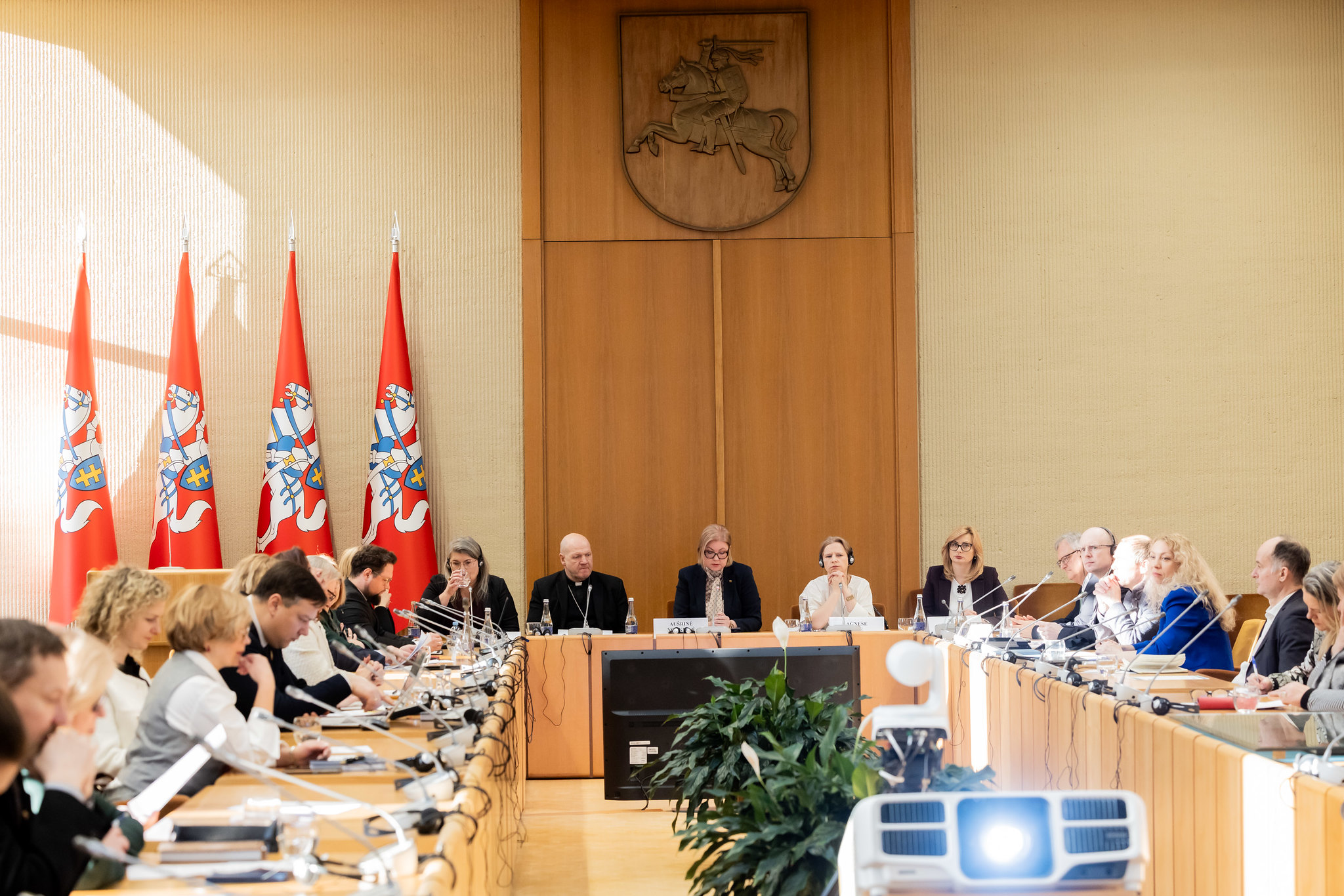
Bishop Saulius Bužauskas of Kaunas addressed the gathering and framed the decline in births as a moral and spiritual challenge rooted in weakening marriage, family life, and respect for human dignity. He explained that stable family life must again be recognized as a fundamental social good.
"It is important for young people to see that family is not a risk but an opportunity, that children are not a burden but the greatest gift, that having a family is not an exception but a natural and meaningful path in life," he said. He added that reversing demographic trends requires both cultural renewal and practical support, so that families "are not left alone with their concerns but receive help and support."
Hungary's long-term model
Árpád József Mészáros, strategic vice president of the Mária Kopp Institute for Demography and Families, described Hungary's fertility strategy as a long-term social project rather than a quick demographic fix. He said the country began systematically expanding family-support measures in 2011, when the total fertility rate stood at an average of 1.23 children per woman, among the lowest in Europe and well below the 2.1 replacement level. The rate has since risen to around 1.51 by 2023, he reported, though demographic pressures remain significant.
Mészáros presented housing support as one of the most influential tools of the government's family policy. He pointed to subsidized loans for married couples, interest exemptions after the first child, partial loan reductions after the second, and full debt cancellation after the third, describing these measures as designed to ease financial barriers and strengthen long-term family stability.
He also discussed broader social support, including expanded child care infrastructure, discounted meals for children, and workplace and municipal "family-friendly" initiatives aimed at making it easier to balance work and parenting. Alongside these measures, he noted rising homeownership and improved living standards among families, suggesting that some of the policy's strongest effects may be indirect but socially significant.
Money alone cannot reverse value shifts
Agnese Irbe, OFS, founder of the Latvian Philosophers' Association "Peripatos," offered a more cautionary diagnosis. She explained that Latvia's fertility decline reflects a generational shift in values that cannot be solved simply through incentives or social benefits.
Citing a 2022 University of Latvia survey, Irbe pointed to a steep drop in the importance young people attach to "children and family," falling from a high priority in 2004 to near the bottom of the rankings by 2022. In her view, this shift limits what state policy can achieve, since financial support cannot compensate for a weakening cultural desire for marriage and childbearing.
Overall, Irbe presented Latvia as a case where the limitations of family policy lie not only in budgets or programs but also in the broader societal messages shaping the next generation's choices.
Fertility decline is only the visible tip
Helena Hlubocká, general secretary of Slovakia's Christian Union party, placed Europe's fertility decline in a larger historical context. She traced major shifts in household and family structures since the 1980s, including a rise in childless households, growing instability in partnerships, and more couples stopping pregnancies after their first child.
Using an "iceberg" analogy, Hlubocká argued that declining fertility is only the most visible part of a deeper social transformation that has taken decades to form. She warned that narrowly technocratic solutions are unlikely to succeed in cultures increasingly shaped by individualism, where long-term family commitments are weakened and childbearing is seen as increasingly irrational.

Instead, she presented fertility as the outcome of a wider "relational ecosystem" rooted in stable marriage, intergenerational bonds, and a shared moral vision. Without restoring a social story based on continuity, belonging, and mutual responsibility across generations, she suggested demographic recovery would remain out of reach.
Poland's call for family-centered policy and international coordination
Jerzy Kwasniewski, president of Ordo Iuris, framed demographic decline as a strategic crisis that requires coordinated family-centered responses both nationally and internationally. Referring to Poland as an example, he warned that fertility rates across parts of Europe have fallen far below replacement and that the consequences will be structural rather than temporary.
Kwasniewski also explicitly linked family policy to Catholic social teaching. He explained that it must be rooted in solidarity rather than individualism and described the family as "a basic social unit of the society." In his view, public policy should recognize this social contribution and provide stronger, deliberate support for families for the sake of the common good.
A resolution calling for strategic, coordinated family policy
The conference concluded with a resolution urging governments to treat family policy as a strategic national priority rather than a fragmented set of welfare measures. It called for coordinated action across taxation, housing, education, health care, employment, and regional development, so that young families can raise children without poverty, insecurity, or structural barriers.
The resolution also stressed the importance of strengthening cultural and educational support for long-term family commitment.
Themes in the resolution echoed Catholic social teaching, particularly solidarity and subsidiarity, by presenting the family as the foundation of society. This reflects St. John Paul II's description of the family as the "first and vital cell of society" in Familiaris Consortio, as well as Pope Francis' emphasis in Amoris Laetitia that families require sustained and practical support to thrive amid modern pressures.