The pontiff's message was published ahead of the 112th World Day of Migrants and Refugees, observed on Sept. 27.
Pope Leo XIV has appealed to all people to recognize the suffering of child migrants, noting that they are often the most vulnerable during mass migration.
In a message published by the Vatican on Aug. 14, the pope reflected on the theme for the 112th World Day of Migrants and Refugees, "Even Just One of These Children," drawn from Matthew 18:5. The initiative is organized by the Vatican's Dicastery for Promoting Integral Human Development.
Leo highlighted the growing challenges faced by minors forced to migrate from their home countries, including human trafficking, loss of parents, and sexual violence.
"Sadly, migrant children are more easily ignored, because they lack adults capable of protecting and supporting them," Leo said in his message.
"To this already appalling situation are added further tragedies: deaths along migration routes, trafficking and exploitation, the recruitment of minors for use in armed conflicts, sexual violence, forced marriages, and the atrocities they have suffered or witnessed during their travels."
He also noted the contributions of families, civil society, and Church communities in helping child migrants.
"We think of the families who open the doors of their homes in order to restore to these children the warmth of a family hearth; the educators who serve in reception centers; the volunteers and aid workers who each day devote themselves to healing the invisible wounds of these little ones along migration routes and in our cities," Leo said.
The pope then appealed to civil institutions to work to improve protections for migrant children to uphold the dignity of every child.
"Even just one of these children, in the context of civil institutions, calls us to reaffirm the principle of the best interests of the child. Public and private institutions are bound to prioritize the protection and dignity of every single child and adolescent," he said.
Several homes were looted and vandalized in a mainly Catholic village after the body of a Muslim man was found nearby, and 19 Indigenous villagers were arrested.
The Catholic Church and Indigenous Christian leaders in Bangladesh have called on the authorities to protect families terrified by an attack on a Christian village and to bring those responsible to justice.
On Aug. 12, houses in the village of Gazarikura, a community in the Diocese of Mymensingh in the north of the Muslim-majority country, were attacked, looted, and vandalized. Local Indigenous Garo people said the stolen property included cash, cows, goats, and other valuables.
The Indigenous families said the attack and looting were carried out by people from a neighboring Muslim village after the body of a Muslim man was found in their village.
Father Simon Hacha, vicar general of the Diocese of Mymensingh, visited the village together with other priests, sisters, Garo Indigenous leaders, and local leaders.
"We never want unrest; we are for peace," Hacha, who is himself a Garo, told EWTN News.
"We pray for the soul of the deceased person around whom this problem has arisen and we offer our condolences to his family," he said.
He urged police not to harass those who are not guilty and to identify the culprits and take appropriate action.
"I hope that the administration will provide security to the Garo Indigenous of this village and that the villagers will maintain good relations with each other so that peace can prevail in the future," Hacha added.
Losses and arrests
Village leaders told EWTN News that six houses in Gazarikura were vandalized and that the furniture of one house was burned. The attackers took away seven cows, 10 goats, a motorcycle, cash, and expensive furniture. The incident spread panic among local residents.
Father Lawrence Ribeiro, the parish priest of Mariamnagar, told EWTN News by telephone during a visit to the village on Aug. 14 that 11 houses had been looted and that televisions, refrigerators, cows, and goats had been taken away. The families do not have enough food, he said. "So, we brought food, soap, and other items for these families."
Ribeiro said the families had been calculated to have suffered losses of about 4 million taka (about $32,000). "We are preparing to file a case of looting for this," he said.
The body of a rice trader, Billal Hossain, 40, was recovered by police. Nineteen people, including men and women from the Garo community, were arrested on suspicion of involvement in the case. Police later released 14 of them.
According to police sources, Hossain, a resident of the Jarultala area of the upazila, or subdistrict, went missing on Aug. 4. On the afternoon of Aug. 12, local farmers working in a field smelled a foul odor near a canal, searched the surroundings, and found the body buried in the ground. Police went to the spot and recovered it after being informed.
An organization of Garo Indigenous students said in a statement: "We want to say very clearly that the responsibility for the crime of an individual can never be imposed on an entire ethnic group, community, or population."
"If someone is involved in any crime, his involvement will be determined through an impartial and fair investigation. If the crime is proven, he will be tried according to the prevailing law. But suspecting, harassing, or victimizing another innocent person on the basis of an individual's identity, ethnic identity, or community identity is against justice," the student organization said.
S.M. Noor Mohammad, officer in charge of the Jhenaigati police station, said the atmosphere in the village is now calm and that police have been deployed.
"The police are investigating the incident and are continuing their efforts to identify the criminals involved in the incident," Mohammad said.
On Aug. 9, Indigenous people had rallied for their rights and to protest atrocities against them on the occasion of the International Day of the World's Indigenous Peoples.
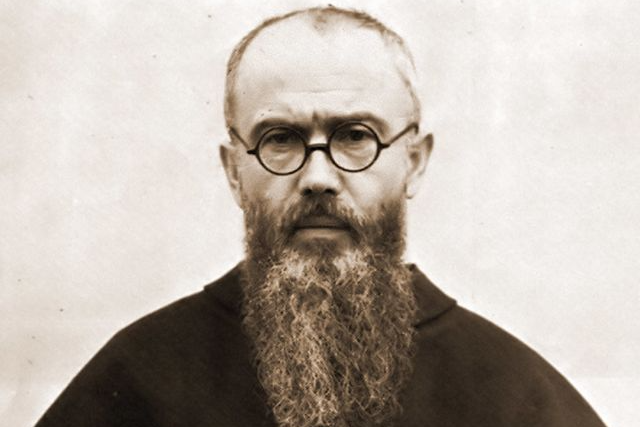
The last image taken of the saint before his final arrest was notable for what it didn't show — his signature long beard.
In 2022, the Catholic Church in Poland shared a photo commemorating the 81st anniversary of St. Maximilian Kolbe's arrest by the Nazis. The image, the last one taken of the saint before his final arrest, was notable for what it didn't show — his signature long beard.
By the time the photo was taken, Kolbe had already been arrested by the Nazis once but was clearly resolved to continue his nationwide evangelization efforts. The monastery he had established at Niepokalanów, 25 miles west of Warsaw, had become a major Catholic publishing center.
The beard with which Kolbe is often pictured is notable for several reasons, one of which was the fact that not many of his Franciscan counterparts in Poland sported them. He shaved his signature beard in order to blend in with his fellow Franciscans and with society at large.
St. Maximilian Kolbe. | Credit: Public domain
The second reason is that Kolbe's beard is the only first-class relic that exists of him. The rest of his body was incinerated in the ovens of Auschwitz after he was murdered by the Nazis in 1941.
Father James McCurry, a Conventual Franciscan and minister provincial of the Our Lady of the Angels Province, gave a homily in 2016 commemorating the 75th anniversary of Kolbe's martyrdom in which he mentioned the saint's beard.
McCurry, author of the book "Maximilian Kolbe: Martyr of Charity," said Kolbe chose to keep the beard upon his return from six years of missionary work in Japan. In those days, it was customary for missionaries to grow long beards, and Kolbe wanted to keep it as a reminder of his missionary days and as a reminder to always be a "missionary" of the Gospel.
McCurry said Kolbe's beard made him unusual among his Conventual Franciscan counterparts, who generally did not wear them. Kolbe's fame was spreading in Poland thanks to his publishing work, and his unique beard helped him to stand out all the more.
It was for this reason that Kolbe eventually, after the 1939 Nazi invasion of Poland, made the decision to shave it, McCurry said, so as not to stand out. Kolbe's founding of the Militia Immaculata (MI), an evangelization movement identifying with Mary, put him high on Nazi watchlists.
One book on his life offers this quote from the saint: "Beards provoke the enemy who rapidly is approaching our friary. Our Franciscan habits also will provoke him. I can part with my beard. I can't sacrifice my habit."
After a fellow brother cut off Kolbe's beard for him, the brother at first tried to save the beard, but Kolbe objected and told him to throw it in the stove. So, obediently, the brother threw it into the stove, but the fire was not lit, so the brother later retrieved it and stored it in a pickle jar.
Today, Kolbe's beard is his only surviving first-class relic.
McCurry was also a friend of Franciszek Gajowniczek, the man for whom Kolbe laid down his life at Auschwitz in late July 1941, following his arrest on Feb. 17.
Gajowniczek was one of the 10 men selected to be executed in reprisal for one prisoner's escape from the barracks. He cried out: "What will happen to my wife and children?" And in response, Kolbe stepped forward and offered to take his place. The 10 were placed, naked, in a starvation chamber.
All 10 of those condemned that day died eventually; six starved, and the deaths of the rest, including Kolbe, were hastened by an injection of carbolic acid.
This story was first published in August 2021 and has been updated.
Southeast India's March for Life draws thousands of participants, a UK bishop is calling on Prime Minister Andy Burnham to push for Jimmy Lai's release, and more in this week's roundup of world news.
Thousands gathered in the city of Chennai in southeast India on Aug. 8–9 for the country's fifth National March for Life, bringing together Catholic bishops, clergy, religious, families, young people, and pro-life advocates for two days of prayer, formation, and public witness to the dignity of human life.
Organized by CHARIS India and hosted by the Archdiocese of Madras-Mylapore, the event featured Catholic leaders including Cardinal Anthony Poola, archbishop of Hyderabad and president of the Catholic Bishops' Conference of India.
JCD Prabhakar, speaker of the Tamil Nadu Legislative Assembly, opened the event. According to march organizers, he is the first Indian politician to publicly express his commitment to the protection and promotion of human life. At the march, he unveiled a memorial dedicated to unborn children. India's National March for Life has previously been held in Delhi (2022), Pune (2023), Thrissur (2024), and Bengaluru (2025).
UK bishop urges prime minister to push for Jimmy Lai's release
Auxiliary Bishop James Curry of Westminster, England, has written a letter to Prime Minister Andy Burnham urging him to do everything possible to secure the release of jailed China democracy activist Jimmy Lai.
"Jimmy Lai's 'crime' was to voice concerns, engage in peaceful protest, and publish a newspaper which was critical of oppressive new laws," Curry said, expressing concern that Lai "has no access to the sacraments" and about his deteriorating health conditions.
"Around 200,000 migrants have come to the U.K. from Hong Kong since 2020, many of whom are Catholic. The Church in England and Wales continues to provide pastoral support to all those from Hong Kong who seek it," he said. "I also offer my prayers for those who are persecuted because of their faith or political beliefs throughout the world. I ask Catholics in England and Wales to join with me in seeking the intercession of St. Maximilian Kolbe for Jimmy Lai, and in seeking the intercession of St. Alban and St. Frances Cabrini for all those who have had to leave their own country because of persecution."
Lebanon's general amnesty law raises concern among Christians
Lebanon's Parliament approved a sweeping general amnesty law on Aug. 12, drawing support from a majority of lawmakers, including representatives of Christian parties.
The vote came shortly after the country abolished the death penalty, but the amnesty has proved far more divisive, ACI MENA, the Arabic-language sister service of EWTN News, reported Aug. 11.
Critics, particularly within Christian circles, fear the release of large numbers of prisoners without adequate rehabilitation programs could deepen Lebanon's security problems. They argue that the measure does little to address overcrowded prisons, prolonged pretrial detention, slow judicial proceedings, or the rights of victims.
The law also permits some Lebanese who fled to Israel after 2000 to return, provided they did not participate in military or security activities. Lebanese activist Maryam Younes, who was deported to Israel, rejected the measure as inadequate, saying returnees could not be certain of their safety from Hezbollah.
Young Russian Catholics gather to discuss Christianity in a digital world
Around 80 young Russian Catholics participated in the 24th annual Catholic Youth Meeting in the Diocese of St. Joseph in Irkutsk, Siberia, the largest geographical diocese in the world.
Participants in the program, titled "Nets of Jesus: Towards Dull Presence," included young people from Krasnoyarsk, Irkutsk, Transbaikalia, and Buryatia, Vatican News reported Aug. 10.
The Aug. 6–9 event included reflections on the parable of the good Samaritan, discussions on remaining Christian in a digital age, and discussions of their experiences and plans for future projects at their respective parishes. Participants were also guided in a daily spiritual reflection centered on young saints of the Church, including St. Carlo Acutis.
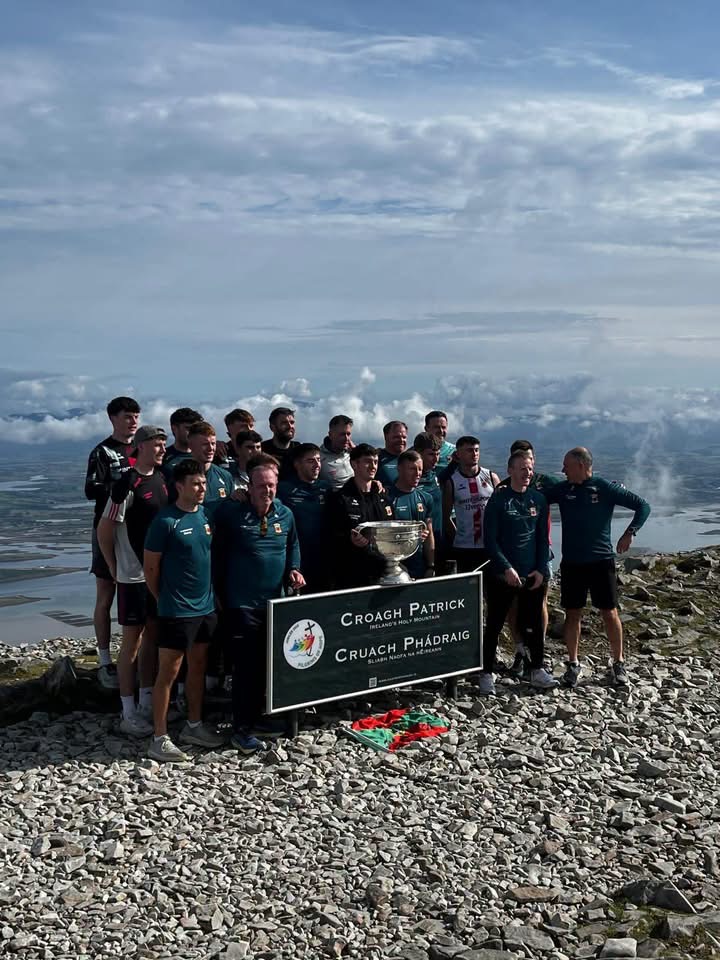
The All Ireland winning Mayo Gaelic football team carried the Sam Maguire cup to the summit of Croagh Patrick, Ireland's holy mountain, in thanksgiving for the historic win. | Credit: Father John Kenny, Westport Parish, Tuam Archdiocese
Ireland's Mayo Gaelic football team carries trophy to Croagh Patrick in thanksgiving
Footballers from the All Ireland winning Mayo Gaelic football team carried the Sam Maguire cup to the summit of Croagh Patrick, Ireland's holy mountain, in thanksgiving. They won a historic All Ireland match on July 26, breaking the legend of a 75-year curse by a parish priest placed on the last Mayo team that won for disrespecting a funeral procession during homecoming celebrations.
Mayo won their all Ireland Championship on Reek Sunday, traditionally a day of pilgrimage in the western county, when thousands of Catholics climb the mountain, many barefooted.
The group of Mayo players led by manager Andy Moran and captain Jack Coyne brought the famous trophy to the summit, where there is a small oratory. There they greeted other pilgrims and said a prayer of thanksgiving for their victory.
Kidnappings heighten anxiety among Syrian Christians
A series of reported kidnappings involving Syrian Christians has renewed concern over security in the region.
The cases include the abduction of a deacon near Homs and the disappearance of a young Christian man in Saidnaya, ACI MENA reported Aug. 11.
Elias Khazal, a farmer and deacon at the Syriac Orthodox Church of St. George in Zaidal, was seized by masked gunmen while working about two miles north of his village. His captors held him for 41 days near Tall Manin, between Damascus and Saidnaya, and demanded a ransom of $1 million. Father Hamid Masouh of Our Lady of Deliverance Syriac Catholic Church said security forces eventually raided the building where Khazal was being held. They freed him without a ransom payment and arrested members of the gang. Although the deacon endured several forms of torture, he returned home in good physical condition.
In Saidnaya, local sources reported that armed men abducted jeweler Fadi Samaan after entering a parking area in vehicles without license plates and opening fire. His fate remains unknown.
Mauritius religious leaders pledge united action against drug abuse
Leaders from several religious communities across Mauritius expressed their commitment to closer collaboration in confronting the country's growing drug crisis in a meeting at Bishop Jean Michaël Durhône's residence in the Diocese of Port-Louis.
At the Aug. 11 meeting, Durhône emphasized the importance of the family, which he described as "the foundation of society," and called on Mauritians not to lose hope, ACI Africa, the sister service of EWTN News in Africa, reported Aug. 12. "We are not giving up," he said, inviting the different religious communities to pool "their experiences, programs, and strengths."
In a statement issued after the meeting, participants described the drug situation as "alarming," noting that drugs, particularly "synthetic drugs," are affecting all sectors of Mauritian society, with young people becoming increasingly involved.
"Families, both rich and poor, are directly affected, while communities are facing a growing deterioration of their social fabric," the religious leaders said in their statement.
Roman pilgrims prepare to return to the Holy Land
After months of suspended pilgrimages because of war in the Middle East, the Opera Romana Pellegrinaggi, the Diocese of Rome's pilgrimage office, is preparing to return to the Holy Land. Its first trip is scheduled to depart Monday, Aug. 17.
Father Giovanni Biallo, the organization's spiritual assistant, told ACI MENA on Aug. 13 that preparations resumed after fighting between Lebanon and the Galilee region ceased and direct flights between Rome and the Holy Land began returning during the past two months. He said European pilgrims have been slower to return than groups from Asia and Latin America, partly because of widespread fears about instability across the region.
The priest welcomed the resumption as a sign of solidarity with local Christian communities whose livelihoods have been devastated. In Bethlehem alone, he said, 100 hotels had been closed and are now waiting for pilgrims to return.
Kevin Mario and Patrick J. Passmore contributed to this report.
A baby born to surrogate mother McKenna West is receiving medical care in a Dallas children's hospital.
The surrogate mother who refused to abort her baby after the biological parents allegedly called for an abortion gave birth two weeks early.
The child, called Gabriel by his surrogate mother, McKenna West, was born in Dallas on Aug. 12. He was born amid an ongoing legal dispute after his biological parents, identified in court documents as Nausheen Gilkar and Omar Ahmed, allegedly demanded West undergo an abortion.
At about 20 weeks, Gabriel was diagnosed in utero with hypoplastic left heart syndrome (HLHS) — a serious congenital heart condition. Treatment for HLHS typically involves three surgeries, beginning with one procedure shortly after birth.
"It's horrific to think that so-called intended parents, when they found out that their baby had hypoplastic left heart syndrome, told the surrogate mother that they wanted her to abort that child," Amy O'Donnell, executive director of Texas Alliance for Life, said in an interview with "EWTN News Nightly."
"That's horrific at any stage to want to abort a child simply because of a disability or a diagnosis, but late term after 20 weeks is even more so," she said.
West traveled to Texas from Alaska to ensure that Gabriel could be near doctors experienced in treating his condition. She allegedly offered to take full responsibility of the baby, but the baby's biological parents reportedly refused.
Gabriel was born "just 24 hours after Attorney General Ken Paxton initiated legal action," O'Donnell said.
Paxton filed an intervention in the case on Aug. 11 asking the Texas district court to enter orders directing the child's care upon birth, prohibiting his removal from the state, and setting an expedited hearing on any refusal of treatment.
"According to the district court, because McKenna [West] so bravely fled to Texas from Alaska to ensure that baby Gabriel had lifesaving care, baby Gabriel, now born in Texas, is a Texas resident," O'Donnell said.
The order stated that UT Southwestern Medical Center and Children's Medical Center of Dallas were legally obligated to care for Gabriel.
Gabriel has "received the lifesaving treatment available" at Dallas Children's, O'Donnell said. He is "in great hands and he has either had a heart surgery or it's pending."
"Due to HIPAA, we probably won't get information on the unfolding care, but we are certain that nobody can deny treatment, can demand transfer, and nobody can request that he receive anything less than the best that Texas has to offer."
"Our laws protect every child born in Texas and guarantee their right to life. The Department of Family and Protective Services [DFPS] holds authority under Texas law to protect children from medical neglect," Andrew Mahaleris, press secretary for Texas Gov. Gregory Abbott, said in a statement.
"DFPS will be closely monitoring this case and will take any action necessary to safeguard those rights," he said.
Pope Leo says surrogacy reduces a child to a 'product'
While acknowledging infertility is an immense cross to bear, the Catholic Church has a clear stance against surrogacy. The practice requires conceiving a child through in vitro fertilization (IVF) or artificial insemination and then transferring the embryo to the uterus of the surrogate.
Pope Leo XIV has affirmed that, by transforming gestation into a negotiable service, one "violates the dignity both of the child, who is reduced to a 'product,' and of the mother, exploiting her body and the generative process, and distorting the original relational calling of the family."
"Techniques that entail the dissociation of husband and wife, by the intrusion of a person other than the couple (donation of sperm or ovum, surrogate uterus), are gravely immoral," the Catechism of the Catholic Church (CCC) states.
"These techniques (heterologous artificial insemination and fertilization) infringe the child's right to be born of a father and mother known to him and bound to each other by marriage. They betray the spouses' 'right to become a father and a mother only through each other'" (CCC, 2376).
"There are a lot of concerns with surrogacy, and the more we look into it, the more concerns we have," O'Donnell said.
"We believe that no contract should be able to require death of a child due to a disability or an imperfection. And so we believe that there should be … nationwide protections there," she said.
"We need to protect the dignity of mothers who are involved in surrogacy as well, as long as it is legal in our nation and in our state," she said.
WBVM/Tampa (90.5 Spirit FM) announces the promotion of Davis Watts to Program Director. Watts will continue to serve as Music Director and host of the More Music Middays (10 a.m. - 3 p.m.) Watts says, "It's been an honor serving the Tampa Bay community with this amazing team for the past 13 years. I feel that the Lord, our listeners and the industry friends I've made over these years have prepared me for the exciting challenge of leading our air staff and I'm eager to get started."
WBVM/Tampa (90.5 Spirit FM) announces the promotion of Davis Watts to Program Director. Watts will continue to serve as Music Director and host of the More Music Middays (10 a.m. - 3 p.m.) Watts says, "It's been an honor serving the Tampa Bay community with this amazing team for the past 13 years. I feel that the Lord, our listeners and the industry friends I've made over these years have prepared me for the exciting challenge of leading our air staff and I'm eager to get started."
Watts joined the Spirit FM team in 2008, moving through the ranks of night time announcer, to middays, Music Director and now Program Director. "I've seen tremendous growth in Davis, and a hunger to improve not only his craft, but the station's as a whole. I'm excited that he's up to the challenge." said John Morris, Station Manager.
Spirit FM is a 100,000 FM station serving the Tampa/St. Petersburg market since May 1986. The station is owned by the Catholic Diocese of St. Petersburg, the only Catholic station in the country programming contemporary Christian music. For more information about Spirit FM, visit myspiritfm.com.