Parents must also regulate their children's cellphone use regarding content and time spent at home, as well as set a good example by their own moderate and judicious use, the archdiocese said.
The Primatial Archdiocese of Mexico said it considers it appropriate to regulate the use of cellphones and other electronic devices in schools but banning them should not be the only response: Parents must set a good example and impose limits at home as well.
In its latest editorial, titled "Before taking away their cellphones, let's look at our own [use]," Desde la Fe (From a Faith Perspective), the archdiocese's weekly publication, addressed the debate surrounding the use of mobile devices at schools as millions of students return to class this fall.
According to the publication, 19 states in the country (about 60%) already regulate or prohibit students' use of such devices in schools, except when teachers allow their use for educational purposes.
A ban 'just by itself' won't solve the problem
The archdiocese acknowledged that younger generations "have grown up connected to a screen" and that social media in particular "is part of how they communicate, entertain themselves, and stay informed."
However, it warned that excessive use of these devices can lead to "distraction, dividing one's attention, and hindering concentration." It also warned of the risk that digital content may gain "greater authority than the words of parents or teachers simply because it is more attractive or popular."
While the archdiocese stated that it is "appropriate to discuss the regulation of mobile phones in schools," it noted that "it would be a mistake to think that banning them by itself will solve the problem."
The editorial highlighted the challenge of teaching students the technical use of digital tools while also helping them engage "responsibly" with "the vast amount of information, stimuli, and content to which they provide access."
A challenge for parents and teachers
The editorial noted that the responsibility cannot solely fall upon children or schools; rather, parents need "tools to set boundaries, give guidance to their children, and learn to manage the use of technology" themselves.
"If a child spends several hours without a cellphone at school but returns to a home where every family member remains absorbed in their own screen, we will have made little progress," the editorial pointed out.
The Archdiocese of Mexico invited adults to ask themselves: "How often do we ask [our children] to get off their phones while we look at ours? How many conversations do we interrupt to check a notification? How often are we physically present with them, but our attention is elsewhere?"
The archdiocese acknowledged that digital tools "allow us to learn, work, communicate, and connect with others," but maintained that the challenge lies in "keeping them at the service of the person and not the person at the service of the screen."
"Regulating cellphones in schools may be a good start, but let's not make banning them a way to ease our consciences, nor set ourselves up as judges of the younger generations," the editorial advised.
The archdiocese emphasized that "educating for the digital world requires time and presence," inviting parents to ask themselves if they are willing to sit down with their children to "get to know what they are viewing, listen to their concerns, and help them establish the criteria needed to discern what they encounter on a screen."
This story was first published by ACI Prensa, the Spanish-language sister service of EWTN News. It has been translated and adapted by EWTN News English.
EWTN News Capitol Hill correspondent Erik Rosales spoke with various Catholic lawmakers about how their faith intersects with their public service.
For many of the 150 Catholics serving in the 119th Congress, faith plays an important role in their lives and work.
The current number of Catholic lawmakers on Capitol Hill is slightly higher than the previous Congress, with Catholics accounting for more than 28% of the members of the United States House of Representatives and Senate. Of the Catholic members, 126 serve in the House and 24 in the Senate, according to a report from the Pew Research Center.
In this special report, EWTN News Capitol Hill correspondent Erik Rosales spoke with various Catholic members of Congress about their faith and how they live it in their work.
Sen. Eric Schmitt
Sen. Eric Schmitt, R-Missouri, grew up a cradle Catholic and said his parents instilled in him the importance of having a personal relationship with Christ at a young age.
"I grew up in St. Louis, which is a very Catholic town and has been referred to as the Rome of the West because per capita, very Catholic," Schmitt told Rosales.
A "conversation back home, it might very easily start … 'What parish are you at? or 'What parish did you grow up in?'" Schmitt said.
At 17, Schmitt went to a Jesuit retreat house that had a profound impact on him. Later, when his son was born with a rare genetic condition, Schmitt would often return to the Jesuits for prayer.
It "was a seed that was planted … when I was confronted with this really kind of difficult situation. I went back there, and it was a profound experience," he said. "I go back every year. It's a … weekend silent retreat. And that keeps me very rooted."
When working busy days on the Hill, Schmitt said he looks to prayer.
"I'll listen to a podcast by Bishop [Robert] Barron or Father Michael Schmitz," he said. "I think technology now too has allowed a different avenue for people to … maintain their faith and grow their faith."
Even "if it's five or 10 minutes, it really does help me kind of start the day right," Schmitt said.
Rep. John Rutherford
Rep. John Rutherford, R-Florida, also spoke about leaning on his faith when working in a hectic position, often by attending Mass and saying the rosary.
"In Ephesians 2:10, it says, 'for we are all God's workmanship, created in the image of Christ Jesus to do good work,' which he prepared … in advance for us to do,'" Rutherford said. "So he's got work out there that he's prepared for me to do," he continued.
While Rutherford's Catholic faith is incorporated into his day-to-day life, he shared that was not always the case. He grew up in the United Methodist Church, but at about 14 years old, "fell away from the church," he said.
After becoming a police officer in Jacksonville, Florida, Rutherford's perspective on faith changed. Witnessing crimes made him question his own mortality.
"So I went back to the Bible, and I read the Bible literally cover to cover, not once but twice," he said.
Rutherford returned to the Methodist Church, while his wife and kids attended Catholic Mass. After reading about the Methodist Church's seven principles, he realized he didn't agree with them.
"It was a long process, but I finally read a book by Pope John Paul II, 'Crossing the Threshold of Hope,' and that explained where the authority of the Church is," Rutherford said. "And how it's passed down through the papacy."
After his research, and inspired by the true Church and presence of Jesus in the Eucharist, Rutherford entered the Catholic Church.
Rep. Mark Messmer
Rep. Mark Messmer, R-Indiana, said he has spent his life putting God, family, and community first.
It was during his time as a state legislator that a colleague invited Messmer and his wife to attend a Cursillo, a retreat focused on showing Christian laity how to become effective leaders and how to use the Gospel in daily life.
"It ignited a passion and a love for Christ, and a love for the Eucharist that I always said I wanted. And then it gives you the tools [for] your prayer life, study life, and evangelization, how to live that out on a daily basis," he said.
Messmer said he stays grounded with daily Mass and his Friday morning prayer group. He and his family also all join together for a weekly group call to catch up and join for "spiritual reinforcement."
Rep. Stephanie Bice
Rep. Stephanie Bice, R-Oklahoma, converted to Catholicism in college after she started going to Mass with her now husband.
Bice served six years in the Oklahoma Senate and later ran for U.S. Congress. She joined a number of women who have been elected over the past two cycles.
"Not every woman believes that … you should be able to terminate pregnancies up to birth," Bice said. "So you had a groundswell of women consider running for congressional seats and Senate seats," she said.
While serving on Capitol Hill, Bice said she turns to prayer and the comfort of the Blessed Mother.
"I stumbled across a group of staffers that actually pray the rosary on fly-in days in the morning," she explained. "I said, 'Hey, can a member come?' And they were delighted that I would even ask."
One highlight of her congressional career was meeting Pope Francis at the Vatican. The invitation came from Rep. James Langevin, a fellow Catholic and Democrat from Rhode Island.
Pope Francis "looked at my husband and I after blessing us both, and he said: 'Will you pray for me?' And that was pretty profound," Bice said.
Rep. Robert Onder
"Really, my Catholic faith has motivated me my whole life, my whole career, and really motivated in many ways the direction my life has taken," Rep. Robert Onder, R-Missouri, said.
Onder said his faith was present in his work trying to pass a religious liberty bill in the Missouri Senate and through his fight to protect the conscience rights of physicians who are forced to perform abortions.
As a medical doctor, Onder detailed the present problem in some states and hospitals, which "want to force physicians to participate in abortions, participate in vitro fertilization or artificial contraception, and, of course, more recently, participate in euthanasia."
Onder said his political service has been motivated by love of God, family, and country. He said he stays rooted in faith by attending daily Mass. He said he also enjoys talking with other lawmakers about their love for Christ.
"Speaker [Mike] Johnson is absolutely a brother in the Christian faith and a very, very strong believer," Onder said. "It does give me a lot hope and a lot of encouragement to serve with other people who really take their faith seriously."
Rep. Riley Moore
Rep. Riley Moore, R-West Virginia, said his Catholic faith is "is the most important thing" in his life.
"It forms me — every decision I make, everything that I do here on the Hill, it is central to my life. I'm always praying to be able to deepen my faith, be a strong family man, and then also my service."
"So it's my faith, my family, my service to my state, my country. But faith comes first."
"Can't always be easy to discern God's will, particularly in a place that is more about individual will and not God's will," Moore said. "I'm trying to re-center myself towards that. That's that gravitational pull for me that I'm always trying to get back to."
Moore started as a Hill staffer on the House Foreign Affairs Committee, working under the late Rep. Henry Hyde, R-Illinois. One of his priorities is drawing attention to the persecution of Christians around the world, especially in Nigeria.
While in Nigeria, "I met a woman who had had all five of her children murdered, murdered by Islamic terrorists," Moore said. "I met another woman who had her two daughters and husband killed right in front of her, and then they killed her unborn child."
"As we know and we've heard many times, and it's so true that there is salvation through suffering. I think that … their suffering offers us salvation as well by doing something here," he said.
House Majority Whip Tom Emmer
Majority Whip of the U.S. House of Representatives Tom Emmer discussed how his faith was largely inspired by his family, including his father, who attended daily Mass.
"The example that they set is, I believe, why I am who I am," said Emmer, R-Minnesota.
Emmer also detailed the trials of his faith, including the loss of his sister Bridget, who died of breast cancer at 38 years old.
Emmer said he was angry at the Lord and had doubts about God's will because of his sister's suffering. A conversation with Bridget during her chemotherapy treatment was a pivotal moment for him and his faith.
"She looked at me and she said, 'Tom, would I love to live forever? Absolutely. But I'm not going to,'" he explained. His sister added: "I have lived a good life. If God comes and calls me today, so be it."
Emmer said her words brought him away from his own anger with the Lord. Now his message to others is to put God first while living each moment to the fullest.
Archbishop Andrew Ding Yang's episcopal ordination is the eighth held during Pope Leo XIV's pontificate, though not all eight bishops were appointed by him.
Father Andrew Ding Yang was ordained Tuesday, Sept. 8, as archbishop of Chongqing in southwestern China, a see that had been vacant since March 26, 2001.
It was the fourth episcopal ordination celebrated since June 15 and the eighth during the pontificate of Leo XIV under the procedures established by the agreement between Beijing and the Holy See governing the appointment of bishops.
The most recently announced appointment had been that of Bishop Paul Liu Honggang as bishop of Datong in China's Shanxi province on Aug. 10.
However, the Holy See announced Tuesday that Leo XIV had appointed Ding on July 28, more than 10 days before Liu's appointment.
The Vatican generally does not announce episcopal appointments in China when they are made but instead waits until the day of the bishop's ordination. In this case, the chronological order of the appointments differed from the order in which they were announced.
The eight episcopal ordinations held during Leo XIV's pontificate do not mean that all eight bishops were appointed by him.
Among these cases are two prelates who had already been ordained bishops and belonged to the so-called underground Church — the Catholic community not officially recognized by Chinese authorities. Both were subsequently recognized by the communist government, regularizing their ecclesiastical and civil status.
Educated at a pontifical university in Rome
Ding was born Sept. 16, 1981, in Hechuan District, part of the Chongqing municipality. He entered the Beijing seminary in 2000 and completed his priestly formation there in 2006.
He was ordained a priest on May 24, 2007, after a year of pastoral service at St. Joseph Parish in Yuzhong, Chongqing, where he later served as parochial vicar.
From 2009 to 2011, he pursued further theological studies at the University of St. Joseph in Macao. From 2012 to 2014, he served as a formator at the National Seminary of the Catholic Church in China in Beijing.
In March 2014, he moved to Rome to continue his studies at the Pontifical University of the Holy Cross, returning to China the following year.
After his return, he held several pastoral assignments as a parish priest in Tongliang, Tongnan, Tongguanyi, and Jiulongpo in the Archdiocese of Chongqing. Pope Leo XIV appointed him archbishop of Chongqing in July.
Appointments under Leo XIV
The process that led to Ding's appointment and episcopal ordination took place entirely during Leo XIV's pontificate, signaling the pope's intention to continue dialogue between Rome and Beijing.
Drawing on the missionary outlook he developed during years of pastoral ministry, Leo has approved several episcopal appointments in China and entrusted new responsibilities to some prelates who had already been ordained bishops.
On June 11, 2025, the Vatican announced the civil recognition and installation of Bishop Joseph Lin Yuntuan as auxiliary bishop of Fuzhou in Fujian province.
Lin was not ordained a bishop during Leo's pontificate, having received episcopal ordination in 2017. Pope Leo XIV appointed him auxiliary bishop of Fuzhou on June 5, 2025, after which Chinese authorities granted him civil recognition.
The prelate welcomed the decision and expressed his willingness to assist in the diocese's pastoral mission.
On July 8, 2025, Leo suppressed the Dioceses of Xuanhua and Xiwanzi, which Pope Pius XII had established in 1946, and created the new Diocese of Zhangjiakou as a suffragan see of Beijing.
Two months later, on Sept. 10, Father Joseph Wang Zhengui, whom the pontiff had appointed to lead the new diocese, received episcopal ordination.
China recognizes 2 underground bishops
On Sept. 12, 2025, the Chinese government recognized two underground bishops — prelates loyal to Rome who had been appointed by the pope.
Bishop Joseph Ma Yanen, 65, formerly the underground bishop of Xiwanzi, became an auxiliary bishop of the new Diocese of Zhangjiakou in Hebei province.
Bishop Augustine Cui Tai, 75, had served as the underground bishop of Xuanhua, the other diocese suppressed by Pope Leo XIV when he created the Diocese of Zhangjiakou. Because Cui is over the age of 70, the Vatican considers him bishop emeritus.
Appointments in 2026
In 2026, Father Francis Xavier Duan Yongkun was ordained coadjutor bishop of Bameng in the Inner Mongolia Autonomous Region after Pope Leo XIV appointed him on June 15 under the Provisional Agreement between the Holy See and the People's Republic of China.
His was the second episcopal ordination connected with appointments approved by the pontiff on June 15. According to the Vatican, Leo also appointed Father Joseph Chang Yanfeng that day. Chang was subsequently ordained the new bishop of Chifeng, another diocese in Inner Mongolia.
On Aug. 10, Father Paul Liu Honggang was ordained bishop of Datong in Shanxi province. Ding has now joined that list.
Tensions during the papal interregnum
During the period when the Holy See was vacant following the death of Pope Francis, Chinese authorities unilaterally selected two bishops, including one for a diocese already led by a prelate recognized by the Holy See.
On Oct. 15, 2025, Father Ignatius Wu Jianlin was ordained auxiliary bishop of Shanghai after Leo officially appointed him on Aug. 11 of that year. His ordination at St. Ignatius Cathedral marked another chapter in the complex relationship between Beijing and the Vatican.
Chinese authorities had previously announced that an assembly of priests and laypeople had elected Wu on April 28, during the interregnum following Francis' death.
The Holy See later revealed that the pope had approved the nomination on Aug. 11. Although the appointment was not immediately made public, the Vatican announcement indicated that it ultimately proceeded under the mechanisms established by the agreement between China and the Holy See.
On Dec. 5, 2025, Francis Li Jianlin was ordained bishop of the Apostolic Prefecture of Xinxiang in Henan province after Pope Leo XIV appointed him on Aug. 11, 2025.
Li was the second bishop promoted by Chinese authorities during the interregnum between the death of Pope Francis and the election of Leo XIV.
18 Chinese bishops ordained under agreement
With Ding's appointment, 18 Chinese Catholic bishops have now been ordained under the Provisional Agreement signed by the Holy See and China during Francis' pontificate.
The bilateral agreement, first signed in 2018, governs the selection and recognition of Catholic bishops in China.
The two states have not maintained diplomatic relations since 1951, following the communist government's rise to power under Mao Zedong. Chinese Catholics subsequently became divided between the state-controlled Chinese Catholic Patriotic Association and the underground Church loyal to Rome.
The agreement's full contents have never been made public. It was renewed every two years until 2024, when the two sides extended it through 2028.
Under the publicly known terms of the agreement, the pope retains the final say over episcopal appointments in China, including the right to reject candidates proposed by Beijing. The Holy See, meanwhile, agreed not to make episcopal appointments without the Chinese government's prior approval.
This story was first published by ACI Prensa, the Spanish-language sister service of EWTN News. It has been translated and adapted by EWTN News English.
Bishop Gerhard Feige called for respect for human dignity as Cardinal Gerhard Müller said bishops should not put their "spiritual authority onto the scales."
A German bishop expressed "great concern" after the Alternative for Germany (AfD) won 43.8% of the vote in a state election on Sunday, falling just short of an absolute majority and leaving the state of Saxony-Anhalt facing a protracted coalition deadlock.
The AfD, which is critical of mass migration, is described by opponents as being "far right," populist, and/or extremist. The state's domestic intelligence office has classified the party's Saxony-Anhalt branch as "confirmed right-wing extremist" — a designation the AfD is challenging in court; the federal equivalent was suspended by a court in February pending a final ruling.
According to preliminary official results, the AfD will hold 39 of the state Parliament's 83 seats, just three short of an absolute majority. The Christian Democrats (CDU), led by incumbent Minister-President Sven Schulze, finished a distant second with 15 seats. The Social Democrats (SPD), the Greens, and The Left each won eight seats, while the Sahra Wagenknecht Alliance (BSW) won five, according to CNA Deutsch, the German-language sister service of EWTN News.
Bishop Gerhard Feige of Magdeburg, in a joint statement with Protestant leaders, called on the election winners to "fully respect our state's constitution as well as the Basic Law and to uphold the dignity of all people."
The Basic Law is Germany's constitution.
"Anyone who wishes to assume governmental responsibility also assumes responsibility for all people in our state," Feige said on Monday.
The statement said the churches noted the results "with great concern" and warned that the election had "profoundly changed the political landscape" in the state.
Separately, Bishop Heiner Wilmer, SCJ, chairman of the German Bishops' Conference, joined Christian leaders in a statement: "Our worst fears have come true, but we must accept the result."
The leaders said they would "closely monitor and critically assess the political actions of the future state government."
Cardinal Gerhard Ludwig Müller, the former prefect of the Vatican's Dicastery for the Doctrine of the Faith, criticized the bishops' statements, writing for website kath.net that they "must in no case throw their spiritual authority onto the scales" for or against a political party.
The prelate warned German bishops to be spiritual pastors rather than committing "abuse of spiritual authority for political purposes."
Observers note that forming a state government in Saxony-Anhalt will prove complicated. The AfD fell short of forming a government alone, and the other parties are unlikely to form a coalition with it. A majority against the AfD would require all other parties to unite, which also seems unlikely.
A coadjutor bishop serves alongside the current diocesan bishop and succeeds him after his retirement.
Pope Leo XIV on Tuesday appointed a coadjutor bishop for the Diocese of Fajardo-Humacao, the third bishop nomination for the island of Puerto Rico in under three months.
Father Gerardo Antonio Vargas Cruz, OFM, as coadjutor will serve alongside Bishop Luis Francisco Miranda Rivera, OCarm, who has led the Fajardo-Humacao Diocese since 2020. Vargas will also automatically succeed Miranda upon his retirement.
Miranda, who is 72 — three years short of the typical retirement age for bishops — did not provide a reason for the appointment of a coadjutor to his diocese.
A press conference to introduce the new coadjutor bishop was scheduled to take place at St. James the Apostle Cathedral in Fajardo on Sept. 8 at 1 p.m. local time.
Vargas, 49, is from Mayagüez, a town on the western coast of Puerto Rico. He joined the Franciscan friars minor and was ordained a priest in 2006. He has served as the vicar for clergy in the Archdiocese of San Juan de Puerto Rico since 2022.
The bishop-designate also has experience as a theology professor and a prison chaplain. He also served in several roles in the Franciscan order in the Caribbean.
The Diocese of Fajardo-Humacao, erected in 2008, serves approximately 63,500 Catholics — about 30% of the area's total population.
It has a cathedral in Fajardo and a co-cathedral in Humacao.
The Catholic Church celebrates the birth of the Blessed Virgin Mary on Sept. 8, nine months after the Dec. 8 celebration of her immaculate conception.
The Catholic Church celebrates the birth of the Blessed Virgin Mary on its traditional fixed date of Sept. 8, nine months after the Dec. 8 celebration of her immaculate conception as the child of Sts. Joachim and Anne.
The circumstances of the Virgin Mary's infancy and early life are not directly recorded in the Bible, but other documents, legends, and traditions describing the circumstances of her birth are cited by some of the earliest Christian writers from the first centuries of the Church.
These accounts are not included in the canon of Scripture and thus lack authority, but they do reflect some of the Church's traditional beliefs about the birth of Mary.
One such non-Scriptural source is the early second century "Protoevangelium of James," an infancy gospel offering pious legends about Mary that nevertheless affirms some of the earliest teachings of the Church on the Blessed Mother.
The Protoevangelium describes Mary's father, Joachim, as a wealthy member of one of the 12 tribes of Israel. Joachim was deeply grieved, along with his wife, Anne, by their childlessness. "He called to mind Abraham," the early Christian writing says, "that in the last day God gave him a son, Isaac."
Joachim and Anne began to devote themselves extensively and rigorously to prayer and fasting, initially wondering whether their inability to conceive a child might signify God's displeasure with them.
As it turned out, however, the couple was to be blessed even more abundantly than Abraham and Sarah, as an angel revealed to Anne when he appeared to her and prophesied that all generations would honor their future child: "The Lord has heard your prayer, and you shall conceive, and shall bring forth; and your seed shall be spoken of in all the world."
After Mary's birth, according to the "Protoevangelium of James," Anne "made a sanctuary" in the infant girl's room and "allowed nothing common or unclean" on account of the special holiness of the child. The same writing records that when she was a year old, her father "made a great feast and invited the priests, and the scribes, and the elders, and all the people of Israel."
"And Joachim brought the child to the priests," the account continues, "and they blessed her, saying: 'O God of our fathers, bless this child, and give her an everlasting name to be named in all generations' ... And he brought her to the chief priests; and they blessed her, saying: 'O God most high, look upon this child, and bless her with the utmost blessing, which shall be for ever.'"
The protoevangelium goes on to describe how Mary's parents, along with the Temple priests, subsequently decided that she would be offered to God as a consecrated virgin for the rest of her life and enter a chaste marriage with the carpenter Joseph.
St. Augustine described the birth of the Blessed Virgin Mary as an event of cosmic and historic significance and an appropriate prelude to the birth of Jesus Christ. "She is the flower of the field from whom bloomed the precious lily of the valley," he said.
The fourth-century bishop, whose theology profoundly shaped the Western Church's understanding of sin and human nature, affirmed that "through her birth, the nature inherited from our first parents is changed."
This story was first published on Sept. 5, 2010, and has been updated.
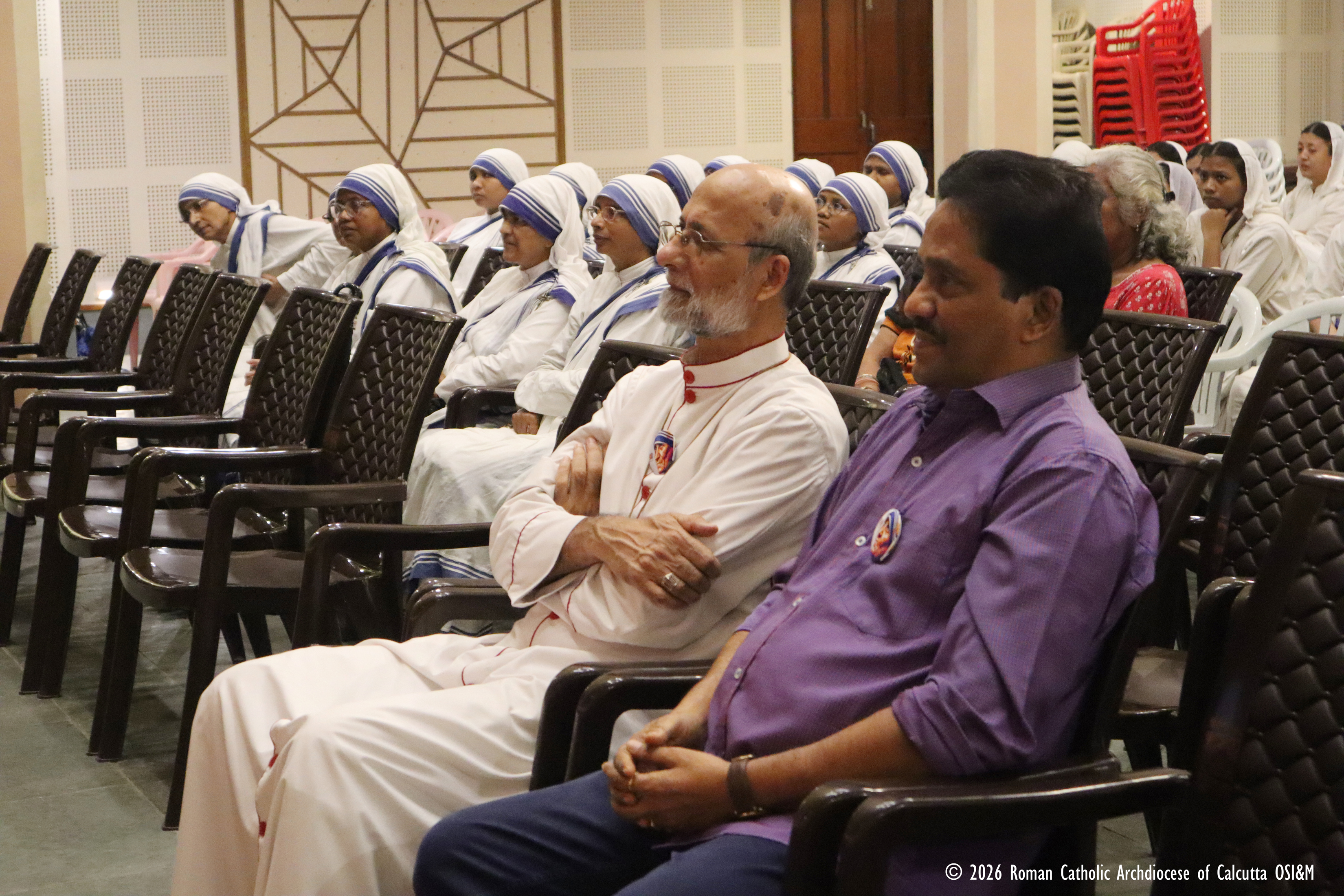
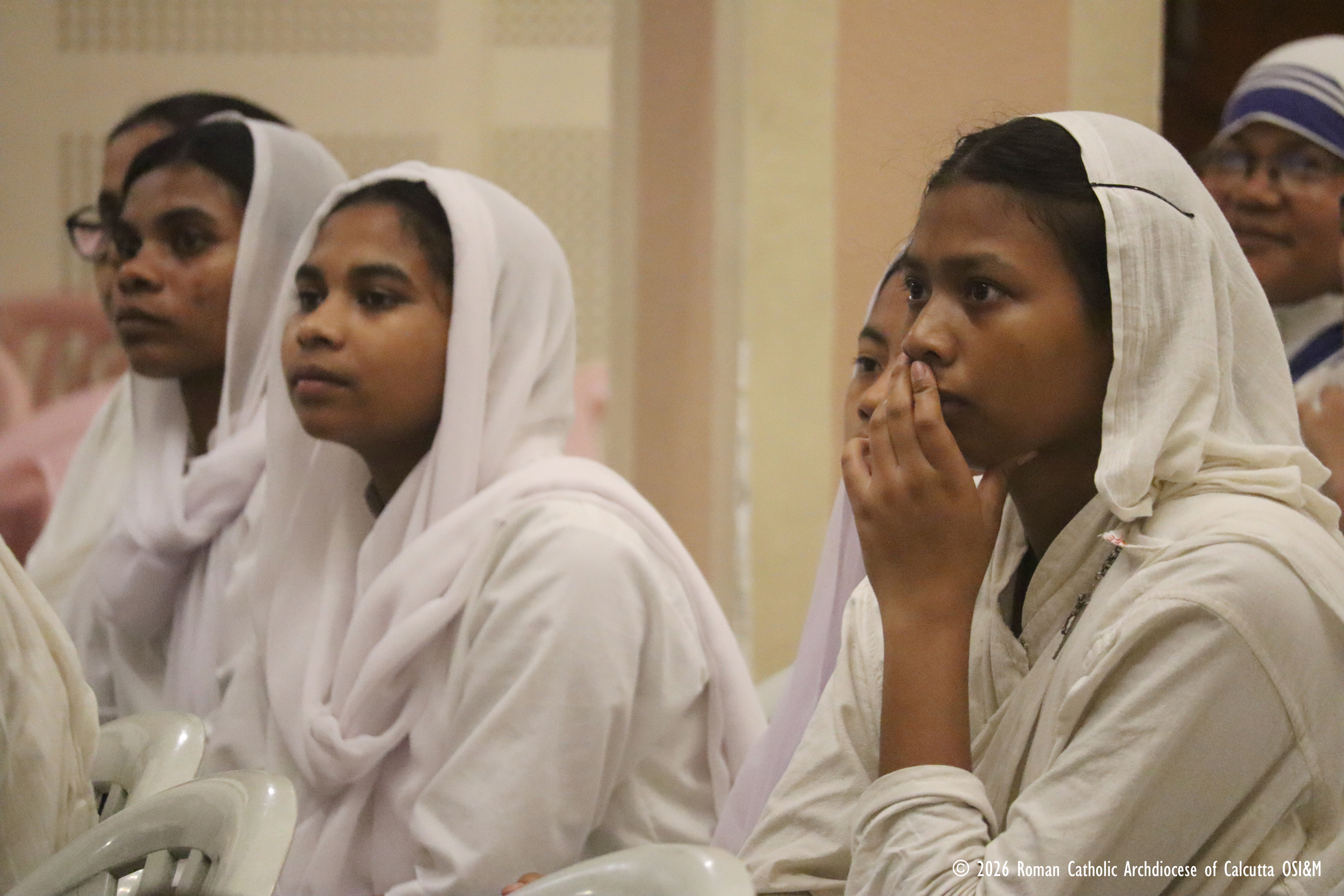
"Mother Teresa – Prophet of Compassion" premiered Sept. 5 in Kolkata, India, drawing more than 200 people, including dozens of Missionaries of Charity (MC) nuns, and novices.
An international documentary tracing the life, legacy, and "prophetic path of compassion" of St. Teresa of Kolkata premiered Saturday on her feast day in Kolkata, India, drawing more than 200 people, including dozens of Missionaries of Charity (MC) nuns and novices.
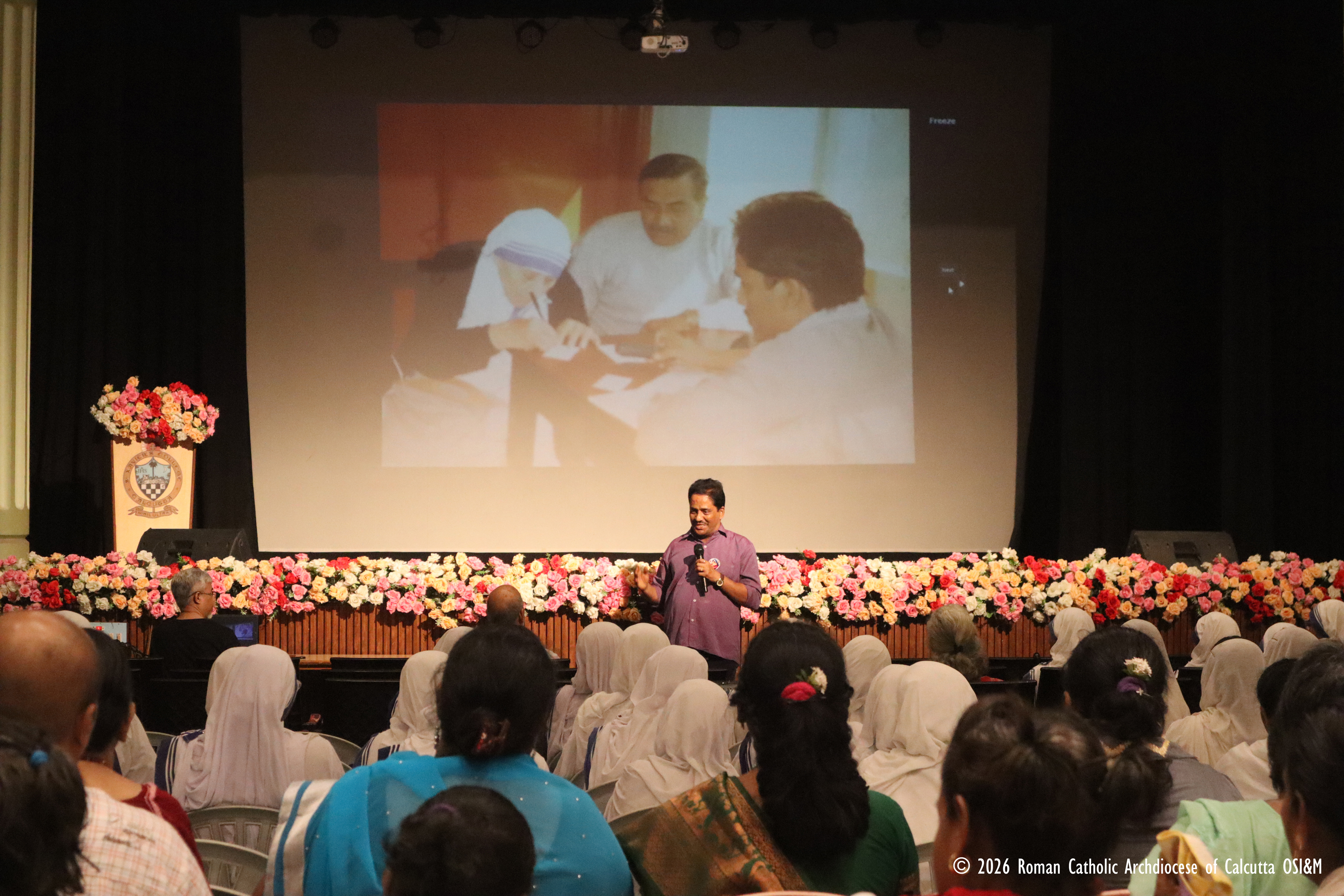
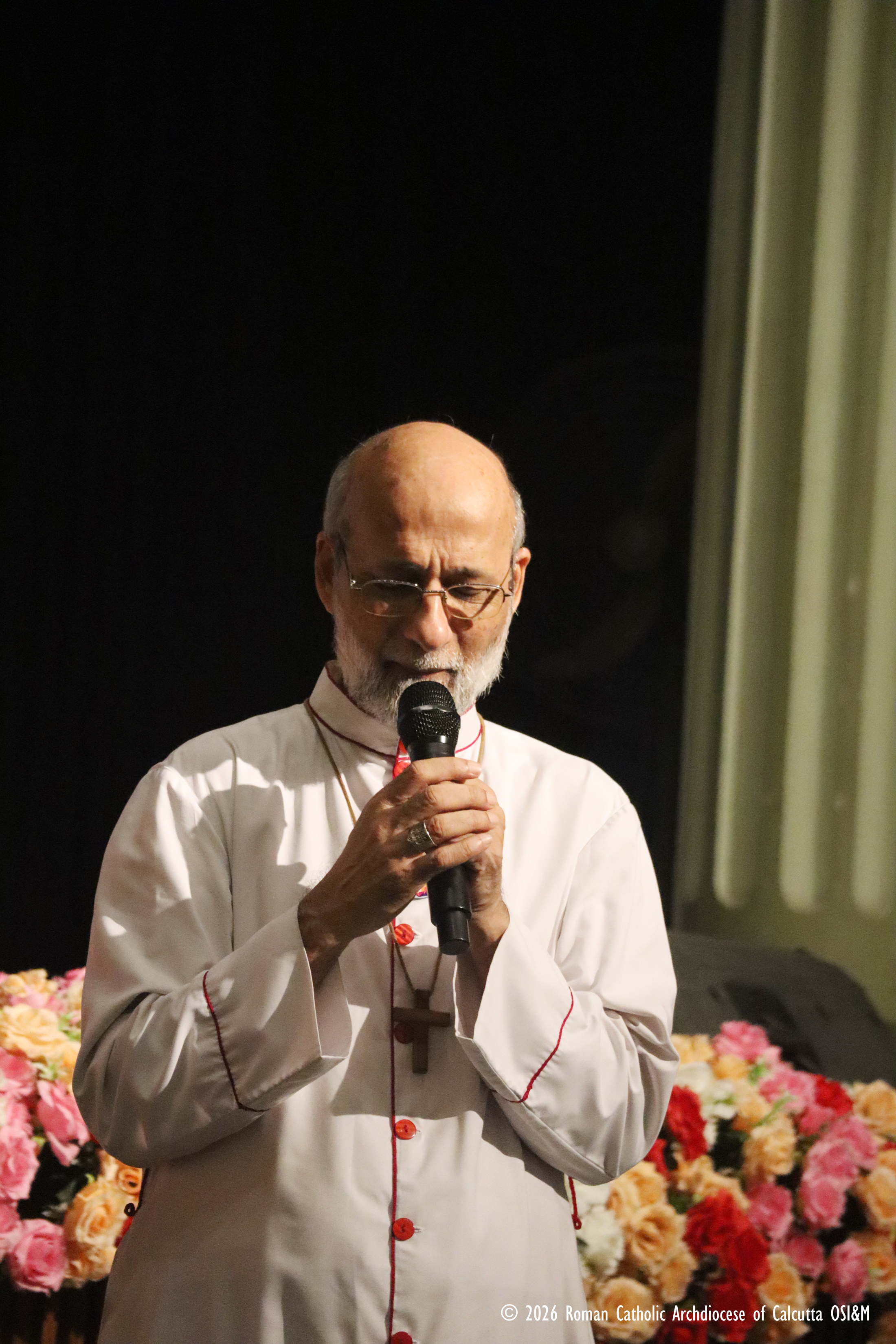
"Mother Teresa – Prophet of Compassion," produced by journalist and author Anto Akkara, was screened at the Auditorium of St Xavier's College, Park Street, with Archbishop Elias Frank of Kolkata presiding over the premiere.
In his introductory remarks, the archbishop praised Akkara's determination to bring lesser-known aspects of Mother Teresa's life and work to a global audience.
"We are here, dear friends, not just to see what he has done, but to be inspired by Mother's work," Frank said, commending the journalist's "passion" for making Mother Teresa known through the documentary.
"There are things that we may not even know yet," Frank said, pointing to the film's journalistic examination of events surrounding the Missionaries of Charity.
Archbishop Elias Frank of Kolkata sits beside journalist and author Anto Akkara during the premiere of the new documentary "Mother Teresa – Prophet of Compassion," at the Auditorium of St Xavier's College on Sept. 5, 2026. | Credit: Farrell Shah, Communications Director, Calcutta Archdiocese
Akkara, who is also a contributor to EWTN News, said his association with Mother Teresa began in 1995, when, at the age of 33, he was granted what he described as a "comprehensive" interview with her.
"Since then, I pursued the Missionaries of Charity on crucial occasions, frequenting Kolkata often from the funeral of the Mother in 1997," he said. Akkara has visited Kolkata more than two dozen times for international reporting.
He said he proposed the documentary as the Missionaries of Charity approached their 75th anniversary, and the congregation agreed to the project. Atmadarshan TV, Indore, provided support for the production.
The new 66-minute documentary builds on an earlier version produced for the congregation's 75th Foundation Day in October 2025. Akkara subsequently reworked the film, adding more than a dozen new episodes and international accounts.
The documentary traces Mother Teresa's journey from her early work in India to the worldwide expansion of the Missionaries of Charity, highlighting episodes in Patna in 1948, Jharkhand in 1959, and New Delhi in 1961.
It also examines the congregation's work amid conflict, including the killings of MC sisters in Yemen in 1998 and 2016, the expulsion of the congregation from Nicaragua, and the decision of sisters to remain in Gaza and Ukraine amid bombardment.
Journalist and author Anto Akkara speaks at the premiere of his new documentary, "Mother Teresa – Prophet of Compassion," at the Auditorium of St Xavier's College on Sept. 5, 2026., hosted by the Archdiocese of Kolkata. | Credit: Farrell Shah, Communications Director, Calcutta Archdiocese| Credit: Farrell Shah, Communications Director, Calcutta Archdiocese
Among those featured in the film is legendary photographer Raghu Rai. The documentary also recalls appreciation expressed for Mother Teresa by Prime Minister Jawaharlal Nehru when inaugurating a new Shishu Bhavan building in New Delhi.
Akkara said the film challenges allegations that Mother Teresa's charitable work was primarily a vehicle for religious conversion and highlights her service to people living in extreme poverty, children, orphans, people with disabilities and mental illness, and those affected by leprosy.
Several lesser-known stories included in the film illustrate the breadth of her work. The documentary notes that the distinctive blue-striped white cotton saris worn by MC sisters are woven by people affected by leprosy at the congregation's Titagarh centre, dedicated to Mahatma Gandhi.
Archbishop Elias Frank speaks at the premiere of the new documentary "Mother Teresa – Prophet of Compassion," at the Auditorium of St Xavier's College on Sept. 5, 2026, hosted by the Archdiocese of Kolkata. | Credit: Farrell Shah, Communications Director, Calcutta Archdiocese
The film also recounts Mother Teresa's efforts to persuade the Indian Air Force to plant trees at the MC leprosy home in Delhi and her decision to decline a papal invitation to the 1993 World Youth Day in Denver so that she could travel to Borduria in Arunachal Pradesh to intervene against the killing of infants born with deformities.
Another story describes a raffle organized to raise funds for the leprosy hospital at Shanti Nagar by selling a popemobile reportedly donated to Mother Teresa following the 1964 World Eucharistic Congress in Mumbai.
The documentary also recalls Mother Teresa's request that the Nobel Committee cancel the customary banquet accompanying the Nobel Prize and use the money instead to help orphans in Kolkata.
The film highlights the respect Mother Teresa received across religious and political lines, including appreciation from former President A.P.J. Abdul Kalam and former Prime Ministers Inder Kumar Gujral and Atal Bihari Vajpayee.
The film also recounts Mother Teresa's relationship with Jyoti Basu, the longtime Marxist chief minister of West Bengal. Basu, a friend of Mother Teresa, reportedly once remarked: "This lady makes me a bad Marxist, making me believe in Godliness."
Over 200 people, including many Missionaries of Charity nuns and novices, attended the premiere of the new documentary "Mother Teresa – Prophet of Compassion" on Sept. 5, 2026, hosted by the Archdiocese of Kolkata. | Credit: Farrell Shah, Communications Director, Calcutta Archdiocese
In another example of her outreach across religious boundaries, Mother Teresa named an MC centre near Ranchi "Radharani Convent" in honor of a Hindu woman who donated land for a leprosy home in 1973.
Born Anjezë Gonxhe Bojaxhiu in 1910 in present-day North Macedonia, Mother Teresa came to India in 1929 as a Loreto Sister and founded the Missionaries of Charity in 1950. The congregation has since expanded across the world, serving some of the poorest and most vulnerable communities.
The new documentary presents that expansion as the story of a movement that seeks to "globalize compassion and care" while remaining rooted in the founder's commitment to the destitute.
The pope celebrates Mass at the Shrine of Our Lady of Good Counsel in Genazzano
ROME — It was shortly after 5 p.m. local time when Pope Leo XIV arrived at the Shrine of Our Lady of Good Counsel, awaited by thousands of people along the road and welcomed by his fellow Augustinians.
Not everyone could fit inside the church, and the streets of Genazzano, about 30 miles east of Rome, were packed. The pope chose to celebrate the Nativity of Mary at this shrine so dear to his heart. He brought a Golden Rose to place at Mary's feet, and the rector thanked him, saying, "Our affection for you is true and genuine," because "we all love you immensely."
The maternal presence of Our Lady of Good Counsel, the pope said, had "accompanied me throughout my entire life, with her wisdom, and with the example of her love for her Son, the Son who is always at the center of my faith," as he wrote in the shrine's guest book on May 10, 2025.
The pope quoted the Augustinian St. Thomas of Villanova, who asked the Evangelists: "Why, I wonder, were we not told about the manner of her conception, her birth, her upbringing, her habits, the virtues that adorned her, what human relationship she had with her Son, how she related to him, how she lived with the apostles after his ascension? All these things were important, and the faithful would have read them with singular devotion, and ordinary people would have delighted in them. O Evangelists, I appeal to you! Why have you deprived us of such great joy by your silence? Why have you left out details so joyful, so eagerly awaited, so pleasing?"
From this open dialogue with Scripture, the pope reflected: "Mary's presence creates something like a leap in the genealogy, an unexpected newness capable of changing not only expectations but also the predictable behavior of a man. What Joseph hears, what he decides and what he does, in fact, is a response to God and to Mary's presence, to her absolute difference, which surpasses every possible discourse and narrative. In Mary, salvation finds a home: God with us!"
Faced with this mystery, the pope explained, "we feel a kind of vertigo."
After all, "God's way has been and remains simpler and quieter, yet no less powerful and transformative." Those humble historical circumstances that lead to the birth of Jesus reveal "the originality of his Kingdom, in which arrogance has no place and omnipotence is creation, service and care for life."
Continuing to draw on the teaching of the Augustinian saint, the pope spoke about prayer, because it is in contemplative prayer that "what the world does not tell us, but already exists, takes shape; what is still invisible, but already possesses a new kind of strength. This is not fantasy, but prophecy. We need it, in times of destruction and uncertainty, to see God's work and serve it."
May the feast of Mary's birth, the pope concluded, increase peace within us: "Yes, dear friends, we want to imagine peace — to broaden the boundaries of our understanding and paint it in our souls — in order to recognize that it already exists, to welcome it and to serve it. It is the gift of God, the breath of the Risen One, the work of the Holy Spirit. Let us allow peace to grow within us. It will blossom in the world. And the Mother of Good Counsel will accompany us in this mission."
The pope also expressed appreciation for the fresco depicting him at prayer, commemorating his visit to the shrine on May 10, 2025, two days after his election.
The final hymn to Our Lady of Good Counsel brought consolation to all:
"Protect our people, who hope in your counsel and live in your love. Receive their fervent prayer, O daughter, O bride, O Mother of the Lord.
Holy Virgin of Genazzano, turn your serene gaze upon us; stretch out your hand to your children, strengthen the just, save the sinner."
This story was first published by ACI Stampa, the Italian-language sister service of EWTN News. It has been translated and adapted by EWTN News English.
"All work, no matter what the work is, is essential," said Father Sinclair Oubre, spiritual moderator of the Catholic Labor Network.
As the U.S. celebrates Labor Day, Catholics have a wealth of resources in biblical interpretation, Church teaching, and social thought that address the nature of work and the place of the worker in society and in God's creation.
But are Catholics, and others, aware of these resources?
One Catholic leader considering such questions is Father Sinclair Oubre, a priest of the Diocese of Beaumont, Texas. He is the spiritual moderator of the Catholic Labor Network, a Catholic association that promotes Catholic teaching about work and labor unions. It also supports labor organizing.
"All work, no matter what the work is, is essential," Oubre likes to say. In his view, if a woman in janitorial work at a major software company does not show up to clean the toilets and empty the trash, all production in the office will nosedive.
Centuries of Catholic teaching about labor can be found compiled in the Compendium of the Social Doctrine of the Church, published in 2004 by the Pontifical Commission for Justice and Peace. It dedicates its entire sixth chapter to human work and labor, its place in God's plan, its role in society, and the rights and duties of workers.
"The Compendium gathers together in one place those rights that are found in Catholic social teaching, whether it's Rerum Novarum, or Quadragesimo Anno, or Centesimus Annus, and synthesizes them," Oubre told EWTN News, referring to the respective encyclicals of popes Leo XIII, Pius XI, and John Paul II.
"It's a beautiful reflection on human work in the world and a very mature and in-depth discussion of the place of work, the place of labor, and the communal nature of it," Oubre said.
Labor, politics, and spirituality
Oubre said Catholic teaching is a challenge regardless of people's political views.
"It's a challenge to the right, but it's also a challenge to the left," he said. Catholicism encourages those on the political right not simply to pray novenas and commit themselves to spiritual actions. It is a challenge not to leave other questions about work and labor to the market.
For the political left, Catholic social teaching "means you have to enter into a more intimate relationship with your Church and your relationship with Jesus and not just be as a social justice person by throwing a couple of little quotes around. It requires you to enter into that deeper spiritual relationship."
Oubre stressed the importance of starting from the view of Catholic spirituality, not only social justice, because if we don't, our approach "becomes ideological and polemic." The spiritual approach "brings us closer to Jesus Christ."
"No matter how dirty, how uncomfortable, how awful the job is, we are participating in God's ongoing creation. It's important that we do that job in a way that gives glory to God," Oubre said.
God and man at work
The Compendium's reflection on work begins with its biblical aspects: There is a human duty to "cultivate and care for the earth" and other good things created by God, it says. Work existed before the fall of Adam and Eve, and it is not a punishment or curse until the break with God transforms it into "toil and pain." However, God's rest on the seventh day of creation is the sign of the "fuller freedom" of the "eternal Sabbath."
The life of Jesus Christ is a mission of work, from his early life helping St. Joseph in the work of a carpenter to his ministry of preaching and healing, and most of all in his redemptive labors on the cross.
The Compendium presents human labor as a way of supporting oneself and one's loved ones but also a way to serve those in need. Work is a way to make God's creation more beautiful, since humankind shares in God's art and wisdom.
"Human work, directed to charity as its final goal, becomes an occasion for contemplation, it becomes devout prayer, vigilantly rising towards and in anxious hope of the day that will not end," the Compendium says.
The rights of labor
God's rest on the seventh day of creation, the Compendium says, means men and women must enjoy "sufficient rest and free time that will allow them to tend to their family, cultural, social, and religious life."
The Compendium outlines and explains the many rights of workers: the right to rest from work; the right to a working environment that is not harmful to a worker's health or moral integrity; the right to unemployment protections; the right to a pension and insurance for old age, disability, and work-related accidents; the right to social security for working mothers; and the right to assemble and form associations; the right to just wages and remuneration; and the right to strike.
Labor unions play a "fundamental role" in serving the common good and promoting social order and solidarity, though they must not abuse their role in society or become simply arms of a political party.
"The recognition of workers' rights has always been a difficult problem to resolve because this recognition takes place within complex historical and institutional processes, and still today it remains incomplete," the Compendium says. "This makes the practice of authentic solidarity among workers more fitting and necessary than ever."
A challenge for Catholics and institutions
Catholic teaching has a lengthy paper record. But as in other areas, there is a challenge to practice it.
"What I find over and over again that the Church — our Church — gives us wonderful documents of guidance… and we never go back and read them," Oubre told EWTN News.
He cited the U.S. Conference of Catholic Bishops' 1996 pastoral letter "Economic Justice for All," which says the Church should be a model for labor rights and treating workers justly.
However, Oubre said that in his experience Catholic parishes often neglect to provide unemployment insurance to employees if the law allows them to opt out. Catholic institutions often act as "at-will" employers in which management can fire employees for any reason. They may show preferences for nonunion labor over unionized labor when planning and funding construction projects.
"You're going to undercut the guy who has actually followed the Church's teachings in regards to work by hiring somebody who may be not offering medical insurance for his employees," the priest lamented.
For Labor Day, Oubre encouraged parishes, dioceses, and other institutions to make sure to adopt policies that put Catholic labor teaching into practice.
This story was first published on Sept. 4, 2023, and has been updated.
From singing together as students at a boarding school in the 1970s to being discovered by Sony in 2008 and making four albums, the priests have always sought to evangelize through sacred music.
Nearly two decades after becoming an international musical phenomenon, the Irish group The Priests continues to bring sacred music to stages around the world as a form of evangelization.
For Father David Delargy, one of the three Irish priests who make up the group, singing does not mean setting aside his ministry, but rather living it out in a different way.
"For me, I don't leave my priesthood behind me or to the side when I'm performing or singing on the stage. My priesthood is there, and I am ministering through the means of sacred music for those who, if you like, are the congregation rather than the audience," he explained to EWTN News.
The Priests consists of priests Father Martin O'Hagan, Father Eugene O'Hagan, and Delargy, who began singing together as students at a boarding school in Northern Ireland during the 1970s and later continued to do so while studying in Rome.
Their story took an unexpected turn in 2008, when a Sony representative heard them singing together and proposed that they record an album.
"One of the Sony record labels, one of the leaders there, had an idea for recording an album that might involve some priests. So, they sent out a scout. When they heard the three of us singing together, they realized we had been singing together since our boyhood days. And they thought, 'These guys, they can sound quite nice together. Let's make an album with them,'" Delargy recounted.
"So, we signed a contract with them on the steps of Westminster Cathedral and went on to make four albums together, beginning in 2008 with 'The Priests,'" he added.
The first album exceeded expectations, selling nearly two million copies worldwide.
The Priests have also released the albums "Harmony" (2009), "Noël" (2010), and "Alleluia" (2016), as well as the compilation "Then Sings My Soul: The Best of The Priests" (2012).
For Delargy, music has never been separate from his priesthood.
"In some profound ways, music moves people, evokes emotions, feelings and thoughts that otherwise might not have been there. So, I think God will use …our poor little voices and instruments, he will use all that to his own kind purposes and ends," he stated.
A musical pilgrimage to Rome
Almost 20 years after that unexpected success, The Priests returned to Rome to mark the centenary of the Pontifical Irish College, the institution where the three men studied.
"We are all former students of the Irish College and we've been in our diocese of Down and Connor for 35 years, each of us, and we've all got great love for the college and I think given the fact that the college is celebrating 100 years this year, it's a momentous occasion for the college," Delargy related.
The celebration included a musical pilgrimage to some of Rome's historic churches accompanied by other priests and the faithful who had traveled from Ireland.
'Sacred music in its essence is prayer'
Delargy believes music allows for the expression of things that words do not always manage to convey.
"Music can express praise, it can express peace, it can express prayer for those who are full of joy, but it can also journey with those who are experiencing difficulty," he noted.
"So, sacred music in its essence is prayer. I have to go back to St. Augustine, who said when you sing, you pray twice," he observed.
The priest also believes that music can serve as a gateway to Catholicism.
"Sometimes the music, sacred music I'm talking about in particular, will be for many people their only point of contact specifically with the Christian faith. And so the Lord will use all these various means to draw us to himself," he said.
This story was first published by ACI Prensa, the Spanish-language sister service of EWTN News. It has been translated and adapted by EWTN News English.