Catholic News
Pope Leo XIV arrived at Rome's Gemelli Hospital on Tuesday for same-day surgery to remove a small lung nodule detected at a very early stage. Follow updates and reactions here.
The conference focuses on the ethical and moral dimensions of caring for the environment and vulnerable communities, Father John Abubakar, chief sustainability officer at Villanova University, said.
Villanova University faculty members will shed light on the application of Catholic social teaching to nontheological disciplines such as business and engineering at the International Sustainability Conference in Rome.
Father John Abubakar, chief sustainability officer at Villanova University, told "EWTN News Nightly" on Oct. 12 that the goal of Villanova faculty at the Oct. 12–15 conference, themed "Responding to the Cries of the Earth and the Poor," is "to bring in the ethical and moral dimension of our responsibility to care for our common home."
The conference comes after Pope Leo XIV announced that he will admitted to the hospital for surgery on Oct. 13 to remove a "small nodule" found in his lung. The Holy Father had been scheduled to present Cardinal Michael Czerny, prefect emeritus of the Dicastery for Promoting Integral Human Development, with the conference's inaugural Pope Leo XIV Sustainability Medal.
"The Pope Leo XIV Sustainability Medal Ceremony will take place on Oct. 13 at the originally announced time and location. We are in close coordination with the Vatican regarding the medal presentation in light of the Holy Father's upcoming surgery," Villanova said in a statement. "We are awaiting official confirmation as to whether Pope Leo XIV will present the medal. Our thoughts and prayers are with the Holy Father. May God grant the Holy Father strength, healing and a full recovery in the days ahead."
Abubakar said the aim of the inaugural award is to fill "an important gap" in the sustainability sphere by emphasizing both "the ethical and moral dimension of caring for our common home and also caring for the poor."
Measures such as carbon footprints and other environmental benchmarks are important tools for understanding ecological systems, he said, but they alone are not enough.
Villanova professors scheduled to present are David Dinehart, a professor of civil and environmental engineering; Manuela Priesemuth-Payan and Jonathan Doh, professors of business; and Ruth McDermott-Levy, co-director of the Mid-Atlantic Center for Children's Health and the Environment.
"It is our hope that the research being done will not only emphasize the technical aspects of caring for our common home, but that the moral and the ethical dimension will also be fully embraced," Abubakar said.
"When you look at Catholic social teaching, the principles are applicable to social settings," he said. "We speak about the preferential option for the poor, for instance. Such a principle directly applies to those who are engaged in business endeavors. And when you think also about solidarity, when you think about what engineering does in terms of maybe humanitarian engineering, that we have a department at Villanova, they show great sense of solidarity, which is another Catholic social teaching principle."
The pontiff's surprise disclosure about a lung nodule has drawn praise from senior cardinals, who see it as an unprecedented gesture of transparency and an expression of humility and trust.
VATICAN CITY — Pope Leo XIV's decision to personally announce that he will undergo surgery to remove a nodule from one of his lungs has been welcomed as an unprecedented gesture of transparency in the recent history of the papacy.
The surprise announcement Sunday, Oct. 11, stunned hundreds of pilgrims gathered in St. Peter's Square for the Angelus prayer.
By speaking directly about his health, the pontiff departed from a long-standing Vatican practice of limiting information about papal illnesses and medical treatment.
Traditionally, the health of popes has been shrouded in considerable secrecy. For decades, illnesses and hospitalizations were disclosed only in limited terms and sometimes incompletely.
In 1992, for example, St. John Paul II announced that he would enter the hospital for medical tests but did not explain why. Only three days later did the Vatican disclose that he had undergone surgery to remove a benign tumor from his colon.
Under Pope Francis, a greater degree of openness began to emerge. During his various hospitalizations, the Holy See issued medical bulletins about his condition and, in some cases, arranged briefings by the doctors treating him.
Even troubling details of the Argentine pontiff's hospitalizations were disclosed, including respiratory crises during his final illness before his death in 2025.
Nevertheless, the information continued to come primarily through official Vatican channels rather than directly from the pope himself.
In earlier decades, secrecy surrounding papal health had contributed to controversies such as the death of John Paul I in 1978. The limited information released after his death, just 33 days after his election, fueled years of questions and speculation about the circumstances.
Against that historical background, Leo XIV's decision to announce his own upcoming surgery represents a significant departure from tradition.
Senior cardinals interviewed by EWTN News described the disclosure as a shift in how the Vatican communicates about the health of the pope.
Cardinal Michael Czerny, prefect emeritus of the Dicastery for Promoting Integral Human Development, linked the decision to the spirit of fraternity promoted in Pope Francis' encyclical Fratelli Tutti.
"In the spirit of Fratelli Tutti, it is a sign of fraternity to share your illness with those who care for you," Czerny said.
"And to say that the whole world cares for Pope Leo is not an exaggeration; it's a fact. So I see his openness or transparency as an expression of both humility and truth."
Czerny emphasized that the concern and prayers prompted by the announcement reflected the communion of the Church and the wider human family with the successor of Peter.
"Now, every feeling of concern, every hopeful prayer of whatever kind, is the human family expressing communion with an esteemed leader and father who we know loves us," he said.
"May God bless Pope Leo and bring him back to us, healthy as ever!"
Czerny is scheduled to receive the first Pope Leo XIV Sustainability Medal on Tuesday afternoon at Borgo Laudato Si', located on the grounds of the papal villas at Castel Gandolfo. The pope had been expected to attend the ceremony, but his participation was canceled.
Cardinal Víctor Manuel Fernández, prefect of the Dicastery for the Doctrine of the Faith, said hearing the news directly from the pope had provoked a mixture of painful surprise, fear, and fraternal affection, along with a sense of closeness and honesty.
"Hearing the news directly from the pope caused me painful surprise, fear, fraternal affection, but at the same time a sense of intimacy, closeness, openness without masks, of great honesty toward us," Fernández said.
"It is impossible not to feel personally involved when you hear the pope tell his truth in that way, acknowledge the frailty of his flesh and at the same time his serene confidence," he added.
Fernández said that, paradoxically, the troubling news had deepened the sense of communion within the Church.
"Mysteriously, bad news thus becomes a deeply felt expression of ecclesial communion and affection for that father who unites us," he said. "I experienced a powerful sense of how valuable it is for the Church to have that father."
Cardinal Tarcisio Isao Kikuchi, archbishop of Tokyo and president of Caritas Internationalis, offered a firsthand account of the pope's condition after meeting with him Monday, Oct. 12.
The audience, Kikuchi explained, had been arranged long in advance as part of the annual meeting in which the president and secretary-general of Caritas Internationalis report on the organization's activities to the pope.
"Holy Father was as usual and calm with no sign of sickness," Kikuchi told EWTN News.
"He assured me that this is a minor operation and he feels nothing wrong with his body, and he said he had decided to go for the operation as soon as possible not to change his plan of [the] Latin America pastoral visit."
The pope is scheduled to travel to South America Nov. 6–17.
Kikuchi said he also joked with Leo XIV about the wisdom of publicly announcing the surgery.
"I told him jokingly that his decision to make it public was prudent to prevent speculation of [the] public who would be next pope. For this he smiled," the cardinal recalled.
"But I really believe so that he made really a prudent decision to avoid any speculation or gossiping," Kikuchi added.
The cardinal's account suggests that Leo XIV's decision to disclose his medical condition was intended not only to inform the faithful but also to forestall rumors about the future of the papacy.
For the cardinals who spoke to EWTN News, the announcement marks a notable change in Vatican communications, with the pope choosing to speak openly about his vulnerability while expressing confidence about his treatment and his plans to continue his ministry.
This story was first published by EWTN News Español, the Spanish-language sister service of EWTN News. It has been translated and adapted by EWTN News English.
Children in Lebanon, Palestine, and Syria joined a global rosary campaign for peace this month.
In a Middle East scarred by war, children in Lebanon, Palestine, and Syria gathered in churches and schoolyards this month to answer Pope Leo XIV's call to pray the rosary for peace, joining more than a million young people worldwide.
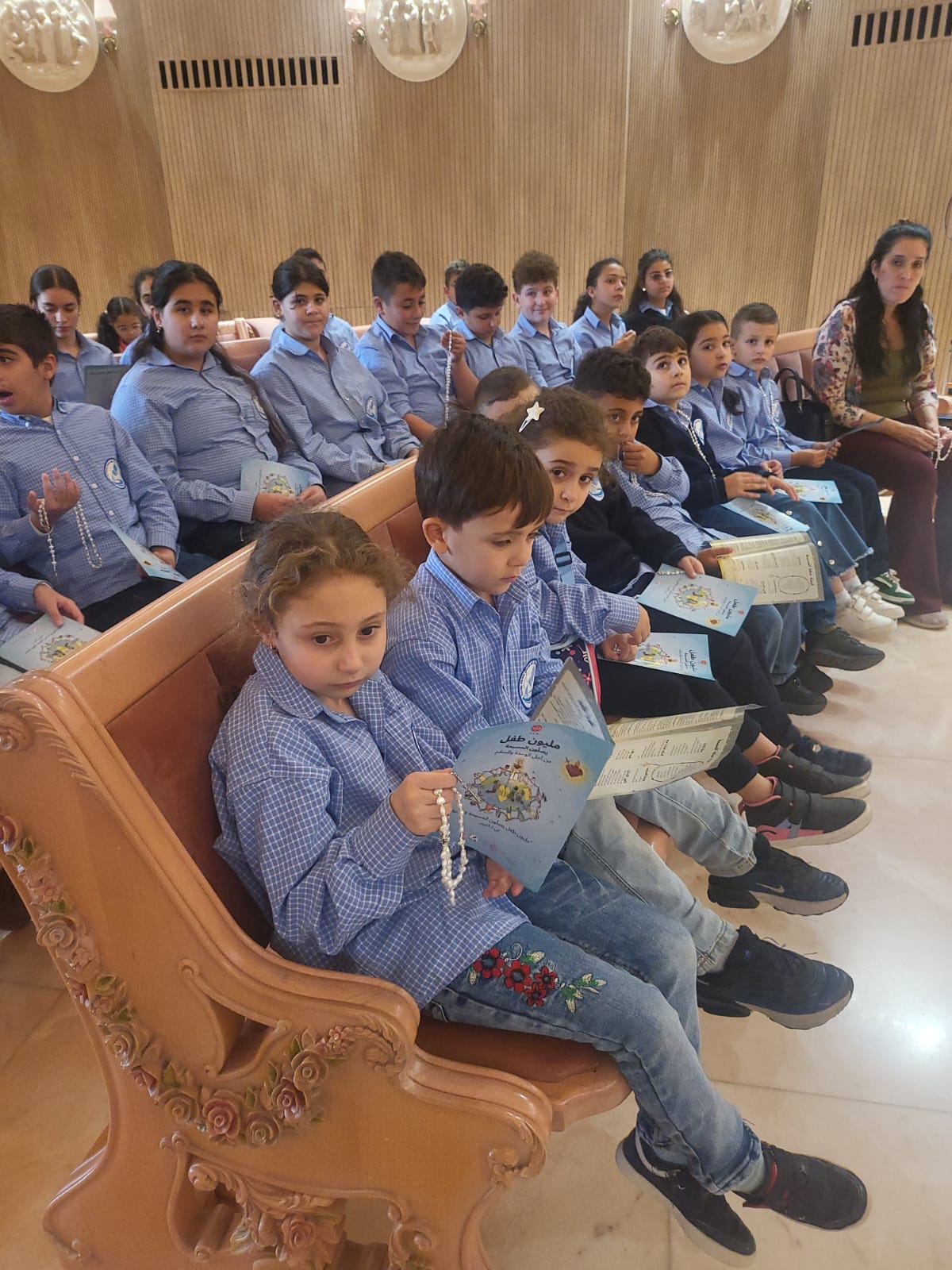
Their prayers were part of "One Million Children Praying the Rosary," organized by the pontifical charity Aid to the Church in Need (ACN), and took place Oct. 1–7. This year's campaign drew particular inspiration from Our Lady of Fátima's promise: "In the end, my Immaculate Heart will triumph."
Lebanon
At least 261 children have been killed and 1,056 injured in Israeli attacks on Lebanon since March 2, according to figures published by UNICEF. In March, the agency reported that an average of at least 19,000 children were being displaced each day.
Against this backdrop, in the Maronite Diocese of Antelias, more than 1,300 students gathered around Bishop Antoine Bou Najem to pray. "We are praying today for children living in fear, for those who have no home, and for those enduring war, hunger, and sorrow," Bou Najem said.
Palestine
In Palestine, the prayer for peace took place against the backdrop of the devastation and displacement caused by the war in Gaza, whose effects continue to weigh heavily on children and families there.
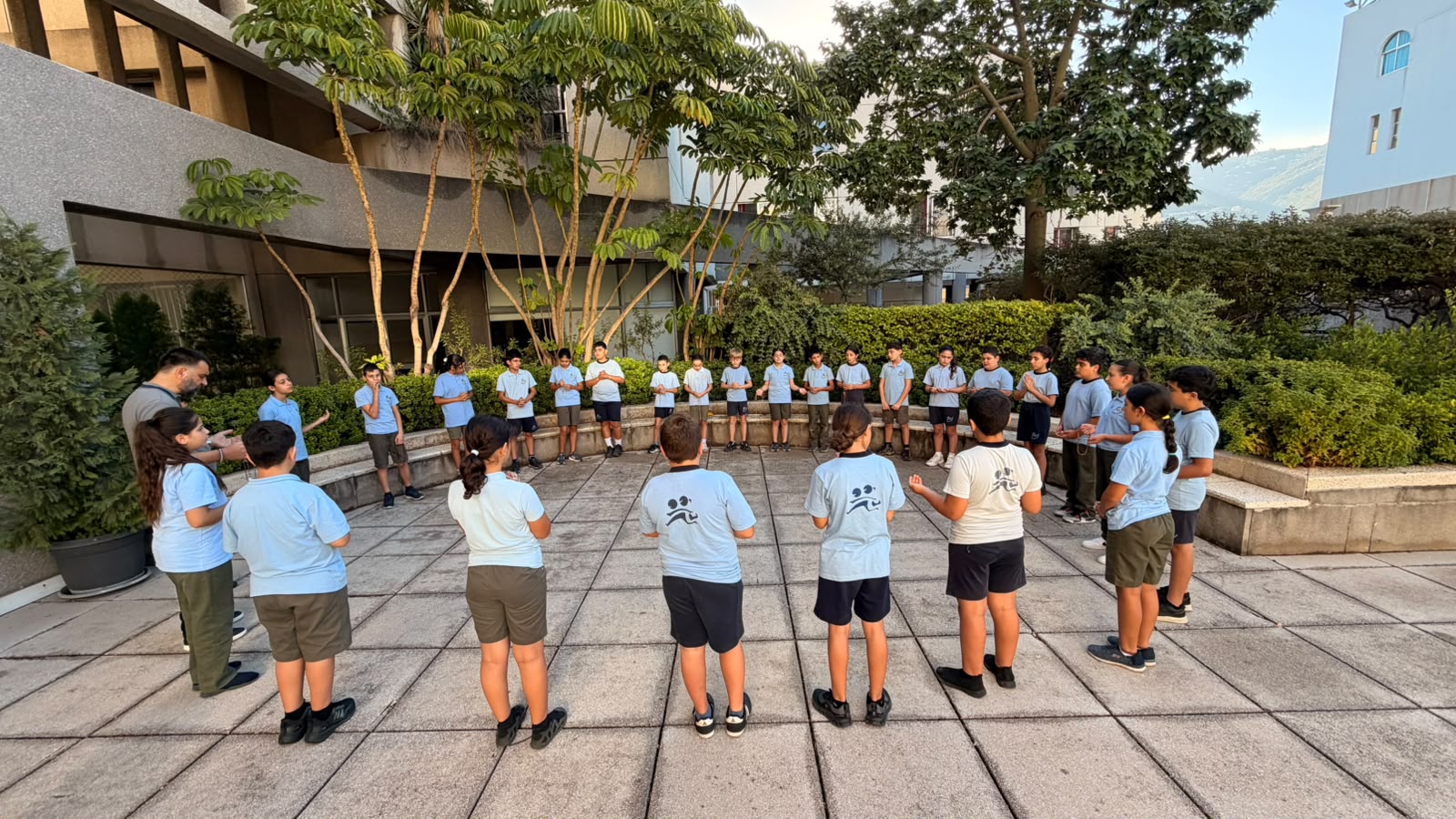
In Jerusalem, Our Lady of Pilar College, also known as the Spanish School, shared photographs of its students gathered in the school courtyard to pray for peace.
Located in Jerusalem's Old City and run by the Missionary Daughters of Calvary, the school serves underprivileged students belonging to the poorest families in and around East Jerusalem.
Syria
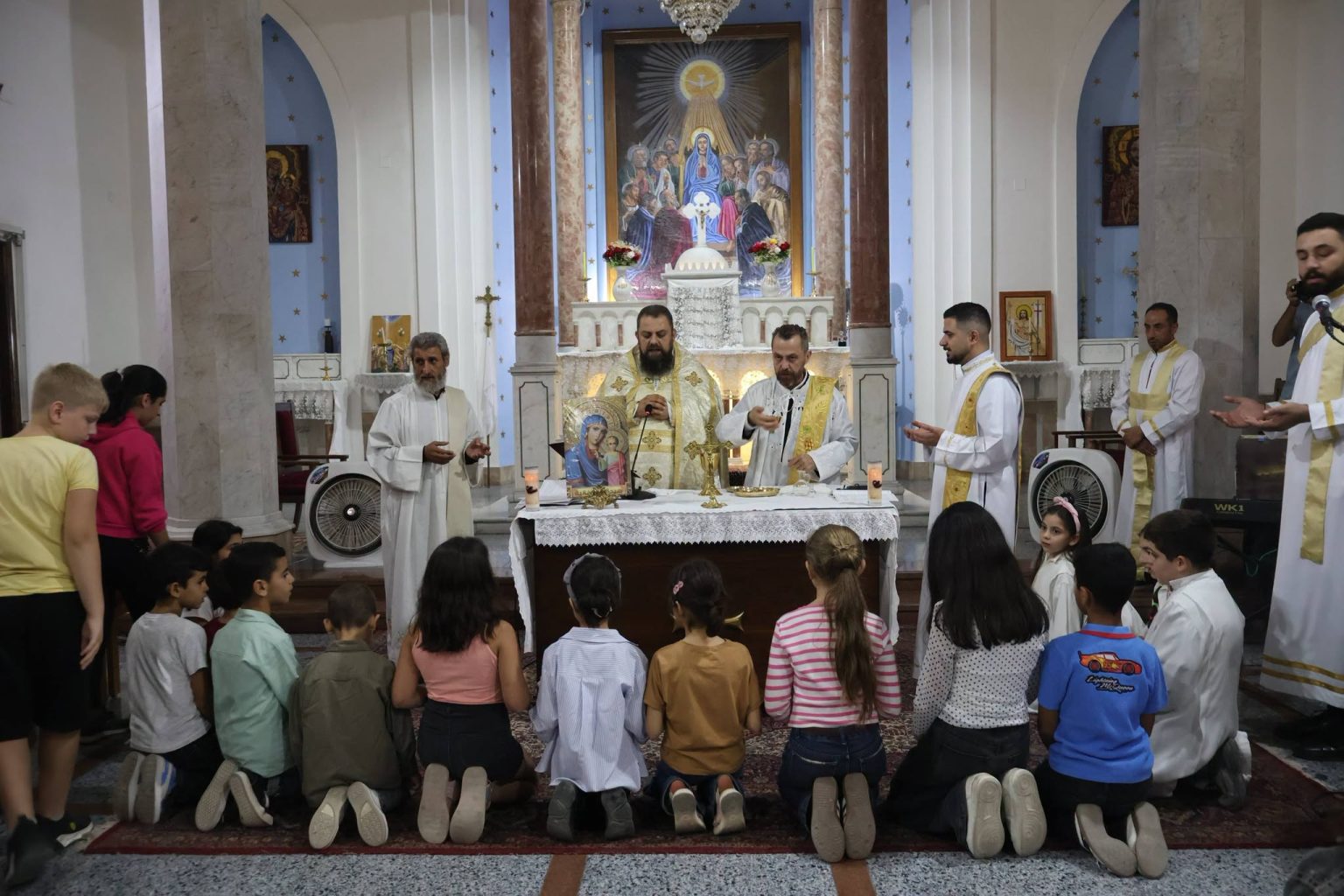
In Syria, children and families gathered at Holy Spirit Cathedral in Homs, a city scarred by years of war, to join the same international initiative.
"From Homs, a city that has known the pain of war and longs for peace, the children's prayers rose with a simple yet profound hope," the Syriac Catholic Archdiocese of Homs, Hama, and Nabk wrote in its post. "Queen of Peace, pray for us … and bring the world together in love and unity."
This story was first published by ACI MENA, the Arabic-language sister service of EWTN News, and has been translated for and adapted by EWTN News English.
Archbishop Timothy Broglio said, after meeting with Pope Leo XIV, that the firing squad could cause moral harm to the service members ordered to carry it out.
U.S. bishops, including Archbishop Timothy Broglio of the Archdiocese for the Military Services, USA, continue to denounce plans to livestream the Dec. 3 execution of Fort Hood shooter Nidal Malik Hasan.
In a joint statement with Broglio issued Oct. 12 by the Texas Catholic bishops, Bishop Daniel E. Garcia of the Diocese of Austin said the public broadcast of Hasan's execution "would make a spectacle of death." He wrote that "True justice cannot be achieved through further violence or vengeance."
Pentagon spokesperson Sean Parnell announced Oct. 5 on X that President Donald Trump had approved the execution of Hasan, the Army psychiatrist convicted in the 2009 Fort Hood mass shooting. On Oct. 8, Defense Secretary Pete Hegseth said in an interview with Real America's Voice that Hasan's execution would be livestreamed from Fort Hood in Killeen, Texas, where Hasan killed 14 people, including an unborn baby, and wounded more than 30 others in the attack.
"The tragedy at Fort Hood has traumatized the loved ones of those killed, the survivors, and the entire military community," Garcia, whose diocese encompasses Fort Hood, said. "Carrying out this execution at Fort Hood, especially as a public broadcast, will only exacerbate that trauma."
Garcia asked Catholics to pray for military service members "called upon to participate in the execution." In a letter issued the same day, Broglio went further, writing that he obliges "any Catholics assigned to the firing squad to request to be excused from this action contrary to the teaching of the Church."
I oblige any Catholics assigned to the firing squad to request to be excused from this action contrary to the teaching of the Church."
Archbishop Timothy BroglioArchdiocese for the Military Services, USA
Broglio, who was received by Pope Leo XIV on Oct. 12, added that "it is my duty to express my disapproval of what is proposed regarding the execution of the terrorist Hasan in the Archdiocese entrusted to my spiritual care to be done by those for whose salvation I have been constituted as the Archbishop for the Military Services, USA," pointing out the "moral injury … the members of the firing squad might experience."
He also expressed his sympathy for the family and friends of the victims of Hasan's attack, which he said "disregarded the dignity of the human person," and reiterated the Church's opposition to the death penalty, saying that it too offends human dignity.
Broglio called Hasan's crime "heinous," and asked if "exposing the public to his execution" would serve any purpose. "Will the exposure of a live-stream to the young and impressionable during the 250th anniversary year of our independence be able to be repaired?" Broglio asked.
He urged that the decision be reconsidered, and if not, for "the young and impressionable" to be protected from viewing the livestream of the execution.
He asked if Americans "really want to imitate the terrorists of this world and make a public spectacle of barbarically killing our adversaries?"
Cardinal Blase J. Cupich, archbishop of Chicago, agreed. He also issued a statement on Oct. 12, calling the upcoming execution "performative barbarism."
"Do we really want our children, who will inevitably view it, exposed to the pornography of a state-sponsored slaying?" he asked.
Cupich said a televised execution will not prevent future crimes and might even encourage the conferral of "martyrdom on the Fort Hood killer."
He also said the livestreamed execution further "contributes to the characterization of our nation as a violent, vengeful place. Forgiveness bestows grace. Murder by the state is an insult to Our Lord who teaches that all life is sacred."
Broglio concurred, asking "if there really is a value to throwing [the U.S. military] in the same boat with terrorists by broadcasting the image of the execution of a man in a wheel chair to the whole world? Does this decision reflect the dignity of the human person?"
Last week, Archbishop Paul S. Coakley, president of the U.S. Conference of Catholic Bishops, wrote in an Oct. 9 statement: "It is with shock and great sorrow that I have learned of the Department of War's decision to publicly livestream the execution of Nidal Hasan."
"Our God is the God of life," Coakley said. "In no way can Hasan's actions be condoned but this decision is a barbaric promotion of a culture of death and must be reconsidered."
Citing Romans 12:17, which commands: "Do not repay anyone evil for evil," Coakley continued: "The public execution even of one who has done grave harm will only further undermine the moral fabric of our nation and be a blight on the conscience of its people."
"I pray for the intercession of Our Lady of Good Counsel that we as a nation may always choose life even in the most trying times and circumstances."
The platform and name are new, but the mission is the same: report the truth and bring the faith to the Spanish-speaking world.
There are dates that could not be better selected, even with the liturgical calendar in hand. On Monday, Oct. 12, ACI Prensa became EWTN News Español and launched its new platform at EWTNNews.com/es. This is a day when so many celebrations converge that it is impossible not to see the hand of God behind it.
I would be lying if I said this was the date we had in mind from the moment we began this project, as if we had experienced a supernatural vision. That was not the case. But when you work in the service of God and the Church, you learn to view coincidences through different eyes. They are "God-incidences."
This relaunch goes far beyond simply changing a website's name. Since 1980, ACI Prensa has accompanied generations of Spanish-speaking Catholics, and since 2014 it has been part of the EWTN family. Today, that journey enters a new phase: the same mission, but with the strength and reach of a global brand like EWTN News.
I confess that, while I am incredibly excited to launch EWTN News Español, I also feel a touch of nostalgia at saying goodbye to ACI Prensa — a brand I have followed and admired for decades. Yet, "we know that all things work together for good for those who love God" (Rom 8:28). St. Augustine spoke of God as a beauty "ever ancient, ever new." The Gospel does not change; what changes are the ways we transmit and communicate it, or the technologies that help us spread it throughout history.
3 feasts, 3 patrons
This Oct. 12 marks 20 years since the death of St. Carlo Acutis at the age of 15. Canonized by Pope Leo XIV in September 2025, Acutis is the first millennial saint, and his defining characteristic was his use of new technologies to share the faith.
We ask him to guide us in the apostolic use of communication technologies (including the internet, social media, and artificial intelligence) and to help us bring God closer to the many young souls who live their lives online today. It cannot be a coincidence that a new platform is being born under the gaze of a teenager who turned the internet into a path to heaven.
It is also the feast of Our Lady of the Pillar, patroness of the Hispanic world — a title recognized by St. John Paul II in 1984 — and the date on which Spain celebrates its National Day.
There could hardly be a better day to launch EWTN News Español: a language that connects hundreds of millions of people — from the historic Catholic communities of Latin America and Spain to the ever-growing Catholic population of the United States, which now has a home of its own within the global EWTN family.
On this same day of Oct. 12, Brazil celebrates its patroness, Our Lady of Aparecida, a title proclaimed by Pius XI in 1930. Since the mission of EWTN News extends beyond a single language — and with ACI Digital delivering our news in Portuguese — we place our work under her protection as well, honoring her as a patroness of our efforts across the Americas, alongside our beloved Virgin of Guadalupe. Yet today, the focus is on Spanish, and to that we now return.
A platform built for us
A shared brand does not imply an identical experience for everyone. Our goal is not merely to translate the English-language EWTN News site into Spanish but to build a platform tailored to the Spanish-speaking audience — reflecting their customs, their culture, and the ways they stay informed today. That is why EWTN News Español combines the technology and editorial resources of EWTN News with the expertise and capabilities of a team that deeply understands the people it serves and the evolving nature of news consumption habits.
We used to expect users to come looking for us. Now, it's the other way around: We go where the people are. The latest Reuters Institute report on journalism makes this clear: Today, most people get their news from social media and video rather than from media websites.
That is why EWTN News Español is designed for mobile, where you and I spend our day. We offer content that keeps you informed wherever you are (whether via a newsletter sent to your email or your WhatsApp) while also enriching your faith with devotional material, such as the daily Mass readings or the lives of the saints. The good news alongside the day's headlines.
And if you prefer watching to reading, we now have "Watch" — a new tab on the EWTN News Español site where we gather all our video content, featuring the best reports, interviews, broadcasts, and viral social media clips.
Plus, if something major happens in the Church or the world, we cover it with you in real time through updates on our live blog.
And speaking of staying connected, your EWTN News Español account goes wherever you go. Not only can you save articles, comment on them, and follow your favorite writers and topics, but you can also personalize your experience across EWTN.com, EWTNNews.com, Roku, and EWTN+ using the same login.
As always, access is free, sustained by the generous donations of so many people who believe in and support our mission, a mission that began when Mother Angelica had the "crazy" idea to launch a Catholic television channel on Aug. 15, 1981 (talk about providential dates!).
Behind this platform lies an incredible team that is deeply dedicated to the mission and has decades of experience covering conclaves, World Youth Days, synods, jubilees, and International Eucharistic Congresses, as well as the daily lives of Catholic communities throughout the Spanish-speaking world. The new platform makes this work easier to discover, whether for those who live out their faith every day or for those who are just beginning to explore it.
What does not change
The name (from ACI Prensa to EWTN News Español), along with the design and the site's tools and features, are changing.
What does not change is our commitment to the truth, to our audiences, and to journalistic excellence — a path ACI Prensa charted four decades ago, bringing hundreds of thousands of people closer to God through quality content and a faithful commitment to the Church's magisterium. That will not change, with God's help and the guidance of Mother Angelica.
St. Carlo Acutis used to say that the Eucharist was his "highway to heaven." We simply aspire to build, by God's grace, a few digital lanes leading to it. Our hope is that EWTN News — in all its languages — becomes the place where every Catholic turns for information and that we prove ourselves worthy, day by day, of the trust that aspiration represents. Welcome to EWTN News Español!
This story was first published by EWTN News Español, the Spanish-language sister service of EWTN News. It has been translated and adapted by EWTN News English.
In his pilgrim's Mass homily, Hicks recalled that "Our Lady of the Pillar wants only one thing from us. She wants us to know her Son and to find salvation through, in, and with her Son Jesus Christ."
Upon completing the final 62 miles of the Camino de Santiago (Way of St. James) in northwestern Spain, New York Archbishop Ronald Hicks celebrated on Monday the pilgrim's Mass at the Cathedral of Santiago de Compostela.
During his homily, delivered in both Spanish and English, the prelate shared aspects of his experience as a pilgrim and encouraged those present to reflect on what — and with whom — they had journeyed along the Camino de Santiago, the route that leads from various points across Europe to the site where tradition places the tomb of the apostle St. James the Greater.
Regarding the first question — "What were you walking with?" — the archbishop revealed that, beyond his backpack, walking sticks, and physical gear, he completed the route with something more: "With my prayers, with my problems, with my thoughts."
He also took the opportunity to share that he made the pilgrimage wearing a baseball cap "featuring a photo of our Holy Father, Pope Leo," to show that "I am Catholic and am walking with him and the Church."
Tweet< async src="https://platform.twitter.com/widgets.js" charset="utf-8">
As for the company he kept during the pilgrimage, the prelate expressed his joy at having walked the Camino de Santiago not only with a group of his own companions but also alongside other pilgrims from all over the world. He particularly noted crossing paths with an 89-year-old woman and a family with a 7-month-old baby.
"To say that we were walking with everything is another way of saying that we were walking with the Church, together as brothers and sisters. Pope Francis said that the Catholic Church is 'everyone, everyone, everyone.' When we are gathered together, Jesus is with us," he added.
He also noted that the apostle James was very much present throughout the journey. In this regard, he affirmed that James is "not merely part of our past history" but is present today, for "he walked with us at every step."
Referring to the feast of Our Lady of the Pillar — patroness of the Hispanic world, celebrated on Oct. 12 — Hicks recalled how she appeared to the apostle James in Zaragoza before her assumption into heaven at a time when he was feeling "a bit discouraged" at seeing no fruit from his preaching.
"Our Lady of the Pillar wants only one thing from us. She wants us to know her Son and to find salvation through, in, and with her Son Jesus Christ — in his life, suffering, death, and resurrection," he added.
Hicks emphasized that the journey of faith is not limited to the Camino de Santiago; rather, "our journey is with Jesus toward heaven, toward eternal life." In this regard, he added that the pilgrim's Mass does not mark the end of the Camino de Santiago: "Our journey continues on to eternal life."
A journey encouraged by Cardinal Dolan
Hicks arrived in Spain on Sunday, Oct. 4, embarking on what he described — in posts shared on his social media — as a "spiritual journey" he had long wished to undertake.
"I have been planning this journey for three years. Ever since I arrived, I kept asking myself, 'Will I have time to do it? Am I too busy? Should I put it off?'" he explained shortly before traveling to Spain.
While weighing this decision, he received a call from Cardinal Timothy Dolan — his predecessor as archbishop of New York — who told him: "I hear you want to do the Camino. Here is some advice: Do it, do it, do it. I always wanted to do the Camino but never could, and I regret it."
Taking that recommendation to heart, he decided to make the pilgrimage to Santiago de Compostela, "following the voice of the Lord." To that end, he announced that he would disconnect from social media for the duration of the trip.
And that is exactly what he did; upon arriving Sunday in Compostela — standing in the imposing Plaza del Obradoiro beside the cathedral — he picked up his phone again to share that he had felt the Lord's companionship every step of the way: "Jesus was walking with me the whole time."
Santiago de Compostela is one of five cities in the world that enjoy the privilege of celebrating jubilee years in perpetuity, alongside Jerusalem and Rome as well as Santo Toribio de Liébana and Caravaca de la Cruz, both in Spain.
This story was first published by EWTN News Español, the Spanish-language sister service of EWTN News. It has been translated and adapted by EWTN News English.
"Lead Kindly Light: The Story of St. John Henry Newman" has premiered in Rome.
A new documentary about the life of St. John Henry Newman has premiered in Rome.
The film "Lead Kindly Light: The Story of Saint John Henry Newman" premiered at the Pontifical University of the Holy Cross in Rome on Oct. 9, marking the first celebration of his feast day since Pope Leo XIV declared him the 38th doctor of the Church in 2025.
The movie, produced by Lumine Studios in Brazil, features places significant to Newman's life, including his childhood home in London, the University of Oxford, and Rome, where he studied for the Catholic priesthood after converting from Anglicanism.
The movie is available in English on the Catholic media website Formed.
'A story of conversion and great personal sacrifice'
Father Hermann Geissler, FSO, director of the International Centre of Newman Friends in Rome, described the movie as a demonstration of faith and the significant personal sacrifices that would mark Newman's life.
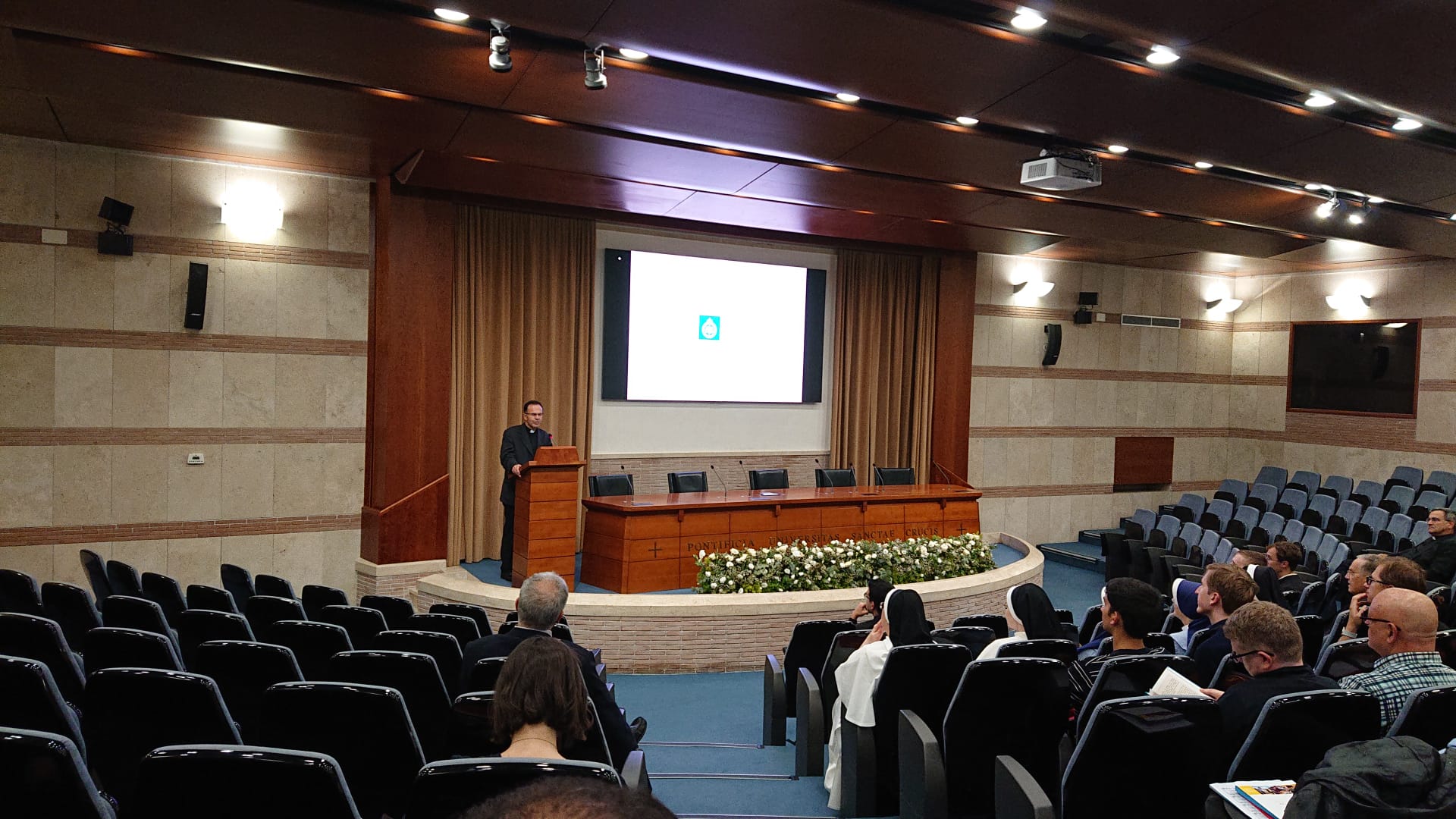
"It is a documentary film where we visit all of the places where Newman lived, doing interviews," Geissler told EWTN News, "and where we are telling the story of Newman and reading parts of Newman's letters. It is a wonderful film that shows the great faith of Newman, the sacrifice that his conversion cost, and the coherence of his life and thought."
A doctor and patron for Catholic education
Pope Francis canonized Newman along with four others in 2019, after Pope Benedict XVI beatified him in Birmingham, England, in 2010.
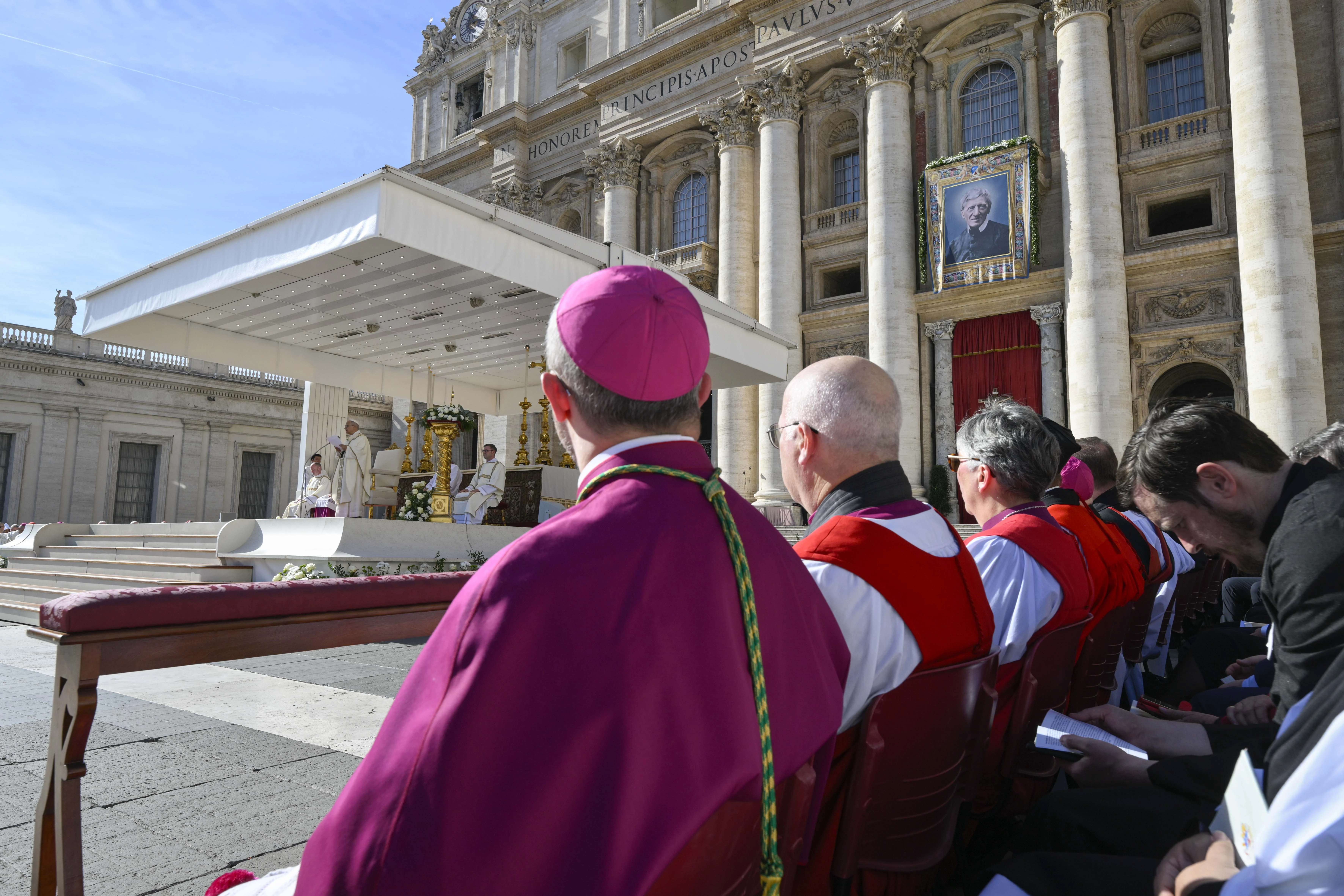
In 2025, Pope Leo XIV declared Newman a doctor of the Church and a co-patron of Catholic education alongside St. Thomas Aquinas. In his homily, the pontiff cited Newman's famous hymn "Lead, Kindly Light" to highlight the need for education to inspire hope.
"The task of education is precisely to offer this Kindly Light to those who might otherwise remain imprisoned by the particularly insidious shadows of pessimism and fear," Leo said. "For this reason, I would like to say to you: Let us disarm the false reasons for resignation and powerlessness, and let us share the great reasons for hope in today's world."
In February, the Vatican established Newman's feast day as Oct. 9 in the General Roman Calendar.
She said that she was "approximately 20, 30 minutes away from being aborted" when her mother changed her mind.
Newly appointed White House press secretary and pro-life advocate Katie Zacharia, whose appointment President Donald Trump announced Oct. 9, has shared that her biological mother chose life over abortion in the final moments before a scheduled procedure, calling it a "miracle."
Last year Zacharia, now herself a mother of four and an attorney, described in an interview with "We The People with Gates Garcia" how the precise circumstances of her birth became the foundation of her pro-life convictions.
She told Garcia that she was "approximately 20, 30 minutes away from being aborted" when her mother, Ruth, changed her mind.
Ruth, whom Zacharia described as having a "tough background of sexual abuse," was about to head to her abortion appointment when the biological father called, pushing the abortion.
Ruth was about to walk out the door to head to the clinic when the phone rang again. Ruth walked back to the phone to answer it, and the Christian counselor who'd called urged her to "consider an open adoption rather than an abortion, so you have an opportunity to know who this child could be and give this child an opportunity to live."
The counselor told her she did not understand "how painful" abortion would be for her, because along with "the loss of [her] baby," there would be "ensuing psychological, physical … trauma."
Zacharia said her mother decided not to go through with the abortion "to the anger and dismay of her family," which allowed Zacharia to be adopted as a newborn. She later met her biological mother at age 18, who told her the story. She said that "seconds of a phone call … saved my life," calling her story "a miracle" that explains why the issue is "so near and dear" to her.
Zacharia, who while in law school at Pepperdine University served as president of the university's Christian Legal Society chapter, has also served on the board of advisers for the White Rose Resistance, a group founded by Seth Gruber that advocates for legal protection for the unborn.
Zacharia has been a frequent commentator on Fox News, Newsmax, and other outlets. She also previously worked as general counsel for Fix California, a conservative nonprofit.
In February, she became deputy assistant secretary for public affairs at the Department of Homeland Security under then-Secretary Kristi Noem. She resigned after roughly a month, citing the strain on her family of commuting between California, her home, and Washington, D.C. In June, she joined Trump Media & Technology Group/Truth Social as a senior communications adviser.
Zacharia succeeds Karoline Leavitt, who in an interview with Sean Hannity last month explained that she left the position to spend more time with her growing family.
Trump said Zacharia would begin her new role on Oct. 12 and hold an introductory news conference on Wednesday, Oct. 14, at 9:30 a.m. ET in the White House press briefing room.
He emphasized that the protection of society and the application of justice can be guaranteed without resorting to capital punishment.
Pope Leo XIV described the death penalty as "inadmissible" in a message posted on social media on the occasion of the World Day Against the Death Penalty on Saturday, Oct. 10.
In his post, the pontiff stated: "The death penalty is inadmissible because it attacks the inviolability and dignity of the person."
He emphasized that the protection of society and the application of justice can be guaranteed without resorting to capital punishment. In this regard, he said that "the common good can be protected and the requirements of justice can be safeguarded without resorting to capital punishment: effective penitentiary systems have already been developed that protect citizens and, at the same time, do not entirely deprive the guilty of the possibility of redemption."
The message concluded with the hashtag #NoDeathPenalty, used in international campaigns promoting the abolition of the death penalty worldwide.
The Holy Father made this statement one day after the secretary of state, Cardinal Pietro Parolin, criticized the planned public execution in the United States of Nidal Hasan, according to Vatican News.
Parolin stated on Oct. 9 that plans to broadcast the execution live are unacceptable. "It is truly incomprehensible that anyone would want to resort to this method in this day and age," he noted.
"I do not know for what purpose. It is certainly unacceptable to turn death into a spectacle. However guilty the person may be, there are other ways."
He emphasized that the death penalty "does not serve as a deterrent."
That same day, the president of the U.S. Conference of Catholic Bishops, Archbishop Paul Coakley, expressed his "shock and great sorrow" and urged that the decision be reconsidered.
Hasan was convicted of killing 13 people and wounding another 32 at Fort Hood in November 2009, and a military court sentenced him to death in 2013. The Pentagon announced on Thursday that his execution by firing squad is scheduled for Dec. 3, although new legal proceedings could delay it.
This story was first published by ACI Prensa, the Spanish-language sister service of EWTN News. It has been translated and adapted by EWTN News English.