The pontiff, who is on vacation at the lakeside town, will attend a classical concert in his honor on July 18.
Pope Leo XIV, who has restored the papal tradition of spending part of the summer at Castel Gandolfo, is set to attend a classical concert there on July 18.
The "Concert in Honor of the Holy Father Leo XIV" will take place in the courtyard of the Apostolic Palace of Castel Gandolfo, where he is staying from July 5–27. The nearby Suburbicarian Diocese of Albano will offer the event as a gift to the pontiff to mark the renewal of the papal presence at the lakeside town, which is part of the diocese.
Leo XIV, as Cardinal Robert Prevost, was the titular cardinal-bishop of the Diocese of Albano before his election to the papacy in 2025.
Bishop Vincenzo Viva of Albano, in a July 16 press release from the diocese, described the concert as an expression of the diocese's joy and closeness to the pope.
"The renewed presence of the Holy Father in our diocesan territory has filled our local Church and its inhabitants with joy," Viva said in the statement. "We wish to offer this symphonic concert as a gesture of affection and communion, and the program we have designed reveals pages of rare splendor."
The concert will feature classical repertoire by Niccolò Paganini and Vincenzo Bellini. It will be performed by the orchestra I Musici di Parma of Parma, Italy.
Pope Leo XIV decided to spend part of this summer on vacation at the Apostolic Palace of Castel Gandolfo after Pope Francis opted not to spend his summers there for his entire 12-year pontificate. The complex also includes the Pontifical Gardens, including the Borgo Laudato Si' garden.
The July 18 concert will be Leo's second public appearance (outside his Sunday Angelus) at Castel Gandolfo so far, following his lunch with the poor in the Borgo Laudato Si' garden on July 11. With the exception of his Sunday Angelus, all private and public audiences, including the Wednesday general audience, are suspended during his vacation.
The diocese also will seek to remove Father Jeffrey Nowak from the clerical state.
The Diocese of Buffalo, New York, has cut a priest off from financial support and is seeking his removal from the clerical state after federal investigators accused him of "abhorrent criminal conduct," the diocese said this week.
The U.S. Attorney's Office for the Western District of New York said in July that Father Jeffrey Nowak of Lackawanna, New York, had been arrested and charged with both the receipt and possession of child pornography.
Nowak had been placed on administrative leave by the diocese in 2019 amid allegations that he had sexually harassed a seminarian. Bishop Michael Fisher, who was appointed to the diocese in 2021, subsequently told Nowak that his priestly faculties in the diocese would not be reinstated and that he would advise other bishops not to accept Nowak in their own dioceses.
In a July 15 statement, the diocese pointed out that it was required by canon law to "provide some level of financial sustenance" to Nowak, even though he was not in active ministry. But after the "abhorrent criminal conduct" of which Nowak was accused this month, the diocese said it was "no longer providing any financial support" to the priest.
In addition, Fisher "has now instructed the diocese's judicial vicar to gather the necessary documentation based on these latest allegations to petition the Vatican's Dicastery for the Doctrine of the Faith to dismiss Jeffrey Nowak from the clerical state," the statement said.
The diocese had previously not made such a petition due to "no allegation of child sexual abuse or other criminal allegation," the statement said.
In its statement, the diocese noted that its financial support of Nowak was "considerably less than what an active priest receives and also less than what a retired priest receives."
Nowak is facing up to 20 years in prison on the child pornography charges. In announcing Nowak's arrest earlier in July, U.S. Attorney Michael DiGiacomo said the priest "hid behind a keyboard and took part in the tragic exploitation of one of society's most vulnerable populations, our children."
"Nowak has now been exposed and can no longer hide and will be held accountable for his disgraceful behavior," the prosecutor said.
Cardinal Seán O'Malley discussed ways in which Catholics and Orthodox Christians can build closer bonds. Archbishop Flavio Pace discussed ongoing Vatican efforts to help bring about unity.
WASHINGTON — Cardinal Seán Patrick O'Malley, retired archbishop of Boston, encouraged Catholic and Eastern Orthodox Christians to pray together for reunification at a joint conference focused on healing the nearly 1,000-year schism between the churches.
"Come together and pray for unity," O'Malley said at the conference, hosted by the Orientale Lumen Foundation at the retreat house for the St. John Paul II National Shrine on July 13–15.
Speakers included Roman Catholic, Eastern Catholic, and Eastern Orthodox bishops, and a few dozen laity and clergy focused on ecumenism attended. Along with O'Malley, speakers included Archbishop Flavio Pace — secretary of the Vatican's Dicastery for Promoting Christian Unity — and Metropolitan Tikhon Mollard, primate of the Orthodox Church in America (OCA).
O'Malley encouraged concrete steps to integrate Catholic and Orthodox communities, one of the most important of which was "praying together." Just prior to his speech, the Catholic and Orthodox clergy — including O'Malley, Pace, and Mollard — prayed daily vespers together in the form used in Eastern churches.
The cardinal, speaking to those gathered, said unity will ultimately be achieved as a gift to the faithful granted by Christ and will come about "how he wills [it]." He said he considers joint prayer to be crucial because it is the Holy Spirit who will "illuminate the way" toward East-West communion.
'Work for unity'
In his address, O'Malley discussed his concern with the disunity of Christianity, which he said "weakens our ability [as Christians] to proclaim the Gospel with coherence and authority."
He recalled his early work in the 1970s with the Order of Friars Minor Capuchin. The order was deeply involved in missionary work in Papua New Guinea. Although O'Malley himself was not a missionary there, he spoke about conversations with colleagues who were working with people accepting Christianity in large numbers.
O'Malley noted that when new converts had learned about the various Christian denominations, many felt "sad and embarrassed." Although many Christians view the disunity as "normative," he said, the people of Papua New Guinea correctly recognized it as "scandalous."
"All disciples of Jesus Christ must feel an impulse to work for unity among Christians," O'Malley said.
O'Malley said Catholics should see Orthodoxy as the "greatest possibility of success in this task in fulfilling Christ's wish so that we all become one so the world may believe." He noted that the two share "so many saints and devotions" and are more similar to Catholics in theology than any other Christian community.
He expressed joy that many Orthodox churches send representatives to meetings held by the Vatican and the U.S. Conference of Catholic Bishops, and that the Catholic Church also sent representatives to the Orthodox Council of Crete in 2016. Yet, he encouraged a stronger bond.
O'Malley urged the bodies to "consider the possibility of joint pastoral letters or statements" on issues of mutual agreement like world hunger, euthanasia, and abortion. He said they should establish committees together to organize joint prayer, study sessions, and works of mercy.
His idea of unity, he explained, would be "communion without absorption" and said there is a difference between "unity and uniformity." He said people should look to the Eastern Catholic Churches as a model, saying "they are bridges for reconciliation and laboratories for synodal communion."
Although Rome's relationship with the Eastern Catholics was not always perfect (O'Malley noted historical attempts at forced Latinization), the cardinal said there is an opportunity to work more closely with Eastern Catholics as part of ecumenical efforts, focused on "greater respect for their uniqueness."
Mollard, speaking from the Orthodox position, echoed O'Malley's desire for unity and the feeling of pain over continued separation.
"It affects the faithful in the parishes and how they live their lives," the metropolitan said. "And perhaps encourage[s] us all to not just reach out and educate but really inspire in people that faith in Christ and love for the Church can drive … [the path toward] unity."
O'Malley told EWTN News that ecumenism requires "different groups that would be Catholic and Orthodox, working together," and Church leaders should be "letting people know the progress that has been made in the dialogue."
He said Eastern Orthodox Christians "have the sacraments," they have apostolic succession, and "the differences are not great." Although theological disputes remain a division between Catholicism and Orthodoxy, he said he believes the causes of the schism were more political and cultural.
"Most Catholics and Orthodox in the pews are not focused on those fine points of theology," O'Malley said.
Ongoing Vatican ecumenical work
Many theological disputes, however, are being hashed out at the highest levels of the Catholic and Eastern Orthodox Churches. Some of the biggest include questions of papal supremacy, primacy, and jurisdiction as well as the language of the Nicene Creed and subsequently certain details about the Holy Trinity.
Pace, who flew in from Rome, discussed some of the history and recent progress on ecumenism related to these subjects during his speech, noting that the end goal is "full unity" between the East and the West.
Archbishop Flavio Pace, secretary of the Vatican's Dicastery for Promoting Christian Unity, speaks at the Orientale Lumen Foundation conference at the retreat house for the St. John Paul II National Shrine in Washington, D.C., on July 15, 2026. | Credit: Tyler Arnold/EWTN News
The Joint International Commission for Theological Dialogue between the Roman Catholic Church and the Orthodox Church, formed in 1980, created two subcommittees in 2024. One focuses on infallibility, which is the current priority. The other is about the dispute about the Nicene Creed.
"We have to prepare a very good draft," Pace told EWTN News.
He said once the subcommittee completes its draft on infallibility, the body will consider a call for a full meeting for approval. He said the subcommittee must "arrive to a good document that the [full committee] can discuss and approve."
The First Vatican Council teaches that the pope speaks infallibly on matters of faith and morals when defining matters of doctrine and invoking his papal authority, binding the declaration on the entire Church.
Bishop Anthony Vrame, a Greek Orthodox bishop and director of Holy Cross Orthodox Press, said in a panel discussion that Orthodoxy recognizes the indefectibility of councils: "When the Church gathers together in council, … no error is possible." Yet, papal infallibility is different, as it is "designated to one person."
Cardinal Kurt Koch, president of the Vatican's Dicastery for Promoting Christian Unity, offered a prerecorded video message for the conference, stating that he hopes the eventual documents will be received by the Catholic Church and Eastern Orthodox churches.
Koch emphasized the importance of clergy informing the laity when there are developments, so the progress is "not to be remained known only by experts."
Religious nationalism, state control, terrorism, authoritarianism, and limits on women are among drivers of rising persecution globally, the International Christian Concern (ICC) report said.
International Christian Concern (ICC) released its 2026 Global Persecution Index, offering an in-depth analysis of the persecution Christians face in more than 20 countries and recommendations for how policymakers and organizations can combat escalating violations.
"This year's Global Persecution Index is a sobering reminder that millions of our brothers and sisters in Christ continue to pay a high price for their faith," Shawn Wright, president of ICC, said in a statement.
ICC is a nonprofit organization assisting the persecuted Christian church through assistance, advocacy, and awareness across the globe.
The index, "Faces of the Persecuted," was created by ICC as more than 388 million Christians worldwide — or 1 in 7 believers — live under "high levels of persecution and discrimination for their faith," according to the report.
The index highlights the leaders of countries where persecution is worsening including Nigerian President Bola Ahmed Tinubu, Nicaraguan President Daniel Ortega, Syrian President Ahmed al-Sharaa, and Indian Prime Minister Narendra Modi.
The index outlines trends in religious freedom that are aiding the rise of persecution including religious nationalism, transnational repression, state control over religious organizations, terrorism, authoritarianism, restrictions on women, and the use of the West to persecute.
The report states: "Despite these challenges, the church continues to grow in some of the most hostile environments, and resistance to repression is rising as individuals and communities push back against injustice and demand greater freedom."
"Behind every statistic is a real person: someone who has chosen faithfulness to Jesus over safety, comfort, or even life itself," Wright said. "Our hope is that this report not only informs decision-makers and stakeholders but moves readers to act with urgency, conviction, and compassion."
Recommendations to 'ease the burden of persecuted Christians'
The index details Christian persecution in African, Latin American, Middle Eastern, North African, South Asian, and Southeast Asian countries, and it specifically offers recommendations to aid the faithful in Nigeria, Nicaragua, Syria, and India.
As Nigerians face political persecution, mob violence, and other actions aiding the nation's religious persecution, ICC recommends immediate and independent investigations into the reported mass killings against the faithful in the country.
It also calls for international leadership to reverse legal barriers, including blasphemy laws in the nation that criminalize disfavored religious beliefs.
In Nicaragua, ICC notes that hundreds of priests, nuns, and other religious workers have disappeared or been detained. The nation's regime also engages in systematic attempts to control religious sermons and media, and surveil members of independent religious organizations.
To combat the issues, ICC recommends expedited asylum pathways for the exiled clergy and calls for the support of aid to parishes and civil society organizations shuttered by the regime. It also urges expanded international sanctions against Nicaraguan officials, including regime leaders Daniel Ortega and Rosario Murillo.
In Syria, religious people face numerous challenges despite a shift of government following the Assad regime. They experience reprisals, detentions, and discrimination that prevents their participation in governance councils and denies them property restitution.
In its index, ICC recommends support for programs that aid displaced communities and protect targeted Christians in Syria. It also calls for accountability for war crimes committed by both Assad and post-Assad actors.
As India's persecution is on the rise, ICC urges the protection of independent nongovernmental organizations and media working to provide aid and to report on the persecuted groups as the faithful in the nation face mob attacks and other acts of violence.
With U.S. and Mexican authorities reducing the migration flow and organized crime getting into the extortion business, migrants have been seeking alternative ways to get to the U.S border.
Official figures show a drastic drop in irregular migration in Mexico and in encounters between undocumented migrants and U.S. authorities at the U.S.-Mexican border.
However, a priest who has been helping migrants for over a decade points to a reality that goes unrecorded: routes that are less visible, more expensive, and exposed to organized crime networks.
In Mexico, according to figures from the Migration Policy, Registry, and Personal Identity Unit, the number of recorded instances of individuals with irregular migration status fell from over 1.2 million in 2024 to 155,730 in 2025. As of May of this year, the total stands at 18,083 cases.
On the U.S. side, Customs and Border Protection (CBP) recorded 443,671 encounters at the southwest border during fiscal year 2025, compared with 2.1 million the previous year. So far in fiscal year 2026, the figure stands at 90,121.
This trend also reflects the shrinking number of people assisted by Catholic shelters.
Located halfway along the route of those seeking to reach the north of the continent, the Mexican city of Puebla is also seeing a drop in the number of migrants arriving to seek help at Catholic shelters.
Father Alberto Vivar León told ACI Prensa, the Spanish-language sister service of EWTN News, that 1,200 migrants were assisted at the Archdiocese of Puebla's three shelters during 2023. Two years later, in 2025, the figure was 145.
Ordained nearly 15 years ago, Vivar has dedicated the last 11 years to assisting migrants. He estimated that the shelters have assisted around 60 migrants during the first half of 2026.
His close involvement with migrants began at San Felipe de Jesús parish in Hueyotlipan, about an hour north of Puebla. The parish boundaries include the Puebla City Central Bus Terminal (CAPU, by its Spanish acronym), which for years has served as a transit point for many migrants continuing their journey northward.
Both that parish and Our Lady of the Assumption, where Vivar has served as parish priest since late 2021, are located near the railway tracks known to many as "La Bestia" ("The Beast"), another mode of transport historically used by many migrants, despite the risks involved in traveling atop freight cars.
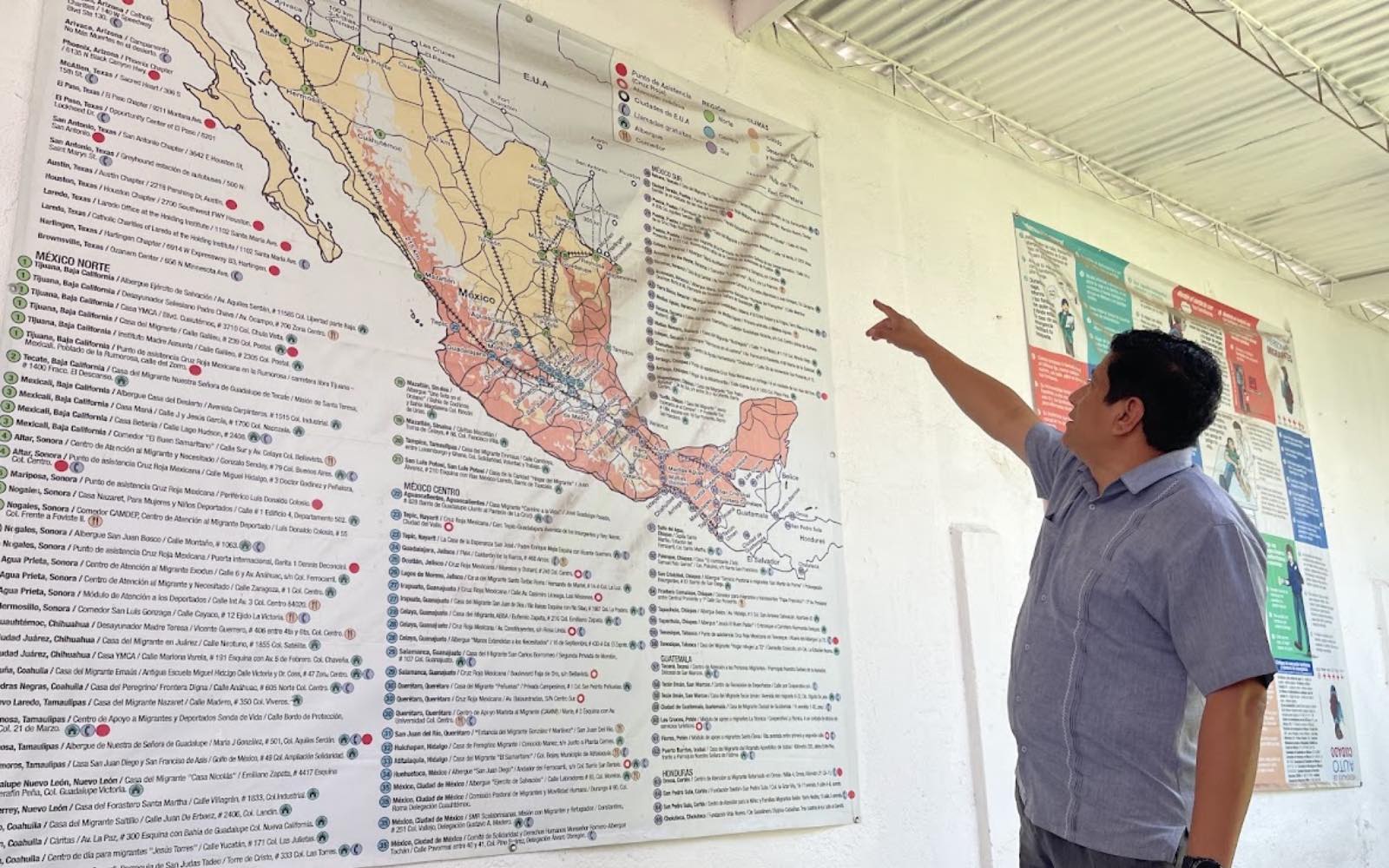
Father Alberto Vivar León shows a map of the migrant shelter network in Mexico during an interview with ACI Prensa in Puebla. | Credit: David Ramos/EWTN News
The numbers
Although the figures point to a decline in migration flows, Vivar said this doesn't mean people have stopped trying to reach the U.S. "The traffic continues," he said. "Perhaps not as many as before, but they keep coming through. People are still passing through Mexico."
He believes the policies implemented by the administrations of President Donald Trump and Mexican President Claudia Sheinbaum have contributed to a "natural decrease in the number of people, because they couldn't cross as freely." However, he maintains that these policies have also led to a situation where "organized crime exploited the circumstances and began profiting from them."
Criminals are currently demanding "between $6,000 and $7,000" of migrants seeking to cross Mexico, he said.
"Organized crime … continues to take advantage" of migrants, he reiterated.
An important change in migrant transportation
Throughout his years of pastoral work, Vivar has observed a significant shift regarding transportation.
In the past, he noted, migrants would board the freight train to take advantage of routes heading north. However, since 2018, many have avoided this option because "drug traffickers with long guns get on, demand payment, and throw anyone who doesn't pay off the train."
Word of this has spread among migrants, leading them to switch to buses; subsequently, however, Mexican authorities stepped up document checks for those traveling through the country.
The result was that many migrants began to rely on buses offering alternative routes, some of which were controlled by criminal groups.
Along these routes, Vivar said that some migrants end up falling victim to scams, abuse, and even forced labor.
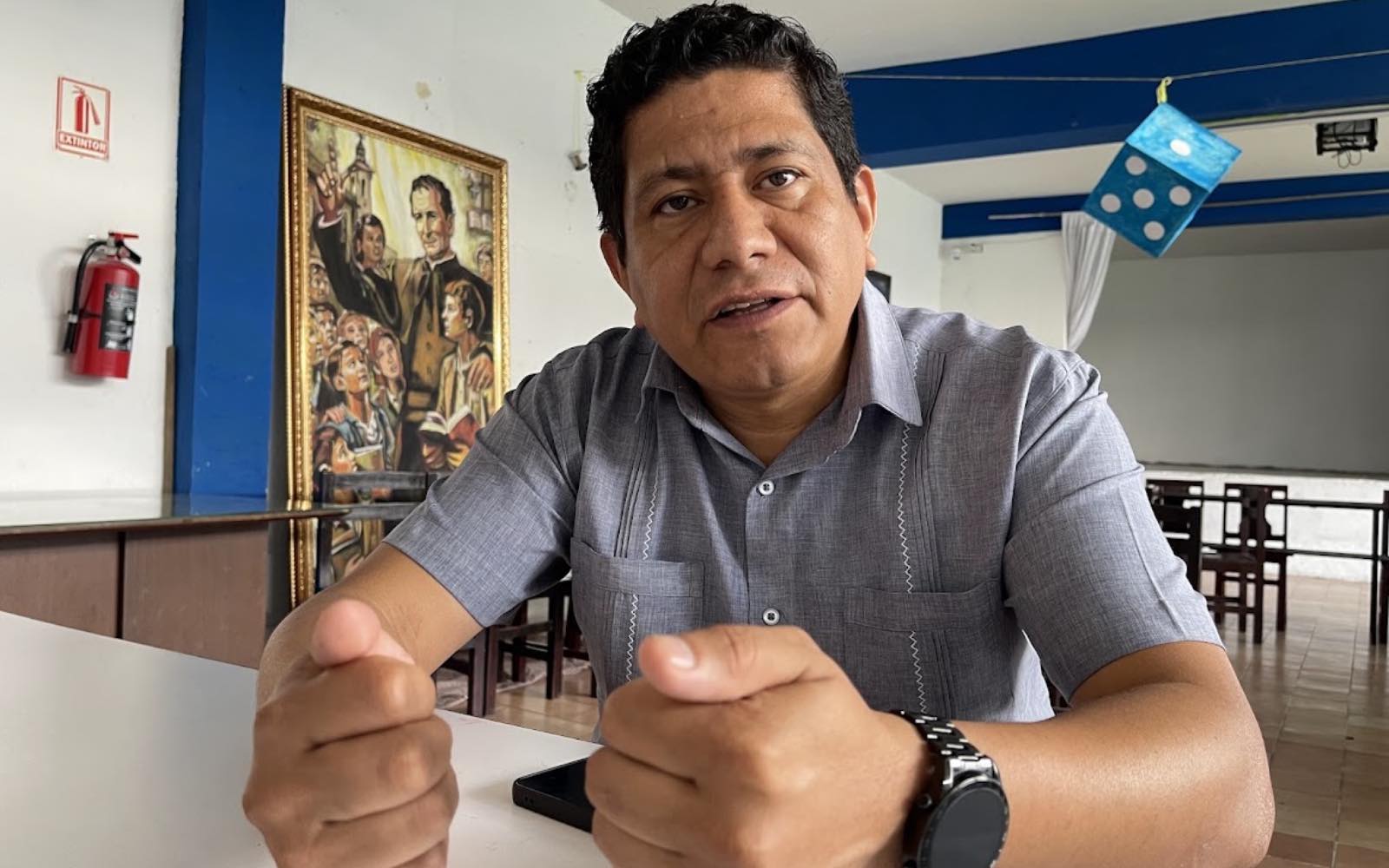
Father Alberto Vivar León has dedicated the last 11 years to assisting migrants in Puebla, Mexico. | Credit: David Ramos/EWTN News
Violence: A constant on the migrant's journey
One of the cases the Mexican priest recalled involved a group of five or six young people whom he had advised to be wary of anyone trying to offer help, "because people are watching where you come from and who you are."
"They didn't listen to me, and a pickup truck took them away," he said. "They took them to a ranch. They kept them there working for about 15 days without pay" and barely gave them anything to eat.
"One day, they managed to escape," he said. "They returned to the shelter ... and said, 'Father, you were right.'"
Criminals, Vivar warned, "are lying in wait at bus stops" such as the CAPU terminal, where "several individuals are looking specifically to rob migrants" because they are easy to spot "and [the criminals] know that if they rob them, they won't cry out" because the authorities "will deport them."
He also recalled one migrant who was abducted in San Luis Potosí and fell victim to sexual abuse at the hands of criminals. The victim managed to escape when his captors asked him to prepare breakfast. He seized a moment of inattention to flee barefoot and, after receiving help from several people, managed to reach the shelter in Puebla. "It was a very, very ugly situation; and from here, we paid for his fare to Tapachula in southern Mexico so he could continue on to his country."
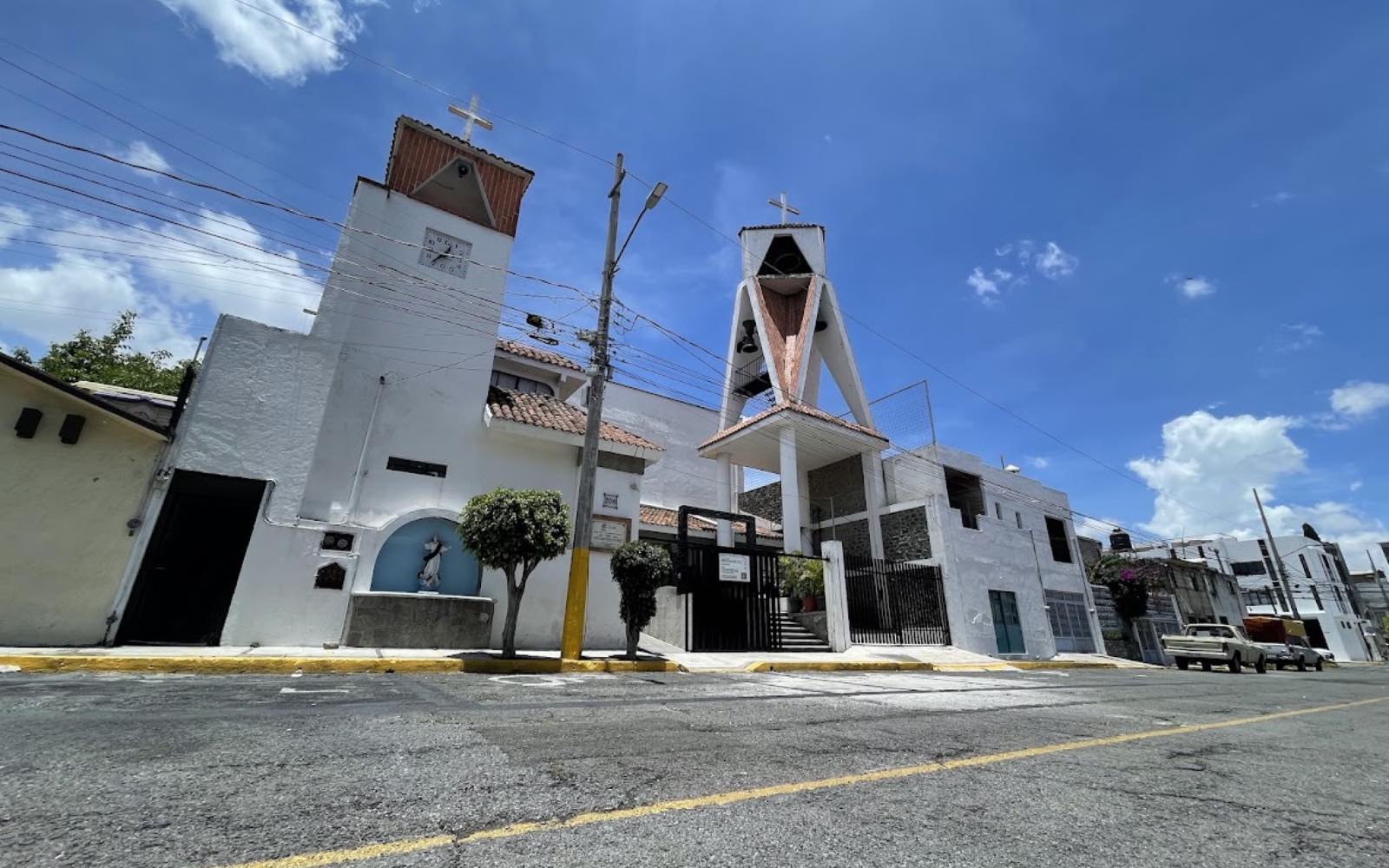
Our Lady of the Assumption Parish in the northwestern part of the city of Puebla, Mexico. Its parish priest, Father Alberto Vivar León, coordinates care for migrants there. | Credit: David Ramos/EWTN News
The Church's response
In the face of such suffering, Vivar noted that the Church continues to maintain shelters where migrants can receive food, clothing, medical care, and a place to rest for one or two nights before continuing their journey.
Furthermore, thanks to a bazaar organized by the parish community, there are funds that help cover the cost of travel fares as well.
These shelters receive no government aid. Years ago, during the massive migrant caravans, authorities would send some aid, he said, but "there has been a distancing since 2018 under the new administrations because that support is no longer there."
"The government does not have migrant shelters; it's the Church that operates migrant shelters throughout the country. The National Migration Institute has detention centers; they are not shelters," he said.
Assistance to migrants should not be restricted to Catholic shelters but should be the responsibility of every believer, Vivar emphasized, and every Christian must "try to help."
Almsgiving, he said, is not about giving from "my surplus" but rather about "giving what is right."
"Give your alms, but alms in the sense of giving what is necessary. If you have some clothes, if you have a jacket, give it to them."
"Help however you can, and then — yes — send them to the shelters we have, and we'll see what else can be done," he added.
The migrant, he said, "didn't leave home because he wanted to ... he isn't going days without eating and sleeping on the street because he wanted to."
Rather, migrants leave "out of necessity, because they have no other option," Vivar said, and are "chasing a dream, trying to provide for their families."
This story was first published by ACI Prensa, the Spanish-language sister service of EWTN News. It has been translated and adapted by EWTN News English.
Giovanni Boscia will succeed Gian Franco Mammì in managing the daily operations of the Institute for the Works of Religion.
The Institute for the Works of Religion (IOR), also known as the Vatican Bank, has named Giovanni Boscia as its next director general.
He will succeed Gian Franco Mammì, who has reached the mandatory retirement age of 70 and has led the IOR's day-to-day operations since 2015.
Boscia, 55, will assume his new role on Oct. 1. According to a July 15 press release from the IOR, his appointment "reflects a robust governance structure based on a clear distinction between the supervisory, governing, and management bodies, and designed to ensure transparency and stability."
The IOR was founded in 1942 by Pope Pius XII to manage the Holy See's assets and centralize the worldwide administration of the Catholic Church's funds. It is also the central financial institution of Vatican City State.
Personnel changes and a mixed year at the IOR
Boscia's appointment is the second leadership change at the IOR in 2026, following François Pauly's appointment as its president. Pauly serves as a nonexecutive member assisting with oversight, whereas Boscia will oversee the bank's daily operations as director general.
The leadership changes come amid a mixed year for the IOR. In its annual reports published in May, the bank reported a net profit of 51 million euros (about $58.4 million) for 2025, up 55.5% from the 32.8 million euros ($37.5 million) recorded the previous year.
In April, the Vatican detected 78 suspicious activities involving accounts linked to the IOR.
More than 3 decades of experience in finance
Before joining the IOR in 2019, Boscia spent more than 30 years in international financial markets across several firms, including Salomon Brothers, Citigroup, RBS, and Credit Suisse First Boston.
He graduated with honors with a master's degree in finance from Bocconi University in Milan, Italy, and an executive MBA from London Business School.
In 2019, he went to Rome to serve at the IOR as its head of finance and chief financial officer. He was promoted to head of investments in 2021 and to deputy director general in 2023.
The beatification Mass for Archbishop Fulton Sheen is set for 2 p.m. CT on Sept. 24 at The Dome at America's Center in St. Louis. Tickets cost $15 to $25.
Dominican Sister Jude Andrew Link is encouraging Catholics to view the beatification of Venerable Archbishop Fulton J. Sheen as a chance to deepen their relationship with Christ rather than simply a historic celebration.
The 2 p.m. CT Sept. 24 ceremony at The Dome at America's Center in St. Louis will formally declare Sheen "blessed," bringing him one step closer to sainthood.
Link, programming director for the Archbishop Fulton J. Sheen Foundation, told Veronica Dudo on "EWTN News Nightly" on July 15 that pilgrims can arrive early for the broader celebration, which includes a nine-day novena of Holy Hours in Peoria, Illinois, leading up to the beatification, along with Masses of thanksgiving and the Sheen Awards Gala afterward.
Sheen was a pioneering television evangelist whose popular media ministry made him one of the most influential American Church figures of the 20th century.
"I think of someone who fell in love with Jesus Christ," said Link, with the Dominican Sisters of Mary, Mother of the Eucharist. "He knew Jesus Christ through his study. He knew Jesus Christ in the Church and in the liturgy. But in a really profound way, he knew Christ in the Eucharist. He knew Christ in prayer."
"He knew he was a child of God. He knew he was a priest of Jesus Christ," she said. "He knew that as a priest then that he was called to be a victim and to offer his life in union with the sacrifice of Christ."
Link also reflected on St. John Paul II's 1979 meeting with Sheen, when the pope embraced the archbishop and called him "a loyal son of the Church."
"John Paul II could see right into the heart of Fulton Sheen's identity there and just affirmed him at the deepest level," she said.
Encouraging the faithful to attend
Inviting Catholics to attend the beatification in St. Louis, Link called the celebration "a gift for the Church."
"Fulton Sheen doesn't need it. He's in heaven," she said. "But it's a gift that the Church gives to us."
At the beatification, Cardinal Luis Antonio Tagle will serve as the papal representative. Before the liturgy, pilgrims can attend a morning program featuring Cardinal Timothy Dolan; Sister Josephine Garrett, CSFN; Matt Maher; Monsignor Roger Landry; and Katie McGrady.
The beatification Mass requires a ticket, which costs about $15 to $25. Organizers say the fee is intended to offset the high costs of hosting thousands of pilgrims in a stadium venue.
Organizers have stressed that the ticket charge is not a fee for attending Mass, which canon law prohibits. Instead, it is intended to help cover the costs of hosting the large-scale event, including security, crowd management, and stadium operations, while also helping make attendance possible for priests, religious, and school groups.
The former head of the Vatican's liturgy office told the European Parliament that ambiguous language risks turning international agreements into "instruments of perversion and of silent power."
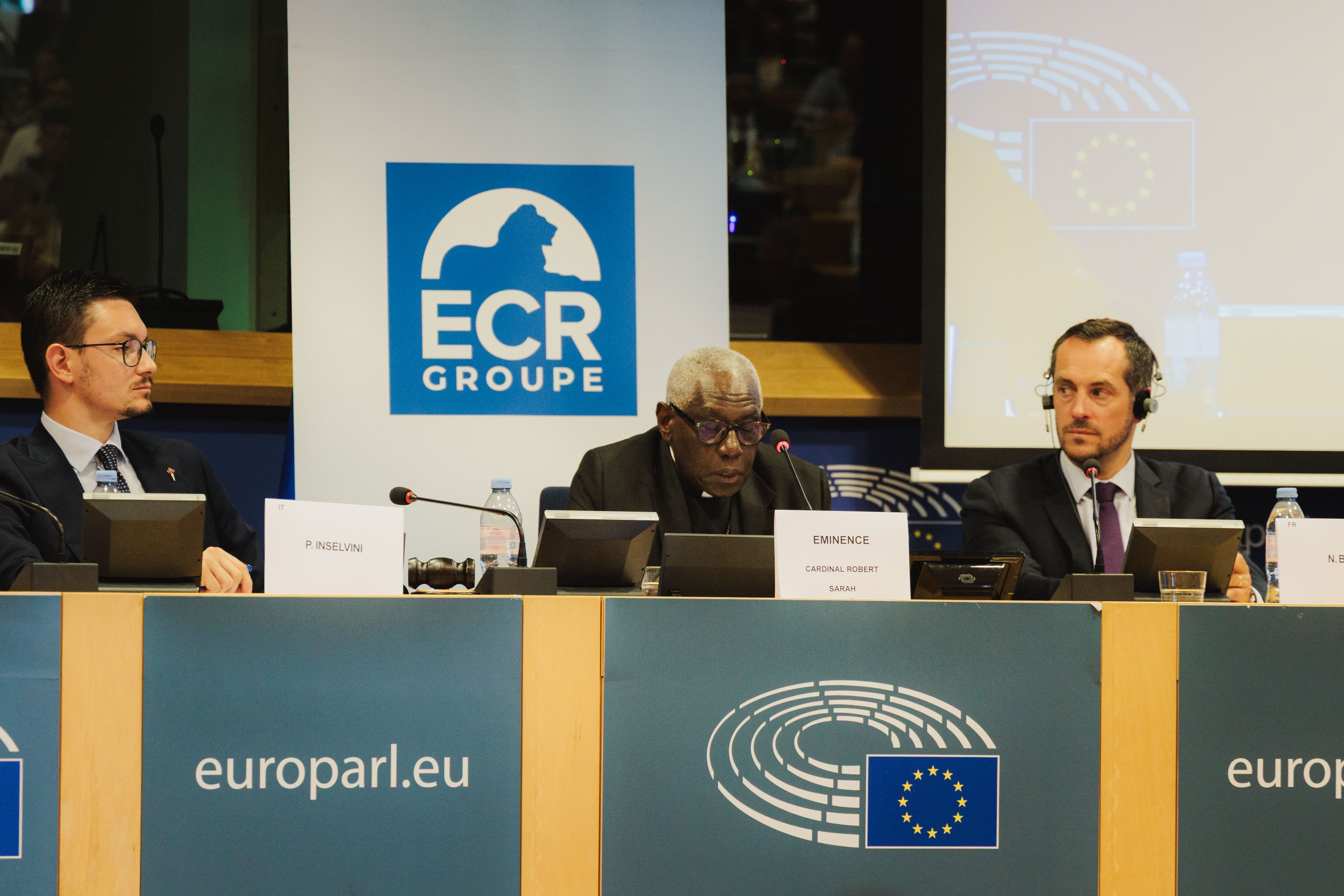
Cardinal Robert Sarah urged Europe and Africa to build their future relationship on truth, justice, and human dignity rather than ideological approaches, warning that today's geopolitical conflicts stem from what he described as a "crisis of the logos" in which reason and language become instruments of power rather than truth.
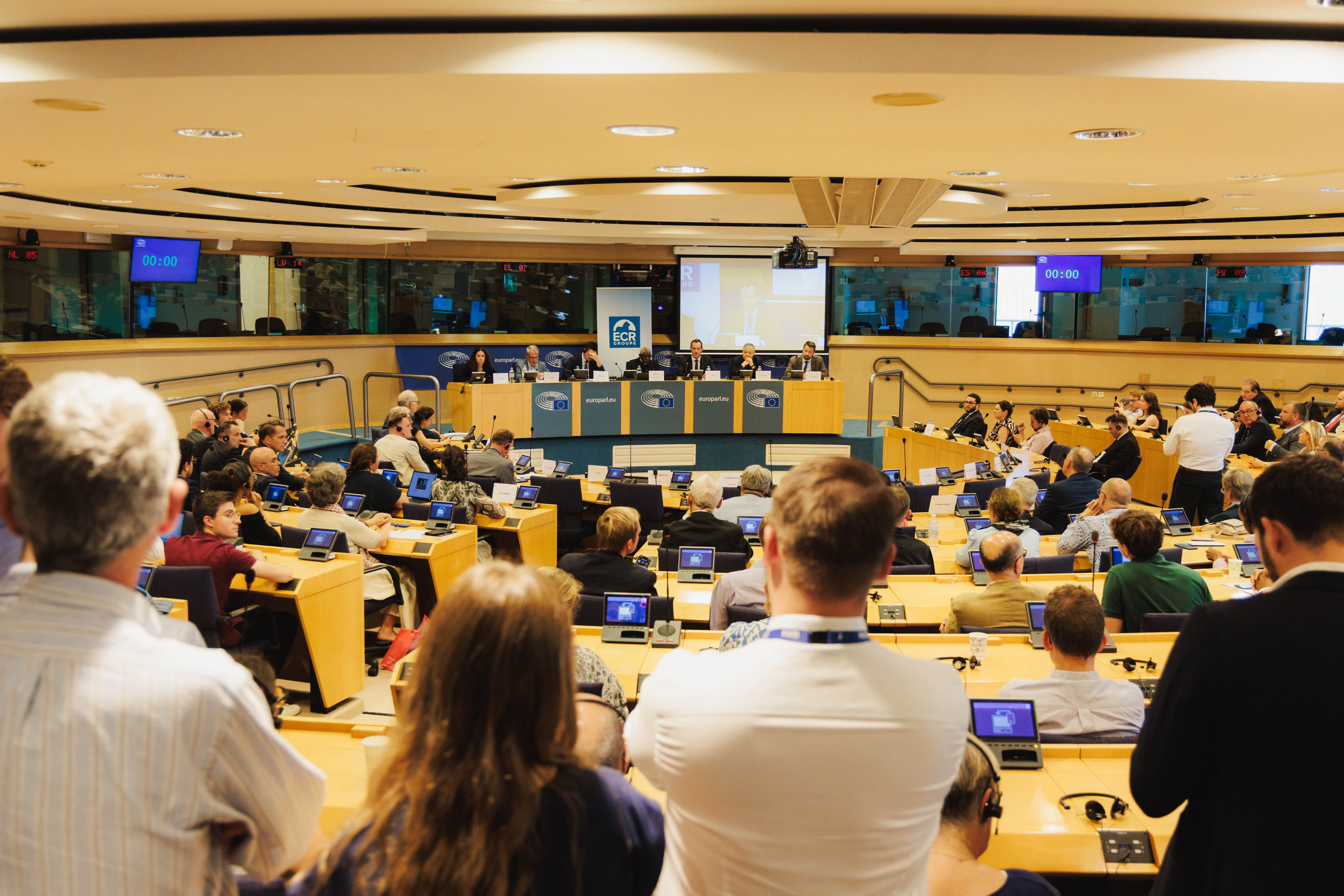
Speaking at the European Parliament in Brussels on July 15 during a discussion titled "Europe and Africa: In Conversation with Cardinal Robert Sarah," the former prefect of the Congregation for Divine Worship and the Discipline of the Sacraments said international cooperation is increasingly undermined by a growing disconnect between language and reality.
A view of the hearing room during the discussion "Europe and Africa" at the European Parliament in Brussels on July 15, 2026. | Credit: ECR Group
"In the relationship between the European Union and Africa, words are today used not to reveal reality but to hide it, and even to distort it," Sarah said.
Pointing to expressions such as "sexual and reproductive health," "gender equality," and "human rights," Sarah argued that such language is sometimes used to advance concepts that many African societies neither share nor have chosen.
"If words no longer mean what they say, how can there be authentic dialogue?" he asked. "How can Africa trust a Europe that speaks with equivocal, double-meaning words?"
He warned that international agreements relying on ambiguous terminology risk becoming "instruments of perversion and of silent power" rather than genuine cooperation.
Lessons from the pope's AI encyclical
Sarah also drew on Pope Leo XIV's encyclical Magnifica Humanitas, published in May, arguing that although it addresses the ethical challenges posed by artificial intelligence (AI), its warning against manipulative and deceptive language also extends beyond technology to diplomacy and international cooperation.
He said the encyclical calls on policymakers to ensure political, economic, and technological systems remain grounded in truth and always serve the human person. It also insists on human oversight and moral discernment so that AI remains at the service of the human person rather than becoming its master.
Cardinal Robert Sarah delivers his remarks during the discussion "Europe and Africa" at the European Parliament in Brussels on July 15, 2026. | Credit: ECR Group
Warning against reducing individuals to "statistical categories or instruments of economic power" rather than recognizing their "transcendent dignity," Sarah said the encyclical ultimately places the human person at the center.
"The question remains, and always will remain, anthropological," he said, urging Europe and Africa to build their partnership on "the truth of the human person, of the family, and of peoples."
Europe-Africa cooperation
Opening the conference, Paolo Inselvini, an Italian member of the European Parliament, said the gathering offered an opportunity to recover Europe's Christian roots while promoting "a frank, equal dialogue" with Africa based on truth rather than ideology.
European Parliament Vice President Antonella Sberna pointed to the EU's Global Gateway investment strategy and Italy's Mattei Plan as examples of cooperation with Africa based on "respect, reality, and the identity of peoples." She said such discussions help "translate our values into legislation and concrete change."
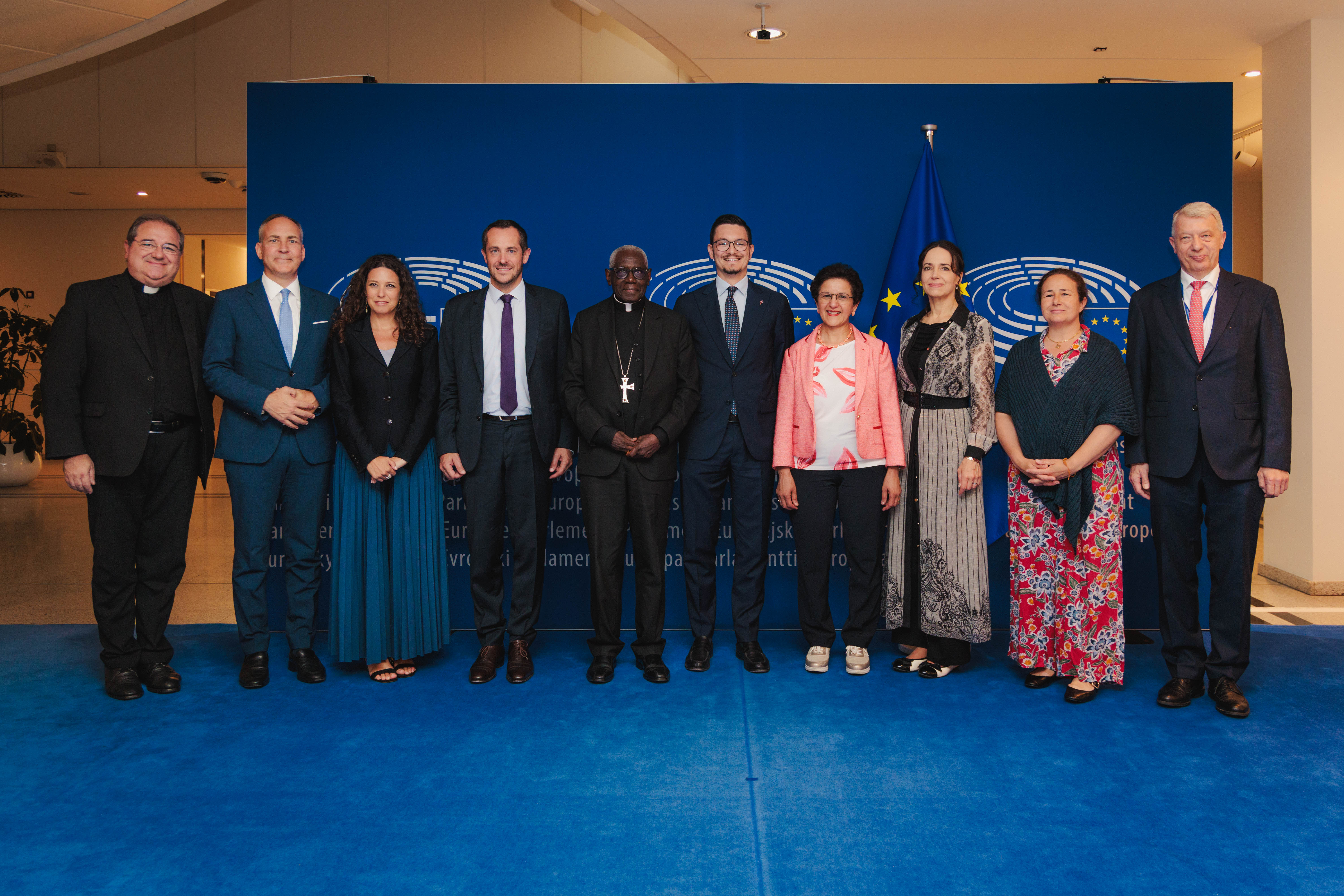
Cardinal Robert Sarah poses with speakers and organizers at the European Parliament in Brussels on July 15, 2026. | Credit: ECR Group
Launched in 2021, Global Gateway is the EU's flagship global investment strategy. As part of that strategy, the EU aims to mobilize up to 150 billion euros ($171.9 billion) in public and private investment across Africa.
A bridge between continents
Born in Guinea, Sarah was appointed archbishop of Conakry by Pope John Paul II in 1979 at the age of 34, becoming the youngest Catholic bishop in the world at the time.
Pope Benedict XVI named him president of the Pontifical Council Cor Unum in 2010, and Pope Francis appointed him prefect of the Congregation for Divine Worship and the Discipline of the Sacraments in 2014, a position he held until his retirement in 2021.
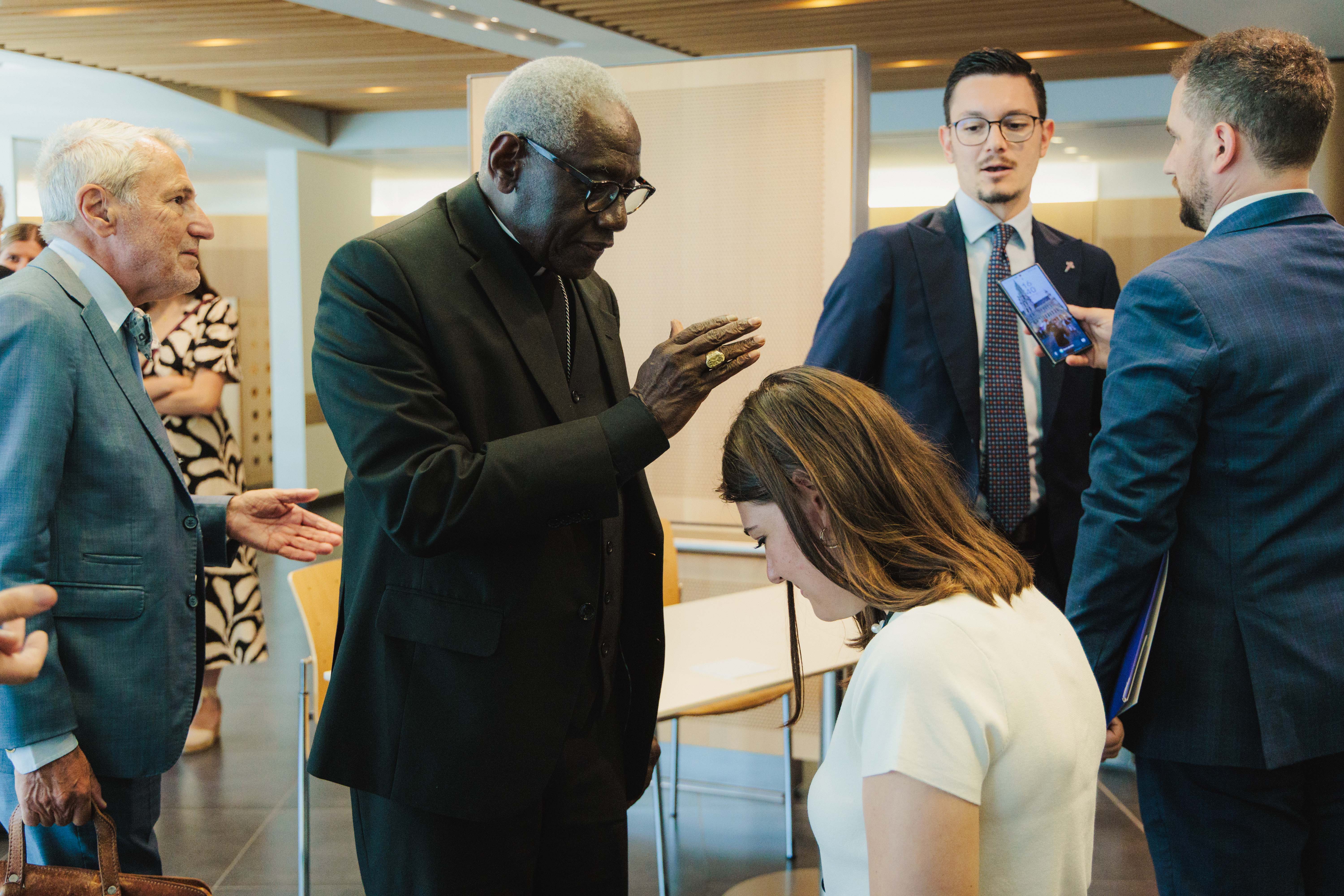
Cardinal Robert Sarah blesses a young woman following the discussion at the European Parliament in Brussels on July 15, 2026. | Credit: ECR Group
Archbishop Bernardito Cleopas Auza, the apostolic nuncio to the European Union, who also spoke at the event, recalled his first meeting with the cardinal during reconstruction efforts following the 2010 Haiti earthquake. He described Sarah as someone whose life and ministry have spanned Africa, Europe, and the universal Church.
Sarah remains one of the Catholic Church's most influential voices on evangelization, liturgy, religious freedom, and the relationship between faith, culture, and public life.
"The pope normally speaks as a head of the Church," papal expert Father Roberto Regoli told EWTN News.
When the pope speaks out on matters of war and peace, is he doing so as a religious authority or a political leader? A U.S. diplomat and a Vatican official recently expressed contrasting views on the question.
According to the New York Times last week, U.S. ambassador to the Holy See Brian Burch argued that when Pope Leo spoke out against the war in Iran, "he was not doing so as the leader of the Roman Catholic Church, the vicar of Christ."
"When the pope acts as the sovereign leader of the Holy See, he is coequal with world leaders," Burch is quoted as telling the NYT in an interview published online July 9.
While the Vatican News editorial did not mention Burch by name, it addressed the ambassador's argument in the NYT interview.
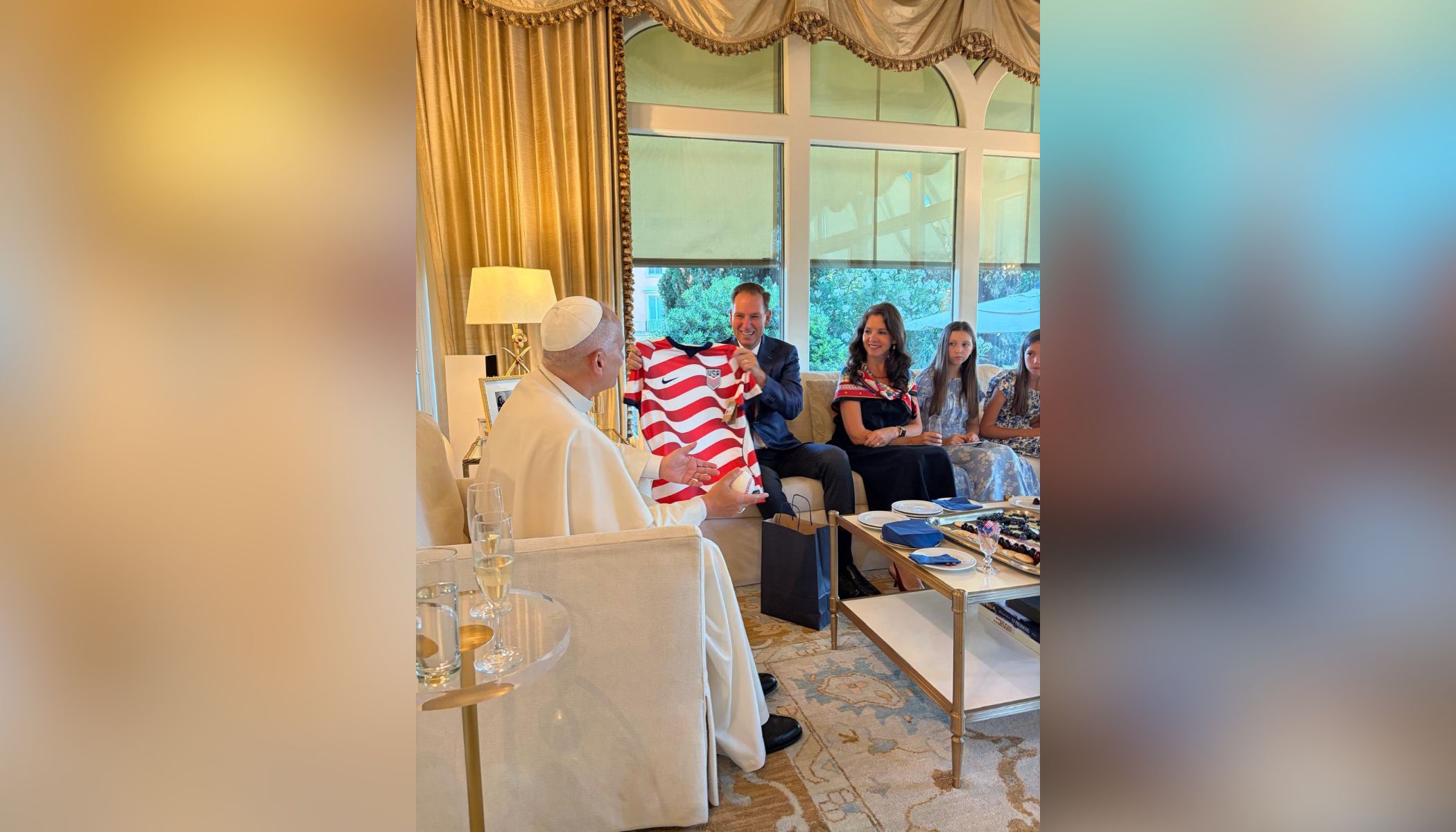
Pope Leo XIV has dinner with U.S. Ambassador Brian Burch and his family at the ambassador's residence in Rome on July 4, 2026. | Credit: U.S. Embassy to the Holy See
"Any glorification or exaggeration of the pope's role as head of state, any emphasis on the importance of this role, is therefore misleading because it comes at the expense of his one true mission as universal shepherd," Tornielli wrote.
A spokeswoman for Burch declined to comment.
Expert weighs in
Father Roberto Regoli, an expert on papal history and diplomacy from the 19th to 21st centuries, explained that while the pope is the head of a state, "it is just functional to his personal service as a Church leader."
"Vatican State is an enclave state … it is functional for the spiritual mission of the popes," Regoli told EWTN News. "The pope normally speaks as a head of the Church."
In the Vatican News editorial, Tornielli pointed to the 1929 Lateran Pacts, an agreement that resolved the issue of the temporal power of popes and gave the pope a small territory — less than 110 acres — but said that "does not mean that he acts or speaks as a politician when addressing issues concerning the affairs of humanity."
Tornielli quoted St. Paul VI, who, in an address to the United Nations General Assembly in 1965, said, referring to himself, that "he is your brother, and even one of the least among you who represent sovereign states, since he possesses — if you choose to consider us from this point of view — only a tiny and practically symbolic temporal sovereignty: the minimum needed in order to be free to exercise his spiritual mission and to assure those who deal with him that he is independent of any sovereignty of this world. He has no temporal power, no ambition to enter into competition with you."
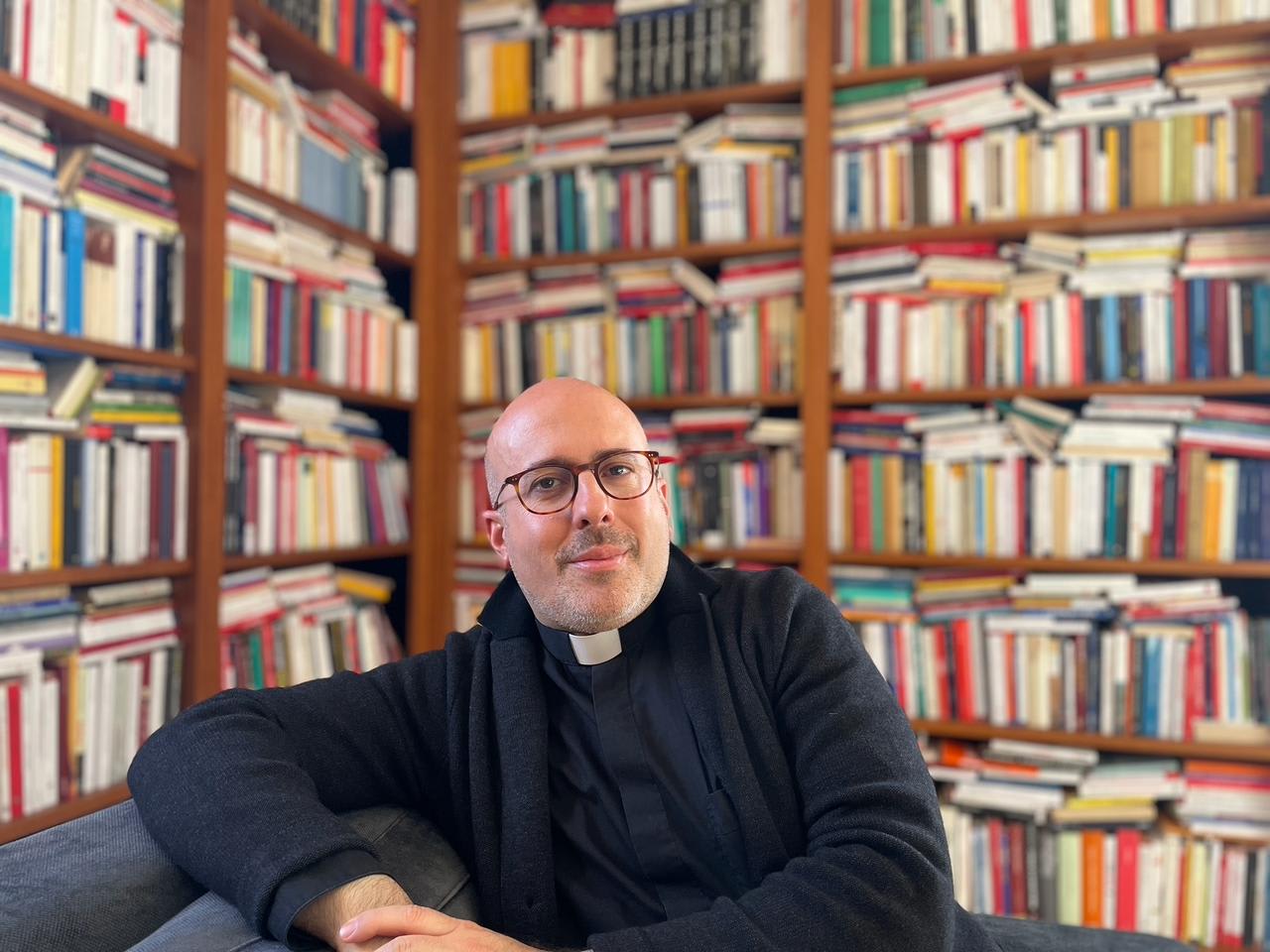
Father Roberto Regoli was appointed by the Vatican Secretariat of State in January 2026 as president of the board of directors of the Joseph Ratzinger-Benedict XVI Vatican Foundation. | Credit: Photo courtesy of Father Roberto Regoli
Regoli noted that the political power of popes was different in the past, such as in the time of the Papal States. Being the head of a state today "is just functional to his personal service as a Church leader" to maintain his independence.
As the sovereign of an independent city-state, the pope has interactions with other states and multilateral institutions via apostolic nuncios and other delegates, who represent him to both the local Church and the state, Regoli said.
He added that these "diplomatic structures are in the function of papal politics," which are "ecclesiastical politics" — that is, about the Church's internal government.
Pope Leo himself, at the beginning of a speech to members of the Spanish Parliament in Madrid on June 8, explained in what capacity he addressed the politicians and the role of the Holy See on the international stage.
"I come before you," he said, "as the bishop of Rome and shepherd of the Catholic Church, aware that the mission entrusted to the successor of the apostle Peter, as the principle and foundation of the unity of the bishops and the faithful, places the Holy See, in a special way, in dialogue with peoples and with states."
The declaration was signed on July 16, marking the conclusion of a three-day Vatican summit on AI security risks.
Inspired by Pope Leo XIV's encyclical Magnifica Humanitas, more than 200 leading academics, innovators, and Nobel laureates signed a declaration in Rome on July 16 calling for responsible AI development and the complete elimination of nuclear weapons.
"We must disarm the next arms race, both AI and nuclear, before they define the next century as well," the declaration stated.
According to Vatican News, the signing of the declaration for "an unarmed and disarming peace in the age of artificial intelligence, nuclear and autonomous weapons, new digital protocols, and emerging models of digital development" took place in the Giulio Cesare Hall at the Palazzo Senatorio, Rome's city hall atop the Capitoline Hill.
The signing also concluded the Global Nobel Laureates Assembly on Artificial Intelligence and Nuclear War, held July 14–16 at Borgo Laudato Si', part of the Pontifical Gardens at Castel Gandolfo, where Pope Leo XIV is staying from July 5–27.
Among those present at the signing were the vicar general of the Diocese of Rome, Cardinal Baldassare Reina; the mayor of Rome, Roberto Gualtieri; and Hollywood actress Sharon Stone.
For an unarmed and disarming peace
The declaration called on governments and corporations to slow AI development, halt the expansion of nuclear arms, and work toward their total elimination.
"We call on governments, corporations, and international organizations to enable coordinated slowdown of frontier AI development," the declaration stated. "We call for urgent, sustained, and good-faith negotiations leading, within an agreed and time-bound framework, to the verifiable and irreversible elimination of nuclear weapons."
According to a July 16 press release, the declaration and summit were inspired by Leo XIV's encyclical Magnifica Humanitas.
"Pope Leo XIV, invoking values shared across religious traditions, has called humanity toward an 'unarmed and disarming peace.'"
A race for human survival
Speaking at the signing of the declaration, Reina explained its significance for humanity's survival amid the threats of nuclear war and AI misuse.
"The declaration presented today reminds us with great clarity that no machine, no algorithm, and no autonomous system can be placed at the center of decisions upon which the survival of humanity depends," Reina said.
Professor David Gross, a Nobel Prize laureate in physics and a professor of theoretical physics at the University of California, Santa Barbara, emphasized the need for nuclear nations to adopt policies to reduce the risk of nuclear war.
"We are in the middle of an accelerated arms race," Gross said.
"We ask that nuclear nations promote policies that reduce the risk of war, nuclear war, and annihilation."