• Home
  • About Us
  • Support
  • Concerts & Events
  • Music & Media
  • Faith
  • Listen Live
  • Give Now

Catholic News

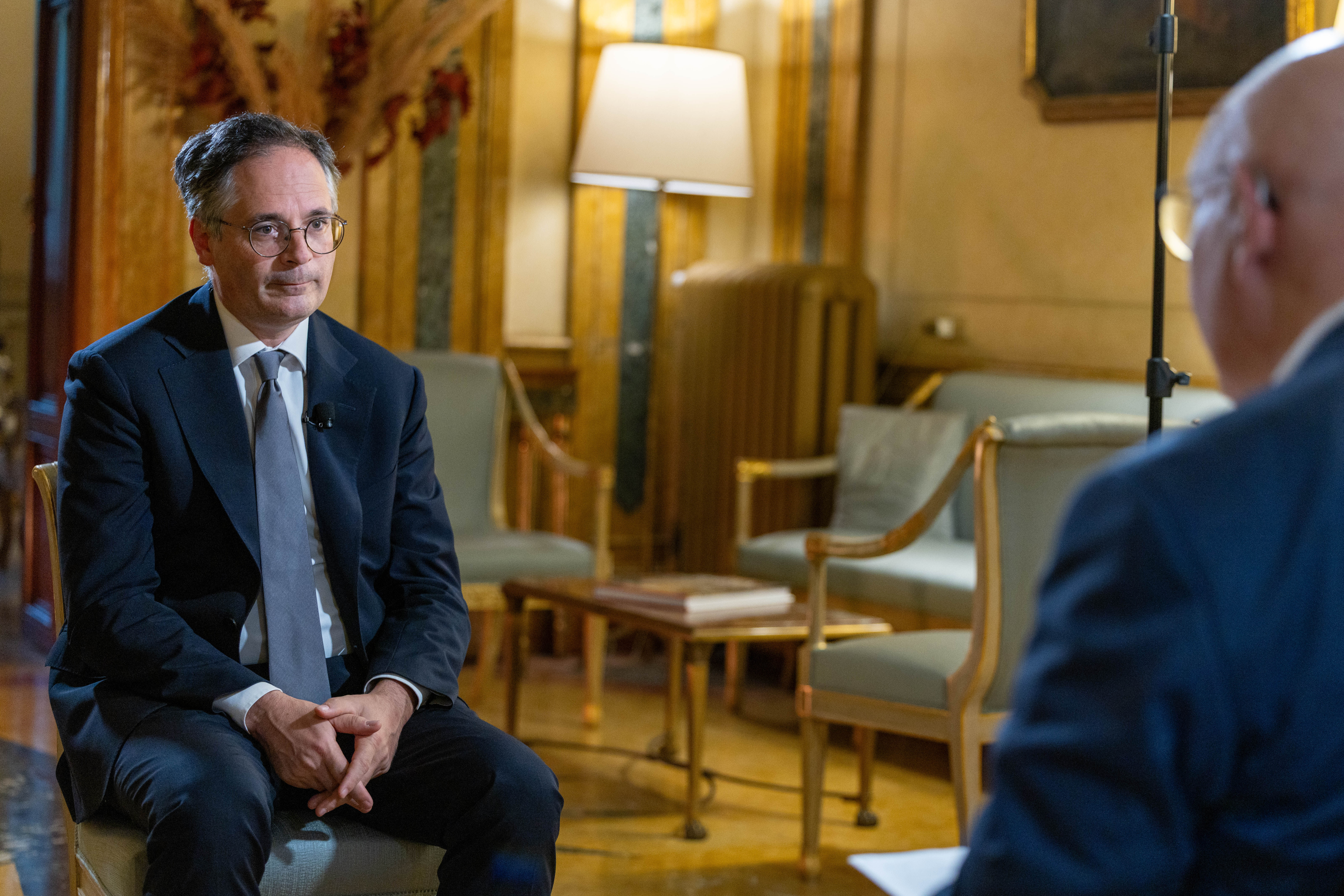
Angola is one of the African countries Pope Leo XIV plans to visit in what will be his first pastoral trip to the continent as Pontiff. | Credit: Vatican Media/Catholic Archdiocese of LuandaJan 13, 2026 / 12:41 pm (CNA).Angola is one of the countries Pope Leo XIV plans to visit in what will be his first pastoral trip to the continent of Africa as pontiff, the apostolic nuncio in the southern African nation has announced.Addressing journalists during a press conference on Tuesday, Archbishop Kryspin Witold Dubiel confirmed that the Holy Father had accepted invitations from both the Catholic bishops of Angola and the country's President João Lourenço, adding that the timelines and itinerary of the visit and program are still being finalized."At this moment, we are preparing the plan and program for Pope Leo XIV's visit to Africa. We do not yet have details on the exact date or program, but these will be communicated as soon as they are defined," Dubiel said.The native of ...

Angola is one of the African countries Pope Leo XIV plans to visit in what will be his first pastoral trip to the continent as Pontiff. | Credit: Vatican Media/Catholic Archdiocese of Luanda

Jan 13, 2026 / 12:41 pm (CNA).

Angola is one of the countries Pope Leo XIV plans to visit in what will be his first pastoral trip to the continent of Africa as pontiff, the apostolic nuncio in the southern African nation has announced.

Addressing journalists during a press conference on Tuesday, Archbishop Kryspin Witold Dubiel confirmed that the Holy Father had accepted invitations from both the Catholic bishops of Angola and the country's President João Lourenço, adding that the timelines and itinerary of the visit and program are still being finalized.

"At this moment, we are preparing the plan and program for Pope Leo XIV's visit to Africa. We do not yet have details on the exact date or program, but these will be communicated as soon as they are defined," Dubiel said.

The native of Poland's Diocese of Przemysl invited all Angolan citizens to prepare for this significant event.

"I hope that the Holy Father's visit will be an opportunity to rediscover the values that have shaped the Angolan people and to share these values with the diverse communities that live and work around the world," said the Vatican diplomat in Angola, who also represents the Holy Father in São Tomé and Príncipe.

Also speaking at the press conference was the president of the Bishops' Conference of Angola and São Tomé and Príncipe, who called upon Angolans to participate in the committees that will be established to prepare for the papal visit.

"Each of these committees should give their best in the preparation, promotion, and realization of all tasks assigned," Archbishop José Manuel Imbamba of Angola's Saurimo Archdiocese said.

Imbamba thanked Pope Leo XIV for accepting the invitation to visit Angola.

Archbishop Filomeno do Nascimento Vieira Dias of Angola's Archdiocese of Luanda described the planned papal trip as a "moment of great human and spiritual comfort," occurring during a special period in the history of Christianity and in the year marking the "grand jubilee of Luanda — 450 years as a city, 450 years celebrating the faith."

Dias emphasized that the visit places Angola on the path of evangelization and universality.

He went on to thank the Angolan government for "opening the doors" and for accepting to collaborate with faith-based leaders to facilitate the papal visit.

In December 2025, Pope Leo XIV reportedly indicated that he would visit Africa in 2026, naming Algeria as a possible initial destination. Angola, Equatorial Guinea, and Cameroon were also mentioned as potential stops.

Pope Leo is the first pontiff in modern history with firsthand knowledge of Africa. Unlike his predecessors, he has already been to eastern, western, southern, northern, and central Africa in person.

As he began his papacy following his May 2025 election, the American-born member of the Order of St. Augustine had already visited Kenya at least half a dozen times, the regional vicar of the order in the east African nation told ACI Africa — the last visit to the country having taken place in December 2024.

In a May 12, 2025, interview, Father Robert Karanja Ireri, superior of the Order of St. Augustine in Kenya, recalled that Pope Leo XIV had visited the neighboring Tanzania, confirming the country's Daily News report that he had visited the East African nation multiple times.

Karanja also confirmed that Pope Leo XIV visited Algeria in North Africa.

Some members of the Augustinian Sisters of the Mercy of Jesus in South Africa recalled their interaction with Pope Leo XIV, then Father Robert Francis Prevost, when he visited the southern African nation.

According to the Nigeria Catholic Network's May 10 report, Pope Leo would not be "a stranger to Nigeria, as records show that he has visited the country on at least nine occasions between 2001 and 2016."

In his capacity as Augustinian prior general, Prevost presided over the inauguration of the Augustinian University in the capital city of the Democratic Republic of Congo, Kinshasa, in 2009.

This story was first published by ACI Africa, CNA's news partner in Africa, and has been adapted by CNA.

Full Article

Archbishop Hebda speaks to EWTN News in August 2025. | Credit: "EWTN News Nightly"/ScreenshotJan 13, 2026 / 13:11 pm (CNA).Archbishop Bernard Hebda of St. Paul and Minneapolis described a pervasive "heaviness" in the community over federal agents' deadly shooting of a U.S. citizen.In his pastoral reflection on Jan. 12, the archbishop said he was on retreat with regional bishops last week when the shooting of Renee Good by an Immigration and Customs Enforcement official occurred."I find myself Googling 'Minneapolis' every few hours to learn of the latest developments in a situation that truly tears at the heart," he wrote, noting that some parishes with large Latino populations are seeing fewer than 50% of usual congregants at recent Masses."I hope that you might think about contacting any of our parishes serving immigrant communities to see how you might support them in their ministry," Hebda wrote.During the retreat, he said he prayed for consolation for the Good f...

Archbishop Hebda speaks to EWTN News in August 2025. | Credit: "EWTN News Nightly"/Screenshot

Jan 13, 2026 / 13:11 pm (CNA).

Archbishop Bernard Hebda of St. Paul and Minneapolis described a pervasive "heaviness" in the community over federal agents' deadly shooting of a U.S. citizen.

In his pastoral reflection on Jan. 12, the archbishop said he was on retreat with regional bishops last week when the shooting of Renee Good by an Immigration and Customs Enforcement official occurred.

"I find myself Googling 'Minneapolis' every few hours to learn of the latest developments in a situation that truly tears at the heart," he wrote, noting that some parishes with large Latino populations are seeing fewer than 50% of usual congregants at recent Masses.

"I hope that you might think about contacting any of our parishes serving immigrant communities to see how you might support them in their ministry," Hebda wrote.

During the retreat, he said he prayed for consolation for the Good family, wisdom for political leaders, prudence and safety for law enforcement, temperance among protesters, healing for those wounded by political divisions (especially young people), and courage for immigrants living in fear of deportation.

Hebda said he also prayed for parish priests, deacons, educators, and others who are navigating these tensions while striving to "bring the light of the Gospel and the balm of Jesus' love into these difficult situations."

After the shooting last week, Hebda in a statement pleaded for "all people of goodwill to join me in prayer for the person who was killed, for their loved ones, and for our community."

"We continue to be at a time in this country when we need to lower the temperature of rhetoric, stop fear-filled speculation, and start seeing all people as created in the image and likeness of God," he said.

Good was behind the wheel of an SUV after dropping off her 6-year-old at school when she was killed. Dueling narratives emerged, with the president and Homeland Security secretary saying the ICE officer's actions were justified against an "act of domestic terrorism," while Democratic officials said the administration is lying and urged the public to review videos of the shooting themselves.

In his Jan. 12 letter, the prelate noted the "providential" timing of the Church's psalm response at this past Sunday's Mass: "The Lord will bless his people with peace" (Psalm 29), adding: "I am confident that the Lord keeps his promises, but I am hoping that he won't keep us waiting too long. Maybe I should be praying for patience."

To address the ongoing wounds, the archdiocese hosted Bishop Andrew Cozzens of the Diocese of Crookston on Monday evening for a public presentation titled "A Wounded Church: Finding Peace and Healing," originally intended to address the shooting that occurred during the all-school Mass at Annunciation Church in August 2025. The event began with a Mass and concluded with Eucharistic adoration.

"How providential that the evening event, planned months ago, would have been scheduled to coincide with this challenging time," Hebda remarked in his letter. Cozzens also led a morning of recollection for archdiocesan staff on Jan. 13 on the same theme.

The archbishop urged the faithful to support immigrant parishes facing sharp declines in attendance since early December.

"A number of parishioners expressed to me their concerns about how the parishes will be able to continue their excellent ministry and outreach to the needy if Mass attendance (and offertory) remains low," he wrote. "I am confident that it would be a shot in the arm for them if you could join them some weekend."

Hebda also requested continued prayers for Father Greg Schaffer, an archdiocesan priest serving at a mission parish in Venezuela. Amid heightened dangers following the Trump administration's military operation that led to the capture of President Nicolás Maduro on Jan. 3, the U.S. State Department has warned of risks for Americans, prompting the archbishop to ask for prayers for Schaffer.

Daniel Payne contributed to this story.

Full Article

Archbishop Paul Coakley of Oklahoma City, president of the United States Conference of Catholic bishops, meets with President Donald Trump on Jan. 12, 2026. | Credit: Archdiocese of Oklahoma CityJan 12, 2026 / 18:07 pm (CNA).Archbishop Paul Coakley and President Donald Trump met on Jan. 12 to discuss areas of "mutual concern," which likely included topics related to immigration enforcement and Venezuela's sovereignty. The archbishop of Oklahoma City, Coakley, who was elected president of the United States Conference of Catholic Bishops (USCCB) in November 2025, visited with Trump at the White House on Monday.Chieko Noguchi, USCCB spokesperson, said in a statement after the meeting: "Archbishop Coakley had the opportunity for introductory meetings with President Trump, Vice President [JD] Vance, and other administration officials, in which they discussed areas of mutual concern, as well as areas for further dialogue. Archbishop Coakley is grateful for the engagement and look...

Archbishop Paul Coakley of Oklahoma City, president of the United States Conference of Catholic bishops, meets with President Donald Trump on Jan. 12, 2026. | Credit: Archdiocese of Oklahoma City

Jan 12, 2026 / 18:07 pm (CNA).

Archbishop Paul Coakley and President Donald Trump met on Jan. 12 to discuss areas of "mutual concern," which likely included topics related to immigration enforcement and Venezuela's sovereignty.

The archbishop of Oklahoma City, Coakley, who was elected president of the United States Conference of Catholic Bishops (USCCB) in November 2025, visited with Trump at the White House on Monday.

Chieko Noguchi, USCCB spokesperson, said in a statement after the meeting: "Archbishop Coakley had the opportunity for introductory meetings with President Trump, Vice President [JD] Vance, and other administration officials, in which they discussed areas of mutual concern, as well as areas for further dialogue. Archbishop Coakley is grateful for the engagement and looks forward to ongoing discussions."

The meeting was closed to the press, but White House spokesperson Karoline Leavitt told EWTN reporter Owen Jensen she would ask the president about providing a readout of the meeting.

Pope Leo XIV has said immigrants must be treated with dignity and encouraged all people in the United States to heed the U.S. bishops' message on immigration.

Coakley, appearing on CBS News' "Face the Nation" on Dec. 21, 2025, predicted immigration would be a discussion topic with Trump and said: "I think we have opportunities to work together. We have opportunities to speak frankly with one another."

After U.S. military action to capture Venezuela's president, the pope on Jan. 4 called for full respect for Venezuela's national sovereignty and for the human and civil rights of its people.

Earlier in the day on Jan. 12, Pope Leo XIV met with Venezuelan opposition leader María Corina Machado at the Vatican.

Full Article

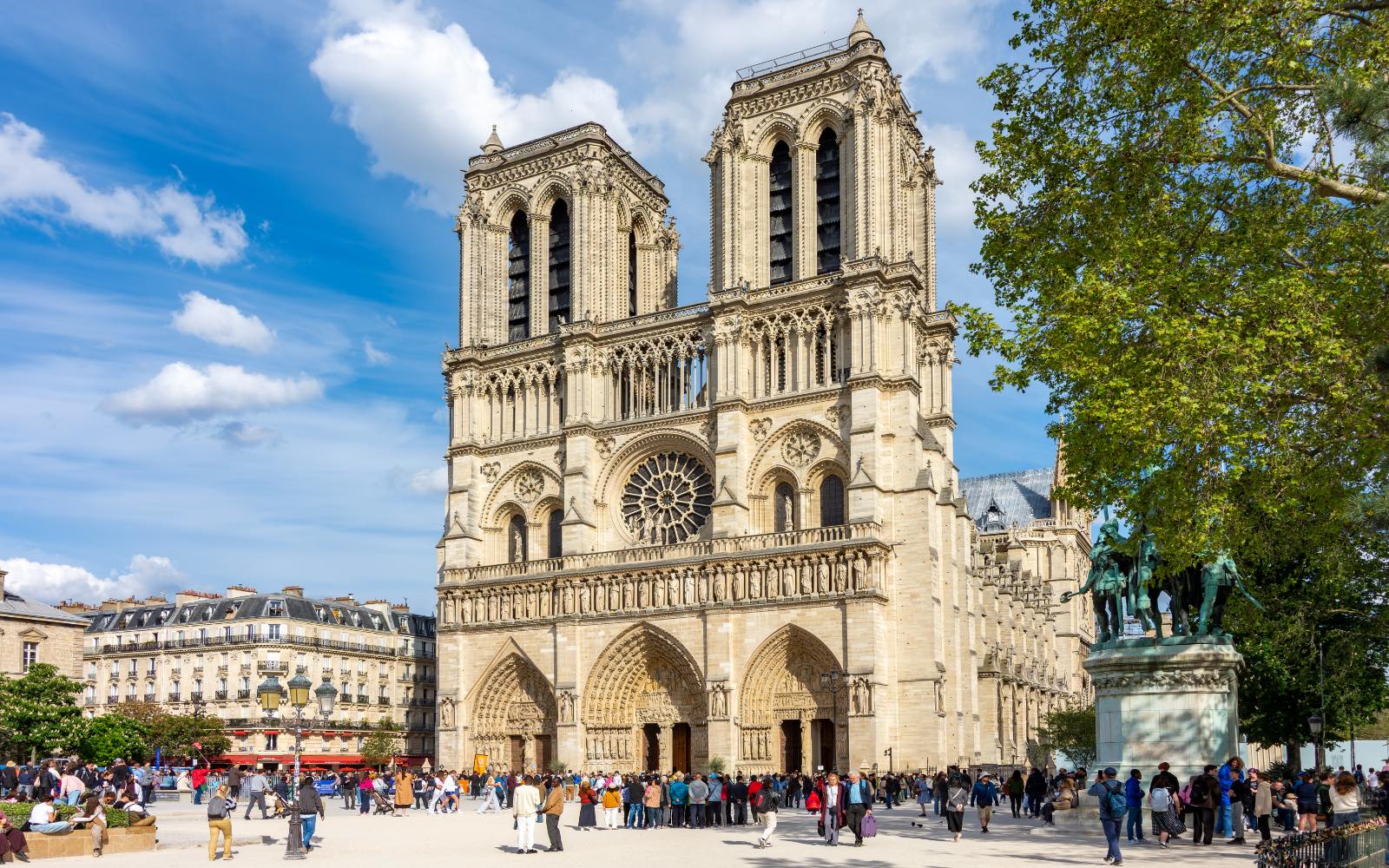
St. Paul's Hospital in Vancouver, British Columbia, Canada. | Credit: CCN Photo/Terry O'NeillJan 12, 2026 / 13:29 pm (CNA).In a case with implications for religious freedom, institutional autonomy, and health care access across Canada, a British Columbia Supreme Court trial starting Jan. 12 will consider whether faith-based hospitals can be forced to provide euthanasia on site.The case, Gaye O'Neill et al. v. His Majesty the King in Right of the Province of British Columbia, Vancouver Coastal Health Authority, and Providence Health Care Society, arises from the death of a terminally ill woman who sought medical assistance in dying (MAID) while receiving care at St. Paul's Hospital in Vancouver. Because St. Paul's is a Catholic facility that does not provide assisted suicide, the patient was transferred to another health care facility that offered MAID. Her family and co-plaintiffs allege the transfer caused "unnecessary pain and distress" and argue that the policy allowing fait...

St. Paul's Hospital in Vancouver, British Columbia, Canada. | Credit: CCN Photo/Terry O'Neill

Jan 12, 2026 / 13:29 pm (CNA).

In a case with implications for religious freedom, institutional autonomy, and health care access across Canada, a British Columbia Supreme Court trial starting Jan. 12 will consider whether faith-based hospitals can be forced to provide euthanasia on site.

The case, Gaye O'Neill et al. v. His Majesty the King in Right of the Province of British Columbia, Vancouver Coastal Health Authority, and Providence Health Care Society, arises from the death of a terminally ill woman who sought medical assistance in dying (MAID) while receiving care at St. Paul's Hospital in Vancouver. Because St. Paul's is a Catholic facility that does not provide assisted suicide, the patient was transferred to another health care facility that offered MAID. Her family and co-plaintiffs allege the transfer caused "unnecessary pain and distress" and argue that the policy allowing faith-based facilities to opt out of MAID violates the Canadian Charter of Rights and Freedoms.

The co-defendants in the case are the Providence Health Care Society, the Catholic denominational authority that operates St. Paul's and 16 other facilities, the B.C. Ministry of Health, and the Vancouver Coastal Health Authority (VCH).

Trial proceedings are scheduled to run from Jan. 12 to Feb. 6. While the legality of MAID itself is not being challenged, the court must decide whether publicly funded, faith-based hospitals can maintain MAID-free spaces or whether the state's duty to provide access overrides institutional conscience rights.

Central to the defense is a 1995 Master Agreement between the B.C. government and denominational health providers. The agreement formally recognizes the right of faith-based facilities to preserve the spiritual nature of the facility and governs how services incompatible with a facility's religious identity are handled, typically through transfer rather than on-site provision.

Supporters of the current system argue that this pluralistic model protects the diversity of care available to British Columbians.

The Canadian Conference of Catholic Bishops in 2023 released a statement reiterating its opposition to euthanasia in Catholic hospitals. Vancouver Archbishop J. Michael Miller noted that the bishops had already drawn a line in the sand at their September plenary meeting when they stated unanimously that MAID would not be delivered at Catholic hospitals.

The new statement formalized that stance by saying the bishops "unanimously and unequivocally oppose the performance of either euthanasia or assisted suicide (MAID) within health organizations with a Catholic identity."

The case has drawn a large number of interveners, reflecting its potential national impact on the future of denominational health care in Canada.

The Christian Legal Fellowship (CLF) will argue for the protection of associational religious freedom, suggesting that institutions, like individuals, possess a right to collective conscience. CLF has said that forcing a religious community to act against its foundational beliefs has dehumanizing consequences and undermines the purpose for which such institutions exist.

The Canadian Physicians for Life and the Evangelical Fellowship of Canada are expected to focus on the sanctity of life and the integrity of the medical profession, arguing that a health care system that mandates the ending of life within all its facilities risks failing to protect the most vulnerable.

Conversely, the B.C. Humanist Association has called for the provincial government to "tear up" the 1995 Master Agreement, arguing that it undermines the government's duty of religious neutrality. "No one should suffer needlessly at the end of life," said executive director Ian Bushfield, adding that the state should not put the interests of religious institutions ahead of individual rights.

The Canadian Civil Liberties Association (CCLA), also intervening, plans to challenge whether a publicly funded organization can claim standalone religious protections independent of its staff. The CCLA will argue that ascribing religious rights to an institution whose primary purpose is health delivery poses inevitable difficulties for state neutrality.

The Delta Hospice Society (DHS) has introduced a distinct legal argument, suggesting that section 7 of the Charter, which protects the right to life, liberty, and security of the person, should protect a patient's right to access a MAID-free environment.

"There are many terminally ill palliative care patients who desire to spend their final days without being asked if they want their life ended by their health care provider," said constitutional lawyer Allison Pejovic, representing the society. DHS argues that for many patients, a space free of euthanasia is a requirement for psychological security of the person.

The trial comes as construction continues on the new $2.18 billion St. Paul's Hospital at its new site. The B.C. government has indicated it remains committed to the project's Catholic identity, despite the ongoing litigation.

Evidence and testimony will be heard through early February, with the court expected to receive final written submissions in the spring.

This story was first published by The Catholic Register and has been reprinted by CNA with permission.

Full Article

Credit: CDC/Debora CartagenaJan 12, 2026 / 06:00 am (CNA).Catholic medical professionals and ethicists had mixed reactions to the Centers for Disease Control and Prevention's (CDC) announcement last week that it has revised the recommended childhood and adolescent vaccine schedule.In a press release on Jan. 5, the CDC announced a revised recommended childhood immunization schedule, which reduces the number of universally recommended vaccines from 18 to 11. It retains routine recommendations for all children against measles, mumps, rubella, polio, pertussis, tetanus, diphtheria, Haemophilus influenzae type b, pneumococcal disease, human papillomavirus (HPV), and varicella (chickenpox).Vaccines for rotavirus, influenza, COVID-19, hepatitis A, hepatitis B, meningococcal disease, and RSV now shift to recommendations for high-risk groups or after "shared clinical decision-making" between providers and families.According to a Department of Health and Human Services (HHS) memo, the CD...

Credit: CDC/Debora Cartagena

Jan 12, 2026 / 06:00 am (CNA).

Catholic medical professionals and ethicists had mixed reactions to the Centers for Disease Control and Prevention's (CDC) announcement last week that it has revised the recommended childhood and adolescent vaccine schedule.

In a press release on Jan. 5, the CDC announced a revised recommended childhood immunization schedule, which reduces the number of universally recommended vaccines from 18 to 11. It retains routine recommendations for all children against measles, mumps, rubella, polio, pertussis, tetanus, diphtheria, Haemophilus influenzae type b, pneumococcal disease, human papillomavirus (HPV), and varicella (chickenpox).

Vaccines for rotavirus, influenza, COVID-19, hepatitis A, hepatitis B, meningococcal disease, and RSV now shift to recommendations for high-risk groups or after "shared clinical decision-making" between providers and families.

According to a Department of Health and Human Services (HHS) memo, the CDC "applies shared clinical decision-making recommendations when evidence indicates that individuals may benefit from vaccination based on an analysis of the individual's characteristics, values, and preferences, the provider's medical judgment, and the characteristics of the vaccine being considered."

Insurance companies must continue to cover all vaccines.

The changes come after President Donald Trump directed the heads of the CDC and HHS in December 2025 to "review best practices from peer, developed nations regarding childhood vaccination recommendations and the scientific evidence underlying those practices" and to make changes accordingly.

After reviewing the vaccination practices of 20 peer nations, a scientific assessment found that "the U.S. is a global outlier among developed nations in both the number of diseases addressed in its routine childhood vaccination schedule and the total number of recommended doses but does not have higher vaccination rates than such countries."

"Science demands continuous evaluation," Dr. Jay Bhattacharya, director of the National Institutes of Health (NIH), said in the CDC press release. "This decision commits NIH, CDC, and the Food and Drug Administration (FDA) to gold standard science, greater transparency, and ongoing reassessment as new data emerge."

Dr. Tim Millea, chair of the health care policy committee at the Catholic Medical Association (CMA), welcomed the changes, telling CNA that he thought the CDC approached the revisions "in a very logical way."

"There has been a huge drop in trust surrounding vaccines since the COVID-19 pandemic," Millea said. "The suggestions during COVID that the science was 'settled' rubbed a lot of us the wrong way."

"The loudest critics of these new recommendations say this is ideology over science," he said. "Science is a process, not an end. If we need more evidence, let's get it," he said, pointing out Bhattacharya's call for "gold standard" science and "ongoing reassessment."

Millea, a retired orthopedic surgeon, said he has confidence that Bhattacharya and Dr. Marty Makary, head of the FDA, are "not going to let ideology get ahead of science."

The president of the National Catholic Bioethics Center (NCBC), John Di Camillo, told CNA in a statement regarding the updated immunization recommendations: "The people look to public health authorities precisely for this kind of guidance, which is responsive to continually evolving research, ongoing discussions among professionals in the medical field, and ethical principles that promote the common good, respect the dignity of the human person, and limit the interference of financial and ideological conflicts."

'Let those closest to the children make the decisions'

Millea acknowledged that critics of the CDC's revised recommendations say comparing the U.S. vaccine schedule to that of much smaller, more homogeneous nations such as Denmark is like "comparing apples to oranges."

However, he pointed out that the CDC's revised schedule is simply a recommendation, and each of the 50 U.S. states is free to do what it deems best. "It's like 50 laboratories. Let's see what works the best."

Invoking the Catholic principle of subsidiarity, Millea said "let those closest to the children who are getting the vaccinations make the decisions."

"One of the positive aspects of the pandemic is that now we can take a step back and we're questioning, not because something may be wrong, but maybe because it could be improved upon," Millea said.

John F. Brehany, executive vice president and director of Institutional Relations at the NCBC, told CNA that "the new schedule appears to have been designed with good intent; that is, … to have gained public trust in the absence of mandates and to have contributed to population health outcomes that meet or exceed those of the U.S."

"The new schedule does not take a 'one size fits all' approach but rather structures recommendations based on the nature of the diseases, vaccines in question, and characteristics of the children or patients who may receive them," he continued. "This approach appears to be well-founded and to provide a sound foundation for respecting the dignity and rights of every unique human person."

This will 'sow more confusion'

Dr. Gwyneth Spaeder, a Catholic pediatrician in North Carolina, did not welcome the changes to the immunization schedule.

While she acknowledged that the damage to trust in institutions was substantial after the COVID-19 pandemic, she thinks the issues surrounding the COVID-19 vaccine's safety and efficacy "cannot be compared" with the decades of studies demonstrating the safety of common children's immunizations.

"It is not the same moral calculus," she said.

She does not believe revising the immunization schedule this way will restore trust in institutions, which she said might take "years or even generations" to rebuild.

This method will "sow more confusion," Spaeder said. "Instead of trying to rebuild trust in transparent, evidence-based practices, we have created a situation where everyone is told different things … For this child, we think this schedule is the best, for that child, there's a different one. That's not how public health works."

She also said that comparing the homogeneous, relatively tiny population of 6 million in Denmark to that of the diverse population of 340 million in the U.S. is "a false comparison."

"Their children are at less risk from falling through the cracks and contracting these diseases we try to vaccinate against," she said, noting the protective public health effects of Denmark's universal health care and generous parental leave policies.

"The children who will be most harmed in the U.S. are the underserved," Spaeder said. "That's being lost in this conversation. We can have a lot of high-level political arguments, but I am most concerned about my patients from single-parent homes who attend day care from young ages, or who are born to mothers who don't have adequate prenatal care."

"They will lose out the most from not being protected from these diseases."

Full Article

Pope Leo XIV meets Venezuelan opposition leader Maria Corina Machado at the Vatican on Jan. 12, 2026. / Credit: Vatican Media.Vatican City, Jan 12, 2026 / 06:50 am (CNA).Pope Leo XIV met with Venezuelan opposition leader María Corina Machado at the Vatican on Monday, in an audience that was not initially included in the official schedule for the day.The meeting was added to the pontiff's agenda in the Holy See's 12:00 p.m. news bulletin. The Vatican has not released any details about the audience.Machado, one of the leading figures of the Venezuelan opposition, has been a prominent voice in denouncing the institutional, economic, and humanitarian crisis facing the country.The Venezuelan politician, who received the Nobel Peace Prize in December, is also expected to meet with U.S. President Donald Trump this week.Nicolás Maduro is being held in a New York prison after appearing before a federal judge on various charges related to drug trafficking and terrorism following his capt...

Pope Leo XIV meets Venezuelan opposition leader Maria Corina Machado at the Vatican on Jan. 12, 2026. / Credit: Vatican Media.

Vatican City, Jan 12, 2026 / 06:50 am (CNA).

Pope Leo XIV met with Venezuelan opposition leader María Corina Machado at the Vatican on Monday, in an audience that was not initially included in the official schedule for the day.

The meeting was added to the pontiff's agenda in the Holy See's 12:00 p.m. news bulletin. The Vatican has not released any details about the audience.

Machado, one of the leading figures of the Venezuelan opposition, has been a prominent voice in denouncing the institutional, economic, and humanitarian crisis facing the country.

The Venezuelan politician, who received the Nobel Peace Prize in December, is also expected to meet with U.S. President Donald Trump this week.

Nicolás Maduro is being held in a New York prison after appearing before a federal judge on various charges related to drug trafficking and terrorism following his capture by the U.S. military in the early hours of Jan. 3.

Delcy Rodríguez, former vice president of Venezuela, has assumed the interim presidency of the country following Maduro's arrest.

In his Angelus message on Jan. 4, Leo XIV called for full respect for the country's national sovereignty and for the human and civil rights of its people.

"It is with deep concern that I am following the developments in Venezuela," said the pontiff, stressing that "the good of the beloved Venezuelan people must prevail over every other consideration."

The pope urged cooperation to "build a peaceful future of collaboration, stability, and harmony" and emphasized that this effort must be made "with special attention to the poorest, who suffer because of the difficult economic situation."

In his address to the diplomatic corps on Jan. 9, Leo reiterated his call to respect "the will of the Venezuelan people" and for work "to safeguard the human and civil rights of all, ensuring a future of stability and concord."

This story is developing. It was originally published on ACI Prensa, CNA's Spanish-language news partner. It has been translated and adapted by CNA.

Full Article

Four new priests and six new deacons were ordained for South Sudan's Catholic Diocese of Tombura-Yambio on Jan. 4, 2026. | Credit: Ruru Gene News/Sister Laurencila, FSSAJan 11, 2026 / 07:00 am (CNA).The four newly ordained priests and six newly ordained deacons for South Sudan's Catholic Diocese of Tombura-Yambio have been reminded of the urgency of their mission in the contemporary world, especially in communities wounded by conflict, poverty, and division.In his Jan. 4 homily during the ordination Mass that coincided with the solemnity of the Epiphany at St. Augustine Parish in the diocese, Bishop Eduardo Hiiboro Kussala reflected on the role of priests in reconciling broken communities, forming consciences through education, restoring dignity among the poor, and remaining steadfast where fear and suffering persist."I am not ordaining you for an ideal country," Hiiboro said and described South Sudan, the world's youngest nation, as a nation deeply loved by God and...

Four new priests and six new deacons were ordained for South Sudan's Catholic Diocese of Tombura-Yambio on Jan. 4, 2026. | Credit: Ruru Gene News/Sister Laurencila, FSSA

Jan 11, 2026 / 07:00 am (CNA).

The four newly ordained priests and six newly ordained deacons for South Sudan's Catholic Diocese of Tombura-Yambio have been reminded of the urgency of their mission in the contemporary world, especially in communities wounded by conflict, poverty, and division.

In his Jan. 4 homily during the ordination Mass that coincided with the solemnity of the Epiphany at St. Augustine Parish in the diocese, Bishop Eduardo Hiiboro Kussala reflected on the role of priests in reconciling broken communities, forming consciences through education, restoring dignity among the poor, and remaining steadfast where fear and suffering persist.

"I am not ordaining you for an ideal country," Hiiboro said and described South Sudan, the world's youngest nation, as a nation deeply loved by God and in need of committed pastoral leadership.

He noted that the Church sends priests into real situations marked by fragility but also hope.

The bishop, who serves as the president of the Integral Human Development Commission of the Sudan and South Sudan Catholic Bishops' Conference, further urged those he was ordaining to be stars in guiding others to Jesus Christ in their respective ministries.

Hiiboro reflected on the story of the Magi and reminded the new priests and deacons that ordination does not replace Christ but points others toward him.

Reflecting on the star that guided the three Wise Men from the East to see the infant Jesus, Hiiboro urged the newly ordained deacons and priests to allow their lives to guide people to Jesus through faithfulness and witness.

"As the Magi followed the star and found Christ, you are now sent to be stars, guiding others to Jesus," the bishop said.

Calling for unity among members of the clergy as one of the most powerful forms of preaching, the South Sudanese bishop encouraged fraternity, shared prayer, and forgiveness, reminding the clergy that love among priests is a visible sign of discipleship.

The bishop cautioned against constant complaint and division among members of the clergy, warning that such attitudes weaken vocation and harm communities.

Instead, he encouraged priests to embrace the cross of Christ, noting that suffering, when embraced with humility, sanctifies — but destroys one who rejects it.

Discouraging a "celebrity mentality" among priests, Hiiboro said the Church is more concerned with "holy shepherds rooted in the daily realities of the people." Holiness, the bishop explained, is not an escape from life but faithfulness within it.

He urged priests never to abandon prayer, warning that a priest who stops praying gradually loses direction.

The South Sudanese Church leader went on to describe the three evangelical vows — celibacy, obedience, and simplicity/poverty — as paths to inner freedom, not limitations, which help priests overcome ego, attachment, and isolation.

Hiiboro, referencing the words of Pope Francis, urged priests to remain close to the communities they serve, portraying them as agents of peace, defenders of human dignity, promoters of education, and advocates for food security and self-reliance.

He emphasized that such involvement is not political activism but a genuine expression of living the Gospel.

The bishop also cited examples of saints who made a lasting impact on society through faith and service, including St. Benedict of Nursia, St. Daniel Comboni, St. Josephine Bakhita, and St. John Bosco — noting that they demonstrated courage even in challenging and imperfect circumstances.

The bishop also urged those he was ordaining to embrace their priestly identity with confidence, reminding them that their very presence, conduct, and appearance already preach before words are spoken.

This article was originally published by ACI Africa, CNA's news partner in Africa, and has been adapted for CNA.

Full Article

Pope Leo XIV greets pilgrims gathered in St. Peter's Square at the Vatican for the recitation of the Angelus on Jan. 11, 2026. / Vatican MediaVatican City, Jan 11, 2026 / 08:25 am (CNA).Pope Leo XIV on Sunday lamented escalating violence in Iran and Syria and renewed his appeal for peace in Ukraine, while also offering a special blessing for children receiving baptism and praying for those born into "difficult circumstances."Speaking after the Angelus on Jan. 11, the pope said: "My thoughts turn to the situation currently unfolding in the Middle East, especially in Iran and Syria, where ongoing tensions continue to claim many lives." He added: "I hope and pray that dialogue and peace may be patiently nurtured in pursuit of the common good of the whole of society."The pope's remarks came amid unrest in Tehran, where anti-government protests that began about two weeks ago have left more than 70 people dead, according to human rights organizations.He also pointed to renewed f...

Pope Leo XIV greets pilgrims gathered in St. Peter's Square at the Vatican for the recitation of the Angelus on Jan. 11, 2026. / Vatican Media

Vatican City, Jan 11, 2026 / 08:25 am (CNA).

Pope Leo XIV on Sunday lamented escalating violence in Iran and Syria and renewed his appeal for peace in Ukraine, while also offering a special blessing for children receiving baptism and praying for those born into "difficult circumstances."

Speaking after the Angelus on Jan. 11, the pope said: "My thoughts turn to the situation currently unfolding in the Middle East, especially in Iran and Syria, where ongoing tensions continue to claim many lives." He added: "I hope and pray that dialogue and peace may be patiently nurtured in pursuit of the common good of the whole of society."

The pope's remarks came amid unrest in Tehran, where anti-government protests that began about two weeks ago have left more than 70 people dead, according to human rights organizations.

He also pointed to renewed fighting in Syria, where international media reports say clashes have erupted in Aleppo between the interim government's army and the Kurdish-led Syrian Democratic Forces over control of neighborhoods in the city center. At least 14 civilians have been killed, with dozens injured and tens of thousands displaced, according to those reports.

Turning to the war in Ukraine, Leo warned of the mounting toll of Russian strikes as winter intensifies.

"In Ukraine, new attacks – particularly severe ones aimed at energy infrastructure as the cold weather grows harsher – are taking a heavy toll on the civilian population," he said. "I pray for those who suffer and renew my appeal for an end to the violence and for renewed efforts to achieve peace."

Recent attacks have left more than one million homes without water or heat in Ukraine's Dnipropetrovsk region.

Earlier in the day, the pope celebrated Mass for the Feast of the Baptism of the Lord and baptized 20 newborns, the children of Vatican employees, in the Sistine Chapel. After the Angelus, he said he wanted to extend his blessing "to all children who have received or will receive Baptism during these days – in Rome and throughout the world – entrusting them to the maternal care of the Virgin Mary."

He added: "In a particular way, I pray for children born into difficult circumstances, whether due to health conditions or external dangers. May the grace of Baptism, which unites them to the Paschal Mystery of Christ, bear fruit in their lives and in the lives of their families."

During his Angelus reflection, Leo spoke about the meaning of Christ's baptism and how the sacrament of baptism makes believers "children of God through the power of his Spirit of life," encouraging the faithful to remember "the great gift we have received" and to bear witness to it "with joy and authenticity."

This story was first published by ACI Prensa, CNA's Spanish-language news partner. It has been translated and adapted by CNA.

Full Article

Pope Leo XIV baptizes a child in the Sistine Chapel at the Vatican on the Feast of the Baptism of the Lord, January 11, 2026. / Vatican MediaVatican City, Jan 11, 2026 / 09:00 am (CNA).Pope Leo XIV baptized 20 infants, the children of Vatican employees, during Mass in the Sistine Chapel on Sunday for the Feast of the Baptism of the Lord.In his homily, the pope urged parents to see faith as essential for their children's lives, comparing it to the basic care no newborn can do without."When we know that something good is essential, we immediately seek it for those we love," he said. "Who among us, in fact, would leave newborns without clothes or without nourishment, waiting for them to choose when they are grown how to dress and what to eat?""Dear friends, if food and clothing are necessary to live, faith is more than necessary, because with God life finds salvation," the pope said.Baptism as God's closenessReflecting on the Gospel account of Jesus' baptism, Leo said the Lord cho...

Pope Leo XIV baptizes a child in the Sistine Chapel at the Vatican on the Feast of the Baptism of the Lord, January 11, 2026. / Vatican Media

Vatican City, Jan 11, 2026 / 09:00 am (CNA).

Pope Leo XIV baptized 20 infants, the children of Vatican employees, during Mass in the Sistine Chapel on Sunday for the Feast of the Baptism of the Lord.

In his homily, the pope urged parents to see faith as essential for their children's lives, comparing it to the basic care no newborn can do without.

"When we know that something good is essential, we immediately seek it for those we love," he said. "Who among us, in fact, would leave newborns without clothes or without nourishment, waiting for them to choose when they are grown how to dress and what to eat?"

"Dear friends, if food and clothing are necessary to live, faith is more than necessary, because with God life finds salvation," the pope said.

Baptism as God's closeness

Reflecting on the Gospel account of Jesus' baptism, Leo said the Lord chooses to be found where people least expect him — "the Holy One among sinners" — drawing near without keeping distance. He pointed to Jesus' reply to John the Baptist: "Let it be so now, for it is proper for us to fulfill all righteousness," explaining that God's "righteousness" is his saving action, by which the Father makes humanity righteous through Christ.

The pope described Jesus' baptism in the Jordan as a sign renewed with deeper meaning — "death and resurrection, forgiveness and communion" — and said the sacrament celebrated for the infants is rooted in God's love.

"The children you now hold in your arms are transformed into new creatures," Leo told parents. "Just as from you, their parents, they have received life, so now they receive the meaning for living it: faith."

A word to mothers and fathers

Leo emphasized the role of parents as the first witnesses and educators of faith, saying God's provident love becomes visible on earth through mothers and fathers who ask for faith for their children.

He also noted the changing seasons of family life: "Certainly, the day will come when they will become heavy to hold in your arms; and the day will also come when they will be the ones to support you."

The pope prayed that the sacrament would strengthen families in lasting love: "May baptism, which unites us in the one family of the Church, sanctify all your families at all times, giving strength and constancy to the affection that unites you."

The signs of baptism

Turning to the rites themselves, Leo explained the meaning of baptism's symbols: "The water of the font is the washing in the Spirit, which purifies from every sin; the white garment is the new robe that God the Father gives us for the eternal feast of his Kingdom; the candle lit from the paschal candle is the light of the risen Christ, which illumines our path."

"I wish you to continue it with joy throughout the year that has just begun and for your whole life, certain that the Lord will always accompany your steps," he said.

The baptism of children of Vatican employees is a tradition begun in 1981 by St. John Paul II. The first ceremonies were held in the Pauline Chapel, and since 1983 the annual celebration has taken place in the Sistine Chapel.

This story was first published by ACI Prensa, CNA's Spanish-language news partner. It has been translated and adapted by CNA.

Full Article

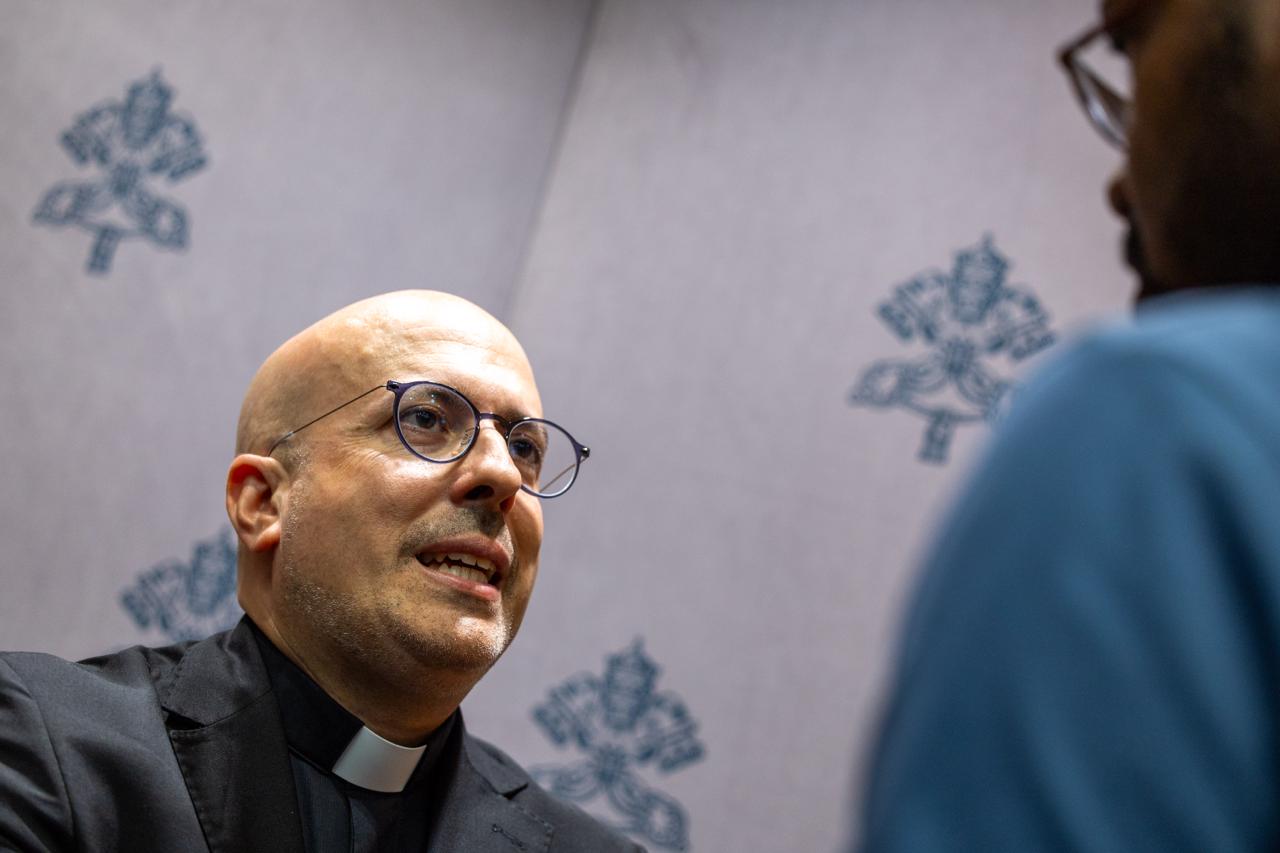
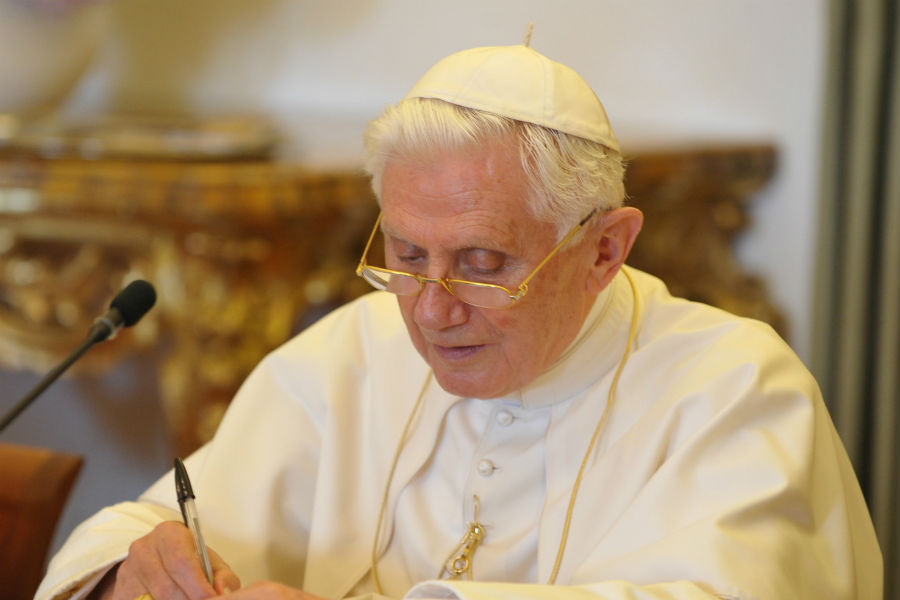
Archbishop Georg Gänswein speaks at an event hosted by the Catholic magazine Kelione at the Lithuanian National Library in Vilnius, Lithuania, on Jan. 7, 2026. | Credit: L. Macevicienes/Zurnalaskelione.ltJan 11, 2026 / 10:32 am (CNA).Archbishop Georg Gänswein, the apostolic nuncio to the Baltic states and longtime personal secretary to Pope Benedict XVI, said he now prays not for but to the late pontiff, asking for his intercession, and expressed hope the beatification cause will open soon.Speaking at an event hosted by the Catholic magazine Kelione at the Lithuanian National Library on Jan. 7, Gänswein offered personal reflections on his new diplomatic mission, the celebration of Christmas in Lithuania, and his decades-long collaboration with Joseph Ratzinger."I come from the most beautiful part of Germany, but I have lived in Rome for most of my life," Gänswein said. "As a bonus and thanks for all my work, I received an assignment to work in the Baltic states," he said jovial...

Archbishop Georg Gänswein speaks at an event hosted by the Catholic magazine Kelione at the Lithuanian National Library in Vilnius, Lithuania, on Jan. 7, 2026. | Credit: L. Macevicienes/Zurnalaskelione.lt

Jan 11, 2026 / 10:32 am (CNA).

Archbishop Georg Gänswein, the apostolic nuncio to the Baltic states and longtime personal secretary to Pope Benedict XVI, said he now prays not for but to the late pontiff, asking for his intercession, and expressed hope the beatification cause will open soon.

Speaking at an event hosted by the Catholic magazine Kelione at the Lithuanian National Library on Jan. 7, Gänswein offered personal reflections on his new diplomatic mission, the celebration of Christmas in Lithuania, and his decades-long collaboration with Joseph Ratzinger.

"I come from the most beautiful part of Germany, but I have lived in Rome for most of my life," Gänswein said. "As a bonus and thanks for all my work, I received an assignment to work in the Baltic states," he said jovially.

Asked about differences between Christmas in Rome and in the Baltic region, the archbishop answered with characteristic humor: "I celebrated Christmas in Rome for 28 years, and in Vilnius for two. The first difference is the cold." He added that Lithuania's seasonal displays left a strong impression, drawing attention to "very beautiful Christmas decorations," and saying the Christmas trees "are very beautiful, maybe even more beautiful than in St. Peter's Square, in the Vatican."

Gänswein also expressed gratitude that the celebration of Christ's birth in Lithuania is not merely cultural or superficial. He said he has sensed a reverence in which "its depth is felt here," pointing to a faith that remains attentive to the mystery at the heart of the season.

During the conversation, the nuncio returned to the influence of Benedict XVI, describing his years beside Ratzinger as a gift of divine providence.

"All the years of cooperation together have left an indelible experience," he said. "It was not only intellectual and theological formation, but also formation of the heart, soul, and everything that we can call life."

Gänswein recalled to the audience that his first encounter with Ratzinger came when he was still a young seminarian, reading the future pope's articles and books while Ratzinger was a professor in Germany. "I tried to read and study all of his writings," he said, explaining that he came to see Ratzinger not only as a theologian and academic, but as "a man full of faith and intelligence."

After his priestly ordination in 1984, Gänswein served as an assistant parish priest before continuing his studies. He later completed doctoral work and eventually arrived in Rome, where he first met Ratzinger while the cardinal was serving as prefect of the Dicastery for the Doctrine of the Faith. Gänswein said Ratzinger invited him into collaboration, an invitation he regards as mysterious and grace filled.

"What did he call me for? I don't know," he said, "but I see it as a great gift of Providence." In 2003, he added, he became Ratzinger's personal secretary.

Speaking of Benedict XVI after the late pope's death, Gänswein made a striking remark about prayer and spiritual closeness: "And now, when Pope Benedict XVI has departed to be with the Lord, I notice that I do not pray so much for him, but to him, asking for his help." He said there were moments, including during his service in the Baltics, when he found himself asking for Benedict's intercession.

At the same time, he stressed the Church's caution regarding sainthood causes. "The Church is a very wise and very prudent mother," he said, noting that in beatification causes she is "twice wise and twice prudent," and that time must pass to discern whether public esteem reflects genuine holiness rather than passing fame.

In a December 2025 interview with German Catholic television network K-TV, Gänswein said, "Personally, I have great hopes that this process will be opened." The interview aired shortly before a private audience he held with Pope Leo XIV during a discreet mid-December visit to Rome.

The Kelione gathering also featured talks from other invited speakers. Educator Vytautas Toleikis, who works as a moral education teacher at Vilnius St. Christopher Gymnasium, is the founder of the informal education group "Walkers." He described taking students on weekly walks around Vilnius to encounter people he personally admires. He said the goal is to broaden students' horizons through lived encounters with kindness and human warmth, adding that these meetings often surprise him as much as they do the young people.

Singer Sasha Song, who represented Lithuania at the 2009 Eurovision, shared a brief personal testimony about his struggle with addiction and the transformation he experienced after rehabilitation. He said the experience taught him to value life differently, describing his current state as one marked by gratitude and a renewed sense of happiness.

Prof. Robertas Badaras, a toxicologist with four decades of experience, reflected on how substance abuse has changed since the Soviet period. He noted that while alcohol once dominated, society now confronts an expanding array of substances, including a vast number of hallucinogens and stimulants.

Actress Juste Liaugaude, representing the "Red Noses Clown Doctors," spoke about offering emotional support to patients of all ages, especially those who struggle to find joy amid illness. She described how the organization's presence has expanded in clinical settings, including, she said, being the only non-medical personnel permitted to accompany children into operating rooms — a reminder that compassion can reach where words and medicine sometimes cannot.

For Gänswein, however, the evening's most enduring note returned to what he called the quiet, lifelong schooling he received at Benedict's side, a formation not only of the mind, but of the whole person and the conviction that gratitude, faith, and truth are never merely ideas, but realities meant to be lived.

Full Article

Facebook Twitter Instagram YouTube Soundcloud

Public Inspection File | EEO

© 2015 - 2021 Spirit FM 90.5 - All Rights Reserved.