The report is the conclusion of the work carried out by one of the 10 study groups created by Pope Francis in 2024 during the Synod on Synodality.
The final report of the Synod on Synodality study group dedicated to the poor and the earth raises the need to create an observatory on disability and to include theologians from poor regions in consultative and governing bodies.
The text — published March 24 — emphasizes that listening to "the cry of the poor and of the earth" is not a pastoral option but a constitutive act of faith in the mission of the Church. It identifies already existing tools such as parishes, base communities, movements, charitable organizations, and ecumenical and international networks.
However, it states that social ministry cannot be delegated only to these structures, since all Christians have the responsibility to listen and respond to the needs of the poor.
The report — which is not binding and will now be reviewed by Pope Leo XIV — is part of the work carried out by 10 study groups created by Pope Francis in 2024 during the Synod on Synodality. The groups are dissolved once their reports are published.
Within the group on the poor, another subgroup was established, mostly composed of people with disabilities.
This subgroup produced the proposal to create an international "Ecclesial Observatory on Disability" that would establish similar bodies at the diocesan, national, and regional levels.
The aim, the text states, is to use this model to "create structures and processes for listening to other marginalized groups," including "the LGBTQIA+ community."
"The Church has many means to listen to the cries of the poor and the earth. However, the Synod learned that women, Indigenous people, Dalits, young people, people with disability, victims of class or caste discrimination and racism, LGBTQIA+ people, those made poor, and other marginalized groups, are still asking to be heard," it states.
"We need to deepen our listening and respond with transformative action. Synodality invites us to move from having means of listening to becoming a means of listening in the service of God's mission," the report says.
The document also highlights the importance of the language used for people in vulnerable situations and urges that it respect the "diversity of their experience" and reflect their dignity, for example through the use of "person first language."
Groups for single or widowed people
Another recommendation in the report is for dioceses and bishops' conferences to consider creating "groups for single parents, widows, and widowers" in order to offer support and learn about their needs, and that there be deeper exploration of "effective ways of listening to those affected by war, conflicts, and violence."
It also calls for ensuring the presence of vulnerable groups, women, and those coming from territories affected by climate change and conflicts in Church bodies.
Greater role for the marginalized and the poor in theology
The report also raises the need to include theologians from "poor, marginalized, or excluded" contexts in the drafting of Church statements.
"The appointment of women, people with disabilities, and people of color should be a key priority," it says.
It proposes creating global networks connecting theologians with organizations working on the ground, strengthening dialogue with other Christian denominations and religions, and promoting collaboration among Catholic media, universities, and young people in order to translate theological reflection into concrete action.
It suggests creating "global networks" that connect the poor "with organizations closest to the reality of the world of the poor." According to the report, the goal is to promote a theology more connected to the reality of the poor and open to intercultural dialogue and other disciplines.
This story was first published by ACI Prensa, the Spanish-language sister service of EWTN News. It has been translated and adapted by EWTN News English.
CRS said it plans to share its experience of aiding communities with developing climate-smart agriculture, accessing nutritious foods, and strengthening local government.
Catholic Relief Services has joined a coalition dedicated to using sustainable means to eradicate hunger and poverty around the world.
"CRS is delighted to join the Global Alliance Against Hunger and Poverty," said Sean Callahan, Catholic Relief Services (CRS) president and CEO, in a press release. "Ending hunger and poverty requires more than goodwill. It requires a sustained commitment to strengthening the systems that shape opportunity."
The Global Alliance Against Hunger and Poverty has over 200 members from more than 100 countries and about 20 international organizations. It was founded in 2024 at the behest of the Brazilian presidency of the G20 to combat poverty and reduce inequalities.
Members join the Global Alliance Against Hunger and Poverty through one of the organization's three pillars: national, financial support, and knowledge. CRS joins the alliance under its knowledge pillar, according to the release, and will focus its efforts toward advancing social equality and inclusion, civic engagement and justice, care for creation, and local leadership.
"Durable change happens when we pair global solidarity with local leadership," Callahan said. "CRS believes that the best way to ensure long-lasting change, especially change that can spread and be sustainable, is built through lifting up our local partners and helping them grow."
"We are committed to the Catholic social teaching principle of subsidiarity and believe that joining the Global Alliance will help us spread that principle farther," he said.
According to the release, CRS plans to share its experience with the alliance of aiding local communities around the world, "from building resilience with climate-smart agriculture to helping mothers and children access and eat nutritious foods and strengthening local government."
In Central America and southern Mexico, the release noted, CRS collaborated with local governments and partners to boost agricultural development and water management, mobilizing "more than $150 million to scale regenerative agriculture," increasing yields by more than 40%.
"We have had tremendous success helping our local partners become stronger," Callahan said. "When local governments and organizations are more capable, their communities become stronger, and their people live better."
Nine Catholic pilgrims will travel more than 2,000 miles across the country with the real presence of Jesus Christ during the 250th anniversary of the U.S.
Nine young adult Catholic perpetual pilgrims will walk with the Eucharist this summer during the National Catholic Eucharistic Pilgrimage spanning more than 2,000 miles.
In celebration of the United States of America's 250th anniversary, the 2026 National Eucharistic Pilgrimage's theme is "One Nation Under God." Pilgrims will journey on the St. Frances Xavier Cabrini Route to honor the first American citizen to be canonized.
"The real beauty in 'One Nation Under God' is the great humility that it takes to truly believe that … there's nothing more healing than God's divine mercy and love, which is open and available to all people," said Zachary Dotson, one of the perpetual pilgrims, during a press conference about the pilgrimage.
Perpetual Pilgrim Zach Dotson. | Credit: Photo courtesy of Simple Heart Photography in partnership with the National Eucharistic Congress
"'One Nation under God' shows that, like St. Augustine said, 'We are a people on pilgrimage.' We are constantly striving for that end goal, which is, of course, full communion with Christ and with the saints," Dotson said.
The 2026 pilgrimage is set to kick off on May 24 in St. Augustine, Florida, and conclude on July 5 in Philadelphia. The pilgrims will pass through most of the original 13 colonies and 18 dioceses, which will host a number of events also open to the public.
Meet the young pilgrims who will be bringing Christ across the nation this summer:
Zachary Dotson
Dotson lives in Hammond, Indiana, where he is the city's "Citizen of the Year" due to his dedication to his community. Dotson pivoted from a career in finance to give himself completely to his parish at St. Joseph Catholic Church.
At the parish, Dotson helps his brothers and sisters in need by working at the parish's soup kitchen. In his free time, Dotson enjoys reading, biking, and spending time with his younger brother.
"I'm excited to be a part of the pilgrimage, and I feel so honored and blessed," Dotson said. "I've really seen the transformation that Christ's Eucharistic heart has had on my life … So to be able to open one single heart to Christ, and to his divine mercy, and for the love and salvation that he offers us through his bride, the Church, is the greatest honor of a life."
"Also to reach our brothers and sisters in the peripheral societies, in the prisons, in the jails, the hospices, and the food pantries, in the soup kitchen. I think Christ was really clear in Matthew's Gospel when he said: 'Did you visit me?' Did you give drink to me? Did you clothe me?' So the opportunity to do that on a national level is again, one of the greatest honors of my life."
Perpetual Pilgrim Marcel Ferrer. | Credit: Photo courtesy of Simple Heart Photography in partnership with the National Eucharistic Congress
Marcel Ferrer
Marcel Ferrer is from Akron, Ohio, and is a sophomore at Franciscan University of Steubenville, Ohio, where he is pursuing a degree in marketing with a double minor in theology and music ministry.
Ferrer grew up Catholic but fell away from the faith when he was young. When he was a junior in high school, Ferrer had a powerful experience with the Lord during Eucharistic adoration, which brought him back to the faith.
Ferrer has a passion for working with youth ministry and helps lead confirmation retreats across the Midwest. He also enjoys playing guitar, going to concerts, and watching movies.
"I've come to know that true happiness and joy cannot be attained in this life without Jesus. I want everyone to experience that joy in the Eucharist," Ferrer said in a statement shared with EWTN News.
"During this mission, I hope to love well and value the person in front of me as a tabernacle. I want to tell stories of God's mercy and love in order to turn hearts to his loving care," he said.
Perpetual Pilgrim John Paul Flynn. | Credit: Photo courtesy of Simple Heart Photography in partnership with the National Eucharistic Congress
John Paul Flynn
John Paul Flynn is from Maryland and is a sophomore at The Catholic University of America, where he is studying business. He is one of 15 siblings and grew up Catholic but has especially grown in his faith in recent years through mission activities.
Flynn will be serving as the media missionary for the pilgrimage and is looking forward to being able to capture the beauty of the Eucharist in his role as the photographer and videographer of the team.
"I decided to become a pilgrim because of the unique mission that is given to us to share the Eucharist with all those around us," Flynn said. "Being the media missionary is especially important to me, as I get to reach a broad audience in a new way through media. The beauty that I have found in the Eucharist drives me to share it with anyone I can."
Perpetual Pilgrim Eduardo Gutierrez. | Credit: Photo courtesy of Simple Heart Photography in partnership with the National Eucharistic Congress
Eduardo Gutierrez
Eduardo Gutierrez was born and raised in Southern California and moved to Phoenix to attend Grand Canyon University (GCU), where he majored in accounting. Gutierrez works at a local tax firm and serves in youth and college ministry.
"I am serving as a Perpetual Pilgrim to be able to share the most beautiful thing on earth: the love, joy, and peace that can only come from the Eucharist," Gutierrez said.
As a cradle Catholic, Gutierrez would occasionally go to church growing up, but at GCU he experienced a renewal of faith, leading to his confirmation during Easter 2022.
"Through the witness of the pilgrimage, I hope that people come to the Lord in all that they do. I hope they see that they are beloved sons and daughters, and that their eternal Father knows them personally by name," he said.
Perpetual Pilgrim Cheyenne Johnson. | Credit: Photo courtesy of Simple Heart Photography in partnership with the National Eucharistic Congress
Cheyenne Johnson
Cheyenne Johnson, who serves as a missionary, is originally from Florida and calls Indiana home. She graduated from Butler University, where she studied music, elementary education, and Chinese.
"I have witnessed the fruits of the pilgrimage with my own eyes and look forward to the ways Our Lord will continue to work this summer," she said.
Johnson was a pilgrim on the 2025 National Eucharistic Pilgrimage and will be returning as the team lead for this year. As a convert to the Catholic faith, she said she understands the power of encountering Jesus in the Eucharist and its ability to bring people to the faith.
"Being a pilgrim on the National Eucharistic Pilgrimage in 2025 was one of the greatest gifts of my life," Johnson said. "I was blessed to witness the faith and conversion of so many people throughout our country, as well as the transformation of my own heart."
"This summer, returning as the team lead, I desire to continue bringing Christ to others, while traveling with Our Lord in the Blessed Sacrament and leading my brothers and sisters into deeper relationship with Christ," she said.
Perpetual Pilgrim Angelina Marconi. | Credit: Photo courtesy of Simple Heart Photography in partnership with the National Eucharistic Congress
Angelina Marconi
Angelina Marconi is from Marion, Arkansas, and lives in Louisville, Kentucky, where she works as a college athletic trainer.
"When I was in high school, I had a personal encounter with the Lord during adoration at a diocesan retreat. From that moment on, I've held the truth that I can rely on Jesus in the Eucharist," Marconi said.
Marconi's faith led her to participate with FIERCE Athlete and the FIERCE Coach ministry, an organization empowering female athletes to thrive in their God-given identity. When she's not working, Marconi likes to cook, spend time with friends and family, and participate in her local Catholic young adult community.
As a pilgrim, Marconi said she wants "to share that no matter the circumstance, Jesus will meet us in the Eucharist and transform our hearts through the struggles and joys in our lives."
Perpetual Pilgrim Raymond Martinez II. | Credit: Photo courtesy of Simple Heart Photography in partnership with the National Eucharistic Congress
Raymond Martinez II
Raymond Martinez II grew up in Midland, Texas, and is a seminarian for the Diocese of San Angelo, Texas. He attends Conception Seminary College in Missouri.
"I am serving as a Perpetual Pilgrim because I want every person to recognize that Christ is truly present in the Eucharist: body, blood, soul, and divinity," Martinez said. "As I journey with our Eucharistic Lord across the country, I hope to help others grow in their love for the Eucharist through a transformative encounter with him."
In his spare time, Martinez enjoys reading, swimming, and making pilgrimages to various shrines and churches. Since he was young, Martinez has had a deep love for Christ in the Eucharist and has always desired to share his love of Christ with others.
Martinez shared that he has a lot of intentions that have been entrusted to his friends, family, and community.
"I regard all of them as special," he said. "Each and every one of the intentions that I'll be carrying with me, that I'll be bringing with me to the pilgrimage, is each unique and is coming from a place of desire for growth with the Lord…every prayer intention that I'm going to bring with me is going to be special in its own way."
Perpetual Pilgrim Sharon Phillips. | Credit: Photo courtesy of Simple Heart Photography in partnership with the National Eucharistic Congress
Sharon Phillips
Sharon Phillips, from northern California, has a love for finding God in all things, often spending her time exploring new restaurants, learning more about her faith and the human experience, and enjoying daily activity outdoors.
After attending Franciscan University, Phillips moved to Washington to serve as a high school youth minister in the Archdiocese of Seattle. There, she built a program founded on Eucharistic discipleship.
"Jesus shows us his heart in that he gives entirely of himself, not just on the cross, but every time we meet him in the Eucharist," Phillips said. "I've found this pilgrimage to be an invitation to root myself in his presence and, as a perpetual pilgrim, to be a part of bringing him to encounter every person and intention that joins in this pilgrimage."
Phillips, who enjoys songwriting and worship leading, will provide music for different processions and events along the route.
"Especially with this pilgrimage … serving the universal Church, I think it's so beautiful that we can take the same approach with our music and really our prayer as well," she said. "So we will have … opportunities for contemporary praise music, as well as traditional hymns."
Perpetual Pilgrim Mary Carmen Zakrajsek. | Credit: Photo courtesy of Simple Heart Photography in partnership with the National Eucharistic Congress
Mary Carmen Zakrajsek
Mary Carmen Zakrajsek, from Carmel, Indiana, is a graduate of Marian University. She worked in the pro-life movement for Students for Life of America and then for a women's care center. She also has spent time volunteering as a mentor for Catholic high schoolers.
Last year she moved to South Bend, Indiana, to serve as a director of youth faith formation. She also loves to play guitar, rap about God, and bake sourdough bread.
"With so much hurt, suffering, and confusion in our culture, God can be seen as distant from our daily lives. But we know that our God is not distant," Zakrajsek said. "In the Eucharist, he is so close that we can touch him. By serving as a Perpetual Pilgrim, I hope that my witness will help others come into contact with this life-giving touch of the healer," she said.
Zakrajsek said she is looking forward to walking alongside Jesus and following him like the early apostles.
"I think that it's really a chance to remind us of our identity, and it's an invitation to realign ourselves under him, under his sovereignty. And so individually, and as part of a community, and as a country … I know he wants to bring about renewal and healing, and that's going to come when we recognize our deepest identity comes from him."
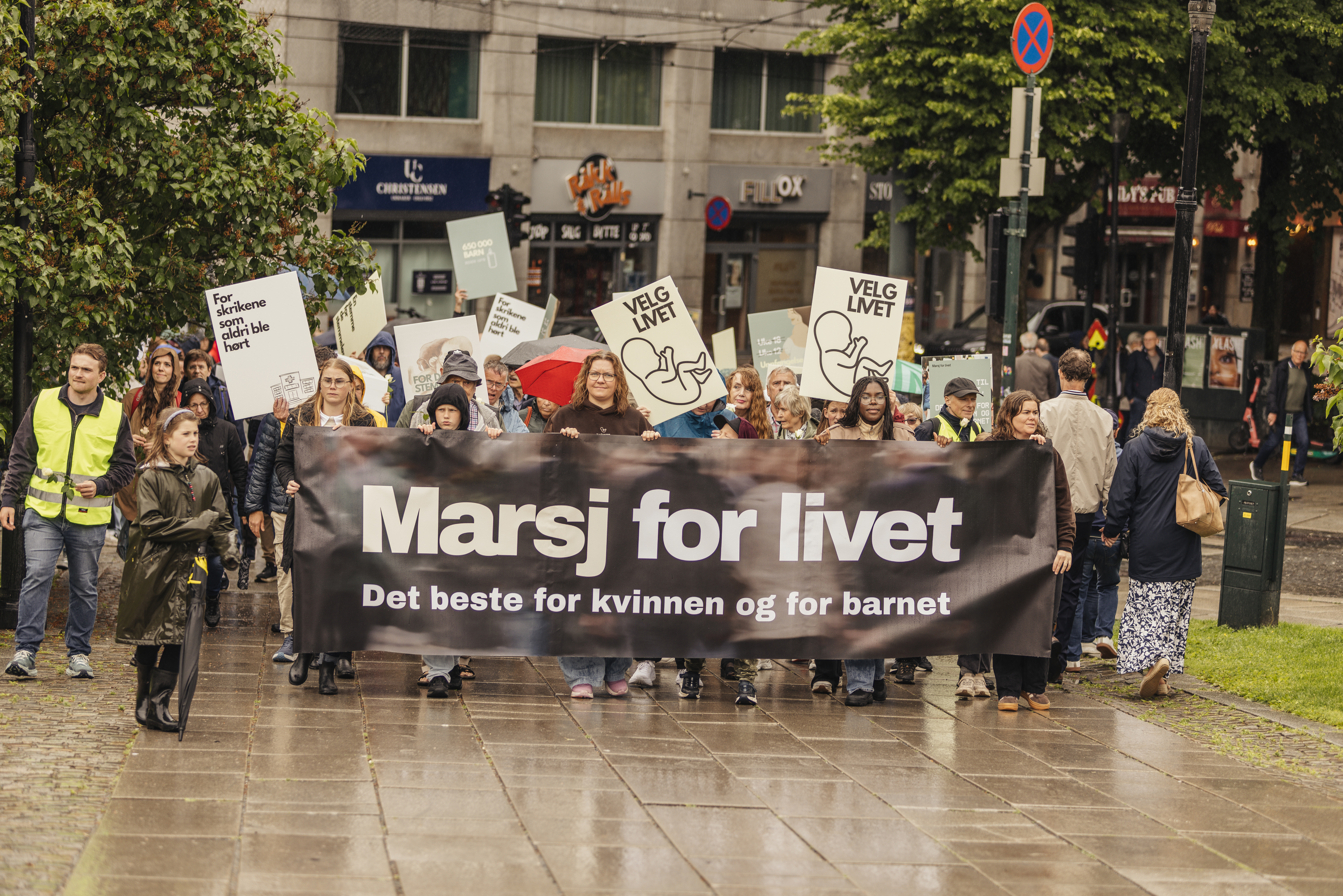
Catholic bishops in various countries are joining the celebration by organizing events in defense of the lives of unborn children.
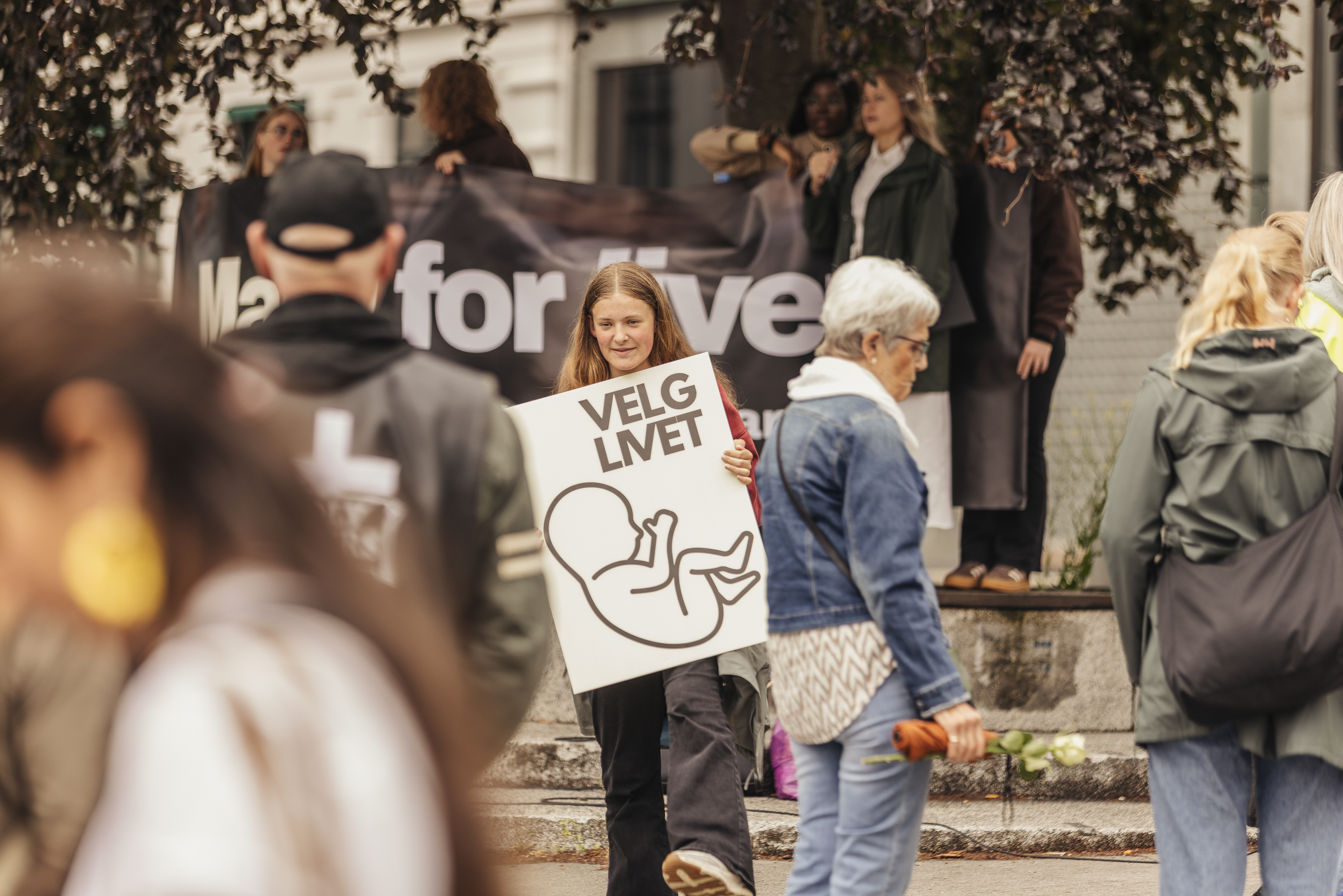
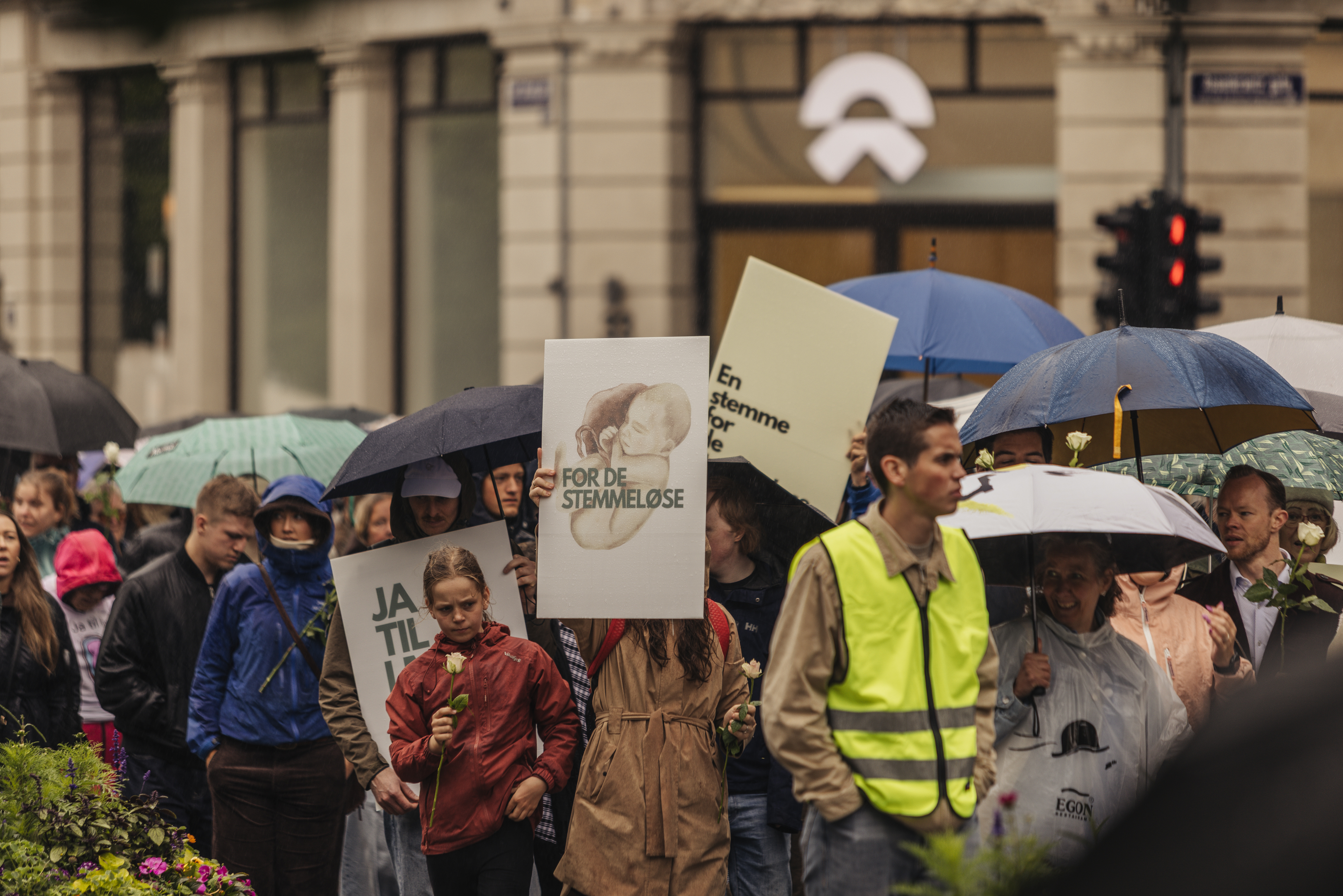
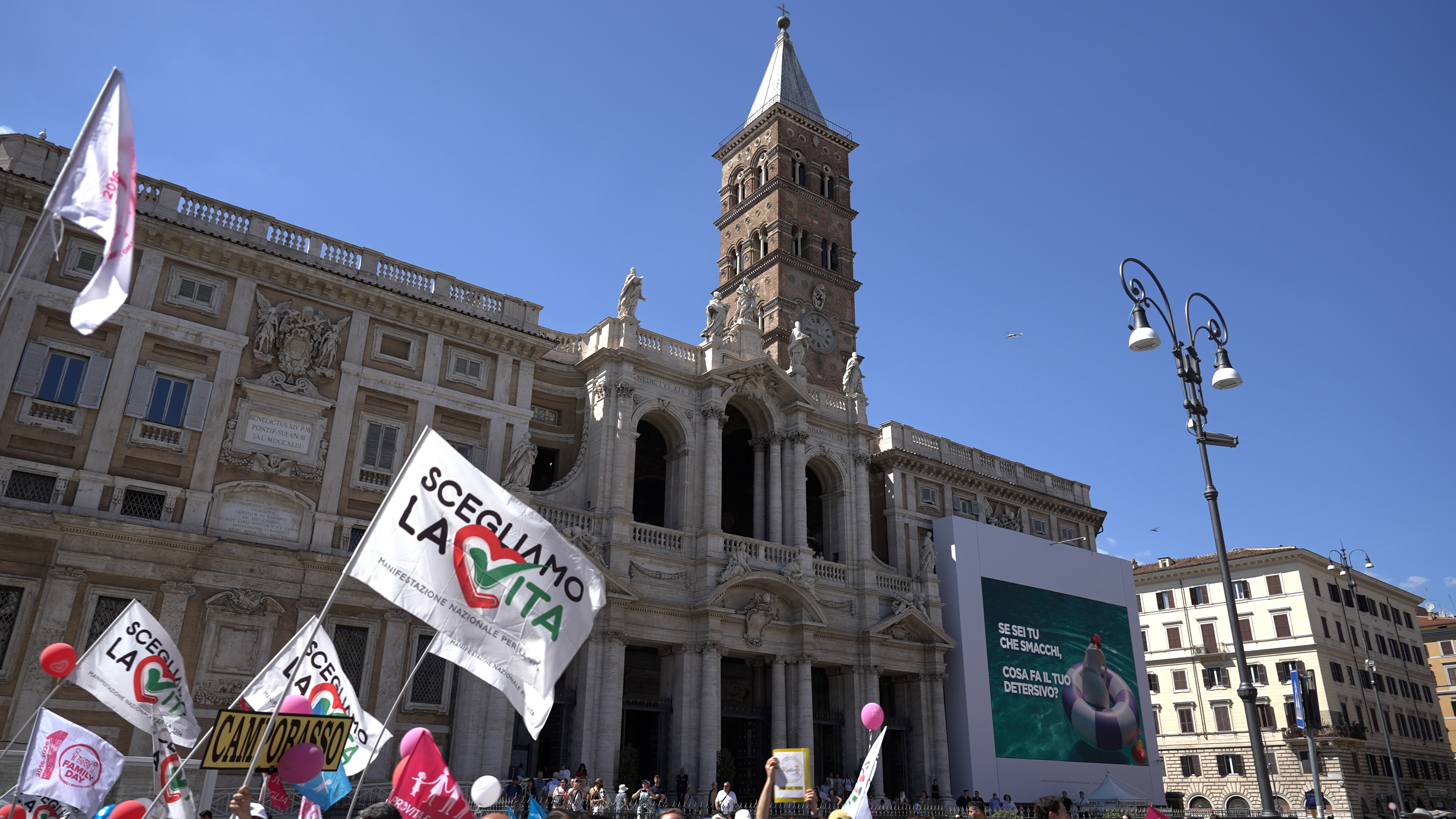
The Day of the Unborn Child is celebrated internationally on March 25 to commemorate, promote, and defend human life from the moment of conception in the mother's womb until natural death.
The date was established in Argentina in December 1998 by President Carlos Saúl Menem. A few days before the observance of this day in 1999, the president encouraged leaders throughout Latin America to join the initiative.
At the time, St. John Paul II sent a letter to the Argentine president, encouraging that "the celebration of the 'Day of the Unborn Child' foster a positive choice in favor of life and the development of a culture oriented in this direction — one that ensures the promotion of human dignity in all situations."
In 1999, the observance was also adopted by law in Guatemala and Costa Rica, while Nicaragua embraced it the following year. Bolivia joined in 2000; the Dominican Republic followed in early 2001; in Peru, it was established by law in 2002; and Paraguay joined in 2003.
The observance is also celebrated on March 25 in El Salvador, Uruguay, Spain, Mexico, Austria, Slovakia, Cuba, and the Philippines. Ecuador joined in 2006, Chile in 2014, and it was enacted by law in Puerto Rico in 2018.
This date typically coincides with the solemnity of the Annunciation, usually celebrated on March 25. On this day, the Catholic Church commemorates the announcement made by Archangel Gabriel to the Virgin Mary as well as her momentous yes to God — an assent that led her to conceive, at that very instant, the Child who saved humanity, becoming his most holy mother.
Catholic bishops in various countries are joining the celebration by organizing events in defense of the lives of unborn children. In addition, in recent years, memorials have been erected in memory of the millions of unborn child victims of abortion.
This story was first published by ACI Prensa, the Spanish-language sister service of EWTN News. It has been translated and adapted by EWTN News English.
Steven Moore, executive producer of "A Faith Under Siege," weighs in on the latest Russian attacks against a UNESCO World Heritage site and where the Ukraine war fits in with broader global conflicts.
A 400-year-old Bernardine monastery and UNESCO World Heritage site in "the heart of Ukraine's Catholic region" will require significant repairs following Russian attacks.
"This happens a lot," Steven Moore, executive producer of the war documentary "A Faith Under Siege," told "EWTN News Nightly" on March 25, live from Kyiv.
Russia carried out missile strikes on March 24 that hit the UNESCO-protected Bernardine Monastery and its St. Andrew's Church.
Moore said Russia's targeting of Christian churches — even Orthodox ones — in Ukraine is a regular occurrence. St. Andrew's, a Ukrainian Greek Catholic Church, "is probably the most historic church they have targeted so far," he said.
Moore described Russia's targeting of churches as part of the Kremlin's "holy war," noting that the Russian Orthodox Church and its Patriarch Kirill of Moscow act as an extension of the Kremlin.
"Patriarch Kirill, their version of the pope, has said, 'If you die fighting in Ukraine, all your sins will be washed away,'" he said, adding that Russian President Vladimir Putin has described the Russian Orthodox Church as having more in common with Islam than Catholicism.
Intersection of Ukraine and Iran wars
Moore said there are concerns the war involving Iran will drive up the price of oil, leaving Russia — "a gas station with an army" — with an increased revenue stream that Putin may in turn use against Ukrainians.
"We're in a mess as a world right now," he said, citing the war in the Middle East and in Ukraine. "And you know, China is backing all of this," he said. "North Korea is waiting to go into South Korea; there's tens of thousands of North Korean troops fighting in Ukraine right now."
"The good news, though, about this invasion into Iran is that the Iranians have been supplying the Russians with drones, these Shahed drones, and it will limit their ability to cooperate with the Russians in the future," he said.
Shahed drones are Iranian-developed unmanned combat aerial vehicles.
Ukrainians have sent drone experts to help Middle Eastern nations to cope with these Russian drone attacks. "American weapons are built with an innovation cycle of months or years. Here in Ukraine, the innovation cycle is days or weeks. And they've been fighting against the same weapons in Ukraine that Russia has sent to Iran," Moore said. "No one in the world right now is as good at drone warfare and anti-drone warfare as the Ukrainians."
Moore further noted the Trump administration's toppling of the Venezuelan regime, a Russian ally, as well as Syria.
"When we're looking at a global war, taking pieces off the board for the bad guys is a really positive thing in the long run," he said.
"No one should ever act against the dictates of a well-informed conscience, and we all have a responsibility to form our consciences according to the law of God," the El Paso, Texas, bishop said.
Bishop Mark Seitz of El Paso, Texas, said law enforcement agents must "evaluate everything in the light of Christ" while discerning actions in regard to immigration enforcement.
Seitz issued the first pastoral letter on mass detention and deportations on March 14. The letter followed the special message the U.S. bishops released in November 2025 expressing opposition to "indiscriminate mass deportations."
While the pastoral letter calls for similar actions as the special message, it comes at a time when U.S. Immigration and Customs Enforcement (ICE) has "been out of the headlines … because ICE pulled out great numbers of their agents out of Minnesota," Seitz told EWTN News.
"But right here in El Paso, we're very much aware that this does not necessarily mark an end to the effort at mass detention and mass deportation," Seitz said. There will be additional detention facilities as the community is "aware three gigantic warehouses have been purchased on the far east of El Paso," Seitz said.
"So while things are quiet right now in terms of the headlines, we know that this is continuing, and we continue to be very concerned about the fear and anxiety present in the community, as well as the suffering of so many people who have been detained," he said.
Discernment for law enforcement officers
In his pastoral letter Seitz wrote: The "current national campaign of mass detention and detention is a grave moral evil, one which must be opposed, with prayer, peaceful action, and acts of solidarity with those affected."
In the Catholic Church, "a grave moral evil" could indicate mortal sin. When asked if agents may need to disobey orders, or even leave their jobs, to avoid mortal sin, Seitz said: "I think the first thing that is most important is that you can't put your conscience on hold if you're a disciple of Jesus Christ."
"You have to evaluate everything in the light of Christ, and in the light of his teaching, and the teaching of the Church," he said. "You can't just say, 'Well, it's a job' or 'These are my orders.' I'm not saying anything morally that has not been said before. It's part of the military code, that a soldier should not follow an immoral order."
You can't just say, 'Well, it's a job' or 'These are my orders.'
Bishop Mark Seitz
Diocese of El Paso, Texas
In a March 25 interview with "EWTN News Nightly," Seitz further spoke about the matter, saying: "No one should ever act against the dictates of a well-informed conscience, and we all have a responsibility to form our consciences according to the law of God."
"That's actually part of the code, that no soldier should follow an order if it is something calling them to do something that they consider immoral," Seitz said.
It is reiterating "what has always been the teaching of both the Church and of our government," Seitz said. "With many of the changes in policy that are coming our way, I do fear that people who work for border enforcement agencies are being put in a very difficult situation."
Agents need to be praying, studying, and "learning what their faith has to teach them and what the Gospel has to teach them about the way that a person ought to be treated, the human dignity that needs to be respected," he said.
Finding an alternative approach
When dealing with immigration enforcement, "justice has to be administered in a way that deals with each person as an individual, and their actions have to be evaluated," Seitz told EWTN News.
Immigration cases need "to be carefully considered," Seitz said. Rather than arresting people because "they look like they belong to this immigrant group" and then deporting them, law enforcement should "find out the location of a criminal, a person for whom there's an order of arrest, and arrest them," he said.
To do so, there's no need to add "25,000 detention beds in the country" to increase bed capacity to 92,000, Seitz said.
"What we would like to see is, in fact, an orderly system," Seitz told "EWTN News Nightly." People would "come to the border and have a process of being able to be vetted there, their background to be checked, and to be able to receive a visa if, for instance, they're fleeing from a life-threatening situation in their home country. They would have the opportunity to pursue an asylum claim in our country."
"There are laws governing that process, which ... need to be updated," he said.
In November 2024 Brazil's Federal Police had named Father José Eduardo de Oliveira e Silva as a suspect in the attempt to prevent the presidential inauguration of Luiz Inácio Lula da Silva.
On March 23, Brazil's Supreme Federal Court permanently closed the investigation into the involvement of Father José Eduardo de Oliveira e Silva in the attempted coup d'état aimed at preventing the inauguration of then-President-elect Luiz Inácio Lula da Silva in 2022.
Justice Alexandre de Moraes signed the decision on March 20 — 12 days after the priest's defense attorney, Miguel Vidigal, requested the permanent closure of the investigation.
The priest, from Osasco in the state of São Paulo, Brazil, was named as a suspect by the Federal Police in November 2024, under suspicion of being part of a "legal core" responsible for advising on and drafting decrees intended to serve alleged coup-related interests.
Others under investigation for the attempted coup d'état include the country's former president, Jair Bolsonaro, along with advisers, allies, military personnel, and former ministers of his administration. However, on Feb. 18, the Office of the Prosecutor General of the Republic did not file charges against the priest before the Supreme Federal Court.
"It is to be hoped that the investigation against Father José Eduardo was an isolated incident on the part of the Brazilian state and that the religious freedoms enshrined in the Federal Constitution and in the Brazil-Holy See Agreement (Federal Decree No. 7.107/2010) will be guaranteed by the Judiciary. Had these norms been observed, unfounded and slanderous messages — as well as aggressive outbursts — could have been avoided, whether coming from the media or from private individuals who were quick to unjustly accuse the clergyman of illicit acts," Vidigal told ACI Digital, the Portuguese-language sister service of EWTN News.
"Father José Eduardo's defense team consistently alerted the Judiciary and the Federal Police — the agency in charge of the investigation — that the visits the clergyman made in Brasilia were never of a conspiratorial nature but rather strictly fulfilled what is expected of a Catholic priest: spiritual care and guidance — nothing more than that," Vidigal said. "The Father had his private life exposed, yet he was never charged with any of the irregularities initially imputed to him; even so, the Judiciary had not requested the formal dismissal of the investigation."
This story was first published by ACI Prensa, the Spanish-language sister service of EWTN News. It has been translated and adapted by EWTN News English.
Catholic leaders in Pakistan expressed solidarity with the nation's armed forces while calling for dialogue to end weeks of cross-border fighting with Afghanistan.
LAHORE, Pakistan — Catholic bishops in Pakistan have voiced support for the military amid an Eid al-Fitr ceasefire following weeks of deadly cross-border violence with neighboring Afghanistan.
In a March 23 message, Archbishop Joseph Arshad of Islamabad-Rawalpindi praised the army "for their sacrifices in defending the country's borders, saying the nation will always remember the bravery and dedication of its soldiers."
"The country remains secure due to their unmatched sacrifices, allowing citizens to live in freedom," he added.
The statement coincided with Pakistan National Day and came a week after Kabul accused Islamabad of striking a drug rehabilitation hospital in the Afghan capital, killing and injuring patients undergoing treatment.
Pakistan declared "open war" with Afghanistan at the end of February after months of escalating border clashes. Airstrikes by Pakistan targeted suspected militants, while Afghanistan's Taliban reportedly responded with drone attacks.
Both sides have traded blame for the violence, with Islamabad accusing Kabul of sheltering "anti-Pakistan terrorists," particularly Tehrik-e-Taliban Pakistan, which it holds responsible for attacks including a recent suicide bombing at a mosque in the capital.
Pakistani Information Minister Attaullah Tarar said a temporary ceasefire — from March 19–24 — was arranged at the request of Saudi Arabia, Qatar, and Turkey to ease tensions.
Catholic bishops call for dialogue
Bishop Samson Shukardin of Hyderabad, president of the Catholic Bishops' Conference of Pakistan, supported the ceasefire.
"We call for peace and an end to war. Together with Pope Leo XIV, we urge both sides to sit and dialogue. At the same time, we stand in unity with the nation and all government departments, including the army," he told EWTN News.
"Our loyalties lie with the progress of the country and the safety of our borders. We call for unity. Except on political issues, the Church must comment on military matters to guide the community along the right path. The state is also keen to hear the perspectives of religious leaders."
Activist urges balanced approach
Luke Victor, a Christian advocate and human rights activist, endorsed the bishops' call for unity but emphasized the need for a balanced approach.
"We appreciate defensive actions of our military but denounce overreach into politics. Likewise, we condemn enforced disappearances and election manipulation. Truth, justice, and human rights must remain our first priority," he said.
Pakistan's military has long been accused of intruding into civilian affairs, having directly ruled the country for nearly half of its 78-year history while continuing to wield significant influence behind the scenes.
Relations soured since 2021
Relations between Islamabad and Kabul have soured since Pakistan initially welcomed the Taliban takeover of Afghanistan in 2021 as the "logical conclusion" of the U.S. withdrawal. The Pakistani government now accuses Taliban authorities of sheltering militants, a charge Kabul denies.
Pakistan was ranked the most terrorism-affected country in the Global Terrorism Index 2026, recording 1,139 deaths, 1,595 injuries, and 1,045 attacks in 2025 — a nearly 6% rise in fatalities and a sharp increase in hostage-taking cases.
Afghan Christians face risk
In November 2023, Victor joined politicians in filing a Supreme Court petition challenging a caretaker government directive to deport all "illegal immigrants," a policy seen as targeting Pakistan's estimated 4.4 million Afghan residents. The court disposed of the petition in January 2025.
"Many Afghan converts to Christianity had served with U.S.-led forces in Afghanistan. They could not openly declare their faith because of potential stigma or reprisals from their Muslim families," Victor said.
"Afghan Christians should have been placed under the care of Church authorities as refugees. Their forced deportation to the Taliban was a death sentence. While praising the military, Church leaders must also demand protection for such minority groups."
Cardinal Pietro Parolin also addressed tensions over the Traditional Latin Mass.
Cardinal Pietro Parolin, the Vatican secretary of state, said on Thursday that the U.S.-Israeli war on Iran does not meet the Catholic Church's criteria for a just war.
"No, it does not seem to meet the conditions," he told reporters on the sidelines of an academic conference at the Vatican Apostolic Library.
When asked by EWTN News about the decision of the United States to attack Iran, Parolin referred to recent remarks by Cardinal Robert McElroy, archbishop of Washington, D.C.
In an interview with his archdiocesan newspaper, The Catholic Standard, McElroy said the intervention in Iran failed to meet several conditions required by the Church's teaching on just war, including that the benefits of this war will not "outweigh the harm which will be done."
"He explained this point very well," Parolin said, referring to McElroy's statement.
Parolin's comments follow those of Pope Leo XIV in a statement given to journalists on Tuesday at Castel Gandolfo, the papal villa south of Rome, when he renewed his call for an unconditional ceasefire, saying that "death and pain caused by these wars is a scandal for the entire human family."
Parolin was also asked about a letter he sent on behalf of the pope on Wednesday to the bishops of France, in which Leo encouraged them to be more inclusive of communities attached to the Traditional Latin Mass, which the pope said had become a divisive issue in the Church.
The debate over the Traditional Latin Mass has taken on fresh urgency in France in part because of the Society of St. Pius X, founded by French Archbishop Marcel Lefebvre and known for celebrating only the traditional liturgy. The SSPX said in February that it plans to consecrate bishops on July 1 without a pontifical mandate, a step canon law says carries automatic excommunication for both the consecrating bishop and the one ordained.
"The liturgy must not become a source of conflict and division among us," Parolin said, without pointing to any specific solutions. "It will be necessary to find the formula that can meet legitimate needs. But I believe that, well, this can happen without turning the liturgy into a battlefield."
A Catholic missionary's five-minute appeal at Sunday Mass brought 50 new volunteers forward to serve street children in Dhaka — and most of them are Muslim.
DHAKA, Bangladesh — As Lent calls Catholics around the world to prayer, fasting, and almsgiving, many faithful in Bangladesh are embracing a fourth practice this year: serving the country's street children.
On a recent Sunday at Tejgaon Church in Dhaka, Pontifical Institute for Foreign Missions (PIME) missionary Brother Lucio Beninati invited parishioners to join Potho Shishu Sheba Sangathon, a volunteer-run ministry he founded nearly 20 years ago to accompany children who sleep in rail stations, bus terminals, and city sidewalks. His appeal moved dozens. In the weeks that followed, more than 50 Catholics submitted their names to begin weekly service.
"You can almost see children lying on the sidewalks everywhere in Dhaka," said Catholic volunteer Mukta Rozario, who joined the ministry for the first time this Lent. "I always wished I could do something for them. Today, I finally played with them, talked with them, and felt so much joy. I hope to return every week."
Catholic volunteers sit with street children during an activity session
in Dhaka, Bangladesh, on March 14, 2026. | Credit: Sumon Corraya
The ministry works with some of the most vulnerable children in Bangladesh — girls and boys who have fled violence at home, been abandoned by parents, or migrated alone to the city in search of work. With no guardians, many end up sleeping beside train tracks or market stalls, surviving through begging, carrying loads, or becoming entangled in petty crime, drug trafficking, or exploitation.
Teacher Maria Baroi, another new volunteer, said her time with the children transformed her Lenten journey. "These are not 'street children' to me. They are children living in helplessness," she said. "If even one of them returns to a stable life because someone cared, that is a blessing."
Volunteers gather at railway stations — especially Dhaka's Kamalapur — to offer informal lessons, games, art activities, storytelling, and emotional support. They also provide basic health care, accompany sick children to hospitals, and help reunite those who want to return home. If returning home is not possible, the team arranges shelter in orphanages or rehabilitation centers.
"In the eyes of society, these children are often rejected," said volunteer Samuel Mondol. "But serving them is pure joy. This is selfless service, and I want to continue it long after Lent."
A mission rooted in love
Beninati, a 70-year-old Italian missionary, has spent decades working with abandoned children. Before coming to Bangladesh, he served seven years in Brazil, where he first learned street-child outreach. He later spent 24 years in Bangladesh before relocating again in 2022. From Jan. 6 to March 3 this year, he returned to Dhaka to strengthen the volunteer network.
"When parents abandon them, there is no one left to care," he said. "But love can change a life. Good behavior, compassion, and accompaniment — these are the tools that bring a child back to normal life. Without love, no one can return."
The organization operates without foreign funding. Every cost — from medical emergencies to sports equipment to educational materials — is covered by the volunteers themselves.
Brother Lucio Beninati during an outreach session at Kamalapur Railway Station in Dhaka, Bangladesh, on Feb. 27, 2026. | Credit: Sumon Corraya
One of the most moving testimonies involves Tamim, a young Muslim who once worked as a porter at Kamalapur Railway Station. He lost contact with his family and suffered a severe accident while getting off a train, leading to the amputation of one leg. Volunteers helped him receive treatment at the Center for Rehabilitation of the Paralyzed, where he also received a prosthetic limb and enrolled in mobile phone repair training. Last year, he played with his team in the National Wheelchair Basketball Championship — and they won.
"If it weren't for Brother Lucio and the other volunteers, I would still be sleeping at the station," Tamim said.
Another child, Muslim Rakib, fled home at age 8 after being beaten by his stepmother. Now 10, he regularly meets volunteers at the station. "Here we play and draw," he said. "We get medicine. As long as they are here, we feel safe." He hopes to go home soon.
A ministry for all religions
Although the ministry was founded by a Catholic missionary, nearly 90% of its volunteers are Muslim. The service has become a bridge of harmony in a country where Christians are a small minority.
Muslim volunteer Shafiqul Islam said the interreligious unity is one of the group's greatest strengths. "Serving these children feels like serving God," he said. "Here we are Muslims, Hindus, and Christians. We respect each other's faith and work together for the welfare of children. Our harmony has grown through this service."
Catholic teacher Bridget Corraya, who joined the ministry 20 years ago, said her motivation comes from her own story. "I grew up in an orphanage run by the Congregation of Our Lady of the Missions [RNDM Sisters]," she said. "I received so much love. Serving street children is how I repay that gift."
Transforming Lent through service
For many Catholics in Dhaka, this Lent has taken on new meaning through their encounters with the children. Playing, teaching, and simply listening have become acts of penance, charity, and spiritual renewal.
"Lent is not only about sacrifice or fasting," Beninati reminded the faithful. "It is also about serving — especially those who have no one."
As more volunteers join the mission, the ministry hopes to expand its work across Dhaka. But its heart remains simple: one encounter at a time, one child at a time, offering dignity to those the world often overlooks.