Barron, who already serves as a member of the domestically focused Religious Liberty Commission, was appointed to the position by President Donald Trump.
Bishop Robert Barron this week was named to serve on the U.S. Commission on International Religious Freedom, the commission announced on Sept. 16.
Barron, who already serves as a member of the domestically focused Religious Liberty Commission, was appointed to the position by President Donald Trump. The Winona-Rochester, Minnesota, bishop was selected for the post alongside former U.S. Domestic Policy Council Director Joe Grogan and former missionary Andrew Brunson.
In a statement to EWTN News on Sept. 16, Barron said he was "honored" to accept Trump's invitation to serve on the commission.
The bishop noted that the commission itself is "strictly bi-partisan" with its members "chosen by leaders of both major political parties."
He highlighted the numerous Catholics who have served on the commission over the years, including Princeton Professor Robert George, U.S. Ambassador to the Holy See Mary Ann Glendon, Jesuit Father Thomas Reese, Archbishop Charles Chaput, and Bishop William Murphy.
"I feel privileged to join their company," Barron said.
An independent agency in the legislative branch, the U.S. Commission on International Religious Freedom monitors global religious liberty issues and recommends policy to the U.S. government to advance religious liberty around the world.
It regularly publishes briefs on countries it identifies as consistent violators of religious liberty. It also advocates for those suffering from religious persecution, such as this week when it urged Trump to push for the release of religious prisoners in China and for the end of religious persecution by the Chinese government.
The appointments on Sept. 16 came shortly after Trump asked Cissie Graham Lynch, the granddaughter of famed late Southern Baptist evangelist Billy Graham, to serve as the U.S. ambassador-at-large for international religious freedom.
According to Pope Leo, the message of Gaudium et Spes on "the growing interdependence of men" is especially urgent today.
VATICAN CITY — Pope Leo XIV said Wednesday that the diversity of the world's peoples "must not be considered as a danger or a threat, but rather as a resource for enrichment and growth." He also criticized confrontational attitudes that, at times, "degenerate into violence."
"Conflict, which at times degenerates into violence, is the result of the power of sin and the way it conditions mindsets and actions at every level, causing destruction and death," he said during the general audience in St. Peter's Square.
He underscored the need to "be ever more open to the logic of reciprocity, sharing, and care, as is also the case amongst the various members of the human body."
The pontiff thus continued his catechetical series dedicated to Gaudium et Spes, the pastoral constitution on the Church and its role in the modern world, approved by the Second Vatican Council on Dec. 7, 1965.
According to Pope Leo, the message of the document, which considers "the growing interdependence of men" as "one of the salient features of the modern world," is especially urgent today.
Risk of delegating important decisions to algorithms
Although the development of communications technology, social media, and artificial intelligence is opening up new possibilities and helping to break down "barriers and distances," the pope observed that human relationships "are tending to become less and less personal, more virtual."
From this perspective, he also warned of the risk of "becoming accustomed to delegating to algorithms decisions that are the sole preserve of the human conscience."
"Ensuring that social relationships have real substance and personal depth is, in this regard, the contribution that the Christian community seeks to offer," he told the hundreds of faithful gathered in St. Peter's Square to hear his teaching.
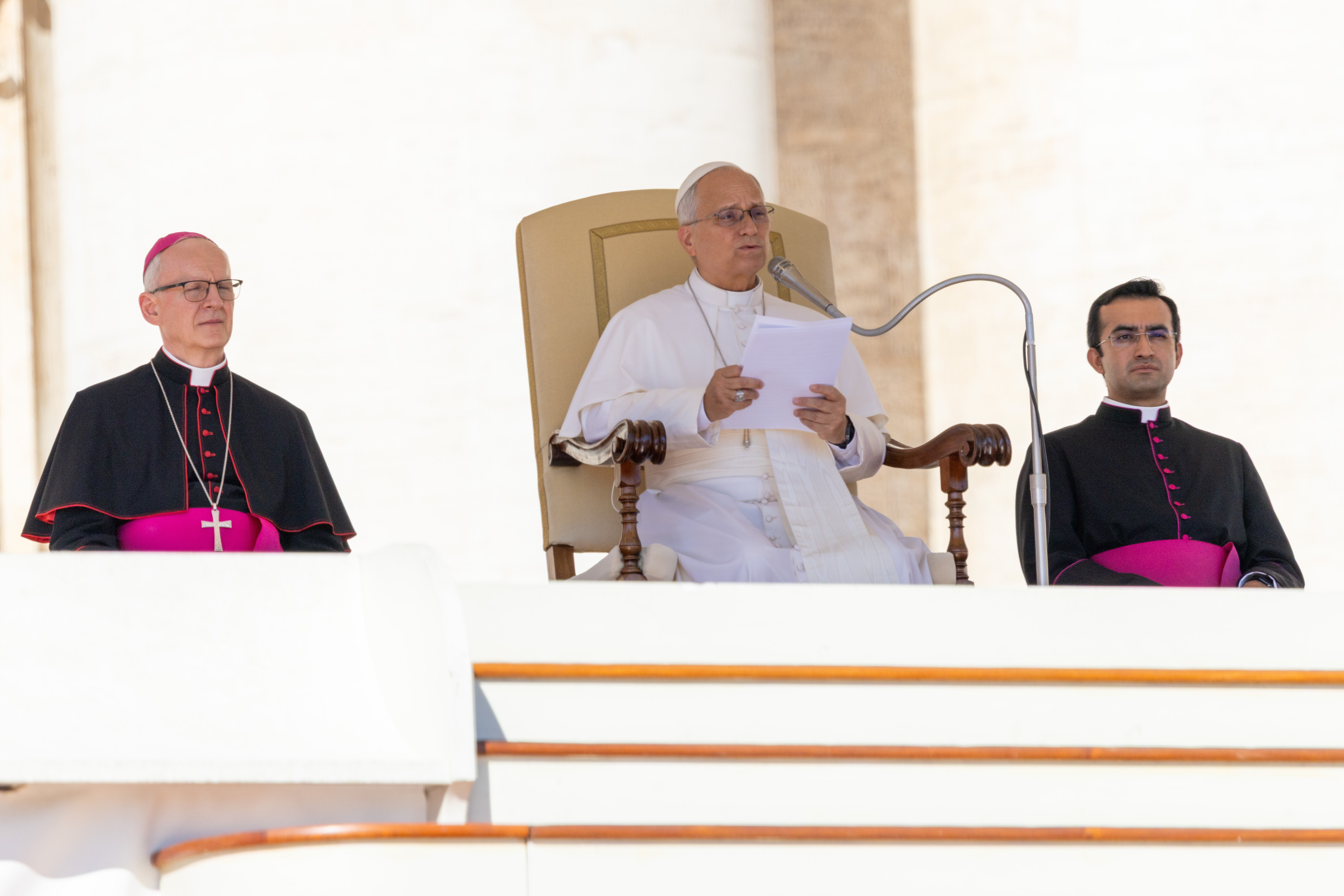
Pope Leo XIV speaks on the human community as described in "Gaudium et Spes" during his weekly general audience address in St. Peter's Square on Sept. 16, 2026. | Credit: Daniel Ibañez/EWTN News
The pope also recalled that the pastoral constitution Gaudium et Spes offers a concise definition of the common good, understood as "the sum of those conditions of social life which allow social groups and their individual members relatively thorough and ready access to their own fulfillment."
At the same time, he noted that the document recognizes the interdependence of peoples and states that "every social group must take account of the needs and legitimate aspirations of other groups, and even of the general welfare of the entire human family."
Respect for human dignity
Building on this approach, the council fathers identified several "practical and particularly urgent consequences," including respect for the human person.
The pope recalled that Gaudium et Spes states: "Whatever is opposed to life itself, such as any type of murder, genocide, abortion, euthanasia, or willful self-destruction, whatever violates the integrity of the human person, such as mutilation, torments inflicted on body or mind, attempts to coerce the will itself; whatever insults human dignity, such as subhuman living conditions, arbitrary imprisonment, deportation, slavery, prostitution, the selling of women and children; as well as disgraceful working conditions, where men are treated as mere tools for profit, rather than free and responsible persons; all these things and others of their like are infamies indeed."
Likewise, the pope said that the second consequence of this message is "respect and love for adversaries or for those who think and act in ways different from our own."
Third, Pope Leo emphasized that the fundamental equality of all human beings gives rise to the demand for social justice. In this regard, he urged people to "overcome the individualistic mindset" and adopt "an attitude of responsibility and participation."
"The future of humanity depends on each person's commitment to collaborate with God and with their brothers and sisters in building a more humane world," the pope concluded.
At the end of the general audience, Leo XIV offered a special greeting to various groups of pilgrims and expressed his "deep appreciation" for the apostolate carried out by prison chaplains.
"May you always be a living presence of the Gospel and of Christian hope," the Holy Father said, also thanking them for the assistance they provide both to him and to the Secretariat of State in the spiritual care of prisoners who write to the pope each day to share their personal struggles and wounds.
Among those present, Leo XIV also greeted participants in a pharmaceutical care course, encouraging them to combine scientific expertise with human closeness and an integral vision of the person.
This story was first published by ACI Prensa, the Spanish-language sister service of EWTN News. It has been translated and adapted by EWTN News English.
The pontiff held a private audience on Sept. 16 to conclude a conference in Rome on modern Christian martyrs, including American nun Sister Dorothy Stang.
A Vatican conference on modern Christian martyrs concluded with a speech by Pope Leo XIV, who praised their witness and the evangelizing power of their simple, daily holiness.
The pontiff held a private audience at the Vatican on Sept. 16 with participants in the conference "The 21st Century: A New Time of Martyrs?" held at the Patristic Institute Augustinianum in Rome from Sept. 15–16.
The conference, organized by the Dicastery for the Causes of Saints, discussed the ecumenical initiative "Commission for New Martyrs — Witnesses of the Faith" established by Pope Francis in 2023 to document the deaths of Christians of all denominations who have been killed for their faith since 2000.
Christian witnesses propose a faith lived out daily, not an ideology
In his address, Pope Leo praised the dicastery's work cataloging the lives of Christians killed for their faith and explained that their example can teach believers today to present the faith not as an ideology but as a way of life.
"The evangelizing strength of the new witnesses to the faith represents one of the Church's greatest resources for proclaiming the Gospel in today's world," Leo said. "The witnesses to the faith do not propose an ideology but show a faith lived out in everyday life."
He also explained the significance of those Christians to Catholics, saying they "are brothers and sisters who, in different geographical, historical, and political contexts, have given their life for the Gospel."
The pope also said that daily holiness — the holiness next door — can help Christians explain and defend their faith in arguments.
"In indifferent cultural contexts, "holiness next door" and quiet heroism become powerful arguments, capable of speaking to everyone, even the most skeptical."
Muslims in West Bank are tired of violence against Christians
Speakers at the conference included Cardinal Marcello Semeraro, prefect of the Dicastery for the Causes of Saints, and Cardinal Pierbattista Pizzaballa, Latin patriarch of Jerusalem.
Pizzaballa, who delivered a speech on the suffering of Christians amid ongoing wars in the Holy Land, recounted his experience of explaining that suffering to Muslim students in Palestine.
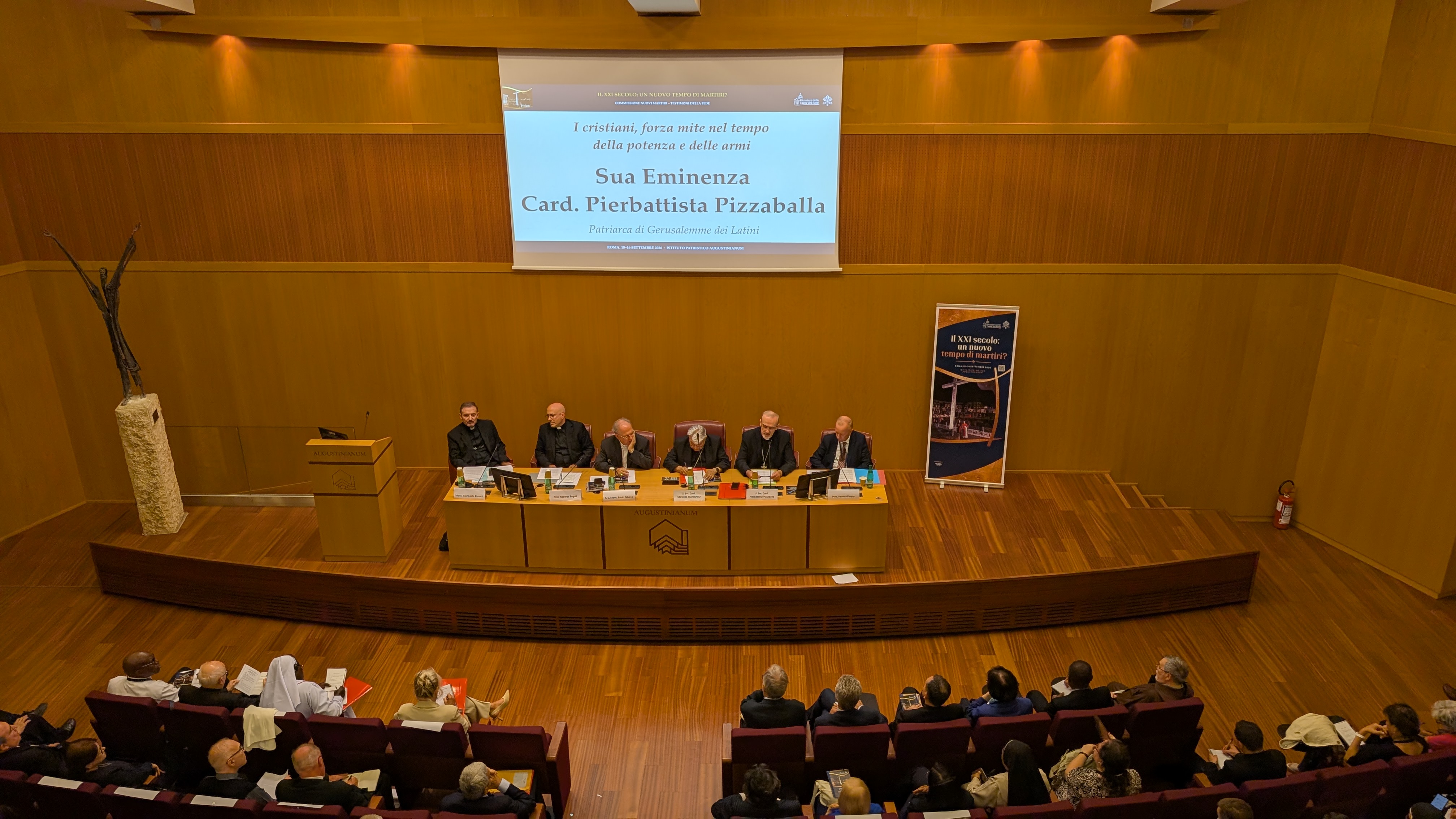
Cardinal Pierbattista Pizzaballa, Latin patriarch of Jerusalem, delivers an address at the conference "The 21st Century: A New Time of Martyrs?" held at the Patristic Institute Augustinianum in Rome from Sept. 15–16, 2026. | Credit: Ishmael Adibuah/EWTN News
"I agreed to meet with young people from the local university [in Palestine] who insisted I come," Pizzaballa recounted. "I had never experienced that before and was afraid. About 600 students were there, all Muslims. During the discussion, I expected political questions about the war. Instead, all the questions were about life, faith, and Christianity."
"When I said that Christianity rejects violence …, they stood up and applauded, saying they, too, are tired of living in a system of violence."
The blood of the martyrs comes before theological disagreements among Christians
Semeraro, in his address, discussed the progress of the "Commission for New Martyrs — Witnesses of the Faith" initiative and emphasized the need to prioritize the sacrifice of Christians for the faith over theological debates.
"The blood of the martyrs comes before our theological dialogues," Semeraro said. "Where our Christian confessions still have wounds that need to be healed, the martyrs tell us that what is essential is already shared: the confession of Christ, even unto the gift of one's life. This is called the 'ecumenism of blood.'"
Sister Dorothy Stang and the impact of 9/11 on Christian persecution
Among the Christians mentioned at the conference was Sister Dorothy Stang, an American nun who was murdered in Brazil in 2005 for defending the land rights of the Indigenous peoples. In 2025, she became the first U.S. woman to be included in a permanent memorial in Rome for modern Christian martyrs.
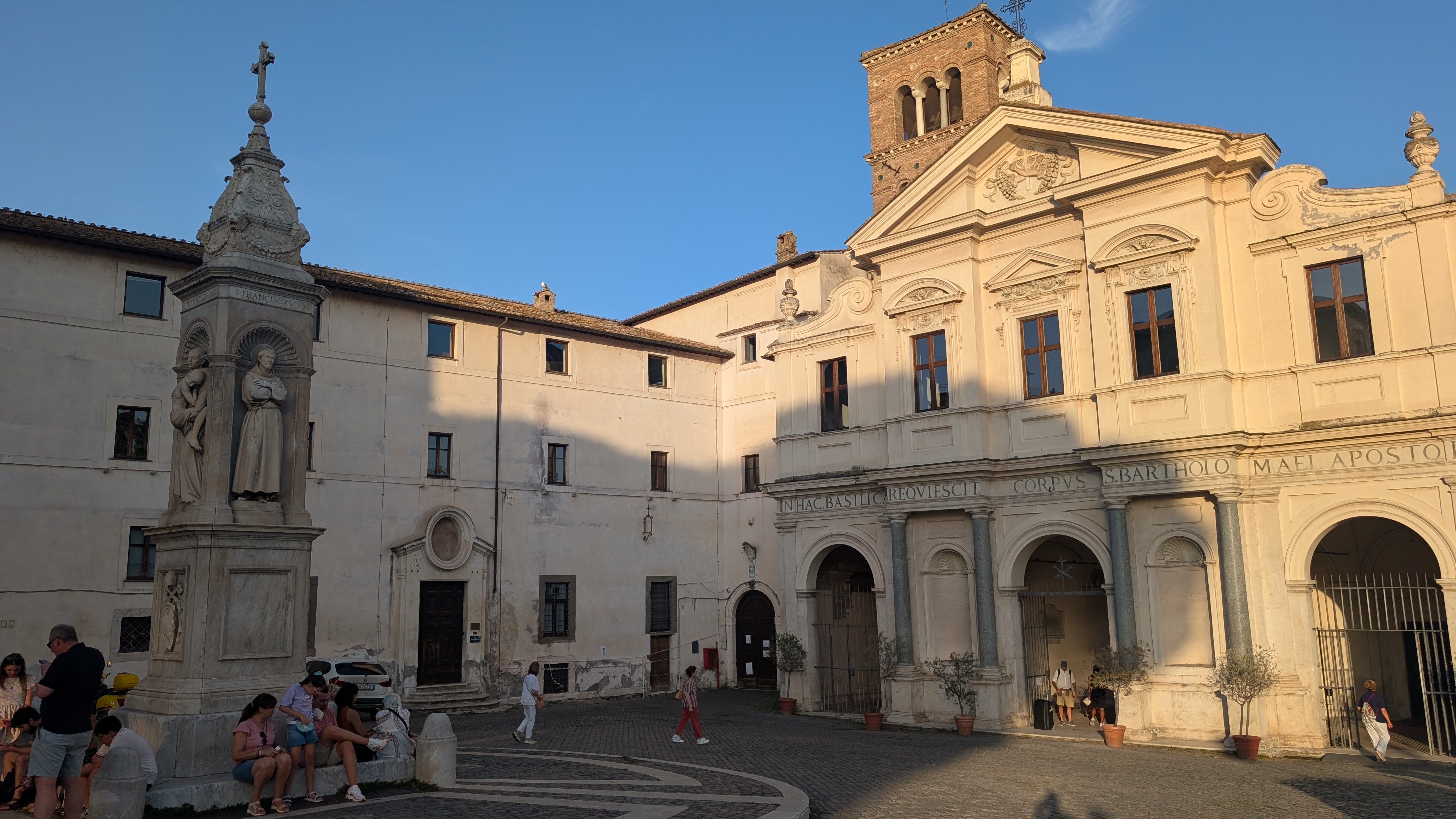
The Basilica of St. Bartholomew on Tiberina Island contains a permanent memorial honoring various 21st-century Christian martyrs, including Sister Dorothy Stang. | Credit: Ishmael Adibuah/EWTN News
Sister Nicoletta Spezzati, a consultor for the Dicastery for the Causes of Saints, described Stang as a "woman of contemplative prayer" who understood that "the predatory devastation of the planet is not simply a moral offense but humanity's rebellion against the Creator."
Marcia Goodman, a niece of Stang, added that her life was rooted in the belief in a sustainable environment for all people.
"It's especially powerful that Dorothy, a woman, is being recognized as a modern martyr," Goodman told EWTN News. "She led her life in the belief that all people matter and therefore deserve a place to call home."
Besides Stang, the impact of the U.S. terrorist attacks on Sept. 11, 2001, on Christian persecution in Europe was also noted. Father Roberto Regoli, president of the Joseph Ratzinger Foundation, described those attacks as a precursor to a new scale of Christian persecution internationally.
"Twenty-five years ago, on Sept. 11, we remember the attacks on the Twin Towers. We remember the airplane that struck the Pentagon in Washington. From those years onward, there was an escalation of conflicts at the international level," Regoli said.
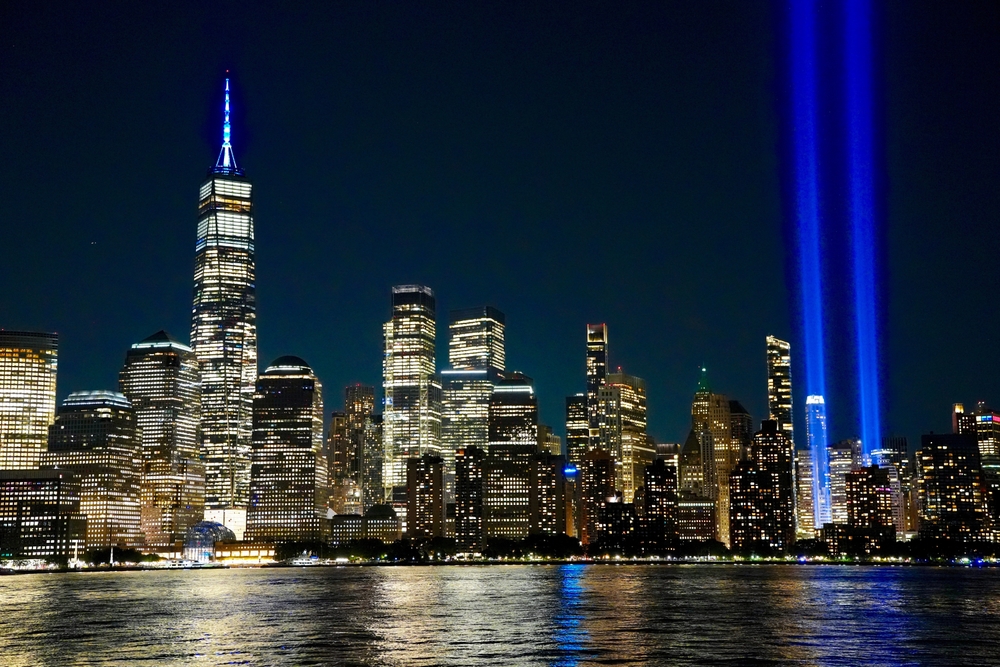
The Tribute in Light annual 9/11 memorial's twin shafts of light soar skyward over Manhattan's skyscrapers in 2025. | Credit: George Wirt/Shutterstock
"In the face of secularism, social difficulties, psychological difficulties, and religious tensions, there are men and women — religious and laypeople — who remain where they are. And perhaps this is itself a form of testimony: to remain in one's place," Regoli added.
They point to collective bargaining, social dialogue, and human oversight as safeguards for jobs, rights, and human dignity.
VATICAN CITY — As artificial intelligence reshapes workplaces and corporate decision-making, labor leaders and Catholic bishops are calling for workers to have a direct voice in how the technology is introduced and used.
Their argument is not that technological innovation should be resisted but that decisions affecting jobs, wages, and working conditions should not be left solely to corporate executives or automated systems. Instead, they point to collective bargaining, social dialogue, and human oversight as safeguards for workers' dignity and rights.
Liz Shuler, president of the American Federation of Labor and Congress of Industrial Organizations (AFL-CIO), said protecting workers requires confronting a model in which executives make far-reaching technological decisions without worker input.
"Right now, we have CEOs who want to play God to make decisions that affect hundreds of millions of working people without our input and consent," Shuler said.
Shuler made the remarks at a Sept. 11 Vatican press conference held in connection with the Fourth Fratelli Tutti Synodal Meeting, a Sept. 10–12 gathering in Rome focused on dialogue between the Global North and South on social and environmental issues. The press conference brought together labor and Church leaders to discuss, among other questions, the impact of artificial intelligence on workers and the need for social dialogue. Other speakers included Bishop Daniel Flores, vice president of the U.S. Conference of Catholic Bishops; Cardinal Jaime Spengler; and labor leader Gerardo Martínez.
For Shuler, social dialogue is essential to ensuring that AI is developed and deployed with human dignity in mind. She compared the current technological transition to the introduction of electricity during the second industrial revolution.
"Electricity was a new technology that was raw and revolutionary and dangerous, and companies were racing to make profits and people were suffering," she said.
Shuler linked that history to Pope Leo XIII's 1891 encyclical Rerum Novarum, which addressed the relationship between labor and capital. It was "workers organizing together in a union who stood up to demand safety from the government, from power companies, and negotiated to make sure electricity was installed and used responsibly to benefit everyone," she said.
She also pointed to the partnership between the AFL-CIO and Microsoft as an example of how organized labor can seek a formal role in the development and introduction of AI.
Shuler said the agreement "guarantees workers a voice in the development of AI" and "puts into writing our workers' right to form a union."
Martínez similarly argued that worker protections need not come at the expense of technological innovation. He summarized the labor movement's approach in three principles: "Not resisting innovation, not accepting exclusion, and negotiating transition."
Under that approach, unions do not reject technological advances but insist that automated systems should not independently determine fundamental working conditions.
"We cannot accept that an algorithm decides by itself about employment, salary, and rights that correspond to a worker," Martínez said.
He said the objective should be integration rather than a confrontation between workers and technology: "The challenge is not technology against work. The challenge is technology with worthy work, productivity, distribution, and development with social justice."
Flores connected the issue of worker participation to Catholic social teaching, particularly the principle of subsidiarity and the importance of allowing communities affected by technological change to express their concerns.
"From the Catholic point of view, history is not always a matter of what the powerful decide, that there are other things that move history," Flores said. "One of them is social friendship, and a sense of justice, and a sense of what is right."
Those themes also figure prominently in Pope Leo XIV's encyclical Magnifica Humanitas, which addresses the protection of human dignity amid the development of artificial intelligence.
Spengler cited the encyclical's call to each generation to shape technological and social change in accordance with human dignity: "Each generation inherits the task of shaping its own era, of guiding history to become a place where the dignity of every person is safeguarded, justice is promoted, and fraternity is made possible."
Taken together, the speakers presented worker participation as a central question in the development of AI. Their proposed safeguards include collective bargaining, negotiated technological transitions, human oversight, and cooperation among unions, employers, international organizations, and faith communities — with the aim of ensuring that innovation serves workers rather than leaving consequential employment decisions to algorithms alone.
Auxiliary Bishop Josef Graf of Regensburg said the Church could ordain married men of proven faith while affirming the value of celibacy and rejecting women's ordination.
A German auxiliary bishop has said the Catholic Church "could afford" to ordain married men as priests while firmly rejecting demands for the ordination of women to the priesthood ahead of a crucial gathering of German bishops later this month.
Auxiliary Bishop Josef Graf of Regensburg told the Catholic Sunday newspaper of the Diocese of Bolzano-Brixen in an interview published Sept. 15 that he personally believes the Church could open the door to so-called "viri probati" — men of proven faith who are married.
"I personally believe the Church could afford 'viri probati.' It could grant ordination to 'proven men' with a marriage and a family," Graf said.
The German prelate pointed out that the Diocese of Regensburg had several married priests — former Protestant pastors who converted to Catholicism and were ordained with Rome's permission while continuing to live in marriage and family.
"We also recognize the priestly ordination of the Orthodox churches and of the Eastern Catholic churches of the Byzantine rite. These have married priests alongside the monastic state," Graf said. "I could well imagine the Church taking the path of 'viri probati.' But the priest shortage would probably not be eliminated by it."
Celibacy 'not indispensable'
Graf, 69, who served as seminary spiritual director for 26 years before his episcopal appointment in 2015, affirmed the value of priestly celibacy but said it is not a prerequisite for ordination.
"I still believe that the celibacy of the priest has not only a great tradition in the Catholic Church but is also a charism that is helpful in the exercise of priestly ministry," he said.
Celibacy, when lived honestly, Graf added, will always involve renunciation of sexual intimacy, and "the lifelong partnership of marriage, of having one's own children."
"Celibacy, as an expression of following Christ, will always also involve the way of the cross. However, the unmarried state of the priest would not be a 'conditio sine qua non' — an indispensable prerequisite — for receiving priestly ordination," he said.
The celibacy lived by ordained men and women in the Latin Church is rooted in the example of Christ, who lived unmarried. It enables the priest to serve his community with undivided attention and functions as an eschatological sign pointing to the fullness of communion with God, in which "they neither marry nor are given in marriage" (Mt 22:30). Pope Paul VI described celibacy in Sacerdotalis Caelibatus (1967) as the object and outward sign of a complete and generous self-giving to the mystery of Christ.
Women's ordination rejected
Graf firmly rejected calls for the ordination of women, a demand raised by Germany's Synodal Way process.
"I believe that is not possible. Already because we have a different tradition," he said. "If a pope were to break with this tradition, it would at present lead to a split in the Church."
Asked whether tradition was the only argument against it, Graf replied: "Not at all. In my view there are still very weighty theological reasons for the sacrament of ordination being reserved to men. Listing them here would require too much space."
The Catholic Church holds that only men can be validly ordained to the priesthood, a teaching declared as definitive by St. John Paul II in his 1994 apostolic letter Ordinatio Sacerdotalis. The teaching applies analogously to the diaconate and the episcopate.
Ordination numbers and 'crisis of faith'
Germany ordained 30 men to the priesthood in 2026, up from 25 the previous year. Eleven of the country's 27 dioceses and archdioceses had no new priest this year. Regensburg had one. In 1966, there were 447 ordinations across Germany.
Graf attributed the decline primarily to secularization and anti-Church sentiment rather than celibacy.
"When I entered the seminary in 1977, it was practically an honor for a village and even more for my parents. Today it is unfortunately different. The priestly vocation is a contested profession — the abuse scandal being the key word," he said.
He also pointed to the experience of Germany's Protestant churches as evidence that abolishing celibacy does not solve the underlying problem.
"All our Catholic hot-button issues like celibacy and women's ordination have long been settled by the Protestant church in Germany. Yet it now also suffers from personnel shortages and ongoing membership losses," Graf said.
"I say that with no 'schadenfreude,' certainly not. But one can see that the root of the problems lies elsewhere. It is the decline of faith."
Fulda plenary ahead
Graf's public remarks were made less than two weeks before Germany's bishops convene for their autumn plenary in Fulda from Sept. 28 to Oct. 1. The agenda under new conference president Bishop Heiner Wilmer includes surrogacy, assisted suicide, organ donation, artificial intelligence, and sexual abuse.
Wilmer, the bishop of Münster and a member of the Priests of the Sacred Heart, was elected president of the German Bishops' Conference in February. In an interview with Vatican News published Sept. 16, he called for renewal.
"We need not be afraid of renewal," Wilmer said. "Nor need we be afraid of the spirit of the times, which shows us how to proclaim the Gospel well today."
Wilmer argued that a synodal Church is essential for Europe. "Europe urgently needs a synodal Church, because Europe is becoming ever more complex, ever more fragmented. The danger is that Europe falls apart, descends into petty statism, and there are skirmishes," he said.
The statutes for Germany's planned Synodal Conference — a controversial, permanent body that would give laypeople a formal advisory role alongside bishops — remain pending approval from the Holy See. Wilmer submitted the text to the Vatican on March 31. The conference's inaugural meeting, originally planned for November in Stuttgart, has been postponed until Rome's response is finalized.
This story was first published in two parts by CNA Deutsch, the German-language sister service of EWTN News. It has been translated and adapted by EWTN News English.
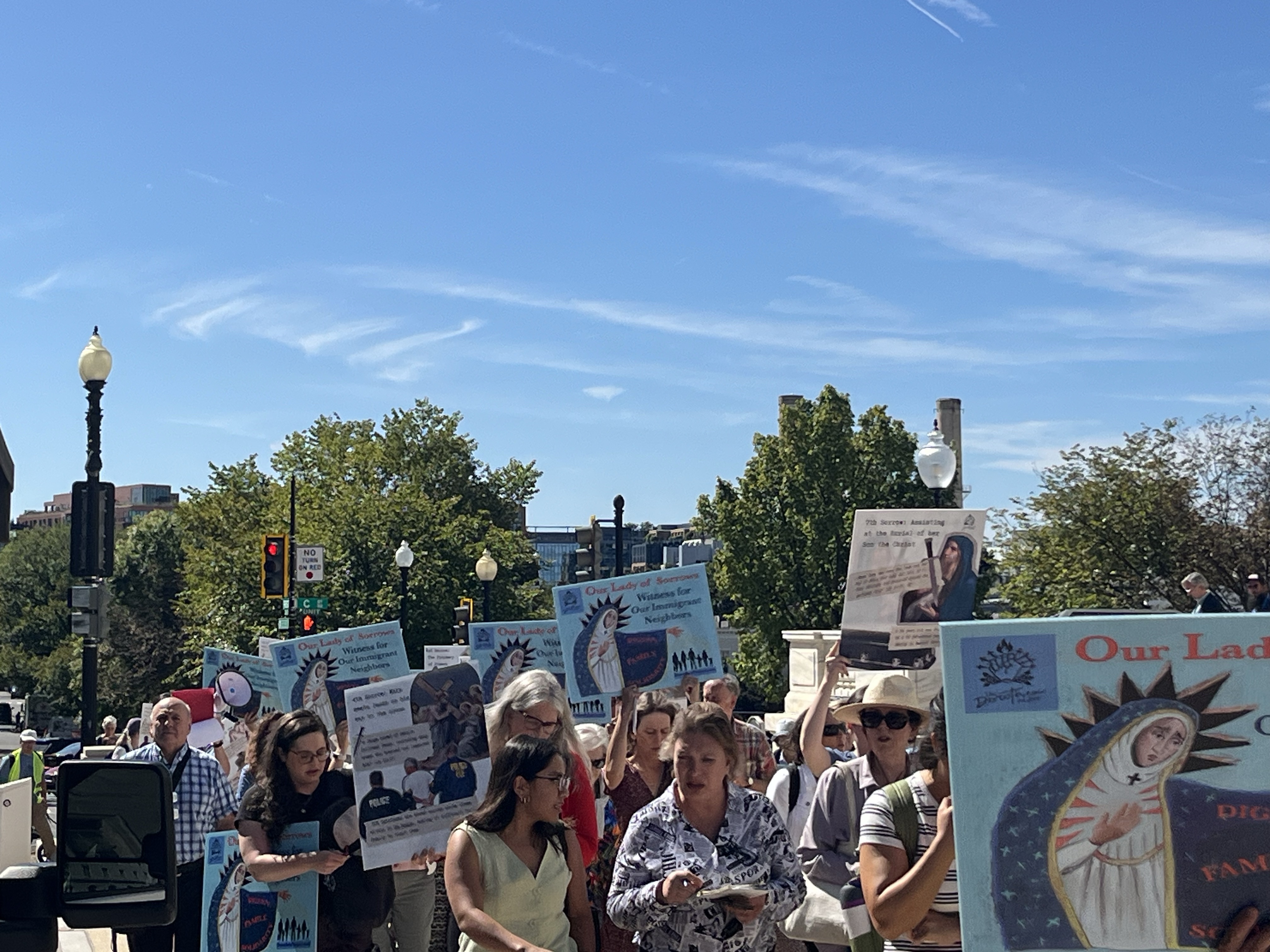
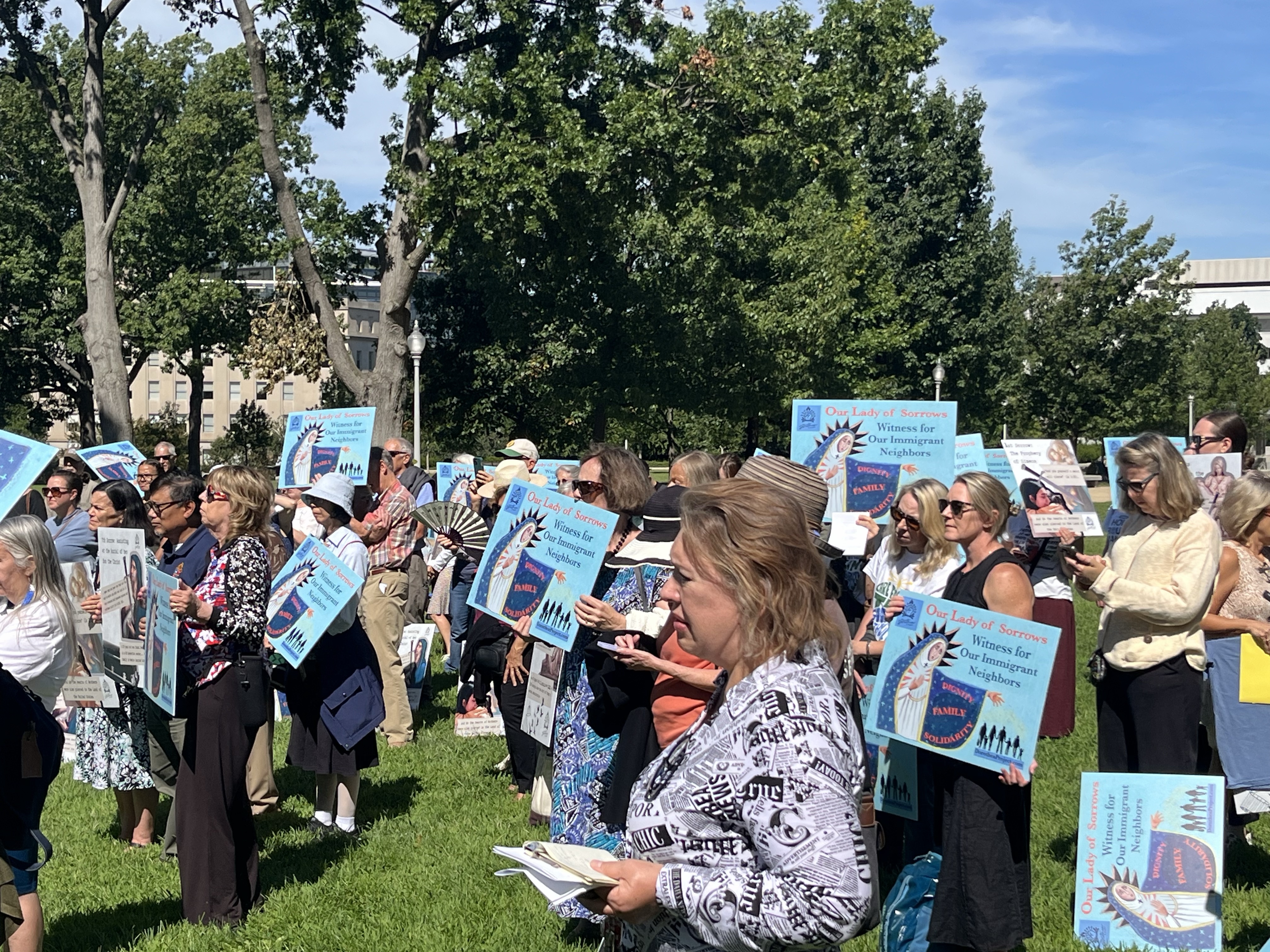
The Mass, procession, and rally brought out more than 100 Catholics. Following the events, some attendees met with congressional staffers about the dignity of migrants.
More than 100 Catholics processed to a rally near the U.S. Capitol in Washington and met with congressional staffers to advocate for migrant dignity and show solidarity with the community.
The Dorothea Project — named after two servants of God, Dorothy Day and Sister Thea Bowman — organized the Sept. 15 event to coincide with the feast of Our Lady of Sorrows, one of the patrons of the organization.
Catholics gathered for Mass at St. Peter's Church on Capitol Hill, celebrated by Washington, D.C., Auxiliary Bishop Gary Studniewski, and processed to Upper Senate Park, which is less than a mile from the parish and sits adjacent to the Capitol. They prayed the sorrowful mysteries of the rosary.
Catholics gather for a procession in Washington, D.C., to show solidarity with migrants on Sept. 15, 2026, organized by the Dorothea Project. | Credit: Tyler Arnold/ EWTN News
In his homily, Studniewski reflected on the Gospel reading from John 19 when Mary, the mother of God, stood before Christ on the cross. As Mary did, he said, "we want to stand at the foot of the cross of suffering, the suffering Christ, [and] we want to be present to our suffering brothers and sisters to offer our tears and our prayers and our consolation."
The bishop said that "these days, in our own country, we are aware of so many who suffer the pains of injustice." He said: "We gather today, mindful of the many men, women, and children — real families — who suffer the injustice of being mistreated as immigrants, migrants, strangers."
"Like our Blessed Mother, we may appear to be powerless at the foot of the cross," Studniewski said. "But the suffering of our brothers and sisters in need is somehow softened by our presence and by the agency of those who love them. They are not alone. They are accompanied in their suffering. They are loved."
Catholics gather for a procession in Washington, D.C., to show solidarity with migrants on Sept. 15, 2026, organized by the Dorothea Project. | Credit: Tyler Arnold/EWTN News
Anna Marie Gallagher, executive director of the Catholic Legal Immigration Network (CLINIC), an organization that works closely with the U.S. Conference of Catholic Bishops (USCCB), said the procession and rally come at a "difficult and frightening moment for immigrant communities in the United States."
She said deportations impact people "who have lived, worked, worshipped, raised children, and have contributed to our community for years." She said immigration status is more complicated than "legal" and "illegal," noting that people can face deportation when protected status expires or have difficulty moving from temporary to permanent status.
People who follow the laws, Gallagher said, may "find that the rules have changed around them."
Policies, she said, must protect "family safety and human life" and always be consistent with "human dignity." She said policies should recognize every person, regardless of immigration status, as "a person created in the image and likeness of God."
"You are part of our communities," Gallagher said of migrant communities. "Your dignity does not depend upon your immigration status. You are not invisible and the Church will continue to walk with you."
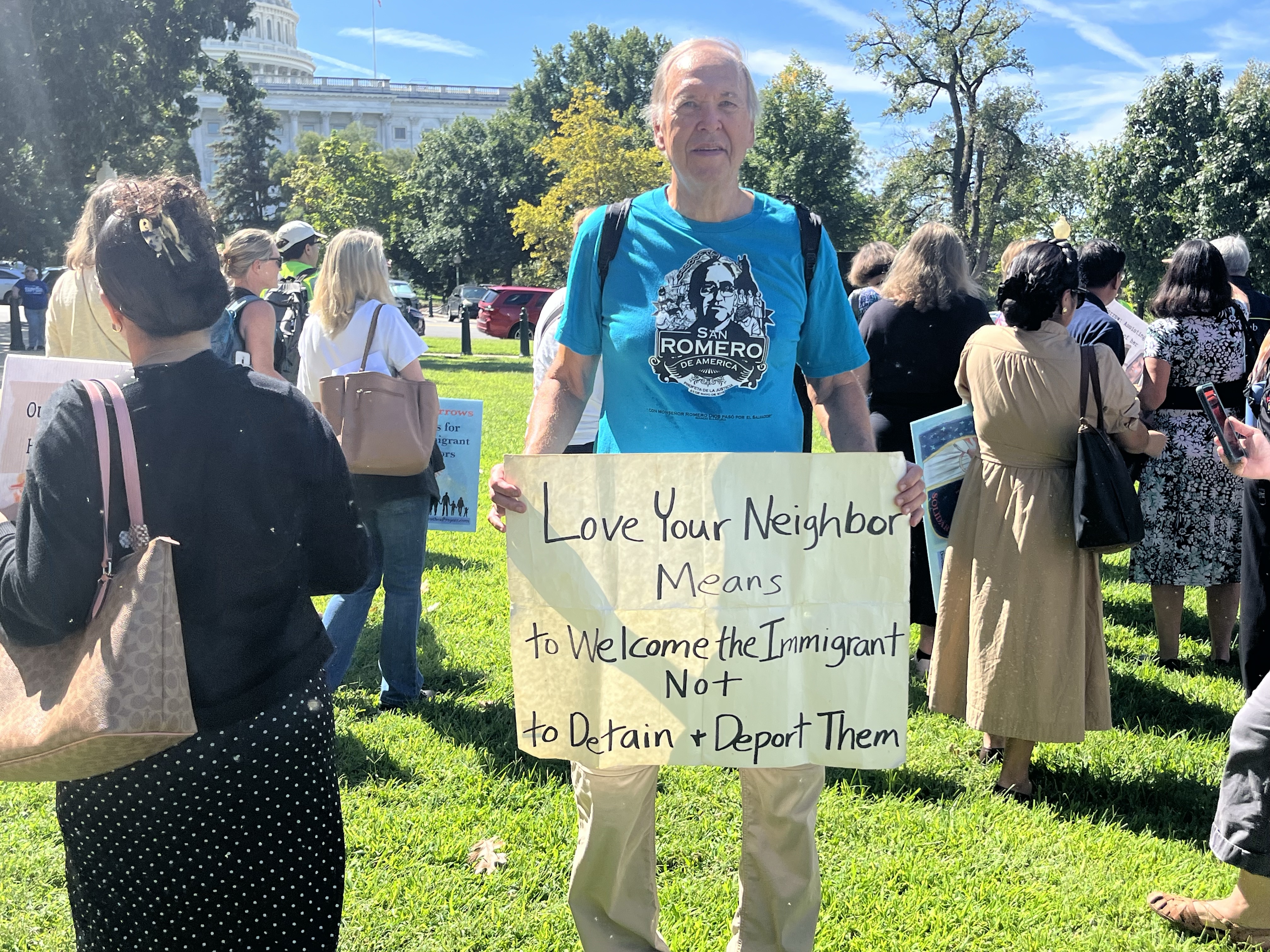
Many gathered for the procession carried signs, some of which were premade and depicted Our Lady of Sorrows with the text, "dignity, family, solidarity." Art Laffin, a member of the Dorothy Day Catholic Worker movement in Washington, D.C., carried a handwritten sign saying, "Love your neighbor means to welcome the immigrant, not to detain and deport them."
Art Laffin, a member of the Dorothy Day Catholic Worker movement in Washington, D.C., holds sign at a procession in Washington, D.C., to show solidarity with migrants on Sept. 15, 2026, organized by the Dorothea Project. | Credit: Tyler Arnold/EWTN News
Kathy O'Leary, who traveled from New Jersey, told EWTN News she came to connect with Catholics "taking action right now," adding: "We need to show our love for our neighbors." She said she's grateful Pope Leo XIV and the U.S. bishops have spoken up for migrants, noting that their statements have encouraged more people to attend events like this.
Frank Panopoulos, a human rights attorney and activist, told EWTN News he also believes it's "great that the bishops and the pope are speaking about it." Yet, he said he does not believe the message has reached the pews to the point that it motivates more people to take action.
He said gatherings that defend the dignity of migrants should have "the same kind of crowd that Jesus got when he entered into Jerusalem."
Ken Cooper, a retired religion teacher, told EWTN News he attended the event because "when you welcome the stranger, you welcome [Christ]," quoting from Matthew 25.
"If they're here, you must treat all human beings like Christ," he said.
Following the rally, the Dorothea Project took groups to several congressional offices with whom they coordinated meetings.
Katie Holler, founder of the Dorothea Project, told EWTN News the group "feels really blessed that so many people came from both near and far" for the event. The advocacy of Leo and the U.S. bishops on behalf of migrants, she said, "gives us fertile soil" to bring more Catholics into public advocacy for migrants.
The Mexican bishops acknowledged that while progress has been made in human rights, serious social ills persist. They also emphasized religious freedom and devotion to Our Lady of Guadalupe.
As Mexico commemorates the 216th anniversary of Mexico's War of Independence, the Mexican Bishops' Conference (CEM, by its Spanish acronym) acknowledged the nation's political progress but warned that "open wounds" such as violence, kidnappings, corruption, and inequality persist.
Every year, on the night of Sept. 15, Mexico begins its independence day celebrations by reenacting the "Grito de Dolores" ("Cry of Dolores"). On Sept. 16, 1810, in the town of Dolores, Father Miguel Hidalgo rang the church bells and urged the assembled people to take up arms against the Spanish colonial government.
Mexico's independence was finally achieved on Sept. 27, 1821, with the entry of Agustín de Iturbide into Mexico City at the head of the Army of the Three Guarantees. The army got its name for its defense of the three "guarantees" of the Plan of Iguala: the Catholic faith as the national religion, independence from Spain, and social and legal equality between between all citizens regardless of ethnic origin.
'Celebrating independence does not mean turning a blind eye'
In a Sept. 14 statement, the CEM said that in Mexico, "we have made progress in recognizing people's rights, women's participation, the strengthening of institutions, solidarity in the face of disasters, and a societal yearning for peace that can no longer be ignored."
"At the same time, the country continues to bleed from violence, persons inexplicably gone missing, impunity, humiliating inequality, and the forced displacement of entire communities," the bishops lamented.
For the Catholic Church in Mexico, "celebrating independence does not mean turning a blind eye; it means remembering where we come from so we have the resolve to keep on building."
In their message, the bishops called on leaders at all levels to ensure "that freedom is not [viewed as] a concession, but is a guarantee; that security and justice cease to be mere promises; and that victims are heard."
"Furthermore, on the eve of a new election season, we call for public debate to be worthy of the [nation that] sustains it," they stated, with an eye toward the June 2027 elections, in which the entire federal house of representatives will be elected as well as local officials across Mexico's 31 states.
The bishops also urged citizens "to love Mexico by acting uprightly every day," participating politically, fulfilling their personal responsibilities, and "by caring for those who have the least."
Our Lady of Guadalupe, 'the heart and soul of our people'
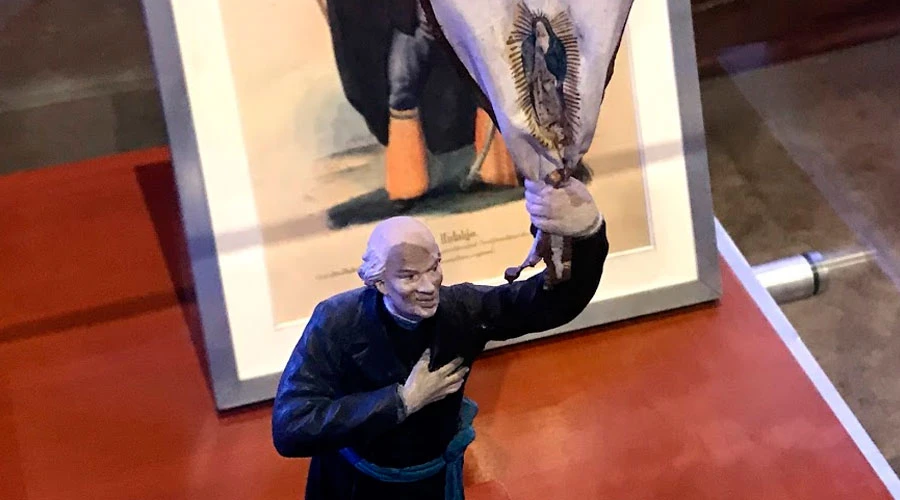
The bishops emphasized that Mexican independence "was born clasping a standard," noting that "the image of Holy Mary of Guadalupe became the banner of a people realizing that it had become a nation."
Statue of Father Miguel Hidalgo y Costilla holding the standard of the Our Lady of Guadalupe at the National Museum of History (Chapultepec Castle). | Credit: David Ramos/ACI Prensa
"It was the recognition that this people already had a mother and with her, a common identity capable of uniting the Indigenous person, the person of European descent born in Mexico, and the mestizo in a single home. Even the first president of the republic chose to call himself Guadalupe," they noted, referring to Guadalupe Victoria, Mexico's first president.
Originally known as José Miguel Fernández y Félix, the independence fighter adopted that name due to his devotion to Our Lady of Guadalupe and his confidence in the victory of the independence cause, according to the General Archive of the Nation.
"Two centuries later, she continues to be the heart and soul of our people," the bishops stated, pointing out that Our Lady of Guadalupe "continues to ask for the same thing as she did on Tepeyac: that her sacred little house [chapel] be built in order to show and give all her love, her compassion, her help and her protection to her littlest children, to hear their cries and remedy their sorrows, their miseries, their pain."
With a view to the upcoming fifth centenary of the apparitions of Our Lady of Guadalupe, which will be celebrated in 2031, the bishops pointed out that "the Intercontinental Guadalupana Novena calls us to make that love an encounter, reconciliation and justice."
'Protecting and safeguarding' freedom of expression and religion
Noting that "independence evokes a decisive word: freedom," the bishops called for "protecting and safeguarding" two human rights in particular: freedom of expression and religion.
The former, they pointed out, "requires media representing various viewpoints, the personal safety of journalists, and a public debate that does not dismiss those who think differently," while religious freedom "is not limited to worship within a temple but encompasses the right to believe, to educate in accordance with one's own convictions, to associate, to serve, and to contribute publicly to the common good."
"This national anniversary finds us amid the centennial remembrance of the Religious Conflict (the Cristero War). We recall it during these celebrations because it was a fratricidal conflict between brothers who shared the same faith, heart, and culture, and because its lesson is urgent: When freedom of conscience is restricted, the entire nation suffers."
This remembrance, they affirmed, "calls upon us to always call for religious freedom to be fully recognized and exercised as a fundamental human right — for Catholics and for all religious denominations in our country."
'The Church is not a guest in Mexico'
The Mexican Bishops' Conference further emphasized that "the Church is not a guest in Mexico: It has been part of the country's fabric since before the state even existed."
The Church in the country, the bishops noted, established and "sustained the first schools, hospitals, and shelters; it educated many of those who envisioned what the nation would be; and it has never ceased to be present where the suffering is greatest."
"Today, that presence has concrete names: Caritas and its thousands of volunteers in every emergency; schools, universities, and educational foundations; migrant centers, soup kitchens, clinics, and shelters for women and children; human rights advocacy centers; support for victims and their families; the rebuilding of the social fabric; and constant work for peace," the CEM stated.
The bishops noted that "the social fabric, freedom, and peace in Mexico are also sustained by the quiet, effective work of believers."
"As the Church, we offer who we are: open communities, hands ready to serve, a voice to speak out without hatred, and the ability to build bridges where others erect walls," they affirmed.
This story was first published by ACI Prensa, the Spanish-language sister service of EWTN News. It has been translated and adapted by EWTN News English.
The Catholic Medical Association at its 95th annual educational conference held in Phoenix Sept. 10–12 focused on how the Eastern Catholic Church can help Western medicine promote human flourishing.
PHOENIX — For the first time in its nearly 100-year history, the Catholic Medical Association is focusing on how the Eastern Catholic Church's emphasis on mystery, united with the Western Church's emphasis on reason, can give a more comprehensive view of human identity and help Western medicine promote human flourishing.
The group's 95th annual educational conference, held in Phoenix Sept. 10–12, emphasized the early Church Fathers, whose influence was strongest in the East, in order to "promote a more comprehensive view and more respect for the mysteries of human health and disease," said conference chair Dr. Mary Keen-Kirchoff.
"We're embodied spirits, not just physical bodies," she said at the opening. Healing, she added, "is a return to humanity's original creation in the image and likeness of God."
The conference theme was "Mysteries and Miracles: Restoring the Practice of Medicine to Heal the Whole Person." Setting the tone, Father Andriy Chirovsky, a theologian and priest of the Ukrainian Greco-Catholic Church, an Eastern Catholic Church in full communion with Rome, and psychiatrist Dr. Donna C. Dobrowolsky shared the first plenary.
They moved between theology and clinical practice, saying they hoped to help medical professionals recover a holistic understanding of "the whole person, because that's who all of us care about." Theology without clinical reality stays abstract, they said; clinical work without a complete Christian anthropology becomes fragmented.
"If the human person is misunderstood, then healing will also be misunderstood and therefore less effective," Chirovsky said. "Healing requires a true anthropology."
He quoted Pope Leo XIV's encyclical Magnifica Humanitas, in which the pontiff wrote: "We Christians lift our eyes to the Incarnate God, knowing that it is 'only the mystery of the Word made flesh that the mystery of humanity truly becomes clear.'"
Why the East, and why now?
Chirovsky cited St. John Paul II's 1995 encyclical Ut Unum Sint (That They May Be One), in which the pope, referring to the Eastern and Western Catholic churches, wrote that "the Church must breathe with her two lungs!"
Dobrowolsky noted that what the West calls sacraments, the East calls mysteries: rites "not fully comprehensible by human reason, but revealed by God."
Chirovsky said Eastern spirituality and practice "preserve certain habits of thought that are especially needed at this moment in history."
He was not arguing against the West, he said. Any strength can become distorted when it loses its complement. The East offers "a needed medicine for some of the pathologies of modern culture," especially the idea that a person is the center of the universe, "self-defining," and "the ground of truth."
"We require revelation to understand our own selves," he said.
"If the person is not self-explaining," Dobrowolsky said, medicine has to be careful because lab values and symptom clusters aren't enough to explain a person. They're important, but they don't tell us everything about who a human person is."
The Catholic Church needs both the East and the West in the same way a healthy person must think with both hemispheres of the brain, the priest said, quoting neuroscientist Iain McGilchrist's book "The Master and His Emissary: The Divided Brain and the Making of the Western World."
In his book, McGilchrist notes that the left side of the brain is analytical and narrow, while the right side focuses more on the big picture, and pathology results when the two sides don't work together and one side dominates.
Chirovsky compared modern medicine's laser focus on the analytical and quantifiable, using hyperspecialization in the medical field as an example, to a pathology with too much dependence on the left brain.
"The analytic mode is powerful, but when it dominates unchecked, the person becomes legible as data but less visible as mystery and as a person," he said.
"Any practice of medicine that loses sight of the whole person as revealed in the incarnate Son of God is going to run into lots of trouble," he added. "Modern medicine is doing exactly that."
Dobrowolsky agreed, adding that "in medicine, that imbalance isn't theoretical, we see it every day."
Seeing the human being as mystery does not mean the person is unintelligible, she said. "We're saying this human person is not exhausted by reductionist accounts. And that the deepest truth of the human person is disclosed in relation to Christ."
"If a person is reduced to a collection of functions, risks, and measurable outputs, their care becomes reduced as well," she continued, saying that while practitioners may "retain technical brilliance … the patient may begin to disappear beneath the technique."
Indeed, the conference's breakout sessions touched upon the necessity for a Christian anthropology informed by a Church "breathing with both lungs," with talks titled "Healing Is Not the Same as Curing: Patristic Anthropology and the Limits of Modern Medicine," "The Neglected Soul: Ancient Monastic Teachings on Depression in the Modern World," and "Psychedelics, AI, Spirituality, and More: Ancient Wisdom for Reenchanting Medicine."
"My prayer before the conference was that all attendees receive abundant graces of understanding and hope for the future," Keen-Kirchoff told EWTN News. "I am so grateful that the Holy Spirit was so present … and trust that attendees are more in tune with who we are in Christ and who we are to become in Christ."
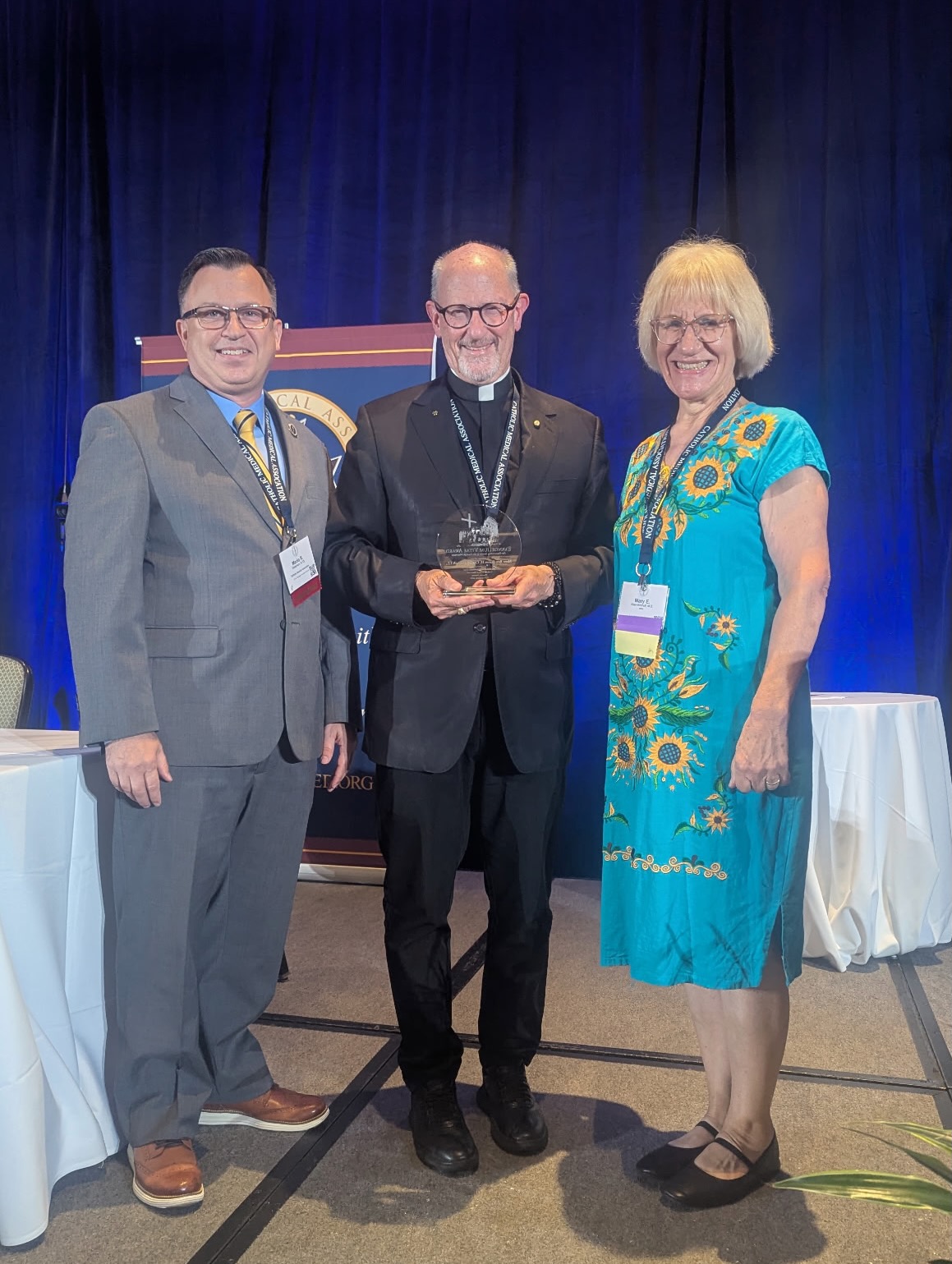
Bishop James Conley, center, receives the 2026 Evangelium Vitae award. He stands with Mario Dickerson, CMA executive director, left, and Dr. Mary Keen-Kirchoff, CMA conference chair, on Sept. 10, 2026. | Credit: Photo courtesy of Catholic Medical Association
Bishop James D. Conley of the Diocese of Lincoln, Nebraska, won the CMA's annual Evangelium Vitae award for his pastoral efforts surrounding mental health.
In May 2024, Conley published a pastoral letter titled "A Future with Hope," concerning the Catholic response to mental health struggles. The honor sits close to the conference's theme: care that views the person as a whole, in the mystery of body and spirit.
The author and radio host said it would be a "great honor and privilege" to serve if she is confirmed by the U.S. Senate.
Cissie Graham Lynch, the granddaughter of famed late Southern Baptist evangelist Billy Graham, said this week that President Donald Trump asked her to take up a key religious freedom position in his administration.
Lynch, whose father, Franklin Graham, leads the Billy Graham Evangelistic Association, revealed the news on X on Sept. 15, saying Trump had asked her to serve as U.S. ambassador-at-large for international religious freedom.
The role helps lead the U.S. Commission on International Religious Freedom in the U.S. Department of State. Lynch on X said it would be "a great honor and privilege" to serve in the role.
"If confirmed by the Senate, please pray that I would serve with excellence and make the most of every opportunity to protect our most precious and fundamental right—and one that far too many people around the world still live without—freedom of religion," she wrote.
Lynch has remained active in the religious advocacy and aid networks started by her grandfather and continue to be run by her family.
She has served as an adviser to the Billy Graham Evangelistic Association and at Samaritan's Purse, an international Christian aid organization also led by Franklin Graham.
On Sept. 15 Franklin Graham said his daughter is "uniquely" qualified for the role, the duties of which include promoting religious freedom abroad and advising the U.S. government when that right is violated internationally.
The government says the religious freedom ambassador serves as "a principal adviser to the president and the principal adviser to the secretary of state regarding matters affecting religious freedom abroad." The ambassador-at-large also has served as a nonvoting member of the U.S. Commission on International Religious Freedom, which has three vacancies yet to be appointed by the president.
Franklin Graham said his daughter has "traveled the world and been a student of this issue for many years" and has "a broad worldview and knowledge of the issues facing religious freedom today."
"I couldn't be more proud of her, and I ask you to pray that God would give her wisdom and strength," Graham wrote.
The Latin patrarch presided over Mass on the eve of the feast of the Exaltation of the Holy Cross in Taybeh, calling on Christians to live the "logic of the cross" through love and self-giving.
Cardinal Pierbattista Pizzaballa, the Latin patriarch of Jerusalem, said the cross is not a sign of defeat or death but an expression of God's love and the victory of life, urging Christians in the Holy Land to make it a way of life rooted in love and self-giving.
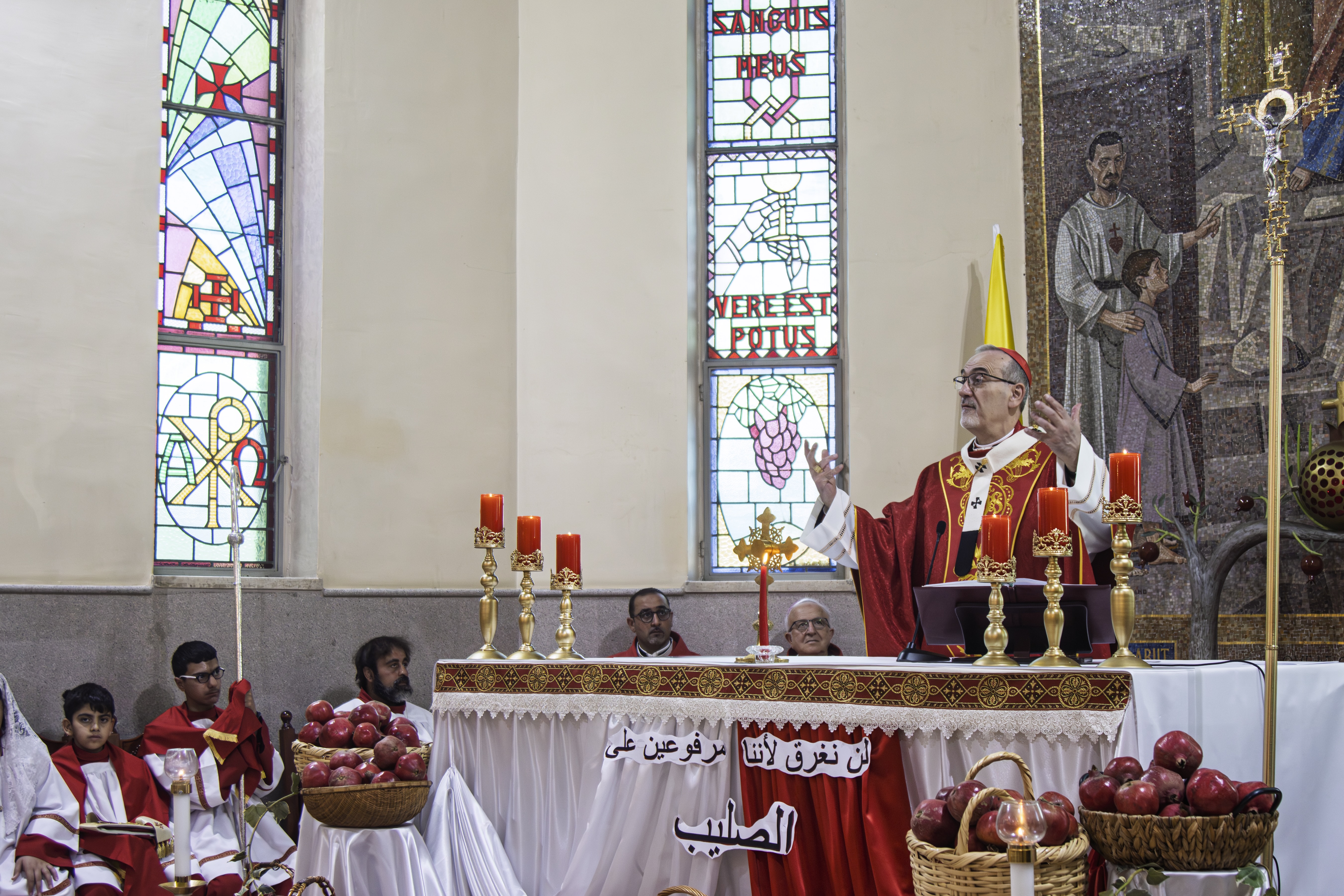
Cardinal Pierbattista Pizzaballa presides over Mass on the eve of the feast of the Exaltation of the Holy Cross at Christ the Redeemer Church in Taybeh, West Bank, Sept. 13, 2026. | Credit: Emad Diab/ACI MENA
Pizzaballa made the remarks while presiding over a Mass on the eve of the feast of the Exaltation of the Holy Cross at Christ the Redeemer Church in Taybeh, a predominantly Christian town in the West Bank.
Bishop William Shomali, patriarchal vicar; Father Davide Meli; and Father Bashar Fawadleh, the parish priest, concelebrated the Mass.
"The cross is our victory, and it is the victory of love," Pizzaballa said.
He added that Christ "chose to enter into the suffering of the cross out of love for us." The patriarch stressed that Christians are "people of the cross" and that the sign defining their identity should be reflected in the way they live and in their relationships within their families, parishes, and wider communities.
"We are called to live according to the logic of the cross," he said.
Pizzaballa noted that Christians do not need to seek out suffering, because they are already surrounded by suffering in many forms. Yet, he said, such experiences can become an opening for God's presence in their lives.
Fawadleh welcomed Pizzaballa to the celebration, telling him: "Your presence today is more than simply taking part in our feast; it is a sign of communion, consolation, and hope."
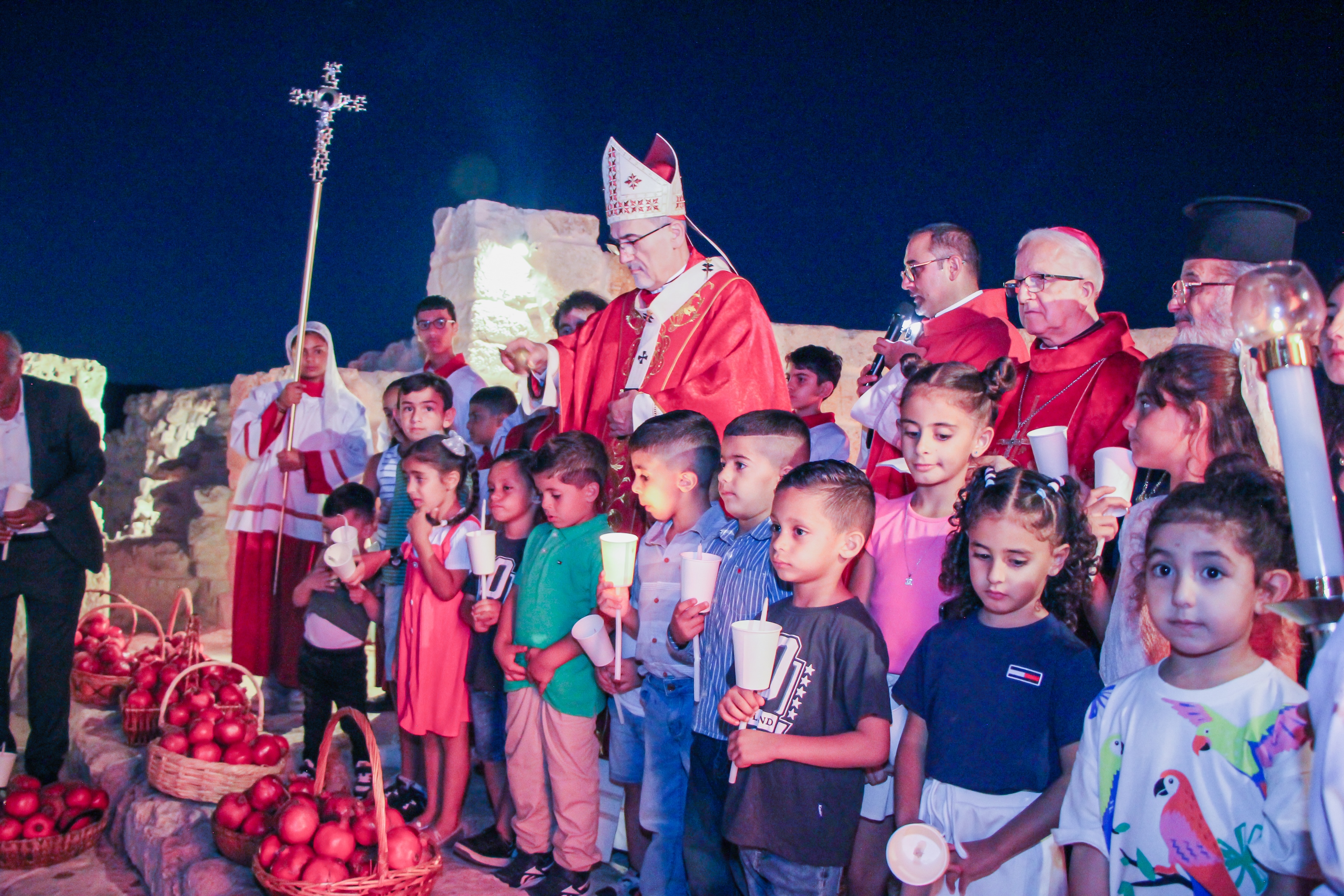
Cardinal Pierbattista Pizzaballa lights the flame at the historic St. George Church, locally known as Al-Khader, Sept. 13, 2026, at Christ the Redeemer Church in Taybeh, West Bank. | Credit: Emad Diab/ACI MENA
The celebration took place as Taybeh continues to face the repercussions of attacks by Israeli settlers, restrictions on movement and access to essential services (Palestinians living in the West Bank require Israeli permits to enter Jerusalem), declining employment opportunities, and continued emigration — all pressures that have placed additional strain on the town's residents.
Following the Mass, the faithful joined a candlelight procession through the streets of Taybeh to the historic St. George Church, known locally as Al-Khader. There, prayers were offered and pomegranates were blessed and distributed to participants before the traditional feast day flame was lit.
This storywas first published by ACI MENA, the Arabic-language sister service of EWTN News. It has been translated and adapted by EWTN News English.