The Holy Tunic will travel almost four miles from Argenteuil, France, to the pope's youth vigil at the Stade de France in Saint-Denis.
For the first time, a pope will witness an exposition of the Holy Tunic, the garment worn by Christ during his passion, which is preserved in the Basilica of Saint-Denis in Argenteuil, France.
The special relic is put on display during regular expositions every 50 years, as well as on extraordinary occasions — the most recent being in 2023 — but it has never before been brought before a pope.
Pope Leo XIV will be able to view it on Sept. 25, when it is displayed at the conclusion of the youth vigil at a soccer stadium in a suburb north of Paris, part of the packed schedule for his trip to France.
More than 80,000 French young people have registered for the prayer vigil at the Stade de France, and according to Father Guy-Emmanuel Cariot, former rector of the basilica of Argenteuil, Leo is the first pope to see the tunic since the time of St. Peter.
That may be an exaggeration, but it is true that there has never before been an extraordinary exposition of the relic during a papal journey and in the presence of a pontiff. That will happen during this trip, in part because only 3.7 miles separate the basilica of Argenteuil from the Stade de France.
The tunic will travel those nearly four miles under extremely tight security measures, made even stricter by memories of the theft of the tunic in 1983, when the relic disappeared for a couple of months. For that reason, the route the tunic will take is being kept confidential. It is known, however, that there will be surveillance both on the ground and from above to ensure that the transfer takes place discreetly and under optimal security conditions.
The tunic has been kept in Argenteuil for more than 1,200 years and is one of several relics of Christ's passion preserved in France. The Crown of Thorns is kept at Notre-Dame Cathedral in Paris, while the Holy Headcloth of Jesus is preserved in Cahors.
As for the Holy Tunic itself, it was mentioned in Gregory of Tours' sixth-century work "Liber in Gloria Martyrum Beatorum" ("The Glory of the Martyrs and the Blessed"). The book notes that Jesus' seamless tunic was kept in Galata, in a church dedicated to the holy archangels, about 120 miles from Constantinople. The seventh-century "Chronicle of Fredegar," however, locates the tunic in Zafad, not far from Jerusalem.
The tunic later came into the possession of the Byzantine Empress Irene, who gave it to Charlemagne in the year 800 on the occasion of his coronation as the first emperor of the Holy Roman Empire. Charlemagne in turn donated it to the monastery of Argenteuil, whose abbess was his daughter Theodrada. The "Charta Hugonis" of 1156 notes that the tunic had long been kept in the basilica of Argenteuil.
Over the centuries, the tunic was hidden to protect it from the Normans and later from the Huguenots. During the French Revolution, in order to save it from anticlerical persecution, Father Ozot, pastor of Argenteuil, had it cut into pieces and hidden. It was eventually reassembled, although some portions were lost.
Other pieces of the tunic are preserved elsewhere. One example is the so-called "Tunic of Trier" in Germany, which has appeared in historical records since 1072 and is believed to be one of the relics brought back from the Holy Land by St. Helena. However, scholars have been unable to determine its origin and age because of its poor state of preservation and the extensive repairs it has undergone over the centuries.
This story was first published by ACI Stampa, the Italian-language sister service of EWTN News. It has been translated and adapted by EWTN News English.
The fascinating story of where the Gospel writer's body lies today takes us back into history.
Sept. 21 marks the feast day of St. Matthew, also known as Levi, an apostle of Jesus and, according to tradition, the author of one of the four Gospels.
Surprisingly little is known for certain about Matthew's life, even though his Gospel is so crucial for the Church. The manner of Matthew's calling by Jesus is well known — Matthew was a Jew but worked as a tax collector for the Romans in Capernaum near the Sea of Galilee, making him a pariah among his own people. When Jesus called Matthew to follow him, Matthew gave up his presumably materialistic life as a tax collector to follow the Lord.
Jesus' calling of Matthew led some religious authorities of the Jewish community to wonder: "Why does your teacher eat with tax collectors and sinners?" To which Jesus responded: "I did not come to call the righteous but sinners."
The Catholic Encyclopedia notes, however, that no further reference is made to Matthew in the Gospels, except in the list of the apostles, and "of Matthew's subsequent career we have only inaccurate or legendary data." It appears though, according to a number of other ancient sources, that he evangelized for at least a decade and a half in Asia.
Matthew's earthly body is purported to lie in the crypt beneath the cathedral of Salerno, Italy. In the crypt, a bronze St. Matthew made by Michelangelo Naccherino in 1606 sits above the altar. The saint is shown writing the Gospel with a book resting on his left knee and a pen in his right hand. At his left side, an angel hands him an inkwell as he writes.
Alfano I, the archbishop of Salerno from 1058–1085, completed the crypt in 1081 and placed Matthew's body in the sepulcher. The renovation in the early 17th century was carried out by architects Domenico and his son Giulio Cesare Fontana.
According to legend, St. Matthew's intercession helped to protect the city in 1544 from the dreaded pirate Ariadeno Barbarossa, supreme commander of the Turkish military fleet, when a storm that had been prayed for by devotees to St. Matthew in Salerno blew Barbarossa's fleet away from the city.
Eastern Catholics and the Orthodox churches celebrate St. Matthew on Nov. 16 along with St. Fulvianus, a prince who is recorded in some traditions as converting from paganism after Matthew's martyrdom.
Pope Benedict said in 2006 that "in the figure of Matthew, the Gospels present to us a true and proper paradox: those who seem to be the farthest from holiness can even become a model of the acceptance of God's mercy and offer a glimpse of its marvelous effects in their own lives."
This story was first published on Sept. 21, 2023, and has been updated.
The pontiff will meet with authorities, interfaith leaders, prisoners, and workers, celebrate 10 public Masses, and hold three prayer vigils with young people.
A motto has been chosen for each of the countries he will visit in November.
According to the announcement, the pope will begin his journey by departing Rome on Nov. 6 at 7:50 a.m. Rome time and arriving at 4:30 p.m. local time the same day at the Carrasco/General Cesáreo L. Berisso International Airport in Uruguay. From there, he will travel to Montevideo, the capital of Uruguay.
Uruguay
Pope Leo XIV is set to be the first pope to visit Uruguay since St. John Paul II in 1988. He will remain there from Nov. 6–8.
At 5:30 p.m. local time on Nov. 6, Leo will attend an official welcome ceremony at the Plaza Independencia, Montevideo's largest public square. Following the ceremony, he will meet with and address authorities and the diplomatic corps.
At 6:15 p.m., the pope will pay a courtesy visit to the president of Uruguay, Yamandú Orsi, at his residence at the Edificio José Artigas.
Leo will then celebrate vespers at 7:10 p.m. with clergy and religious at the Metropolitan Cathedral of the Immaculate Conception and Sts. Philip and James.
The next day, Nov. 7, Leo is scheduled to travel from Montevideo to Paysandú in the morning. He will then celebrate Mass at the Parque París Londres at 10 a.m.
The pope will then return to Montevideo the same day for evening meetings with the Parish of Our Lady of Guadalupe and the Catholic University of Uruguay.
At 7 p.m., Leo will lead a prayer vigil at the Centenary Stadium, which hosted the first FIFA World Cup in 1930.
On Nov. 8, Leo's final day in Uruguay, he will celebrate Mass at the Cathedral Basilica of Florida at 10 a.m. before departing for Argentina at 3:30 p.m.
Argentina
Pope Leo XIV will be the first pope to visit Argentina since 1987. He will remain there from Nov. 8–11.
The pontiff will land at the Jorge Newbery Airpark at 4:30 p.m. After visiting a war monument and attending an official welcome ceremony, he will meet with Argentina's president, Javier Milei, in the evening and then address the country's civil leaders and diplomatic corps.
On Nov. 9, Leo will travel to Claypole in the morning to visit the Pequeño Cottolengo Don Orione de Claypole, Argentina's largest institution dedicated to caring for people with disabilities. He will then celebrate Mass at the Monumento de los Españoles at 11:30 a.m.
The pope will then meet in the afternoon with the work community at the Catholic University of Argentina and then with interfaith leaders at the Palacio San Martín.
At 6:45 p.m., Leo will celebrate vespers with the bishops and the synodal teams at the Metropolitan Cathedral of the Most Holy Trinity. He will have dinner with the bishops afterward.
On Nov. 10, the pope will travel to Córdoba to celebrate Mass at the Military Aviation School. He will then meet with clergy and religious at the Cathedral of Córdoba before traveling back to Buenos Aires for a youth vigil at 8:15 p.m.
On the morning of Nov. 11, Leo will celebrate his final Mass in Argentina at the Basilica of Our Lady of Luján. He will then depart Buenos Aires at 2 p.m. to arrive in Lima, Peru, at 5:30 p.m.
Peru
Returning to the land where he served for two decades as a missionary and a bishop, Leo will visit Peru from Nov. 11–17.
After landing in Lima on Nov. 11, the pope will meet in the evening with the president of Peru, Keiko Fujimori, and address the country's diplomatic corps.
He will meet in Lima on the morning of Nov. 12 with the bishops of Peru before leading midmorning prayer with clergy and religious at 10:20 a.m. at the Cathedral Basilica of Lima. Following the service, he will meet the faithful in the cathedral square and address them on the challenges of the Peruvian people.
In the evening, he will hold a prayer vigil with young people at the Estadio Monumental "U" in Lima before dinner with the bishops at the nunciature.
On Nov. 13 at 7:40 a.m., the pope will depart Lima for Chiclayo, where he served as diocesan bishop from 2015 to 2023. He is scheduled to arrive in Chiclayo at 9:10 a.m. and celebrate Mass near the Pampas de Pimentel at 10:30 a.m.
After a private visit to a chapel dedicated to St. Oscar Romero, Leo will meet in the evening with the synodal teams at the Shrine of Our Lady of Peace. Afterward, he will meet with the Santo Toribio de Mogrovejo Catholic University before having supper with priests of the Diocese of Chiclayo.
On Nov. 14 at 8 a.m., the pope will crown a statue of the Virgin Mary at the Cathedral of St. Mary in Chiclayo. He will then depart for Santa Cruz de Succhabamba to celebrate Mass there at 11 a.m. He will then return to Chiclayo that evening to lead a prayer service for the closing of the jubilee year of St. Turibius of Mogrovejo, who served as archbishop of Lima from 1579–1606.
On Nov. 15, Leo will travel from Chiclayo to Cusco. He will meet in the morning with the faithful at the Saqsaywaman National Park before leading the Angelus in the square of the Cusco Cathedral. In the afternoon, he will travel from Cusco to Pucallpa and meet with representatives of the Amazonian peoples. He will then celebrate Mass at the Villa Deportiva Regional Ucayali before traveling to the Callao Naval Air Base that evening.
On Nov. 16, the final day of his apostolic journey, Leo will visit a shelter run by nuns for elderly people in the morning before celebrating the final Mass of his trip at the Las Palmas Air Base.
He is scheduled to depart Callao Naval Air Base at 1:45 p.m. and arrive in Rome on Nov. 17 at 10:25 a.m. local time.
Coming from schools and parishes throughout Rome, the children will join the pontiff in the "One Million Children Praying the Rosary" campaign.
Between 700 and 1,000 children will pray a rosary for peace with Pope Leo XIV on Oct. 1 at the Lourdes Grotto in the Vatican Gardens, part of a prayer initiative promoted by Aid to the Church in Need.
Coming from schools and parishes throughout Rome, the children will join the pontiff in the "One Million Children Praying the Rosary" campaign organized by the pontifical foundation Aid to the Church in Need (ACN).
They will also be spiritually united with children, families, schools, and Christian communities around the world in an event marking the beginning of the global week during which the prayer initiative is observed.
During that week, any diocese, parish, religious community, school, or family anywhere in the world can participate. The week concludes on Oct. 7, the feast of Our Lady of the Rosary.
Inspired by the message of Fátima
The 2026 campaign is inspired by the message received by the children at Fátima: "In the end, my Immaculate Heart will triumph."
Cardinal Kurt Koch, president of ACN International and prefect of the Dicastery for Promoting Christian Unity, said in particular that "the Immaculate Heart of Mary represents a life completely open to the Holy Spirit and presents Mary as a model of faith, love, and prayer."
According to ACN, "the initiative takes on special significance at a time when millions of people are facing war, violence, persecution, poverty, and uncertainty." For this reason, the prayer campaign "seeks to be a simple yet universal sign of trust and hope: children of different languages, cultures, and countries united in the same prayer for peace."
The origins: Padre Pio and Venezuela 20 years ago
The "One Million Children Praying the Rosary" initiative began in Venezuela in 2005. Today it has become a worldwide prayer movement involving children, families, parishes, schools, and Church groups on every continent, inspired by the words of St. Pio of Pietrelcina, who said that "when 1 million children pray the rosary, the world will change."
ACN said the invitation is not limited to children and that praying an entire rosary is not required: "Even a single decade prayed with faith can become part of this global chain of prayer."
The pontifical foundation also provides prayer materials in several languages and asks participants to register so that the network of children joining the prayer in different countries can be displayed on a map.
The initiative is organized in collaboration with the Shrine of Fátima, the Pope's Worldwide Prayer Network, and the World Apostolate of Fátima. This year, World Rosary Day is also joining the campaign for the first time.
Bolivia, Sudan, Zimbabwe, and Paraguay
The prayers of Pope Leo XIV and the children of Rome will be joined by prayer gatherings planned in locations around the world, "from the Bolivian Amazon to parishes in Sudan, Zimbabwe, Mozambique, Sierra Leone, and many other places affected by war, poverty, or instability," ACN said.
In war-torn Sudan, Father Franck Mandozi of the Kosti Pastoral Region confirmed that children from several parishes and schools will take part. From the Tsimané Indigenous community in the Bolivian Amazon, Sister Patricia Alejandra Botello López said they will pray in both their local language and Spanish.
Children from St. Christopher Parish in the Archdiocese of Bulawayo, Zimbabwe, will gather on Sunday, Oct. 4, to pray with their pastor, Father Charles Mafurutu, who in the following weeks will travel to other communities.
In Paraguay, Radio Pa'i Puku plans to promote the initiative through its broadcasts and will carry a live transmission of the rosary prayed by children at St. Eugene de Mazenod Parish.
This story was first published by ACI Prensa, the Spanish-language sister service of EWTN News. It has been translated and adapted by EWTN News English.
A diocesan bishop will usually undertake a lengthy investigation and administrative process when responding to misconduct or abuse allegations.
News headlines in recent years have periodically reported on Catholic priests accused of various types of misconduct, including financial crimes and sexual abuse, among other allegations.
Much of the public will only be aware of the beginning and the end of such controversies — when a clergyman is accused of a misdeed and when he is ultimately either found guilty of it or cleared of any wrongdoing.
But U.S. dioceses have complex and at times lengthy ways of addressing such allegations — processes that ensure both a full treatment of the alleged misconduct and the rights of priests to be presumed innocent until proven otherwise.
'The smoke of truth'
Monsignor William King, JCD, serves as an assistant professor of canon law at The Catholic University of America. His academic expertise includes the study of both canon and civil law as well as the study of "temporal goods" such as Church finance and corporate structure.
King told EWTN News that bishops who receive allegations of wrongdoing against priests must first determine if there is sufficient credibility to the allegations, a principle he said in canon law is known as "fumus veritatis," or "the smoke of truth."
"It's not proof [of the allegations] in any way," King said, "but if there's sufficient suspicion that it might be truth, then the bishop would accept that allegation" and launch what is known as a "prior investigation" meant to gather facts.
Amid the start of the process, King said, a bishop may or may not remove the priest from ministry if he "felt that it was necessary for any of several reasons." After that he would appoint an investigator, who may or may not be a priest, to lead the inquiry.
"That person is bound to secrecy so as to protect the reputation of the priest, and any of the accusers and witnesses," King said.
Such an investigator has "pretty broad powers" to ask questions of, and seek evidence from, those connected to the case. After that process, he or she would bring the results to the bishop.
The prelate would likely then speak to his canon law experts. He may also talk with mental health experts and could potentially order the priest to submit to a psychological assessment. "That's not uncommon, and depending on the nature of the allegations, it might be appropriate," King said.
After the fact-finding and consultation process, the bishop will decide whether or not to move forward with a criminal or penal process. In some cases, the ordinary may opt instead for a "penal remedy."
"It could be a warning or rebuke, or a 'penal precept' — a formal document that prohibits the priest from undertaking certain actions or doing certain things," King said. A precept, he said, can be used even in cases where no crime is committed, to ensure that the actions that led to the controversy are not repeated.
If a penal process is instigated, the preferred method for most bishops is to convene a tribunal; in some cases, a prelate may opt for a less formal "administrative process." Either option involves the calling of witnesses, testimony from both the accuser and the accused, and the collection of additional evidence.
Tribunals are usually overseen by three judges, King said; they must be priests, and "they would typically be brought in from other dioceses."
Tribunals are meant to determine both whether a priest committed a crime, King said, as well as whether or not the crime itself is "fully imputable" to the priest.
Sexual abuse allegations: Rome must be notified
The process is largely the same whether the allegations involve claims of administrative or professional misconduct or if they involve accusations of sexual abuse, King said.
However, allegations against a priest of abuse of a minor are "reserved to the Holy See," he said. In those cases, following the results of a preliminary investigation, a bishop is obligated to send a summary of the case, including the evidence, to the Dicastery for the Doctrine of the Faith, specifically its special disciplinary section.
"[The dicastery] will review that and instruct the bishop as to what type of process should be followed — administrative or judicial," King said.
"When the bishop sends the initial dossier or file over, most of the time he will make a recommendation" as to which process should be followed, King said. A bishop in certain cases may recommend "no process, or another remedy or way of addressing the situation."
The dicastery "will take that into consideration. But ultimately, they make the determination, and the bishop is bound to follow their direction," King said.
The Vatican can approve or reject a diocese's decision if the matter is reserved to Rome, King said. In all other cases, it is resolved domestically either via administrative process or tribunal.
A priest, King said, can appeal a diocese's decision to the Roman Rota if he wishes.
The Global Rosary for Peace will take place Oct. 22, the feast of St. John Paul II.
Catholics around the world are invited to join in prayer for the Global Rosary for Peace taking place on Oct. 22, the feast of St. John Paul II.
The event is an international prayer initiative that aims to bring together families, parishes, schools, religious communities, and individuals from around the world in response to Pope Leo XIV's call for the Church to pray the rosary for peace.
The Global Rosary for Peace is organized by Holy Cross Family Ministries and is part of its efforts to strengthen family prayer and encourage the faithful to pray the rosary. The initiative received the pope's blessing last year and over 67,000 people prayed the rosary live during the first global event.
Father Fred Jenga, CSC, president of Holy Cross Family Ministries (HCFM), told EWTN News that the first Global Rosary for Peace was created due to several global crises taking place and the need for prayer.
"There is always some kind of global crisis that is going on that really calls us to pray more," he said. "Last year it was all the conflicts that were everywhere. Some of them have sort of died down a little bit but we still have more going on as well in this very year that we are in. So we are just picking up from where we left off. So that we invite people again to pray more."
Currently, over 95,000 people have signed up to take part in this year's live, global rosary.
HCFM was founded by Venerable Patrick Peyton, an Irish-born Catholic priest who was known as the "rosary priest" and for his famous phrase "a family that prays together stays together."
With this at the core of its ministry, HCFM desires to "bring God back into the life of families because we know when God is at the center of the families, especially through prayer, regular prayer, God changes the chemistry in those families because God is love, God is kindness," Jenga explained.
"God created our families. And they will be restless and weak and all over the place until they allow [God] to be the center," he said.
Jenga also spoke about the importance of praying the rosary specifically.
"When we pray the rosary on a family level, the heart of the rosary is the mysteries of the rosary, and those mysteries speak to every human season that you can think about," he shared. "We go through joy, we go through sorrow, we go through mission, we go through celebration or glory. So there you have a set of mysteries that you can pray with through any season that you're talking about."
The priest also pointed out that when we look at the saints, nearly all of them share two characteristics: a love for the Eucharist and a love for the rosary.
"So, in their path to sanctity, these are the two rails that they ran on. And if we also desire the same kind of sanctity and strength in our families, right there is really a formula for us that we can be able to employ to help ourselves as a family and also to help ourselves as individuals," Jenga said.
He added: "We're at a time of need in our world right now. There are too many conflicts that are going on and we need a favor for global peace, and the rosary is one of those prayers that we're turning to because even throughout history, every time there was a global crisis, the Church, even our Blessed Mother, if she appeared, she asked us to pray the rosary."
For those who participate in the Global Rosary for Peace, Jenga said he hopes they are "able to renew their belief in the power of prayer."
"Secondly, this can be a jumping-off point for them to get started, in smaller ways, praying in their own families and for the needs in their families, but also keep praying for our world at this time."
In his Sunday Angelus catechesis, the pontiff reflected on the parable of the vineyard workers, saying God's generosity overturns human calculations of merit and reward.
Pope Leo XIV on Sunday appealed for greater international assistance to Somalia, where violence and extreme weather are worsening an already severe humanitarian crisis, particularly for women and children.
After reciting the Angelus on Sept. 20, the pope said: "With great concern, I am following the humanitarian crisis unfolding in certain areas of Somalia, where acts of violence and extreme weather events are exacerbating the already precarious living conditions of the population, particularly of women and children."
"I hope for the generous involvement of the international community, so that our brothers and sisters may not lack the necessary assistance," he added.
According to UNICEF, about 4.8 million people in Somalia need urgent humanitarian assistance, including some 3 million children. The U.N. agency has also warned that about 1.9 million children are suffering from acute malnutrition, including nearly half a million experiencing severe acute malnutrition.
The pope also used his remarks after the Angelus to emphasize the importance of historical memory.
He sent his blessing to residents of Pescantina, near Verona, who gathered Sunday at a monument honoring those who were deported and held prisoner during World War II.
Leo said the commemoration should serve "to emphasize that we must not forget, but rather learn from history so as not to repeat the mistakes of the past."
God's plans are greater than human calculations
Before the Angelus, Pope Leo XIV reflected on the day's Gospel account of the laborers called to work in the vineyard, some for the entire day, others for only a few hours and still others near the end of the day.
Drawing on the prophet Isaiah, Leo said that God's ways exceed human expectations.
"God's plans are infinitely greater — and, let us say, more 'human'— than those that we men and women, marked by sin, can conceive or bring to fruition," he said.
The pope recalled Isaiah's invitation to turn away from sin and return to the Lord, saying "the prophet's call, which is more relevant than ever, is that we abandon our warped ways and return to the Lord, who is mercy and forgiveness."
Turning to the Gospel parable, Leo said its central moment comes when the vineyard owner pays the workers. Although he keeps the agreement made with those hired first, the owner also gives the same payment to those who arrived later.
"Jesus' parables describe the newness of what God has in store for us; yet they also reveal the resistance we generally offer to a more generous justice and greater love," the pope said.
Leo drew particular attention to the landowner's instruction that the workers be paid "beginning with the last and then going to the first."
"The negative reaction of those who had worked all day, then, could easily have been avoided; it was intentional, however, because the revelation of God's goodness is for everyone, not just for a few," he said.
The pope said the parable also challenges those who see themselves as having earned their place or accomplishments.
"God has different ways and fresh ideas even for those who consider themselves to be first and believe they have earned what they have, that they deserved the results they have achieved," he said.
Leo concluded that God's mercy moves beyond calculations based solely on merit and reward.
"Instead, we all gain joy, wisdom and a better future when the law of love interrupts that of calculation, when the experience of mercy broadens that of merit, and when the gift of peace suspends rivalries and brings us closer together in gratitude," he said.
This story was first published in two parts by ACI Prensa, the Spanish-language sister service of EWTN News. It has been translated and adapted by EWTN News English.
A prayer pilgrimage from Byblos to Annaya aims to offer solidarity and hope to Christians in southern Lebanon.
In southern Lebanon, the story of Christian villages is not defined only by the destruction and isolation left by war but also by a deeply rooted presence and a determination to remain.
Rmeich, Ain Ebel, Debel, and other border towns continue to be home to families who have chosen not to leave their land despite the dangers and hardships they face.
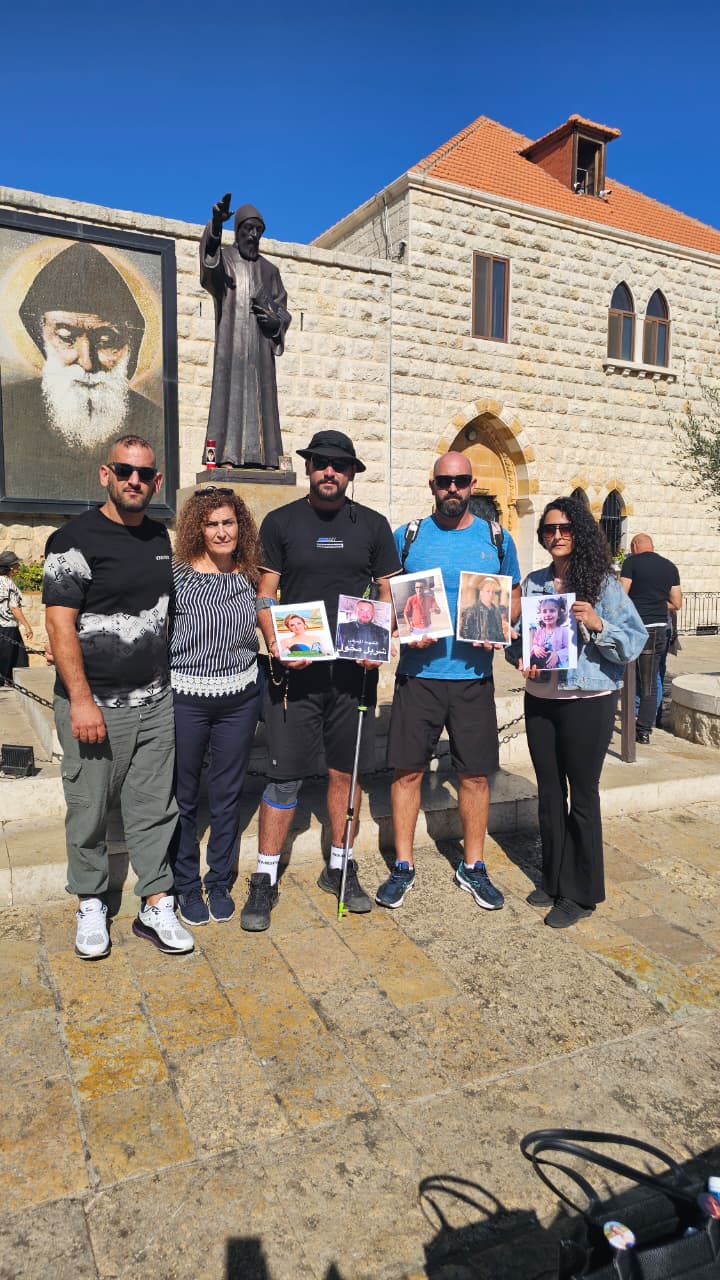
In support of these communities, a prayer walk will take place Sept. 26 from Byblos to Annaya, home to the shrine of St. Charbel, carrying the intentions of Christians who continue to remain in the south, turning the journey into an act of solidarity and hope.
Anthony Jarjour, a native of Rmeich and organizer of the initiative, told ACI MENA, the Arabic-language sister service of EWTN News, that "the goal of the walk is to unite our prayers and offer them for the Christians who remain steadfast in the south."
"Sometimes we feel that the state has abandoned us and that some people are unaware that families are still living there, in the border villages, safeguarding the country's borders simply through their continued presence," he said.
This is not the first time Jarjour has organized a pilgrimage of this kind. Last year, he walked approximately 112 miles from Rmeich to Annaya, offering the journey for those who had died in traffic accidents.
Anthony Jarjour and fellow pilgrims at the St. Charbel Shrine in Lebanon in 2026. | Credit: Photo courtesy of Anthony Jarjour
This year, because of road closures, he will begin his own journey Tuesday, Sept. 22, from Tyre, covering approximately 93 miles before reaching Annaya on Saturday to take part in the conclusion of the pilgrimage.
Explaining why Annaya was chosen as the final destination, Jarjour said: "I have a personal experience with St. Charbel, and I felt his presence during the previous walk. I believe he always protects us through Our Lord Jesus. As for Annaya, it needs no introduction."
He said the pilgrimage is being organized in cooperation with several organizations and local authorities, including the Monastery of St. Maron in Annaya and the municipalities of Byblos and Annaya. Lebanon's Civil Defense and Red Cross will provide support and assistance along the route.
Jarjour has served his hometown of Rmeich and other communities along the border through volunteer work with the Red Cross, Caritas, and Civil Defense, taking part in field operations and helping residents during difficult circumstances.
However, he wanted to add a spiritual dimension to that service. Through the pilgrimage, he seeks to turn every step into a prayer for peace and for those who continue to remain in southern Lebanon.
This storywas first published by ACI MENA, the Arabic-language sister service of EWTN News. It has been translated and adapted by EWTN News English.
While the Catholic Church is often viewed from a Latin rite prism, it also includes 23 Eastern Churches that are in full communion as part of the one Catholic fold.
When the Catholic Church is mentioned, many think exclusively of the Latin Church, to which the vast majority of the world's Catholics belong. However, the Catholic Church is actually composed of 24 "sui iuris" or autonomous Churches: the Latin Church and 23 Eastern Catholic Churches, which are heirs to the ancient Christian traditions of the Middle East, Eastern Europe, Africa, and India.
These Churches have preserved their own liturgical languages, spiritualities, disciplines, and forms of ecclesiastical organization. Some celebrate the liturgy in Arabic, Syriac, Ge'ez, Coptic, Armenian, or Church Slavonic. Others maintain traditions that date back to the early communities founded by the apostles.
All of them are in full communion with the pope, the successor of St. Peter and head of the worldwide Catholic Church.
One Church, many traditions
The Eastern Catholic Churches stem from five major liturgical traditions: Alexandrian, Antiochene, Armenian, Chaldean, and Byzantine. Each possesses its own theological, spiritual, and cultural heritage, developed over centuries within vastly different historical contexts.
Among them are well-known Churches such as the Maronite Church of Lebanon, the Ukrainian Greek Catholic Church, the Syro-Malabar Church of India, and the Coptic Catholic Church of Egypt. Many exist as minorities in countries where Islam or Orthodox Churches predominate, and several have endured persecution, war, or mass emigration.
Governance through synods
One of the most distinctive characteristics of these Churches is their internal organization. Unlike the practice often found in the Latin Church, many Eastern Churches operate through a robust synodal system.
Each Church is structured around a synod of bishops, which serves as the primary governing body. This body legislates on numerous aspects of ecclesial life, makes pastoral decisions, and participates in the election of new bishops. In patriarchal and major archiepiscopal Churches, the synod even elects the patriarch or major archbishop, an election that must subsequently be recognized or confirmed in accordance with norms established by Rome.
Pope Leo XIV has recently reformed the canon law governing Eastern patriarchal Churches to address a legal gap that hindered the resolution of internal conflicts. Through a motu proprio the pontiff granted greater autonomy to the bishops, enabling them to convene a synod independently of the patriarch and to seek his removal with a two-thirds majority vote, a measure that remains subject to the pope's final approval.
The 23 Eastern Churches
Alexandrian tradition
Coptic Catholic Church
The Coptic Catholic Church has its roots in the ancient Church of Alexandria, founded according to tradition by St. Mark the Evangelist. It is primarily present in Egypt and uses the Alexandrian rite in the Coptic and Arabic languages.
It entered into full communion with Rome in the 18th century and is headed by the Coptic patriarch of Alexandria. Interestingly, the Coptic language used in the liturgy represents the final historical stage of the language of ancient pharaonic Egypt, making this Church the direct heir to a cultural tradition spanning more than 3,000 years.
Pope Leo XIV with representatives of the Coptic Church in St. Peter's Square. | Credit: Vatican Media
Ethiopian Catholic Church
The Ethiopian Catholic Church arose from communities of the Ge'ez tradition that reestablished full communion with the Holy See. It is present primarily in Ethiopia and celebrates the liturgy according to the Ethiopian Alexandrian rite, which is characterized by strong biblical symbolism and numerous distinctive traditions.
It primarily uses the Ge'ez language in its liturgy and is distinguished by the integration of African cultural elements into ecclesial life. An interesting feature is that many of its celebrations include traditional instruments such as drums and sistrums, a practice uncommon in other Catholic Churches.
Eritrean Catholic Church
Established as a "sui iuris" metropolitan church in 2015 by Pope Francis, the Eritrean Catholic Church brings together Catholics of the Alexandrian tradition in Eritrea. It shares the use of the Ge'ez rite with the Ethiopian Church, although it possesses its own hierarchy.
It represents a significant portion of the country's Catholics and is notable for the vitality of its vocations and its strong Eastern liturgical identity. It is one of the youngest Eastern Catholic Churches from an institutional standpoint, even though its Christian roots date back to the early centuries.
Armenian Tradition
Armenian Catholic Church
The Armenian Catholic Church follows the liturgical and spiritual tradition of the Armenian people, the first kingdom to officially adopt Christianity in the year 301. It gradually entered into communion with Rome starting in the Middle Ages and is currently led by the patriarch of Cilicia of the Armenians.
Its liturgy, traditionally celebrated in Classical Armenian, preserves unique elements derived from ancient Armenian traditions. A notable feature is the use of a curtain that is drawn and opened at specific moments during the liturgy, a custom inherited from early Christianity.
Antiochene Tradition (West Syriac)
Maronite Church
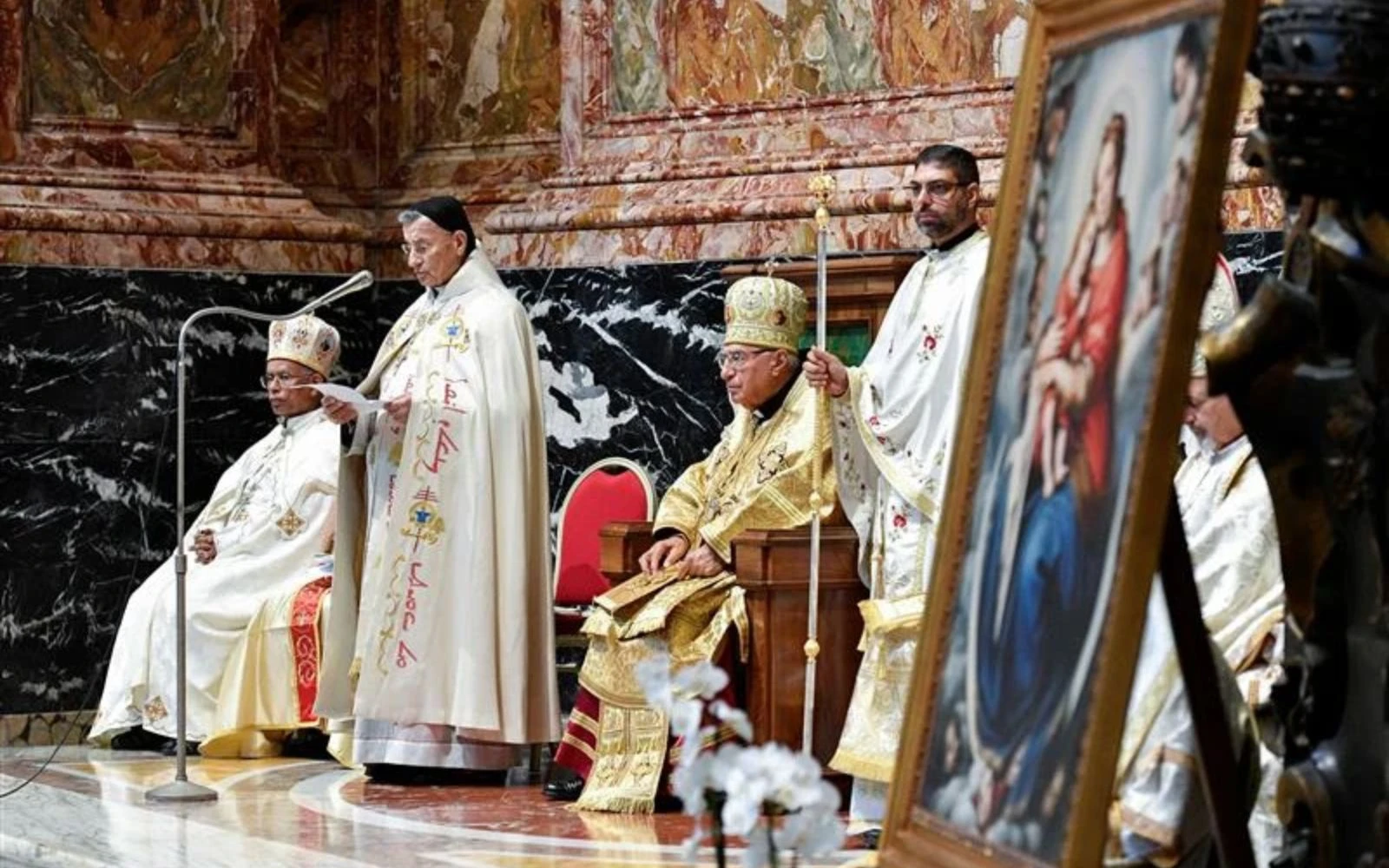
The Maronite Church is the only Eastern Catholic Church that has never broken communion with Rome. Its origins trace back to the communities gathered around St. Maron in Syria and Lebanon.
It is headed by the Maronite patriarch of Antioch and follows the West Antiochene rite, retaining the liturgical use of Syriac alongside Arabic and other modern languages. Many liturgical texts contain words in Aramaic, the language spoken by Jesus, giving its celebrations a particularly evocative character.
Lebanese Cardinal Béchara Boutros Raï, leader of the Maronite Catholic Church, delivers a homily during the Synod on Synodality on Oct. 9, 2023. | Credit: Vatican Media
Syriac Catholic Church
The Syriac Catholic Church originated from groups within the Syriac Orthodox Church that entered into communion with Rome during the 17th and 18th centuries. It preserves the spiritual and liturgical heritage of the ancient Syriac tradition of Antioch.
It is headed by the patriarch of Antioch of the Syriacs and celebrates the liturgy in West Syriac and in the vernacular languages ??of its faithful. Its hymns and prayers retain very ancient expressions of Semitic Christianity that have scarcely changed since the early centuries.
Syro-Malankara Catholic Church
The Syro-Malankara Catholic Church traces its origins to the Christian community of Kerala, India, which is historically linked to the West Syriac tradition. In 1930, a group led by Archbishop Geevarghese Mar Ivanios entered into communion with Rome.
Today, it is a major archiepiscopal church that combines the Antiochene liturgical heritage with Indian cultural traditions. During certain important celebrations, the faithful participate in processions featuring ceremonial umbrellas and floral decorations characteristic of Indian culture.
Chaldean tradition (East Syriac)
Chaldean Catholic Church
The Chaldean Catholic Church originates from the ancient Church of the East and has its primary historical center in Mesopotamia, particularly in present-day Iraq. It entered into communion with Rome during the 16th and 17th centuries and is led by the patriarch of Babylon of the Chaldeans.
It employs the Chaldean rite and preserves the liturgical use of Eastern Aramaic, a language closely related to the one spoken by Jesus. Its communities maintain some of the oldest Christian traditions in the world, in territories evangelized as early as the first centuries.
Syro-Malabar Catholic Church
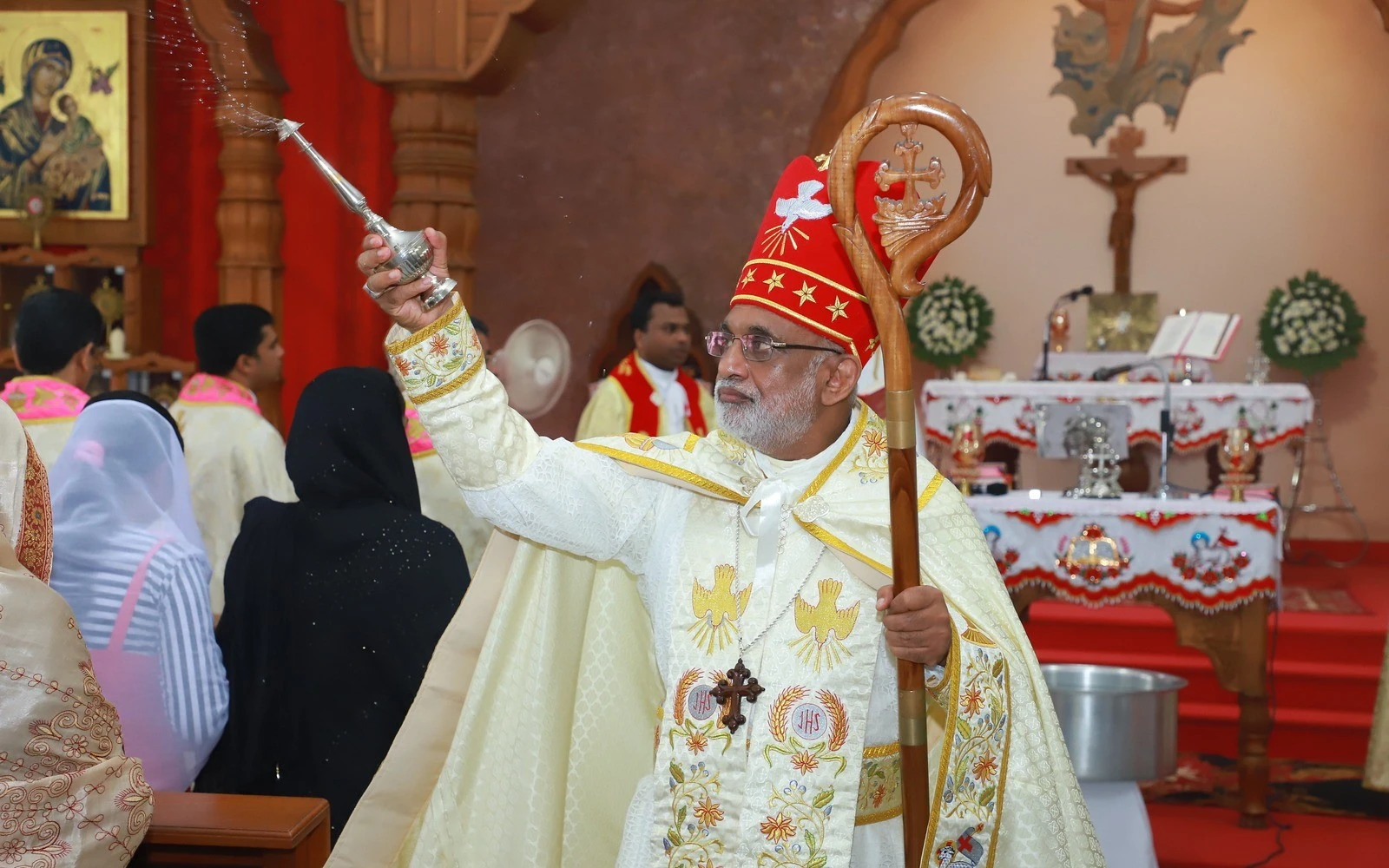
The Syro-Malabar Catholic Church is one of the largest Eastern Catholic Churches. It traces its roots to the so-called St. Thomas Christians of India, who, according to tradition, were evangelized by the apostle.
It follows the East Syriac liturgical tradition and has been raised to the rank of a major archiepiscopal church. It currently has millions of faithful, both in India and in the diaspora. It is the second-largest Eastern Catholic Church in the world, surpassed only by the Ukrainian Greek Catholic Church.
Major Archbishop Raphael Thattil of the Syro-Malabar Church. | Credit: Syro-Malabar Church
Byzantine tradition
Albanian Catholic Church
The Albanian Catholic Church of the Byzantine rite is a small Eastern Catholic Church found primarily in Albania. It arose from communities that adopted the Byzantine tradition while maintaining communion with Rome.
Although small in number, it stands as an important testament to the religious diversity of the Balkans. Its history was marked by severe religious persecution under the Albanian communist regime, one of the harshest of the 20th century.
Belarusian Catholic Church
The Belarusian Catholic Church follows the Slavic Byzantine tradition and traces its origins to the Union of Brest of 1596. Over the centuries, it endured persecution and long periods of institutional disappearance.
Today, it exists primarily in small communities both within and outside Belarus. For decades, it survived mainly thanks to groups of emigrants scattered across Europe and the Americas.
Byzantine-Slavic Rite Catholics in Bulgaria
The Byzantine-Slavic Rite Catholic community in Bulgaria emerged in the 19th century, when a group of Bulgarian Christians sought communion with Rome while retaining the Byzantine-Slavic liturgical and spiritual tradition. A pivotal moment occurred in 1861 with the reception of Archimandrite Joseph Sokolsky into the Catholic Church and his episcopal consecration by Pope Pius IX.
Today, Byzantine-Slavic Rite Catholics in Bulgaria comprise the Eparchy of St. John XXIII of Sofia, established in 2019 when the former apostolic exarchate was raised to the rank of eparchy. They preserve the Byzantine-Slavic liturgical tradition, celebrating the Divine Liturgy primarily in Bulgarian and Church Slavonic.
At the same time, the Catholic Church in Bulgaria also includes the Latin dioceses of Sofia and Plovdiv-Nikópolis. Thus, Bulgaria is a particularly interesting example of the coexistence of Latin and Byzantine-Slavic traditions within the same jurisdiction.
Greek Catholic Church
The Greek Catholic Church consists of communities of the Byzantine tradition located in Greece that are historically linked to communion with Rome. It preserves the Liturgy of St. John Chrysostom and other forms characteristic of the Byzantine heritage.
Situated in a country where the vast majority of Christians belong to the Orthodox Church, it constitutes a small but significant minority.
Hungarian Greek Catholic Church
The Hungarian Greek Catholic Church arose from Byzantine-rite communities established in the Kingdom of Hungary. It uses Hungarian in its liturgy and was elevated to the rank of a metropolitan "sui iuris"Church in 2015.
It was one of the first Eastern Churches to widely introduce a modern language, Hungarian, into its liturgical celebrations.
Italo-Albanian Church
The Italo-Albanian Church brings together communities of Albanian origin established in southern Italy and Sicily between the 15th and 16th centuries. It faithfully preserves the Byzantine tradition and has never lost communion with Rome.
The Monastery of Grottaferrata, founded in 1004 near Rome, remains the only territorial Byzantine monastery in Italy today.
Macedonian Greek Catholic Church
The Macedonian Greek Catholic Church is composed of the Byzantine-rite Catholics of North Macedonia. It originated from movements seeking union with Rome during the 19th and 20th centuries. It is one of the smallest Eastern Catholic Churches.
Melkite Greek Catholic Church
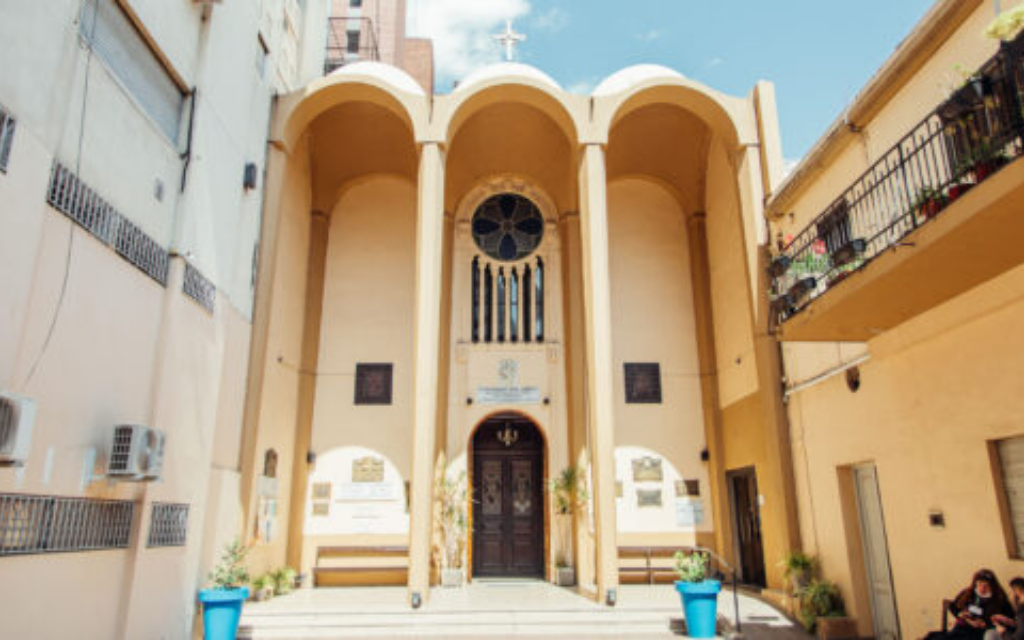
The Melkite Greek Catholic Church originated in 1724 following a schism within the Patriarchate of Antioch. It has a significant presence around the world, including in Lebanon, Syria, Brazil, Argentina, Israel, and Palestine.
Its patriarch holds the title of Melkite patriarch of Antioch, Alexandria, and Jerusalem. It is the only Catholic Church whose patriarch simultaneously holds these three great historical patriarchal titles of the East.
St. George Melkite Greek Catholic Cathedral in Córdoba, Argentina. | Credit: Córdoba Municipal Tourism
Romanian Greek Catholic Church
The Romanian Greek Catholic Church arose through the union of part of the Romanian Orthodox Church with Rome in the late 17th century. It suffered severe persecution under the communist regime, which declared it illegal shortly after coming to power in 1948 until its demise in 1989. Seven of its bishops, who died during the communist persecution, were beatified by Pope Francis in 2019.
Russian Greek Catholic Church
This Church of the Byzantine Rite consists of small communities that preserve the Russian liturgical tradition in communion with the Holy See. It originated in the early 20th century and endured terrible Soviet persecution. Currently, it lacks a fully developed hierarchy, and many of its faithful live in the diaspora.
Ruthenian Church
The Ruthenian Church has its roots in the Union of Uzhhorod of 1646 and is historically linked to the peoples of the Carpathians. It is present primarily in Slovakia, Ukraine, and the United States. In North America, it developed such a strong distinct identity that it has its own metropolitan see in Pittsburgh.
Slovak Greek Catholic Church
The Slovak Greek Catholic Church shares its origins with the Ruthenian tradition and was restored following the communist persecutions of the 20th century.
In 2008, it was elevated to the rank of a metropolitan "sui iuris" church. Among its best-known martyrs are Bishops Pavel Peter Gojdic and Vasil Hopko, canonized for their fidelity during the communist persecution.
Ukrainian Greek Catholic Church
The Ukrainian Greek Catholic Church is the largest of all the Eastern Catholic Churches. It originated with the Union of Brest in 1596 and endured intense persecution during the Soviet era.
It is led by a major archbishop based in Kyiv and has millions of faithful worldwide. For more than 40 years of communist persecution, it was the largest underground Catholic Church in the world.
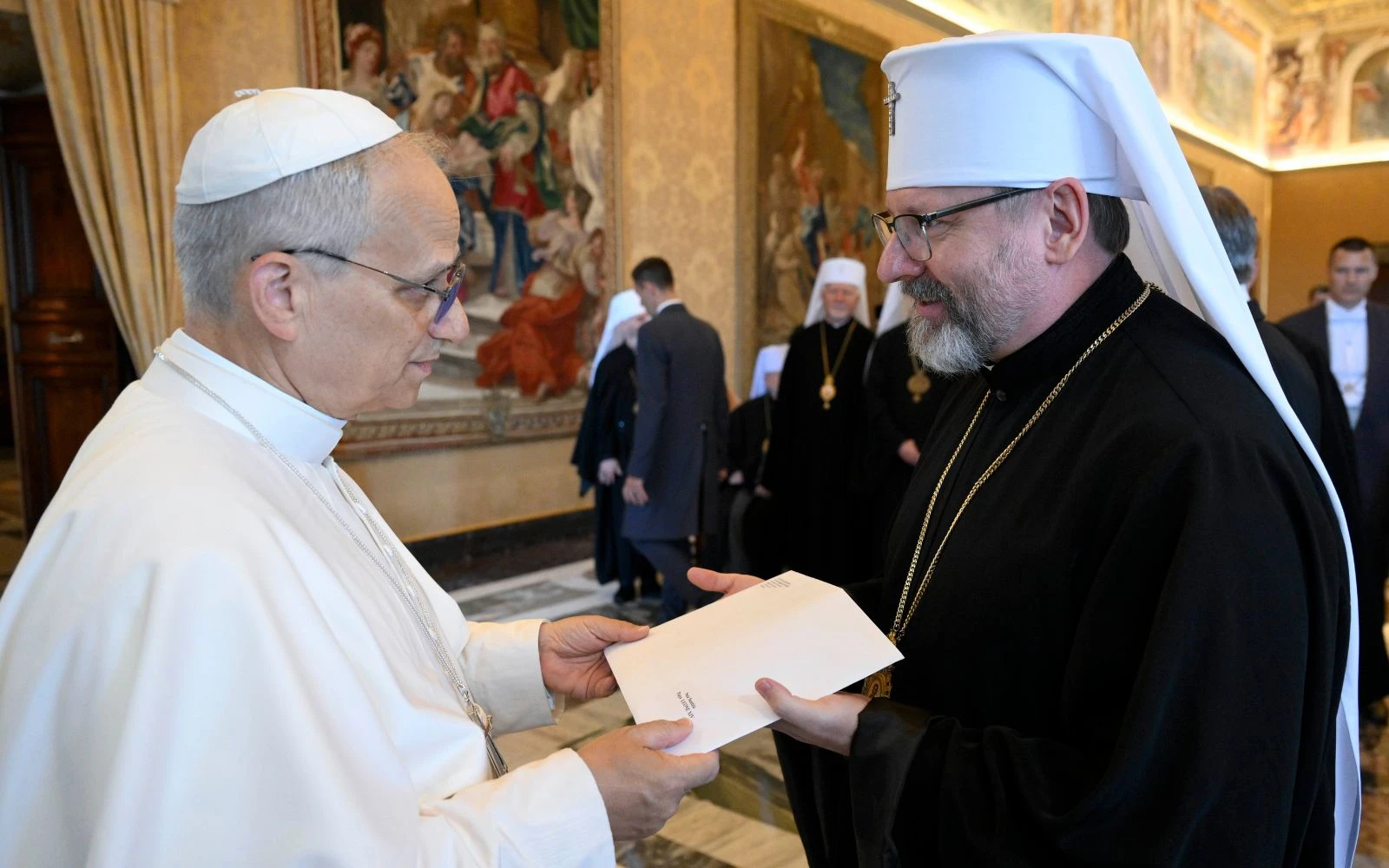
Pope Leo XIV greets Sviatoslav Shevchuk, primate of the Ukrainian Greek Catholic Church. | Credit: Vatican Media
Croatian and Serbian Greek Catholic Church (Eparchy of Križevci)
The Eparchy of Križevci brings together Catholics of the Byzantine tradition from Croatia, Serbia, and other territories of the former Yugoslavia. Established in 1777, it serves the faithful of diverse ethnic and linguistic backgrounds.
Services in its parishes are celebrated in Croatian, Church Slavonic, Ruthenian, and other local languages, reflecting the cultural diversity of the Balkans.
This story was first published by ACI Prensa, the Spanish-language sister service of EWTN News. It has been translated and adapted by EWTN News English.
The Baltimore archbishop gave the keynote address to the Council of Major Superiors of Women Religious meeting in Missouri.
Baltimore Archbishop William Lori this week praised an assembly of women religious major superiors for their witness of "evangelical poverty," with the prelate noting the outsized influence that women religious have had on American society over the past 250 years.
"You and those who came before you have taught our children, tended to the sick, welcomed immigrants, accompanied the dying, consoled the brokenhearted, and proclaimed Christ where no one else was willing to go," the archbishop told the major superiors on Sept. 18 in Florissant, Missouri.
"For that, the Church gives thanks. But gratitude alone is not enough. The Church also looks to you with hope," he said.
The archbishop spoke at the 2026 National Assembly of the Council of Major Superiors of Women Religious, the theme of which was: "250 Years of Freedom: Daughters of the Church from One Generation to the Next."
The council comprises major superiors and vicars from 112 religious communities around the U.S. The group describes its national assembly as "the springboard for collaboration, participation, and dialogue among members" which "promotes unity among the major superiors that gives witness to the joy of religious life."
Addressing the gathering as the keynote speaker, Lori acknowledged the assembly's recognition of the 250th anniversary of the founding of the United States.
The U.S. has been instrumental in advancing religious freedom and human dignity across the world, the archbishop argued. He noted that most histories of the founding of the U.S. focus on the Founding Fathers such as George Washington, Thomas Jefferson and others.
But "the American experiment would have looked very different" without the contributions of "thousands and thousands of women religious," he said.
"Who welcomed wave after wave of immigrants? Who cared for the victims of epidemics when others fled? Who taught generations of children not simply arithmetic and grammar, but honesty, sacrifice, discipline, and love of God?" he said.
Women religious "changed the nation because they first allowed Christ to change them," the archbishop said. He noted the "paradox" in which those who take vows of poverty "enriched countless communities" and those who "renounced worldly ambition" often "exercised the greatest influence upon society."
"The world struggles to understand this paradox," Lori said. "The Gospel does not."
Women religious have historically both upheld the ideals of America while challenging it when it "falls short of the Gospel," Lori said.
He cited the witness of St. Frances Xavier Cabrini's "evangelical poverty" as she carried out the founding of schools, hospitals and orphanages around the world.
And he further pointed to the work of Servant of God Sister Mary Thea Bowman, praising her for her "profoundly Catholic way" of confronting racism while evangelizing about the love of Christ.
Urging the women religious to pursue "an ever-new embrace of the heart of your vocation," Lori told the assembly: "The world needs women who have been seized by Christ."
"It needs women whose lives bear unmistakable witness to the truth that God is real, that holiness is possible, that sacrifice is fruitful, and that love poured out in communion with Christ can transform the world," he said.