With Speaker of the House Mike Johnson by his side, President Donald Trump speaks to the press following a House Republican meeting at the U.S. Capitol on May 20, 2025, in Washington, D.C. / Credit: Tasos Katopodis/Getty ImagesWashington, D.C. Newsroom, May 20, 2025 / 18:28 pm (CNA).While speaking to reporters on Capitol Hill on Tuesday, President Donald Trump said he likes Pope Leo XIV and looks forward to meeting with the pope's elder brother, Louis Prevost, at the White House."I like the pope and I like the pope's brother," Trump told reporters after meeting with House Republicans in an attempt to rally support behind a budget reconciliation bill.Trump noted that the pope's brother Louis "is a major MAGA fan," alluding to the "Make America Great Again" campaign slogan."I look forward to getting him to the White House," Trump said. "I want to shake his hand. I want to give him a big hug."??PRESIDENT TRUMP: I like the Pope, and I like the Pope's brother. You know he's a major ...
With Speaker of the House Mike Johnson by his side, President Donald Trump speaks to the press following a House Republican meeting at the U.S. Capitol on May 20, 2025, in Washington, D.C. / Credit: Tasos Katopodis/Getty Images
Washington, D.C. Newsroom, May 20, 2025 / 18:28 pm (CNA).
While speaking to reporters on Capitol Hill on Tuesday, President Donald Trump said he likes Pope Leo XIV and looks forward to meeting with the pope's elder brother, Louis Prevost, at the White House.
"I like the pope and I like the pope's brother," Trump told reporters after meeting with House Republicans in an attempt to rally support behind a budget reconciliation bill.
Trump noted that the pope's brother Louis "is a major MAGA fan," alluding to the "Make America Great Again" campaign slogan.
"I look forward to getting him to the White House," Trump said. "I want to shake his hand. I want to give him a big hug."
??PRESIDENT TRUMP: I like the Pope, and I like the Pope's brother. You know he's a major MAGA fan! I want to give him a big hug. pic.twitter.com/uKvWOJzqxR
Louis Prevost, a Florida resident, U.S. Navy veteran, and older brother to Leo, sat beside Second Lady Usha Vance at Pope Leo's inaugural Mass on Sunday, May 18. He also joined Vice President JD Vance and Secretary of State Marco Rubio when the U.S. delegation met with Leo on Monday, May 19.
After Leo was elected, becoming the first U.S.-born pope, Louis Prevost did several media interviews expressing his happiness for his brother and confidence in his leadership. Later, some media outlets found social media posts by Louis that also evidenced strong support for Trump and criticism of Democrats.
"I posted it and I wouldn't have posted it if I didn't kind of believe it," Prevost said. "However, I had no idea that what was coming [Leo becoming pope] was coming this soon and I can tell you, since then, I've been very quiet, biting my tongue."
"I don't want to create waves that don't need to be there because I'm a MAGA type and I have my beliefs," he said. "I don't need to create heat for [Leo]. He's going to have enough to handle as it is without the press going 'the pope's brother says this.' He doesn't need that."
When the U.S. delegation met with Leo, Vance handed Pope Leo a letter from Trump that invited the pontiff to the United States for a meeting at the White House. Leo said he would make the visit "at some point."
Vance told Leo "we'll pray for you" and said: "As you can probably imagine, in the United States the people are extremely excited."
Missouri State Capitol in Jefferson City Missouri. / Credit: eurobanks/ShutterstockSt. Louis, Mo., May 20, 2025 / 12:32 pm (CNA).Republican lawmakers in Missouri approved a new referendum last week that, if passed by voters, could reinstate many of the state's pro-life laws, largely undoing a previous statewide referendum that expanded abortion rights a few months ago. The ballot measure, HJR73, would ask voters if they want to allow abortion only in the case of a medical emergency, fetal abnormality, or rape or incest. It also would ban public funding for any abortions not done because of medical emergency or rape or incest. In addition, the referendum would allow the state General Assembly to enact laws that regulate the provision of abortions, abortion facilities, and abortion providers to ensure the health and safety of pregnant mothers.The measure would also constitutionally ban hormones, puberty blockers, and surgeries for "gender transition" for minors. Missour...
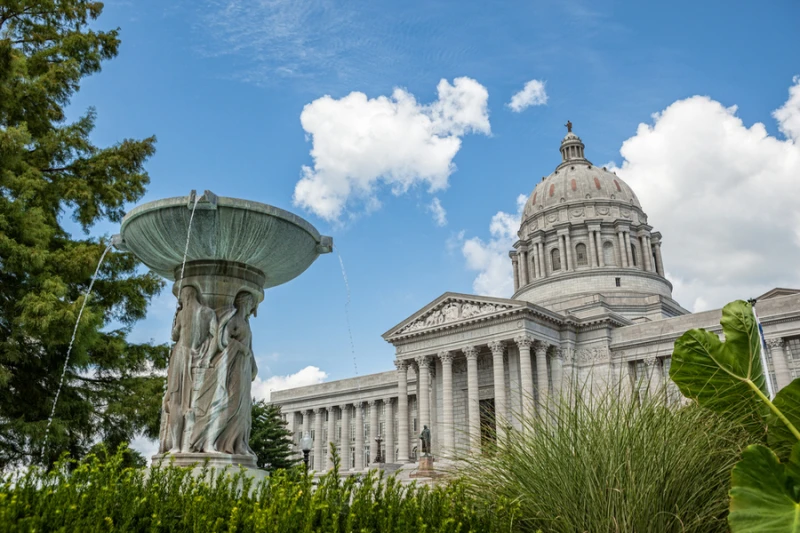
Missouri State Capitol in Jefferson City Missouri. / Credit: eurobanks/Shutterstock
St. Louis, Mo., May 20, 2025 / 12:32 pm (CNA).
Republican lawmakers in Missouri approved a new referendum last week that, if passed by voters, could reinstate many of the state's pro-life laws, largely undoing a previous statewide referendum that expanded abortion rights a few months ago.
The ballot measure, HJR73, would ask voters if they want to allow abortion only in the case of a medical emergency, fetal abnormality, or rape or incest. It also would ban public funding for any abortions not done because of medical emergency or rape or incest.
In addition, the referendum would allow the state General Assembly to enact laws that regulate the provision of abortions, abortion facilities, and abortion providers to ensure the health and safety of pregnant mothers.
The measure would also constitutionally ban hormones, puberty blockers, and surgeries for "gender transition" for minors. Missouri already bans those procedures for minors, but that restriction, first passed in 2023, is set to expire in August 2027.
The measure is expected to appear before voters in November 2026, or sooner if Republican Gov. Mike Kehoe, who is Catholic, calls a special election.
Missourians had last November narrowly voted to overturn the state's near-ban on abortion and enshrine a provision guaranteeing "reproductive freedom" in the state constitution, coming into effect Dec. 6, 2024.
Missouri law had previously extended protection to unborn babies throughout all of pregnancy with the only exception being cases of "medical emergency."
Although the 2024 amendment language mentions that laws could be passed to restrict abortion past the point of "fetal viability," the amendment simultaneously prohibits any interference with an abortion that a doctor determines is necessary to "protect the life or physical or mental health" of the mother.
Missouri lawmakers had in recent years passed numerous laws designed to protect patients and limit the abortion industry's influence, including 2017 regulations requiring that abortion doctors have surgical and admitting privileges to nearby hospitals; that abortion clinics must be licensed with the state; and that clinics must meet hospital-like standards for outpatient surgery.
Soon after the 2024 amendment took effect, Planned Parenthood filed a lawsuit challenging numerous pro-life protections in Missouri, including the state's 72-hour waiting period for abortions; the state's ban on abortions done specifically for reasons of the race, sex, or a Down syndrome diagnosis of the baby; the state's ban on "telemedicine" abortions; and the state's requirement that only licensed physicians may perform abortions.
The Missouri Catholic Conference (MCC), which advocates policy in the state on behalf of the state's bishops, described the upcoming referendum as an "opportunity to add health and safety protections for mothers and their preborn children back into the state constitution."
The MCC had previously expressed support for HJR73, urging support for "the effort to reduce abortions in the state of Missouri and to create a culture of life and compassion and limit the effects of Amendment 3."
Missouri was one of the first states to fully ban abortion after the fall of Roe v. Wade in 2022. Following the 2024 vote, Missouri and six other states expanded legal protection for abortion, while voters in Florida, Nebraska, and South Dakota voted down major pro-abortion proposals the same night.
Planned Parenthood gets millions of dollars in federal support each year. / Credit: Ken Wolter/ShutterstockWashington, D.C. Newsroom, May 20, 2025 / 14:50 pm (CNA).Two American Catholic bishops are hailing a Republican-led legislative effort to end certain taxpayer funds for abortion providers such as Planned Parenthood as well as an attempt to block funding for transgender drugs and surgeries for children.Proposed budget language currently being considered in the U.S. House of Representatives would prevent Planned Parenthood and other abortion providers from receiving Medicaid reimbursements for any services. It would also end all reimbursements for transgender drugs or surgeries that doctors prescribe for children."Americans should not be forced to subsidize abortions and 'gender transition' services with their tax dollars," Toledo, Ohio, Bishop Daniel Thomas and Bishop Robert Barron of Winona-Rochester, Minnesota, said in a joint statement on Monday from the U.S. Conference ...
Planned Parenthood gets millions of dollars in federal support each year. / Credit: Ken Wolter/Shutterstock
Washington, D.C. Newsroom, May 20, 2025 / 14:50 pm (CNA).
Two American Catholic bishops are hailing a Republican-led legislative effort to end certain taxpayer funds for abortion providers such as Planned Parenthood as well as an attempt to block funding for transgender drugs and surgeries for children.
Proposed budget language currently being considered in the U.S. House of Representatives would prevent Planned Parenthood and other abortion providers from receiving Medicaid reimbursements for any services. It would also end all reimbursements for transgender drugs or surgeries that doctors prescribe for children.
"Americans should not be forced to subsidize abortions and 'gender transition' services with their tax dollars," Toledo, Ohio, Bishop Daniel Thomas and Bishop Robert Barron of Winona-Rochester, Minnesota, said in a joint statement on Monday from the U.S. Conference of Catholic Bishops (USCCB).
Thomas is the chairman of the USCCB's pro-life committee, while Barron chairs the Committee on Laity, Marriage, Family Life, and Youth.
Under current law, federal tax money cannot directly fund most abortions, but abortion clinics can still receive federal funding if the money is used in other ways. A Government Accountability Office report found that Planned Parenthood pulled in more than $1.75 billion in taxpayer funds in 2019 and 2021 from a variety of sources.
Planned Parenthood's 2023-2024 annual report stated that the organization received nearly $800 million in taxpayer funding over a 12-month period, which accounted for almost 40% of its total revenue.
"For decades, Planned Parenthood has received government money and offered low-income women one terrible option: to end the lives of their babies," Thomas and Barron said.
"More recently, they have used the same taxpayer funds to expand their destructive offerings by promoting gender ideology and providing puberty blockers and hormones to minors, turning them into lifelong patients in the process."
"Americans should not be forced to subsidize abortions and 'gender transition' services with their tax dollars, and we applaud measures that will finally help to defund Planned Parenthood," they added.
"We encourage greater support for authentic, life-affirming health care providers that serve mothers and their children in need. We urge all members of Congress and the administration to work in good faith to protect vulnerable women and children from mutilating 'gender transition' services and the scourge of abortion."
The proposed language is part of the so-called "One, Big, Beautiful Bill" that would set the nation's budget and incorporate elements of President Donald Trump's agenda. The legislation would only need a majority support in the House and the Senate.
The bill bypasses the usual 60-vote threshold needed in the Senate because certain budget bills only require a simple majority.
Although the bishops have voiced support for this part of the budget bill, they have criticized other proposed elements of the bill. Specifically, the USCCB opposes structural changes to Medicaid and the Supplemental Nutrition Assistance Program (SNAP), which the bishops worry could reduce access to the programs.
The proposed Medicaid reforms include work requirements for able-bodied adults under the age of 65 if they do not have young children as dependents and shifting some Medicaid costs to states if they offer benefits to immigrants who are in the country illegally.
Some of the proposed SNAP changes include shifting between 5% and 25% of the cost to states, raising the work requirement age from 54 to 64, and implementing stricter verifications to ensure money does not go to immigrants who are in the country illegally.
If the House passes its version of the bill, it will then go to the Senate, where lawmakers will likely make changes and send it back to the House. It is not yet scheduled for a vote in the House.
The city of Baltimore. / Credit: Sean Pavone/ShutterstockWashington, D.C. Newsroom, May 20, 2025 / 15:20 pm (CNA).The Archdiocese of Baltimore has been accused of defying a Vatican order after allegedly refusing to reopen a Maryland parish despite a letter from the Holy See halting its closure. In the spring of 2024 Archbishop William Lori announced the "difficult" decision to merge parishes in Baltimore and surrounding suburbs as part of the archdiocesan "Seek the City to Come" initiative. Among the parishes slated for closure was St. Clare in Essex.Several St. Clare parishioners who disagreed with the plan sought assistance from Save Rome of the West, an organization that offers consulting services "to aid in the preservation and maintenance of Catholic churches and parishes."Group co-founders Jason Bolte and Brody Hale helped parishioner Barbara Pivonski write and send a formal letter to the Vatican in October 2024 appealing Lori's plan and requesting that the church re...
The city of Baltimore. / Credit: Sean Pavone/Shutterstock
Washington, D.C. Newsroom, May 20, 2025 / 15:20 pm (CNA).
The Archdiocese of Baltimore has been accused of defying a Vatican order after allegedly refusing to reopen a Maryland parish despite a letter from the Holy See halting its closure.
In the spring of 2024 Archbishop William Lori announced the "difficult" decision to merge parishes in Baltimore and surrounding suburbs as part of the archdiocesan "Seek the City to Come" initiative. Among the parishes slated for closure was St. Clare in Essex.
Several St. Clare parishioners who disagreed with the plan sought assistance from Save Rome of the West, an organization that offers consulting services "to aid in the preservation and maintenance of Catholic churches and parishes."
Group co-founders Jason Bolte and Brody Hale helped parishioner Barbara Pivonski write and send a formal letter to the Vatican in October 2024 appealing Lori's plan and requesting that the church reopen.
In February they received a letter from Cardinal Lazzaro You Heung-sik, prefect of the Dicastery for the Clergy, stating that the "requested suspension" of the "extinctive merger" was "granted for the duration of the recourse."
Bolte, Hale, and Pivonski believed the response from the Vatican approved the reopening of St. Clare while the appeal was under review, but the archdiocese disputed that interpretation. Diane Barr, a canonical consultant to the archbishop's office, told parishioners in a letter that the suspension only meant that the church property could not be sold.
Archdiocesan spokesman Christian Kendzierski, meanwhile, told CNA that the archdiocese "is faithfully following the requirements included in the letter received from the Dicastery for Clergy."
The parish "remains open for baptisms, weddings, and funerals," he said.
"When a decree is suspended, it means that the actions which it orders, all of them, are suspended," Hale, an attorney, told CNA. Yet "the Archdiocese of Baltimore … has refused to do that."
Hale said if the Dicastery for the Clergy "wishe[d] to only suspend part of the decree, or some aspect of it, it would have stated as much."
The lawyer said prior to February he had "never seen a single parish suspension issued by the Dicastery for Clergy," and now he has witnessed more than a dozen.
More than 12 parishes in the Diocese of Buffalo in New York similarly appealed a diocesan restructuring plan to the Vatican, asking that their churches stay open. The Vatican granted those requests and the Buffalo Diocese allowed them to remain open while the appeals were evaluated.
"It's very unfortunate to me that the Archdiocese of Baltimore has taken this position," Hale said, arguing that the archdiocese "deprived these good people of being able to celebrate Holy Week in their parish" and "deprived them of three months of parish life."
Pivonski told CNA that St. Clare was "extremely active" prior to the closure.
The parish is located in a high-poverty area, she said, and catered to the poor and homeless through frequent food donations. It was also working with pregnancy centers.
A hearing on the matter was postponed due to Vatican departments shutting down after Pope Francis' death.
The case will be "presented to the Dicastery for Clergy as soon as it's able to hear the matter," Hale said.
Pope Leo XIV and St. Nicholas of Tolentine. / Credit: Daniel Ibáñez/EWTN News; Province of Our Mother of Good Counsel of the Augustinian OrderLima Newsroom, May 20, 2025 / 09:21 am (CNA).Perhaps many Catholics wonder who Pope Leo XIV's favorite saint is. A Peruvian missionary priest who is a close friend and confidant of the pontiff said he knows the answer in this little-known devotion of the Holy Father, who used to pray to this saint on his knees in a small chapel near Chiclayo in northern Peru."St. Nicholas of Tolentine is, without a doubt, his favorite saint. He is the protector of his perpetual vows, his great devotion within Augustinian spirituality," said Peruvian priest Father David Farfán Guerrero, whom the Holy Father met in 1985 in Chulucanas in the Piura district of the country.Farfán, who has served as pastor of St. Turibius of Mogrovejo Parish for about 10 years, welcomed ACI Prensa, CNA's Spanish-language news partner, to San Nicolás, a small settlement loc...
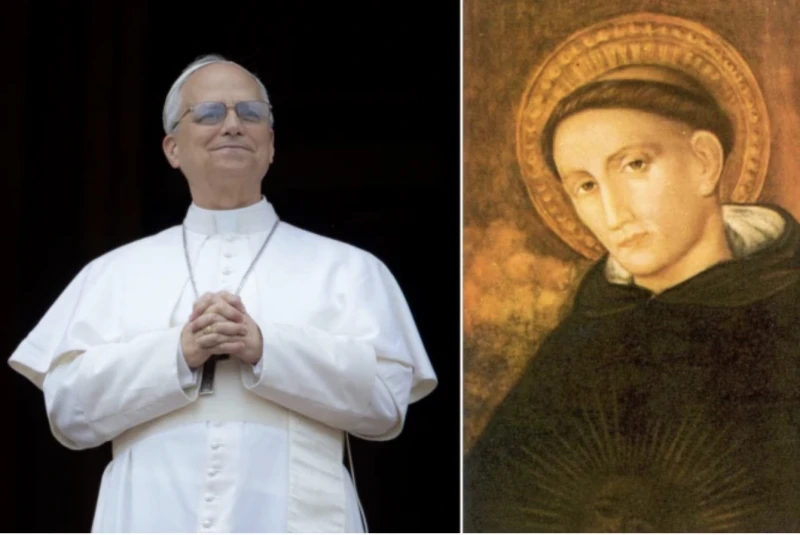
Pope Leo XIV and St. Nicholas of Tolentine. / Credit: Daniel Ibáñez/EWTN News; Province of Our Mother of Good Counsel of the Augustinian Order
Lima Newsroom, May 20, 2025 / 09:21 am (CNA).
Perhaps many Catholics wonder who Pope Leo XIV's favorite saint is. A Peruvian missionary priest who is a close friend and confidant of the pontiff said he knows the answer in this little-known devotion of the Holy Father, who used to pray to this saint on his knees in a small chapel near Chiclayo in northern Peru.
"St. Nicholas of Tolentine is, without a doubt, his favorite saint. He is the protector of his perpetual vows, his great devotion within Augustinian spirituality," said Peruvian priest Father David Farfán Guerrero, whom the Holy Father met in 1985 in Chulucanas in the Piura district of the country.
Farfán, who has served as pastor of St. Turibius of Mogrovejo Parish for about 10 years, welcomed ACI Prensa, CNA's Spanish-language news partner, to San Nicolás, a small settlement located outside of Chiclayo, specifically to the humble chapel dedicated to St. Nicholas of Tolentine, considered the first saint of the Order of St. Augustine and who lived in the 13th century.
Father David Farfán in front of the chapel dedicated to St. Nicholas of Tolentine in San Nicolás outside of Chiclayo, Peru. Credit: Diego López Marina/EWTN News
"This place is very special in the life of His Holiness because this is where, as I often say, 'he put his knees to the test.' He had hardly arrived when he would go in and pray to the patron saint of his perpetual profession," said the priest, a former missionary in Canada and the Philippines.
The then-Friar Robert Prevost — now Pope Leo XIV — professed his solemn (or perpetual) vows with the Augustinians on Aug. 29, 1981, taking this Italian mystic as his patron saint. Years later, his brothers in the order appointed Prevost prior general during the 2001 ordinary general chapter and renewed their trust in him for a second term in 2007.
Adopting a saint when making vows — also called "patron" or "intercessor" — is a common custom in some religious orders. It consists of choosing a saint whose life serves as an example and spiritual aid to better live one's devotion to God and fulfill one's commitments.
According to Farfán, the then-Bishop Prevost, who served as bishop of the Diocese of Chiclayo from 2015 to 2023, "never imagined that, in Chiclayo, within the diocese, he would find a chapel and a village dedicated precisely to this saint."
"When he arrived as bishop, he discovered its existence and then adopted the custom of asking for the key to the chapel, entering alone, and praying there before the image of the saint. Right here," he recounted with emotion.
The connection with this chapel was further strengthened when Prevost was put in charge of the formation of the Augustinians in Trujillo.
"He used to have the novices make the pilgrimage on foot from the Guadalupe district to here [more than 30 miles], and then continue on to Pomalca and Tumán [about 25 miles], where there was also an Augustinian presence," the priest said.
The statue of the saint inside the humble chapel dedicated to St. Nicholas of Tolentine near Chiclayo, Peru. Credit: Diego López Marina/EWTN News
The image of St. Nicholas in the village of San Nicolás (a little over 1.25 miles from the town of Zaña) not only bears witness to centuries of faith but also represents a visible symbol of the devotion that has accompanied Pope Leo XIV since his beginnings as a friar.
History of the image
Discussing the image of St. Nicholas of Tolentine inside the chapel, Farfán explained that it is the oldest in the Zaña area. According to a restorer who worked on it, the priest explained, it is more than 450 years old, which directly links it to the arrival of the Augustinians in this region.
The history of the Augustinian presence in Zaña dates back to the 16th century, when St. Augustine Convent, one of the most important centers of devotion to St. Nicholas of Tolentine in northern Peru, was founded.
"This indicates that the Augustinians who arrived [to establish] St. Augustine Convent in Zaña brought it from Europe; the image already existed there; it was simply transferred. We don't know who made it or the exact year it arrived, but since we know the date the convent was founded, we assume it came with the first friars who settled there," he explained.
According to the chronicler Friar Antonio de la Calancha, through the intercession of St. Nicholas of Tolentine, represented by the statue in the chapel, numerous miracles were performed in the town of Zaña, attracting great popular devotion and generous alms for the Augustinian order.
Both an approachable and austere saint
St. Nicholas of Tolentine was a humble Augustinian friar who dedicated his life to comforting the sick, preaching by example, and praying for the souls in purgatory.
The Italian saint is considered the first saint of the Augustinian order. He was born around 1245 in Sant'Angelo in Pontano, Italy, but his name was forever linked to Tolentine, where he lived and served for 30 years. At a young age, he joined the Augustinian community in his town, where he began his journey as a novice and student. He was ordained a priest around 1273 and shortly afterward sent to Tolentine, a city that would become the center of his intense pastoral work.
According to the Order of St. Augustine, Nicholas was not known for his erudition or for writing great works but for something much more important: his closeness to the people, his profound life of prayer, and his total dedication to those most in need.
He traveled through the poor neighborhoods, comforted the sick and dying, heard confessions tirelessly, and always sought to alleviate suffering, both physical and spiritual. He lived austerely, but with a contagious joy. Shortly before his death, when asked why he seemed so happy, he calmly replied: "Because my God and Lord Jesus Christ, accompanied by His Holy Mother and my Holy Father Augustine, is saying to me: Come! Good and faithful servant, enter into the joy of your Lord."
Throughout his life — and even after his death in 1305 — he was credited with numerous miracles. He is the patron saint of the souls in purgatory and protector against the plague, fires, and stuttering. His canonization was celebrated by Pope Eugene IV in 1446, on the solemnity of Pentecost, and for many, he remains a model of silent devotion, constant prayer, and boundless charity.
Pope Leo XIV's profound devotion to St. Nicholas of Tolentine not only reveals his Augustinian roots but also the soul of a pastor who, like the 13th-century saint, consoles, prays, and walks humbly alongside his people.
Here is a prayer to St. Nicholas of Tolentine:
O glorious wonderworker and protector of the souls in purgatory, St. Nicholas of Tolentine! With all the affection of my soul, I beseech you to intervene with your powerful intercession on behalf of these blessed souls, obtaining from divine clemency the remission of all their crimes and punishments, so that, upon emerging from that dark prison of suffering, they may go to enjoy the beatific vision of God in heaven. And for me, your devoted servant, obtain, O great saint, the most lively compassion and the most ardent charity toward these beloved souls. Amen.
This story was first published by ACI Prensa, CNA's Spanish-language news partner. It has been translated and adapted by CNA.
Italian Cardinal Baldassare Reina was created a cardinal by Pope Francis during the consistory at St. Peter's Basilica on Dec. 7, 2024. / Credit: Daniel Ibañez/CNAVatican City, May 20, 2025 / 10:43 am (CNA).Pope Leo XIV, in one of his first personnel appointments, on Monday named Cardinal Baldassare Reina grand chancellor of the Pontifical Theological Institute John Paul II for Marriage and the Family, replacing Archbishop Vincenzo Paglia, who turned 80 on April 20.Reina, 54, is vicar general of the Diocese of Rome since 2024. As part of that role, he is also grand chancellor of the Pontifical Lateran University, the home of the John Paul II Institute.Pope Leo's May 19 appointment of Reina as grand chancellor appears to be a return to the former practice of linking the leadership of the institute to the vicar general of Rome. This practice had been changed under Pope Francis, who named Paglia to the role in 2016.The following year, in 2017, Francis made the controversial decisi...
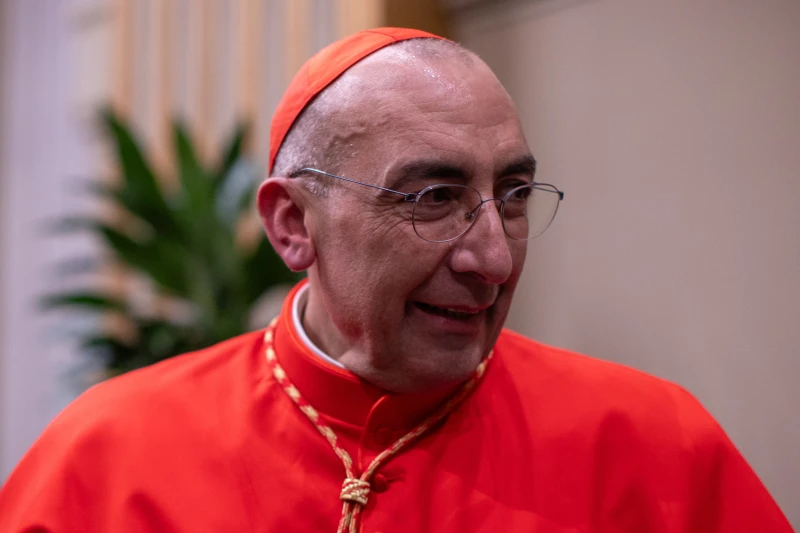
Italian Cardinal Baldassare Reina was created a cardinal by Pope Francis during the consistory at St. Peter's Basilica on Dec. 7, 2024. / Credit: Daniel Ibañez/CNA
Vatican City, May 20, 2025 / 10:43 am (CNA).
Pope Leo XIV, in one of his first personnel appointments, on Monday named Cardinal Baldassare Reina grand chancellor of the Pontifical Theological Institute John Paul II for Marriage and the Family, replacing Archbishop Vincenzo Paglia, who turned 80 on April 20.
Reina, 54, is vicar general of the Diocese of Rome since 2024. As part of that role, he is also grand chancellor of the Pontifical Lateran University, the home of the John Paul II Institute.
Pope Leo's May 19 appointment of Reina as grand chancellor appears to be a return to the former practice of linking the leadership of the institute to the vicar general of Rome. This practice had been changed under Pope Francis, who named Paglia to the role in 2016.
The following year, in 2017, Francis made the controversial decision to re-found the institute, originally established by Pope John Paul II in 1982 under the name the Pontifical John Paul II Institute for Studies on Marriage and Family, broadening its focus from moral theology to the social sciences. When new statutes were issued in 2019, the institute was also criticized for not renewing some of the contracts of longtime faculty and for other hiring decisions.
Paglia, who is president of the Pontifical Academy for Life, told CNA on May 19 it was foreseen he would be replaced as chancellor of the John Paul II institute after turning 80, in accordance with Vatican guidelines. He said he does not know when he may be replaced as head of the Pontifical Academy for Life, but given his age, it is reasonable it may also be soon.
He declined to comment on the institute's controversies under his leadership.
Cardinal William Goh speaks to EWTN News Vice President Matthew Bunson in Rome on Monday, April 19, 2025. / Credit: EWTN NewsVatican City, May 20, 2025 / 11:20 am (CNA).Singapore's Cardinal William Goh believes Pope Leo XIV will build a greater unity within the Church, particularly for Catholic faithful often divided on matters of Church doctrine and morality.Calling the new pontiff a "gift of God" in an interview with EWTN News Vice President Matthew Bunson, Goh said the Holy Father is the "right person" to lead the Church toward synodality and explain the balance between "orthodoxy and being progressive.""Being traditional is not wrong [and] going back to the orthodoxy of the Church is not wrong," he said. "But, at the same time, we are not just asking our Church to be too legalistic about our moral doctrines in terms of practice."Describing the new pontiff as an active listener who is "very attentive to the concerns and sharings of the cardinals," Goh said the Holy Father's ...
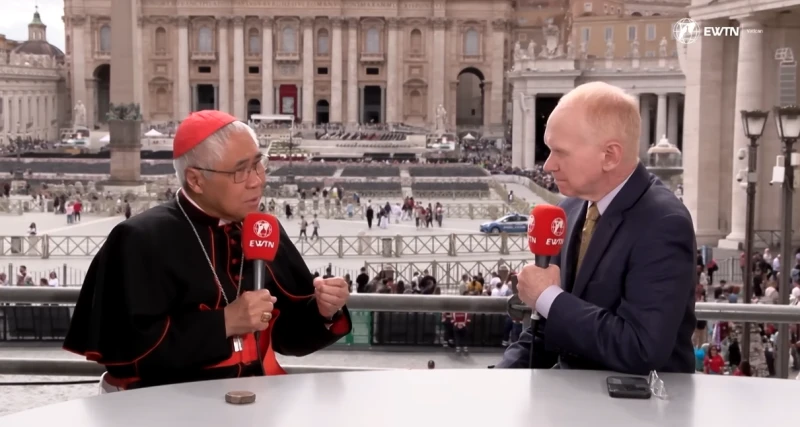
Cardinal William Goh speaks to EWTN News Vice President Matthew Bunson in Rome on Monday, April 19, 2025. / Credit: EWTN News
Vatican City, May 20, 2025 / 11:20 am (CNA).
Singapore's Cardinal William Goh believes Pope Leo XIV will build a greater unity within the Church, particularly for Catholic faithful often divided on matters of Church doctrine and morality.
Calling the new pontiff a "gift of God" in an interview with EWTN News Vice President Matthew Bunson, Goh said the Holy Father is the "right person" to lead the Church toward synodality and explain the balance between "orthodoxy and being progressive."
"Being traditional is not wrong [and] going back to the orthodoxy of the Church is not wrong," he said. "But, at the same time, we are not just asking our Church to be too legalistic about our moral doctrines in terms of practice."
Describing the new pontiff as an active listener who is "very attentive to the concerns and sharings of the cardinals," Goh said the Holy Father's desire for unity is evident in both his words and actions since his May 8 election.
"I believe that, so far, based on his speeches, he is putting into practice the call to synodality," he said. "In his meeting with the cardinals, he spoke to us in a very personal way."
"I believe that there will be greater collaboration and greater dialogue so that we can truly bring about a greater unity in the Church," he added.
Reflecting on issues that were "dividing the Church" during Pope Francis' pontificate such as "ambiguity" in some teachings outlined in Amoris Laetitia and the synodal process, the Asian cardinal said he hopes Pope Leo XIV will bring clarity, and less confusion, to discussions on Catholic teaching.
"I keep on emphasizing that we cannot talk about synodality without unity in doctrines, without unity in faith," he told Bunson.
"Unity that is built on superficial love can never be real unity," he continued. "Unity must be founded on truth that is expressed in charity."
With the continual growth of the Church in both Asia and Africa, Goh said many Catholic faithful are converts who do not want to compromise their newfound religion.
"We are people who have strong faith in the Lord and we want to walk in the way of the Gospel," Singapore's first and so far only cardinal said in the interview. "In fact, we gave up the old faith in order to exchange it for the true faith."
"We want to walk the way of the truth and follow the Gospel and what the Church taught us," he stressed. "That is what is guiding us and our people in Asia."
In addition to the Holy Father's ability to be a good listener, Goh noted the pope's ability to speak several languages has been an advantage for those wanting to discuss with him the pastoral challenges the Church faces in different parts of the world before and after the recent conclave.
"The good thing about Pope Leo is that he speaks English because very often many of the Asian cardinals don't speak Italian so well," he said. "So we want to communicate and to share our views with the Holy Father but it's a bit difficult because of the language."
"I think once you know English, Spanish, and Italian, you can cover at least two-thirds of the globe, right?" he said.
null / Credit: KieferPix/ShutterstockWashington, D.C. Newsroom, May 19, 2025 / 10:00 am (CNA).Catholic Charities in Youngstown, Ohio, will join a new pilot study, Lifting Moms Out of Poverty (LMOP), a program developed by Catholic Charities USA, in a bid to offer aid to mothers with small children."The intent of the program from Catholic Charities USA is to evaluate the effectiveness of programs that support young families with kiddos under 3 years of age," Rick Squier, the executive director of the Catholic Charities serving Portage and Stark counties, told CNA."I'm excited that we have the opportunity to do this," Squier said. "We're going to be able to quantify the results of the program and say that when we do our financial literacy program with young families over the course of 18 months, they see dramatic increases in their ability to overcome when life happens." "And then we have the opportunity to go out and write grants" based on the successful results, he said.Th...
null / Credit: KieferPix/Shutterstock
Washington, D.C. Newsroom, May 19, 2025 / 10:00 am (CNA).
Catholic Charities in Youngstown, Ohio, will join a new pilot study, Lifting Moms Out of Poverty (LMOP), a program developed by Catholic Charities USA, in a bid to offer aid to mothers with small children.
"The intent of the program from Catholic Charities USA is to evaluate the effectiveness of programs that support young families with kiddos under 3 years of age," Rick Squier, the executive director of the Catholic Charities serving Portage and Stark counties, told CNA.
"I'm excited that we have the opportunity to do this," Squier said. "We're going to be able to quantify the results of the program and say that when we do our financial literacy program with young families over the course of 18 months, they see dramatic increases in their ability to overcome when life happens."
"And then we have the opportunity to go out and write grants" based on the successful results, he said.
The pilot program will run for 18 months and will monitor the status of at least 20 families. Each family will take three surveys over the course of the year and a half with the goal of determining improvement in financial literacy, emotional perspective, and parenting skills.
The agency serving Portage and Stark counties is currently monitoring 38 families and is using a combination of internal funds along with a $75,000 grant from Catholic Charities USA.
According to Squier, 100% of these funds go toward the direct support of the families in the form of rent and utilities, transportation, education, or other similar core costs.
Squier said the pilot program will be adapted to existing ones. First Step for Families, which already serves families in Portage and Stark counties, will benefit from the program.
"What we did is take this program that already exists and add a little bit more client management into it … with our case workers," he explained.
"Now, they're just spending a little bit more time and effort in connecting with the families and really working with them on the financial portion, the parenting portion, and seeing what we can do to alleviate the barriers that exist in their situation to get them ahead and get them to be more resilient."
At the end of the pilot program, The Catholic University of America will evaluate the results in order to formulate recommendations to send to Catholic Charities agencies in other dioceses.
Ultimately, Squier said he hopes the pilot program will "really enable us to see what works best, so that we can provide support … lifting moms out of poverty."
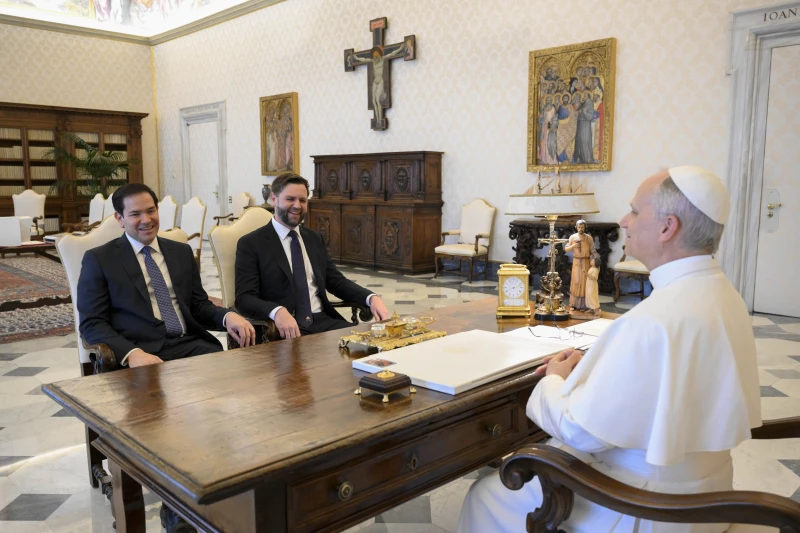
U.S. Vice President JD Vance and Secretary of State Marco Rubio, seated in places of honor usually reserved for heads of state, meet with Pope Leo XIV in the papal library on May 19, 2025. / Credit: Vatican MediaVatican City, May 19, 2025 / 06:52 am (CNA).Pope Leo XIV held a private meeting with U.S. Vice President JD Vance and U.S. Secretary of State Marco Rubio in the papal library on Monday morning.Details of the meeting were not released, but the Americans later spoke with a top Vatican diplomat about U.S. and international issues. The 45-minute papal audience began with a one-on-one between Vance and the pope, with Rubio joining afterward. Second Lady Usha Vance, Rubio's wife Jeanette Dousdebes Rubio, and the larger U.S. delegation joined for the final part of the meeting, which included the customary exchange of gifts.In a photo of the encounter released by the Vatican, Vance appears to have given the pontiff a Chicago Bears jersey with "Pope Leo XIV" printed on the ...
U.S. Vice President JD Vance and Secretary of State Marco Rubio, seated in places of honor usually reserved for heads of state, meet with Pope Leo XIV in the papal library on May 19, 2025. / Credit: Vatican Media
Vatican City, May 19, 2025 / 06:52 am (CNA).
Pope Leo XIV held a private meeting with U.S. Vice President JD Vance and U.S. Secretary of State Marco Rubio in the papal library on Monday morning.
Details of the meeting were not released, but the Americans later spoke with a top Vatican diplomat about U.S. and international issues.
The 45-minute papal audience began with a one-on-one between Vance and the pope, with Rubio joining afterward. Second Lady Usha Vance, Rubio's wife Jeanette Dousdebes Rubio, and the larger U.S. delegation joined for the final part of the meeting, which included the customary exchange of gifts.
In a photo of the encounter released by the Vatican, Vance appears to have given the pontiff a Chicago Bears jersey with "Pope Leo XIV" printed on the back.
Other photos show Vance and Rubio smiling, seated in places of honor across the papal desk from Leo, a position usually reserved for heads of state.
A Vatican spokesperson did not immediately reply to a request for comment on the seating arrangement.
U.S. Vice President JD Vance and Second Lady Usha Vance show Pope Leo XIV the gifts they brought, including a Chicago Bears jersey with "Pope Leo XIV" printed on the back, during a private audience in the papal library on May 19, 2025. Credit: Vatican Media
Following the papal audience, Vance and Rubio met with Secretary for Relations with States Archbishop Paul Gallagher, Rubio's Vatican counterpart. They discussed collaboration between Church and state and issues relevant to ecclesial life and religious freedom, according to the Vatican.
The brief communication on the meeting from the Vatican also appeared to reference disagreements — "an exchange of views" — between the Vatican and the U.S. administration on "some current international issues."
During the meeting, there was a call for "respect for humanitarian law and international law in areas of conflict and for a negotiated solution between the parties involved," the Vatican's statement said.
In the 10 days since his election May 8, Leo has appeared to take a more pro-Ukraine line in the Russia-Ukraine conflict than his immediate predecessor, first by speaking to Ukrainian President Volodymyr Zelensky by phone in the first hours of his papacy, then meeting the leader for a private audience the same day of his inaugural Mass.
Leo also called for negotiations for a "just and lasting peace" in Ukraine in his first two Regina Caeli messages on May 11 and 18, and one of his early audiences was with the head of the Greek Ukrainian Catholic Church, Archbishop Sviatoslav Shevchuk.
As a bishop in Peru in 2022, then-Bishop Prevost also made explicit reference to Russia's invasion, calling it "imperialist in nature," while Francis avoided such language in his peace appeals, and had even called for Ukraine to raise the white flag.
On the conflict in Gaza, Leo, like Francis, has called for ceasefire and the return of Israeli hostages.
Vance, Rubio, and Zelensky also met together in Rome, after they both attended Pope Leo's inaugural Mass on May 18.
According to a post on X from Vance's office, the leaders discussed "updates on the ongoing negotiations for a ceasefire and lasting peace."
Zelensky called the encounter a "good meeting" in his own post on X, and said he "reaffirmed that Ukraine is ready to be engaged in real diplomacy."
The Ukrainian president also said he spoke about the need for pressure and sanctions against Russia, as well as "defense cooperation."
Archbishop Charles C. Thompson elevates the Eucharist during the Opening Mass at St. John the Evangelist Church in Indianapolis, marking the official launch of the St. Katharine Drexel Route. May 18, 2025. / Credit: Jeffrey BrunoCNA Newsroom, May 18, 2025 / 18:00 pm (CNA).The 2025 National Eucharistic Pilgrimage kicked off Sunday, May 18, with an opening Mass in downtown Indianapolis where an estimated 1,000 people, including many young families, joined Archbishop Charles C. Thompson to officially launch this year's pilgrimage.Archbishop Charles C. Thompson blesses a cross that was made from wood from the most recent fires in California and will accompany pilgrims on the St. Katharine Drexel Route. May 18, 2025. Credit: Jeffrey Bruno"Our faith is not something to be lived just within the walls of the Church. The Mass ends with being sent out," the archbishop told EWTN News before the Mass began at St. John the Evangelist Catholic Church. "The Eucharist is transforming. And it t...
Archbishop Charles C. Thompson elevates the Eucharist during the Opening Mass at St. John the Evangelist Church in Indianapolis, marking the official launch of the St. Katharine Drexel Route. May 18, 2025. / Credit: Jeffrey Bruno
CNA Newsroom, May 18, 2025 / 18:00 pm (CNA).
The 2025 National Eucharistic Pilgrimage kicked off Sunday, May 18, with an opening Mass in downtown Indianapolis where an estimated 1,000 people, including many young families, joined Archbishop Charles C. Thompson to officially launch this year's pilgrimage.
Archbishop Charles C. Thompson blesses a cross that was made from wood from the most recent fires in California and will accompany pilgrims on the St. Katharine Drexel Route. May 18, 2025. Credit: Jeffrey Bruno
"Our faith is not something to be lived just within the walls of the Church. The Mass ends with being sent out," the archbishop told EWTN News before the Mass began at St. John the Evangelist Catholic Church. "The Eucharist is transforming. And it transforms us, and through us it transforms others."
A full church participates in the liturgy launching the St. Katharine Drexel Route of the National Eucharistic Pilgrimage in downtown Indianapolis. May 18, 2025. Credit: Jeffrey Bruno
The perpetual pilgrims of the St. Katharine Drexel Route stand before Archbishop Charles C. Thompson to be commissioned for their six-week journey across the country. May 18, 2025. Credit: Jeffrey Bruno
At the opening Mass was Matthew Heidenreich, a 2024 Marian Route pilgrim, who said he wanted to come out and support this year's pilgrims. "Something like this, a pilgrimage that goes across the country, the Lord just uses that to create powerful, powerful moments that will ultimately bring so many people to him, and to the Church," he told EWTN News.
The University of Alabama student from Columbus, Ohio, also shared how his life has changed since making last year's pilgrimage.
"My relationship and the way that I walk with the Lord has completely changed," he said. "Just like experiencing that day to day walk with him, and realizing how much he wants to enter into every part of my life, it transforms the way you view every moment, and the way you enter into life. Because you just know the Lord is with you, he's walking with you, he wants to be there."
Archbishop Charles C. Thompson greets perpetual pilgrims Leslie Reyes-Hernandez and Johnathan Silvino Hernandez-Jose as they bring up the gifts at the Mass for the St. Katharine Drexel Route of the National Eucharistic Pilgrimage. May 18, 2025. Credit: Jeffrey Bruno
The Drexel route will process through 10 states — including California and Texas — as well as through 20 Catholic dioceses and four Eastern Catholic eparchies. Along the way will be opportunities to encounter Jesus including daily Mass, Eucharistic adoration, Eucharistic processions, witness talks, and fellowship meals with the Perpetual Pilgrims.
Archbishop Charles C. Thompson processes with the Blessed Sacrament through the streets of Indianapolis as the St. Katharine Drexel Route departs. May 18, 2025. Credit: Jeffrey Bruno
In keeping with the ongoing Jubilee Year of Hope in the Catholic Church, the focus of the Drexel Route is on "hope and healing," with visits planned not only to churches but also to prisons and nursing homes.
"[The Eucharistic pilgrimage] is bringing a Christ centered focus to a world that is in desperate need of meaning and purpose and healing," said Archbishop Thompson. "That's what this procession is all about — Jesus Christ, the way the truth and the life, being proclaimed, being adored, being worshipped. The one who leads us and unites us."


 With Speaker of the House Mike Johnson by his side, President Donald Trump speaks to the press following a House Republican meeting at the U.S. Capitol on May 20, 2025, in Washington, D.C. / Credit: Tasos Katopodis/Getty Images