• Home
  • About Us
  • Support
  • Concerts & Events
  • Music & Media
  • Faith
  • Listen Live
  • Give Now

Catholic News

On May 17, an event on the National Mall in Washington, D.C., will rededicate the United States as "one nation under God," Trump announced at the National Prayer Breakfast.

President Donald Trump addressed the 74th annual National Prayer Breakfast on Thursday, Feb. 5, touting his record on religious issues and announcing that the United States will hold an event to rededicate the nation to God.

"This prayer breakfast comes at a special time for our country as we prepare to celebrate the 250th anniversary of American independence," Trump said five months ahead of the national celebration of the anniversary of the signing of the Declaration of Independence.

"When our founders proclaimed the immortal truths that echoed around the world and down all the way through time, they declared that all of us are made free and equal by the hand of our Creator," the president said.

In honor of the occasion, Trump announced at the breakfast that he will hold an event, titled "Rededicate 250" on the National Mall in Washington, D.C., on May 17 "to rededicate America as one nation under God."

"We're inviting Americans from all across the country to come together on our National Mall to pray, to give thanks," he said.

Earlier this year, Trump launched the "America Prays" initiative ahead of the anniversary, asking Americans to pray for the country and its citizens. The White House published a 22-page document at the time to highlight the Christian roots of the country, which contained historical prayers, sermons, and presidential proclamations.

The president also announced new guidance from the U.S. Department of Education, which seeks to protect religious speech and prayer in public schools. He said he expects the guidance to face lawsuits but told the crowd: "We'll win it."

He said the country is seeing a resurgence in the Christian faith and highlighted a rise in Bible sales in 2025 and a higher frequency of young people attending religious services. When asked about church attendance rates, a spokesperson for the White House cited one study from the Barna Group as an example, which showed millennial and Generation Z Christians attending religious services at higher rates.

Two of Trump's guests — Emma Foltz and London Smith — were invited to the breakfast to highlight examples of what the president called "young American patriots and believers."

Foltz and Smith, two counselors at Camp Mystic, are credited with saving 14 girls in the deadly July 2025 flood at the Christian summer camp that claimed 27 lives.

"Emma bravely helped lead 14 precious little girls to safety, and London, seeing the water rise, gathered with other girls at the top of their building and prayed," Trump said in the speech.

"Almost 250 years after our Founding Fathers took one of the greatest leaps of faith in human history, the story of Emma and London shows us that faith of the American people remains unbroken, actually became stronger than ever," he said. "And it reminds us that prayers strengthen, prayers heal, prayer empowers, and prayer saves. Quite simply, prayer is America's superpower."

"Prayer is America's superpower."

Donald Trump

45th and 47th president of the United States

During his speech, Trump also took credit for accomplishments that he believes have benefited Christians in the United States and abroad.

The president brought up his executive order related to the Johnson Amendment, which eased restrictions on pastors commenting on political issues. He also noted he expanded the Mexico City Policy to prevent taxpayer funds for international organizations that support abortion and "radical gender ideology."

Trump also touted his executive actions "to slash federal funding for any public school that pushes transgender insanity" on children and "stopped the mutilation of children" with policies that restrict hospitals from offering drugs and surgeries to minors to make them appear like the opposite sex. He also said: "We got men out of women's sports."

"We're still fighting it, but, you know, transgender for everybody — they want transgender for everybody," he said. "We stopped it."

Trump also reminded that crowd that he created the White House Faith Office and the Religious Liberty Commission.

"My administration is confronting head on the militant and really intolerant campaign that tried to drive religious believers out of public life and out of society," Trump said.

Trump also spoke about international affairs, specifically about the December 2025 military strikes on Nigeria, which was aimed at combatting the persecution of Christians. Another one of his guests was Nigerian First Lady Remi Tinubu, who is Christian.

"We knocked the hell out of them the other day in Nigeria because they were killing Christians," Trump said. "They were killing Christians. You can't do that. When Christians come under attack, they know they're going to be attacked violently and viciously by President Trump."

Several lawmakers, including House Speaker Mike Johnson, and members of Trump's Cabinet, including Attorney General Pam Bondi, also attended the prayer breakfast.

Full Article

Here's a roundup of the latest Catholic education news in the United States.

Here's a roundup of the latest Catholic education news in the United States:

Sisters part ways with Benedictine due to aging community, demanding board, expansion efforts

The announcement of the decision by Mount St. Scholastica sisters to part ways with Benedictine College in Atchison, Kansas, came as no surprise to leadership at the institution, as the aging religious community has faced difficulties keeping up with the popular Newman Guide school's growth.

Dean of Students Joe Wurtz told EWTN News he believes the sisters have been discerning the move for more than a decade but ultimately informed the college of the decision a few days before the announcement. "I believe it's because they saw the trajectory of their order and thought, 'OK, we have to plan for the future.'"

Wurtz, who is also the executive director of the Gregorian Fellows Leadership Program at Benedictine, said he believes the current demands of the college's board of directors were ultimately too much for the sisters to handle alongside their current ministries. "I think they just felt it was too much," he said.

Benedictine's board requires three sisters, the prioress and two sisters who rotate every four years, to be present at every board meeting as well as every executive meeting.

"Again, with the complexity of the medical school, there's a lot of terminology, there's a lot of process, there's a lot of things to consider, and it's complicated if you're not tracking all that detail and you're making a big vote," Wurtz said.

While the sisters did not cite the proposed medical school specifically, "they did say the demands of the board are heavy compared to their other things," he said.

According to Wurtz, the sisters did not cite differences in mission or politics when informing the college of their decision.

Dartmouth's new provost a Catholic who says Ivies have been 'negative' role models

Dartmouth University's new provost, Santiago Schnell, spoke with the National Catholic Register's Jonathan Liedl on "EWTN News In Depth" about how his Catholic faith shapes his vision for higher education reform, discussing the Catholic foundations of the modern university and how higher education has gone "astray."

"We have been failing in the United States higher education. That's why the general public and the government are responding negatively," Schnell said. "The Ivies have served as a role model in a very negative way on how higher education should be moving forward, and the time for reform has arrived."

Schnell, a Venezuelan-born mathematical biologist and former dean at the University of Notre Dame, said the "primary challenge" causing the crisis in higher education has been "that we don't have intellectual diversity as we used to" and that many university and faculty members have "unearned certainty" about their beliefs. "They are promoting their ideologies or their points of views instead of providing the tools and the perspectives to the students to actually question and seek the truth," he said.

Schnell called for a return to the historic roots of the university, which he emphasized "is a Catholic invention."

Iowa Catholic schools see enrollment boom after new law grants public funding access

Catholic schools in Iowa saw rising enrollment in the 2024-2025 school year thanks to a 2023 Iowa state law allowing families to use education savings accounts (ESAs) for private school expenses.

< async src="https://platform.twitter.com/widgets.js" charset="utf-8">

"Enrollment in Iowa's Catholic schools increased in the 2025-26 school year. As of October 2025, there were 26,095 students enrolled in Catholic schools, up a little more than 3% compared to the previous year. ESAs are being used increasingly by lower-income families," the Iowa Catholic Conference said in a statement on X.

According to data from the conference, 25,519 Catholic school students received an education savings account in the 2025-2026 school year. The accounts were also "used increasingly by lower-income families," with the number of students eligible for reduced-price lunches increasing by 10%.

Major gift allows Pittsburgh Diocese to offer all elementary school families financial aid

The Diocese of Pittsburgh has received "a significant Educational Improvement Tax Credit (EITC) gift from an anonymous donor" to go exclusively toward expanding long-term financial assistance to Catholic families for education costs across the diocese.

"Combined with existing support and continued monitoring of potential new federal funding opportunities, this gift allows the diocese to make financial assistance available to everyone," the diocese said in a Feb. 3 statement.

"This extraordinary gift reflects a deep belief in the value of Catholic education and the families who depend on it," Bishop Mark Eckman said. "We are deeply grateful for this generosity, which allows us to serve more children, strengthen our schools, and remain faithful to our mission of forming students in faith, knowledge, and service."

Full Article

U.S. bishops' conference president Archbishop Paul Coakley called for keeping limitations of the 2010 New Strategic Arms Reduction Treaty, which is set to expire on Feb. 5.

Archbishop Paul Coakley, president of the U.S. Conference of Catholic Bishops (USCCB), called upon policymakers to pursue diplomatic negotiations to maintain limitations of the New Strategic Arms Reduction Treaty (New START) ahead of its expiration on Feb. 5.

New START is the treaty between the United States and Russia that enhances U.S. national security by placing limits on Russian-deployed intercontinental-range nuclear weapons. The treaty was signed in 2010 by then-U.S. President Barack Obama and Russian President Dmitry Medvedev and is the last major nuclear arms control pact signed by the two nations.

"The dangers posed by current conflicts around the world, including the devastating war in Ukraine, make the forthcoming expiration of New START simply unacceptable," Coakley said in a Feb. 3 statement.

He urged policymakers to "courageously pursue diplomatic negotiations" in order to maintain New START's limits and open pathways toward disarmament.

"I call on people of faith and all men and women of goodwill to ardently pray that we, as an international community, may develop the courage to pursue an authentic, transformative, and lasting peace," Coakley said.

"International policy disagreements, as serious as they are, cannot be used as excuses for diplomatic stalemates; on the contrary, they should spur us on to more vehemently pursue effective engagement and dialogue."

"May the Prince of Peace enlighten our hearts and minds to pursue peace around the world in a spirit of universal fraternity," he said.

Pope Leo XIV warns of 'new global arms race'

Pope Leo XIV has also called attention to the importance of renewing the treaty. In his address to the diplomatic corps this year, the Holy Father said there is a "need to follow up on the New START Treaty" and warned that "there is a danger of returning to the race of producing ever more sophisticated new weapons, also by means of artificial intelligence."

He also addressed the danger of a "new global arms race" at his general audience on Wednesday, Feb. 4. He urged world leaders not to allow the agreement to end without a credible and effective alternative.

"Tomorrow the New START treaty reaches its expiration," the pope said, noting that the agreement helped contain nuclear arsenals and strengthen international security. He called for "every constructive effort in favor of disarmament and mutual trust."

The pope stressed that the world must abandon "the logic of fear and distrust" and embrace "a shared ethic capable of guiding decisions toward the common good and making peace a heritage safeguarded by all."

During the same audience, Pope Leo also renewed his call for prayers for the people of Ukraine who are being "harshly tested" by continued Russian bombardments.

Full Article

The restored fresco in an ancient church in Rome sparked controversy after one of the angels depicted in the restoration bore a striking resemblance to Italian Prime Minister Giorgia Meloni.

The recent restoration of a fresco in an ancient baroque church in central Rome, just a short distance from the Spanish consulate and the Italian Parliament, has sparked an unexpected controversy after one of the angels depicted in the restoration bore a striking resemblance to Italian Prime Minister Giorgia Meloni.

The figure in question holds a scroll with a map of Italy and is one of a pair of angels flanking the marble bust of Umberto II, the last king of Italy, who reigned briefly in 1946. The funerary monument includes the inscription "Acting like a Christian, resigned to the divine will."

< async src="https://platform.twitter.com/widgets.js" charset="utf-8">

The fresco is located in a side chapel of St. Lawrence Basilica in the Lucina area of Rome, which was built in the fourth century. In recent days, the cherub with features similar to those of Meloni became the focus of unexpected attention from numerous visitors, many of whom came out of curiosity rather than for religious reasons.

Curious onlookers photograph the fresco of the angel that bore a striking resemblance to Italian Prime Minister Giorgia Meloni's face. | Credit: Victoria Cardiel/EWTN News

The Italian prime minister herself reacted with irony on social media. In a message posted on Instagram, accompanied by a smiling emoji, she wrote: "No, I certainly don't look like an angel."

Instagram post
< async defer src="//www.instagram.com/embed.js">

The image unleashed a flood of memes on the internet, where Meloni was even depicted as a version of the Mona Lisa.

However, the fresco is not an ancient work of art but a relatively recent one: It was painted in 2000 as part of the funerary complex dedicated to Umberto II, installed in 1985 at the initiative of the then-parish priest, Pietro Pintus. Over the years, the painting had deteriorated and required restoration.

The person responsible for the restoration was the church's sacristan, Bruno Valentinetti, 83, who described himself to the Italian media as an amateur painter. Valentinetti insisted that he never intended to portray the prime minister and downplayed the resemblance, attributing it to a coincidence.

On Jan. 31, the parish priest, Father Daniele Micheletti, was one of the first to speak publicly about the matter.

Although he acknowledged the resemblance between the angel and the Italian leader, he initially downplayed the controversy. However, a few hours later, Cardinal Baldassare Reina, vicar of the Diocese of Rome, intervened, distancing himself from those remarks in an official statement.

The cardinal expressed his "deep dismay" over what had happened and announced immediate measures. "It is firmly reiterated that images of sacred art and Christian tradition cannot be subject to improper use or instrumentalization, as they are intended exclusively to support liturgical life and personal and communal prayer," he stated.

Meanwhile, the church had been transformed into an impromptu tourist attraction, with dozens of people flocking there every day to see and photograph the angel, often for nonreligious reasons — without attending Mass or participating in prayer.

The controversy finally came to an end on the evening of Tuesday, Feb. 3, when according to Italian newspapers, the restorer himself covered over the angel's face with a layer of white paint. Micheletti later explained that the decision was made because the image had become divisive and because "there was a continuous stream of people coming in just to see it, not to pray or attend Mass; it was impossible to go on like this."

This story was first published by ACI Prensa, the Spanish-language sister service of EWTN News. It has been translated and adapted by EWTN News English.
Full Article

February marks the 100th anniversary of Black History Month being commemorated in the U.S.

February 2026 marks 100 years of commemorating Black History Month in the United States and Catholic bishops are marking the milestone.

Bishop Daniel E. Garcia, chairman of the U.S. Conference of Catholic Bishops' (USCCB) Subcommittee for the Promotion of Racial Justice and Reconciliation, and Bishop Roy E. Campbell, chairman of the USCCB's Subcommittee on African American Affairs, marked the anniversary by urging the faithful to "be faithful stewards of memory" and "courageous witnesses to truth."

In a statement released Feb. 3, the bishops highlighted the anniversary and called the milestone "an opportunity for us to prayerfully reflect on the ways history has been preserved, honored, and passed on across generations."

Reflecting on the U.S. bishops' pastoral letter against racism, "Open Wide Our Hearts," the bishops recognized "that the lived experience of the vast majority of African Americans bears the marks of our country's original sin of racism."

"During this year's observance of Black History Month, we encourage the faithful to consider the lessons of history, honoring our heroes of the past and learning from the mistakes of the past," the bishops said.

"Although we may at times encounter people or situations in our country that seek to erase 'memory' from our minds and books, it can never be erased from our hearts. May our reflections strengthen our faith and communities."

The bishops concluded: "Let us be faithful stewards of memory. Let us be courageous witnesses to truth. Let us pray and work to honor the inherent dignity of every person and the sacred stories of every people."

Black History Month first began in February 1926. At the time it was called Negro History Week and was created by Carter G. Woodson, who founded the Association for the Study of Negro Life and History (ASNLH).

After attending a national celebration of the 50th anniversary of emancipation in 1915, Woodson was left inspired and decided to form an organization to promote the scientific study of Black life and history.

From there, he formed ASNLH, launched The Journal of Negro History in 1916, and then in 1924 started Negro History and Literature Week, which was renamed Negro Achievement Week. Finally, in 1926, Woodson sent out a press release announcing Negro History Week, which was later renamed Black History Month by President Gerald Ford in 1976.

Black History Month aims to honor the contributions of Black individuals to history, culture, and society. Additionally, it serves to educate the public, challenge systemic racism, highlight Black leaders, and celebrate the ongoing journey toward equality.

Full Article

The North American country is known for being a global leader in suicide deaths.

Advocates and civic officials are warning of the high numbers of donated organs from assisted suicide victims in Canada, arguing that organ donation programs for suicidal individuals could lead to additional pressure for such patients to decide to end their lives by assisted suicide.

Data have shown consistently high numbers of organ donations in Canada tied to the country's medical aid in dying (MAID) program. A 2024 study published in the Canadian Medical Association Journal, for instance, found "a substantial increase in deceased [organ] donation after MAID in the first five years of implementation in Quebec."

And a 2022 study in the American Journal of Transplantation found that nearly half of euthanasia victims in the survey who donated organs came from Canada.

Jim O'Neill, the deputy secretary of the U.S. Department of Health and Human Services (HHS), recently said in an interview with the Washington Examiner that the data suggesting a link between euthanasia and organ donation is "very unfortunate."

"We thought we'd seen all the possible horrors, you know, in America, and then Canada had this strange new horror that was really just shocking," he said.

'No amount of proposed guidelines' can rule out coercion

Claire Middleton, a doctor of anesthesia at the University of Toronto, told EWTN News that it is "impossible to include conversations about donation at any stage during the MAID process without the potential of influencing and actually encouraging the decision" to go through with euthanasia.

Middleton, a Christian, said she is "totally opposed to MAID and [has] been from the outset." Her ethical concerns over organ donation after MAID stem from that belief, she said.

"We know that some patients who request and are approved for MAID actually change their minds multiple times right up to the actual event," she said. "Many factors may come into play at this time, but how much harder for them to back out of the whole process if they have agreed to donate and now feel they will be disappointing a potential transplant recipient."

"Some patients may actually make an initial choice for MAID because they view their lives as worthless and feel that the world would be a better place if they gave their organs to others," she said.

But "every human being is equally worthy of being valued and supported — no one group of patients should take priority over another," she argued.

Lawmakers in Canada have for years debated the possibility of extending assisted suicide to those suffering solely from mental illnesses rather than terminal medical conditions.

In 2024 the government delayed implementing that expansion until at least 2027, though advocates have continued to warn that individuals with mental illness are uniquely vulnerable to MAID.

Middleton said that vulnerable patients such as those suffering from mental health issues "may see their lives as worthless and just the possibility of organ donation via MAID may sway their decision."

If the death program is ultimately extended to mental illness patients, "concerns about truly informed consent and absence of undue influence would surely increase significantly," she said.

Abandoning the 'dead donor rule'

Some officials have even suggested euthanizing patients directly by removing their organs, in part to ensure that no damage is done to the organs themselves.

Robert Sibbald, the director of health ethics at London Health Sciences Centre, argued several years ago that the best "mode of death" for those donating their organs might be "to retrieve [the] organs" outright.

"We're so invested in this dead donor rule, and I think that over time, that rule has become so ingrained in the medical community that we hold it out as a foundational principle, not only a rule, but a value," Sibbald said at the time.

But "is the dead donor rule even relevant?" he asked.

Alex Schadenberg, a pro-life advocate and the executive director of the Ontario-based Euthanasia Prevention Coalition, admitted that the "problem begins with the legalization of medical homicide."

"Ethically speaking, if it is OK to kill someone, then why isn't it OK to kill them by removing their organs?" he pointed out.

Schadenberg said some studies have indicated that "some people are asking for euthanasia at an earlier time ... in order to ensure that the organ donation is possible."

Echoing Middleton, Schadenberg said that those who are determined to take their own lives may see euthanasia as "a way to give the gift of life to another when someone feels that their life has become meaningless."

Cultural and legal battles over euthanasia have been escalating in Canada in recent years. Last month the British Columbia Supreme Court heard a case to determine whether faith-based hospitals can be forced to provide euthanasia on site.

In July 2025 a member of the Canadian Parliament attempted to preemptively block the MAID mental illness expansion, while advocates there have criticized the current government's lack of a disability minister amid concerns over disabled Canadians opting for assisted suicide.

Assisted suicide in Canada has seen regular double-digit annual growth in recent years, and the government has also considered allowing citizens to prearrange to be euthanized at a time when they are unable to consent to the procedure.

Middleton told EWTN News that MAID uptake in recent years has shifted to people who are seeking it "because of social issues or lack of support for chronic but nonterminal conditions."

That pivot, she said, shows that "at a societal level, we are reaching for a quick cheap fix instead of addressing underlying health inequities."

"Ultimately, we are poorer as a society because of euthanasia," she argued. "Our success as a community is measured in how well we care for each other rather than how well individuals get what they want."

Schadenberg, meanwhile, argued that legalizing medical homicide "opens the door to greater and greater crimes against humanity."

"The only real response is to say no to killing," he said.

Full Article

Regarding the miracle that occurred more than a century ago, the bishop of Tumaco noted that it was also known to St. Carlo Acutis and is part of the exhibition he created about Eucharistic miracles.

The Colombian Diocese of Tumaco celebrated the anniversary of the Eucharistic miracle that 120 years ago saved the town from a tsunami that threatened to destroy the municipality on the Pacific coast.

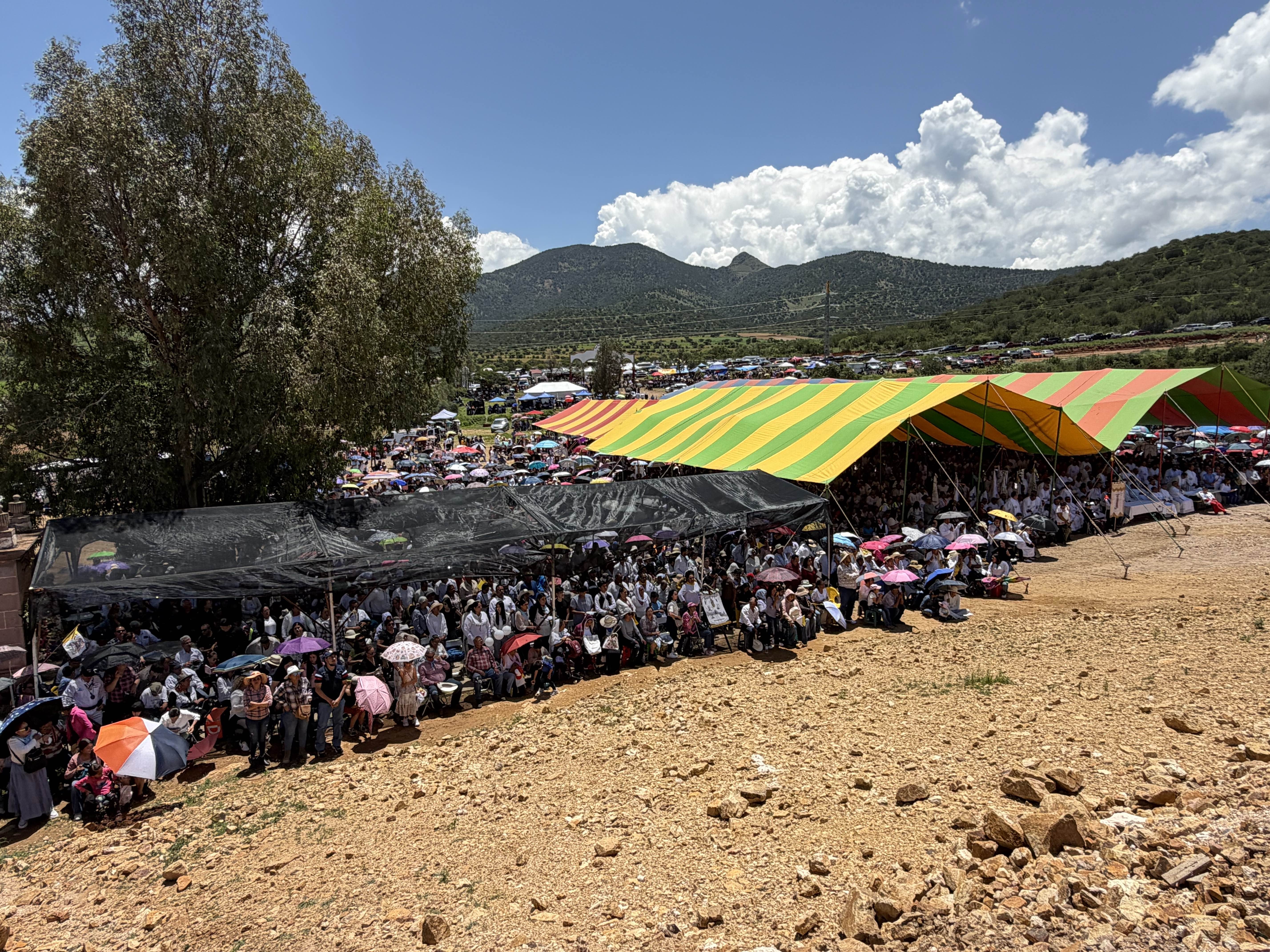
"Today we gather to celebrate the 120th anniversary of that Eucharistic miracle. The miracle of the wave, when Father Gerardo and Father Julián went out from here with the Blessed Sacrament to confront the terrible wave that was coming to destroy this territory," said Bishop Franklin Misael Betancourt of Tumaco during the Mass he celebrated on Jan. 31 at St. Andrew the Apostle Cathedral.

The bishop was referring to the miracle that occurred on the morning of Jan. 31, 1906. The diocesan website recounts that on that day, a strong earthquake shook the region and caused the sea to recede approximately 1 kilometer (over a half a mile), threatening to return in a massive wave.

In response, the then-parish priest of Tumaco, Father Gerardo Larrondo, "rushed to the church and took a large consecrated host and a ciborium from the tabernacle to protect it. He quickly went to the people and, raising the Blessed Sacrament, exclaimed: 'Come, my children, let us all go to the beach, and may God have mercy on us.'"

The people followed the priest to the beach, praying "as they spotted in the distance a terrifying wall of water advancing at great speed." The priest raised the Blessed Sacrament, making "a large sign of the cross."

"Miracle! Miracle!" the villagers began to shout. "The immense wave that threatened to destroy the town of Tumaco suddenly stopped, as if blocked by an invisible force greater than that of nature, while the sea returned to its normal state," the website recounts.

"From that date," the bishop said in his homily, "the people began to gather in the parish church every year to give thanks for the wondrous miracle performed by the presence of the Blessed Sacrament, a miracle comparable in greatness, we dare say, to those recounted in sacred Scripture."

Beyond this extraordinary event, the prelate emphasized that the Eucharistic miracle takes place at every Mass, in which the bread and wine are transformed into the body and blood of Christ.

Betancourt therefore urged the faithful not to stop attending Mass because "just as I need daily food and the air to live, I equally, and even more so, need the Eucharist for my life."

Regarding the miracle that occurred more than a century ago, the bishop of Tumaco noted that it was also known to St. Carlo Acutis and is part of the exhibition he created about Eucharistic miracles.

Before concluding the homily, the prelate expressed his desire "to make this cathedral the shrine of the Eucharistic miracle."

"We are going to create a shrine here, a beautiful shrine, a magnificent shrine," he said.

"I ask you to pray that we may be able to accomplish this. And that everyone will come to visit us" in this "Eucharistic diocese," Betancourt encouraged.

The Mass on Jan. 31 also concluded the 40 hours of adoration of the Blessed Sacrament that the diocese organized in commemoration of the 120th anniversary of the Eucharistic miracle of 1906.

This story was first published by ACI Prensa, the Spanish-language sister service of EWTN News. It has been translated and adapted by EWTN News English.
Full Article

Planned consecrations could trigger automatic excommunication and deepen rupture with Rome.

The Vatican will receive representatives of the Priestly Society of St. Pius X (SSPX) following the traditionalist group's announcement that it plans to consecrate new bishops without permission from Rome — a move that could incur automatic excommunication of all bishops involved and deepen the group's rupture with the Catholic Church.

The Vatican meeting will take place Feb. 12 at the Dicastery for the Doctrine of the Faith and will be led by Cardinal Víctor Manuel Fernández, prefect of the dicastery. The SSPX delegation will be led by its superior general, Father Davide Pagliarani, 55.

Vatican spokesman Matteo Bruni said "the meeting will be an opportunity for an informal and personal dialogue, which may help identify effective instruments of dialogue that could lead to positive outcomes," according to the official outlet Vatican News.

At present, only a meeting with the prefect of the Dicastery for the Doctrine of the Faith is planned, and it is not known whether Pope Leo XIV will also receive the SSPX superior general.

In a Feb. 5 communiqué, the SSPX encouraged members and faithful to accompany the upcoming meeting with prayer.

French Archbishop Marcel Lefebvre founded the SSPX in 1970 in opposition to some teachings of the Second Vatican Council, including those on religious freedom and the Church's relations with other faiths. The society celebrates exclusively the traditional Latin Mass, using the liturgical books in force prior to the postconciliar reforms.

In 1988, Lefebvre ordained four bishops in defiance of an explicit order from St. John Paul II, resulting in the excommunication of all those involved. Lefebvre died in 1991 without having reconciled with Rome. Twenty-one years later, Pope Benedict XVI lifted the excommunications of the surviving bishops.

Pope Francis later authorized SSPX priests to hear confessions and witness marriages in a further attempt to foster reconciliation with the group. The society remains in an irregular canonical situation.

The SSPX has announced that the planned consecrations will take place on July 1, the anniversary of the 1988 decree signed by John Paul II excommunicating Archbishop Lefebvre.

This story was first published by ACI Prensa, the Spanish-language sister service of EWTN News. It has been translated and adapted by EWTN News English.
Full Article

In a break from major medical associations, the American Society of Plastic Surgeons recommends against gender surgeries and other medical interventions on youth.

In an official break with major medical organizations in the U.S., the American Society of Plastic Surgeons (ASPS) issued a position statement this week recommending that due to the "low certainty" of benefit, plastic surgeons should delay surgeries related to treating gender dysphoria in children — including breast and chest, genital, and facial surgeries — until a patient is at least 19 years old.

In its Feb. 3 statement, the ASPS, which represents more than 11,000 plastic surgeons, or 90% of those in the U.S. and Canada, said there is "insufficient evidence demonstrating a favorable risk-benefit ratio for the pathway of gender-related endocrine and surgical interventions in children and adolescents."

The group also cited low certainty of long-term benefits, the likelihood of potential harms, and the irreversible nature of surgeries in a developmentally vulnerable population.

The procedures, which supporters call "gender-affirming care," include surgeries to remove or reconstruct healthy genitals to make them resemble those of the opposite sex.

They also include chest procedures that remove the healthy breasts on girls or implant prosthetic breasts on boys and facial surgeries that attempt to feminize boys and masculinize girls.

According to the ASPS statement, the recommendation is based on a review of evidence including the 2024 Cass Review from the United Kingdom and a 2025 report from the U.S. Department of Health and Human Services.

The U.S. report detailed the lack of evidence to support such procedures for minors along with the potential for irreversible harm. The report came out one year after the Cass Review arrived at similar conclusions, which led to the near-total restriction of puberty blockers and cross-sex hormones for minors in the United Kingdom. Surgeries for minors have been banned there for longer.

In July 2024, the ASPS first broke with the consensus of all major medical associations in the U.S. — including the American Academy of Pediatrics, the American Medical Association, World Professional Association for Transgender Health, and the American Psychological Association — when it cited the evidence as "low quality" for the benefits of so-called "gender-affirming care" for minors in a statement to City Journal.

"This position statement is not a retroactive judgment but a forward-looking response to evolving evidence," the Feb. 3 statement reads.

The ASPS emphasized that its position statement is not a clinical practice guideline, however, "given the current state of the evidence and variability in legal and regulatory environments."

Instead, the group encourages its members to use their "personal and professional judgment" as they "balance compassion with scientific rigor, developmental considerations, and concern for long-term welfare" of their patients.

Alfonso Oliva, a board-certified plastic and reconstructive surgeon and a board member at the Catholic Medical Association, told EWTN News that he welcomes the statement, but it does not go far enough.

"It goes a long way to try to protect adolescents from harm," he said, "but I would like to see it go through age 25, which is when the young adult brain is completely formed, so they'd have better decision-making ability."

"At least by 19 we're not going to transition children who would desist when cared for and loved and counseled appropriately," he continued.

Oliva said it is "almost impossible to pick out which adolescents will persist in their gender dysphoria into adulthood and which will desist" and that according to the evidence, "most adolescents who have gender dysphoria will over time, on their own, desist."

"It makes more sense to treat them through psychotherapy primarily, rather than irreversibly change their physical biology and possibly prevent them from a normal adulthood in terms of sexual function and reproduction," he said.

Health Secretary Robert F. Kennedy Jr., Centers for Medicare & Medicaid Administrator Mehmet Oz, and other officials applauded ASPS for the new position in a news release published by the health department.

"We commend [ASPS] for standing up to the over-medicalization lobby and defending sound science," Kennedy said. "By taking this stand, they are helping protect future generations of American children from irreversible harm."

Oz said the move places ASPS "on the right side of history," adding: "When the medical ethics textbooks of the future are written, they'll look back on sex-rejecting procedures for minors the way we look back on lobotomies."

In a statement this week, meanwhile, the American Medical Association told media that the "evidence for gender-affirming surgical intervention in minors is insufficient for us to make a definitive statement."

But the group said it "agrees with ASPS that surgical interventions in minors should be generally deferred to adulthood."

President Donald Trump signed an executive order in January 2025 to prevent hospitals from performing those procedures on children, calling it "surgical mutilation." The ban, which also prohibited "chemical mutilation" with cross-sex hormones and puberty blockers, threatened to block Medicare and Medicaid reimbursements for hospitals that perform the procedures on minors.

Oliva said he thinks "part of the motivation for the position statement is to limit the legal liability of its members."

Referring to the $2 million awarded by a New York jury in a medical malpractice suit this week to Fox Varian, a young woman who detransitioned after having a double mastectomy at age 16, Oliva said it is "not a coincidence that the ASPS issued the statement this week as they recognize there are lots of other lawsuits coming down the line."

The U.S. Conference of Catholic Bishops (USCCB) has repeatedly opposed doctors performing such procedures on children. Last year, in response to Trump's executive order on the procedures, USCCB Committee on Laity, Marriage, Family Life, and Youth chairman Bishop Robert Barron welcomed the federal restrictions.

"So many young people who have been victims of this ideological crusade have profound regrets over its life-altering consequences, such as infertility and lifelong dependence on costly hormone therapies that have significant side effects," Barron said at the time.

"It is unacceptable that our children are encouraged to undergo destructive medical interventions instead of receiving access to authentic and bodily-unitive care," he said.

Full Article

The pontiff told organizers of a Vatican-backed initiative that global crises are still leaving many children in extreme poverty.

Pope Leo XIV on Thursday voiced deep concern at a "lack of progress in protecting children from danger" as he met with the organizing committee of the initiative "From Crisis to Care: Catholic Action for Children."

Addressing participants gathered to advance proposals stemming from last year's International Summit on Children's Rights, convened by Pope Francis, Leo said: "It is indeed a tragedy that the children and youth of our world, the ones Jesus wanted to come to him, are so often deprived of care and access to the basic necessities of life."

He added that children "frequently have few opportunities for achieving their God-given potential" and warned that the situation "has not improved during the past year."

"One must question whether global commitments for sustainable development have been cast aside when we see in our global human family that so many children still live in extreme poverty, suffer abuse, and are forcibly displaced, not to mention that they lack proper education and are isolated or separated from their families," the pope said.

Leo recalled Pope Francis' teaching in Amoris Laetitia on the child's "right to receive love from a mother and a father; both are necessary for a child's integral and harmonious development" and urged continued defense of "the profound vision of life as a gift to be cherished and of the family as its responsible guardian."

He thanked participants for advocating for children, telling them: "First, you are speaking on behalf of those who have no voice. This is a truly noble task." Acknowledging discouragement that can come from "failed initiatives" or "seeming lack of interest," he encouraged them: "Let the good you know you are doing carry you forward."

The pope also emphasized the need to address children's "transversal needs," which "can easily go unnoticed when care is focused on just one area of need." He noted the committee members' varied charisms and specializations, while urging greater collaboration "so that children receive care that is well balanced, taking into consideration their physical, psychological, and spiritual welfare."

Leo said several Vatican bodies and religious superiors' unions are accompanying the effort, and he encouraged participants "to develop concrete steps and action plans to address the transversal needs of children."

In closing, he recalled Pope Francis' insistence on listening to children and cited a message presented to Francis at last year's summit: "Together with you, we want to cleanse the world of bad things, color it with friendship and respect, and help you build a beautiful future for everyone!"

This story was first published by ACI Prensa, the Spanish-language sister service of EWTN News. It has been translated and adapted by EWTN News English.

Full Article

Facebook Twitter Instagram YouTube Soundcloud

Public Inspection File | EEO

© 2015 - 2021 Spirit FM 90.5 - All Rights Reserved.