• Home
  • About Us
  • Support
  • Concerts & Events
  • Music & Media
  • Faith
  • Listen Live
  • Give Now

Catholic News

A spokesperson for the Department of Health and Human Services said the agency will issue Title X grant notices for 2027 "matched with agency priorities."

The Trump administration, citing legal challenges, said it will continue to give Title X grants to Planned Parenthood for another year — a move pro-life leaders see as a "betrayal."

The administration first restored Biden-era Title X funds to Planned Parenthood in January, to the outcry of pro-lifers. News broke March 31 that the administration would extend the grants for another year, just a day before they were set to lapse.

Thanks to the grants, Planned Parenthood and some other clinics will continue to be able to submit reimbursement receipts to the federal government for low-income patients who received birth control and other non-abortion services.

While grants won't directly cover abortion — the Hyde Amendment prevents the federal government from doing so — grants will subsidize an organization that performs hundreds of thousands of abortions yearly.

A Department of Health and Human Services spokesperson said the agency will issue Title X grant notices for 2027 "matched with agency priorities."

The Trump administration had initially paused the grants in 2025, but after facing legal challenges from Planned Parenthood, HHS released the grants in January. Most pro-life groups decried the decision, though a few defended it by saying it was the administration's only viable option as 42 U.S. Code Part 300, the rule governing family planning grants, had not been amended.

National pro-life groups have denounced the decision to keep funding Planned Parenthood. Marjorie Dannenfelser, president of Susan B. Anthony Pro-Life America, called the move "an inexplicable slap in the face to the pro-life GOP base."

"This is a clear abandonment as the first Trump administration enacted the Protect Life Rule to stop Title X funding of Planned Parenthood," Dannenfelser said. "It should have been 'Day 1' policy in the second administration. Instead, we are 14 months in and this hasn't been prevented."

Dannenfelser called the move "political suicide."

"Three out of four GOP base voters support defunding Planned Parenthood," Dannenfelser said. "One-third of those voters say they'd be less enthusiastic about voting this November if the GOP abandons pro-life policies."

"This comes on the heels of the administration undermining GOP states by allowing the shipping of abortion drugs into their borders, violating their laws," Dannenfelser continued. "And it comes after the president suggesting the GOP should be 'flexible' on the Hyde Amendment. This spells disaster for November."

Jennie Bradley Lichter, who heads the March for Life, said that "funding Planned Parenthood is not, by any stretch of the imagination, Making America Healthy Again."

"Absolutely maddening that [the HHS] is continuing to fund an org whose business model is built on ending human lives, misleading pregnant women into thinking abortion is their only option, and delivering substandard health care even in the rare cases when abortion is not involved," Lichter said in statement provided to EWTN News.

Live Action called on the Trump administration to reverse the decision.

"The Trump administration has decided [to] CONTINUE supplying Title X funds to Planned Parenthood," the statement read. "This is the largest abortion corporation in the country. They don't need our tax dollars. They don't deserve our tax dollars. This decision MUST be reversed."

"Over 400,000 unborn children are killed by this corporation every year, making them the largest abortion chain in America," Live Action President Lila Rose said. "The blood of these babies cries out. Taxpayer dollars should never fund the killing of innocent human beings."

"The Trump administration's decision to keep Title X federal funding going to Planned Parenthood is unacceptable," Rose said in a statement shared with EWTN News. "Taxpayer dollars should never be used to prop up America's largest abortion business. Planned Parenthood exists to end the lives of preborn children, and every dollar it receives helps sustain an industry built on violence against the innocent."

"This decision is a betrayal of the pro-life Americans who expected this administration to stand firmly against abortion and against the forced public funding of those who commit it," Rose continued. "The American people should not be made to subsidize abortion businesses under the guise of women's health. Title X funds should go to real health care providers that serve women and families without taking innocent human life. The administration should reverse course immediately and fully defund Planned Parenthood."

Planned Parenthood did not immediately respond to a request for comment.

Full Article
"I'm glad I found my way back to the Church. I learned much along the way. But if you believe as I do, you know I've been fortunate and touched by God's grace," Vance said.

Vice President JD Vance announced his book, "Communion: Finding My Way Back to Faith," will be released June 16.

"I've been writing this book for a long time, and I'm honored to finally be able to share the full story with you all," Vance wrote in a post to X. "'Communion' is about my personal journey and how I found my way back to faith."

The book will be published by HarperCollins Publishers, which also published Vance's 2016 bestselling book "Hillbilly Elegy: A Memoir of a Family and Culture in Crisis." Since its release, "Hillbilly Elegy" has sold over 5 million copies worldwide.

"The story of how I regained my faith, of course, only happened because I had lost it to begin with," Vance wrote in a HarperCollins press release. "The interesting question that hangs over this book, and over my mind, is why I ever strayed from the path. Why the Christian faith of my youth failed to properly take root."

"I'm glad I found my way back to the Church. I learned much along the way. But if you believe as I do, you know I've been fortunate and touched by God's grace," he said.

The book explores Vance's conversion to the Catholic faith and what it means to be a Christian across all of the seasons of his life, including as a child, a young man, a husband, a father, and a leader.

"To summarize this book: I'm a Christian, and I became a Christian because I believe that Jesus Christ's teachings are true," Vance said. "But I didn't always think that, and by sharing my journey I might be helpful to others — Catholic, Protestant, or otherwise — who are seeking reconciliation with God."

Jonathan Burnham, president and publisher of the Harper Group, said the book "will speak to so many searching for faith, connection, and meaning in their lives."

He added: Vance's "deeply heartfelt story of doubt and regained belief resonates far beyond politics, offering a moving reflection on the questions that define this moment in American public life."

Full Article

A Nigerian archbishop said African missionaries can evangelize a Europe uneasy with its Christian past.

Archbishop Fortunatus Nwachukwu is alarmed about rising hostility toward Christians, both in parts of the Islamic world and in Europe's increasingly post-Christian culture.

Nwachukwu, who serves as secretary of the Section of First Evangelization at the Vatican's Dicastery for Evangelization, told EWTN News that any serious conversation about peace and coexistence must begin with clear condemnation of anti-Christian violence, particularly from Muslim leaders in places where Christians lack full religious freedom.

The Nigerian prelate also warned of a growing cultural aversion to Christianity in the West, where Christian expression is often treated with suspicion even as societies insist on defending the religious symbols of others.

Pope Leo XIV is scheduled to visit four countries in Africa, including the Muslim-majority Algeria, on his first apostolic journey to the continent April 13–23.

A diplomat urges Muslims to confront anti-Christian violence

Drawing on decades of diplomatic service in Ghana, Paraguay, Algeria, and Switzerland, Nwachukwu described the anti-Christian discrimination he witnessed firsthand — experiences he believes continue to be overlooked.

"I do not criticize Islam; I criticize the way some people practice their Islam," he said. "People just shout about Islamophobia, but its main cause is not to be sought in the West. It is to be sought in the way some Muslims practice their religion. We are calling our Muslim friends to condemn the wrong use of their religion as a religion of violence."

He recalled that during his service in Algeria, Christians were openly labeled "enemies of Islam." In one incident, a shopkeeper refused to serve him because he was wearing a Roman collar.

"Christians still do not have full liberty to practice their religion," he said.

A West increasingly uncomfortable with its Christian roots

But Nwachukwu also directed sharp criticism toward Europe, where he sees a growing reluctance to defend Christianity even as Western societies emphasize religious tolerance.

"Everybody denounces Islamophobia, but nobody denounces Christianophobia," he said. "We are in a post-Christian Europe and a post-Christian West."

He noted that Christian symbols face discrimination not applied to other religions: "You enter a hall and see a symbol of Buddhism — nobody touches it. You see a Muslim in a hijab — nobody says to remove it. But you see a cross, and they say, 'Remove it.' Why?"

This, he argued, reflects a cultural embarrassment about Europe's Christian heritage:

"It is like feeling guilty for having a mother who is ugly and then forgetting that she also has rights. The Christianity that gave them their education, culture, and society — they now feel uncomfortable with it."

Reverse missionaries and a hopeful response to Europe's secular drift

Nwachukwu said this situation makes the growing presence of African and Asian missionaries in Europe all the more significant, as a hopeful sign that the global Church can help rekindle the continent's Christian identity.

"The West often forgets that we are the result of sacrifices made by their own brothers and sisters who became missionaries," he said. "But the sheaves — the children of those missionaries — are now returning."

Nwachukwu described this movement as a gift that can strengthen Western Christianity in places where secularism has taken deep root.

"We want to see the mother Churches in Europe accept and be proud of their missionary children from the global south."

Encouragement for persecuted Christians

To Christians facing persecution — whether under hostile regimes, extremist movements, or secular cultural pressures — Nwachukwu offered a message of strength: "If you are encountering persecution, it means that the message you have is important. If your message were not important, people wouldn't even think of you. So, the message is: Do not feel you are alone. Know what you are worth."

Full Article

The Church in Jerusalem is calling for respect for the sanctity of life after the Israeli Knesset recently approved a law permitting the death penalty for Palestinian prisoners.

Amid growing controversy over the Israeli Knesset's recent approval of a law permitting the death penalty for Palestinian prisoners, the Catholic Church in the Holy Land is raising its voice in defense of the sanctity of life and the inherent dignity of every human person.

The measure has stirred not only legal and political debate but also deep ethical and moral questions for believers about the meaning of justice and mercy in times of conflict.

In an exclusive interview with ACI MENA, the Arabic-language sister service of EWTN News, Father Bernard Poggi, rector of the Latin Patriarchal Seminary in Beit Jala, near Bethlehem, reflected on the Church's opposition to the death penalty and on how Christian faith can guide society toward alternatives that foster peace and reconciliation rather than deepen cycles of violence.

Poggi said human life is a divine gift that must never be violated and that any effort to impose the death penalty stands in contradiction to the core values of the Gospel and Christian ethics.

He explained that the Church's teaching is rooted in the Book of Genesis, which affirms that the human person is created in the image of God and therefore possesses a dignity and rights that belong to God alone.

"The divine image in each person grants that person sacredness and intrinsic worth," Poggi said. "This is why the commandment 'You shall not kill' remains one of the foundational principles of the Ten Commandments."

He added that the sanctity of life extends to all humanity, pointing to the story of Cain and Abel, in which God punishes Cain for killing his brother, underscoring that human life is not for one person to take from another.

"The Church upholds the sanctity of life as a fundamental value that must be protected, and no authority has the right to impose death as punishment," he said.

Poggi also cited paragraph 2267 of the Catechism of the Catholic Church, which rejects the death penalty as an attack on human dignity and expresses the Church's commitment to working for its abolition worldwide.

"The Catholic Church, in its official teaching, calls for the rejection of the death penalty as a violation of human dignity," he said. "The Church is committed to working for the abolition of this punishment everywhere and to raising awareness of the sanctity of life."

He also referred to the witness of the American religious sister Helen Prejean, whom he met and who became known for accompanying death row inmates in the United States. Prejean is the author of "Dead Man Walking," published in 1993 and later adapted into a major film in 1995.

"Through her work, we see how the death penalty affects inmates and their families and how it raises profound moral questions about justice and mercy," Poggi said. "Even in the harshest conditions, prisoners retain their human dignity, and that dignity belongs to God alone."

Reflecting on the political and ethical consequences of capital punishment, Poggi warned that using the death penalty as a deterrent or political instrument distorts the very meaning of justice."

Today, ideas of justice are often twisted in many countries and shaped by political interests rather than by human and ethical values," he said. "Revenge becomes dominant, and innocent people are often punished as scapegoats."

"Revenge does not achieve justice," he continued, echoing a phrase often attributed to Mother Teresa: "An eye for an eye leaves the whole world blind."

He stressed that capital punishment robs a person of the possibility of repentance and reform and closes the door to hope.

"Every person makes mistakes," he said. "Punishment should seek correction, not revenge. An ultimate penalty such as execution blocks the path of change and repentance."

Poggi also warned of the political dangers of applying the death penalty in conflict zones.

"In the Middle East, anyone who politically or ideologically opposes the system can become a target simply because of their beliefs," he said. "This threatens freedom of expression and weakens society's ability to build justice and reconciliation."

Speaking specifically about Palestinians, he said many detainees in Israeli prisons have had only limited opportunities to defend themselves or to receive proper legal representation.

"New laws imposing the death penalty increase the risk of killing innocent people and widen the gap between communities instead of encouraging reconciliation and mercy," he said.

He also reflected on the spiritual meaning of the issue during Holy Week.

"We are living through Holy Week, when we remember the trial and crucifixion of Jesus, who himself was a victim of laws applied unjustly," Poggi said. "Jesus did not defend himself through threats or force but offered an example of forgiveness and life."

He added that the Church's call to defend human life is the foundation for building true peace and a just society.

"Real justice is fulfilled in life, not in death," he said. "Every person must have the door of hope left open to return from his mistakes."

Poggi emphasized that this message is not meant only for Christians but also for the whole world. "The Holy Land needs light, not darkness; life, not blood," he said. "The message is clear: Human life is sacred, and forgiveness is needed at every moment."

The priest concluded with a theological reflection: "The human person is created in the image of God, and Christ offered redemption for all humanity," he said. "Every person is called to a better life. Jesus died for the forgiveness of sins and remains the supreme example of mercy and the possibility of change."

Full Article

In a video released on X, the Holy Father posed a question for the faithful: "Have you ever been in a crisis?"

Pope Leo XIV's prayer intention for the month of April is for priests in crisis.

In a video released on X, the Holy Father posed a question for the faithful: "Have you ever been in a crisis?"

"In moments of fragility, it's so important that we are there for one another," he said. "This April, I invite you to join me in prayer for priests going through moments of crisis in their vocation, that they may find accompaniment and that communities may support them with understanding and prayer."

In the full video shared on the Pope's Worldwide Prayer Network website, Pope Leo recites an original prayer written specifically for this month's prayer intention.

Lord Jesus,

Good Shepherd and companion on the journey,

today we place in your hands all priests,

especially those going through moments of crisis,

when loneliness weighs heavily,

when doubt clouds their hearts,

and when exhaustion seems stronger than hope.

You who know their struggles and wounds,

renew in them the certainty of your unconditional love.

Let them feel they are not mere functionaries or lonely heroes,

but beloved sons, humble and cherished disciples,

and pastors sustained by the prayer of their people.

Good Father,

teach us as a community to care for our priests:

to listen without judging,

to give thanks without demanding perfection,

to share with them the baptismal mission

of proclaiming the kingdom in word and deed,

and to accompany them with closeness and sincere prayer.

May we support those who so often support us.

Holy Spirit,

rekindle in our priests the joy of the Gospel.

Grant them healthy friendships, networks of fraternal support,

a sense of humor when things don't go as expected,

and the grace to always rediscover the beauty of their vocation.

May they never lose trust in you,

nor the joy of serving your Church with a humble and generous heart.

Amen.

"Pray with the Pope" is accessible on the Pope's Worldwide Prayer Network website and its digital platforms.

Full Article
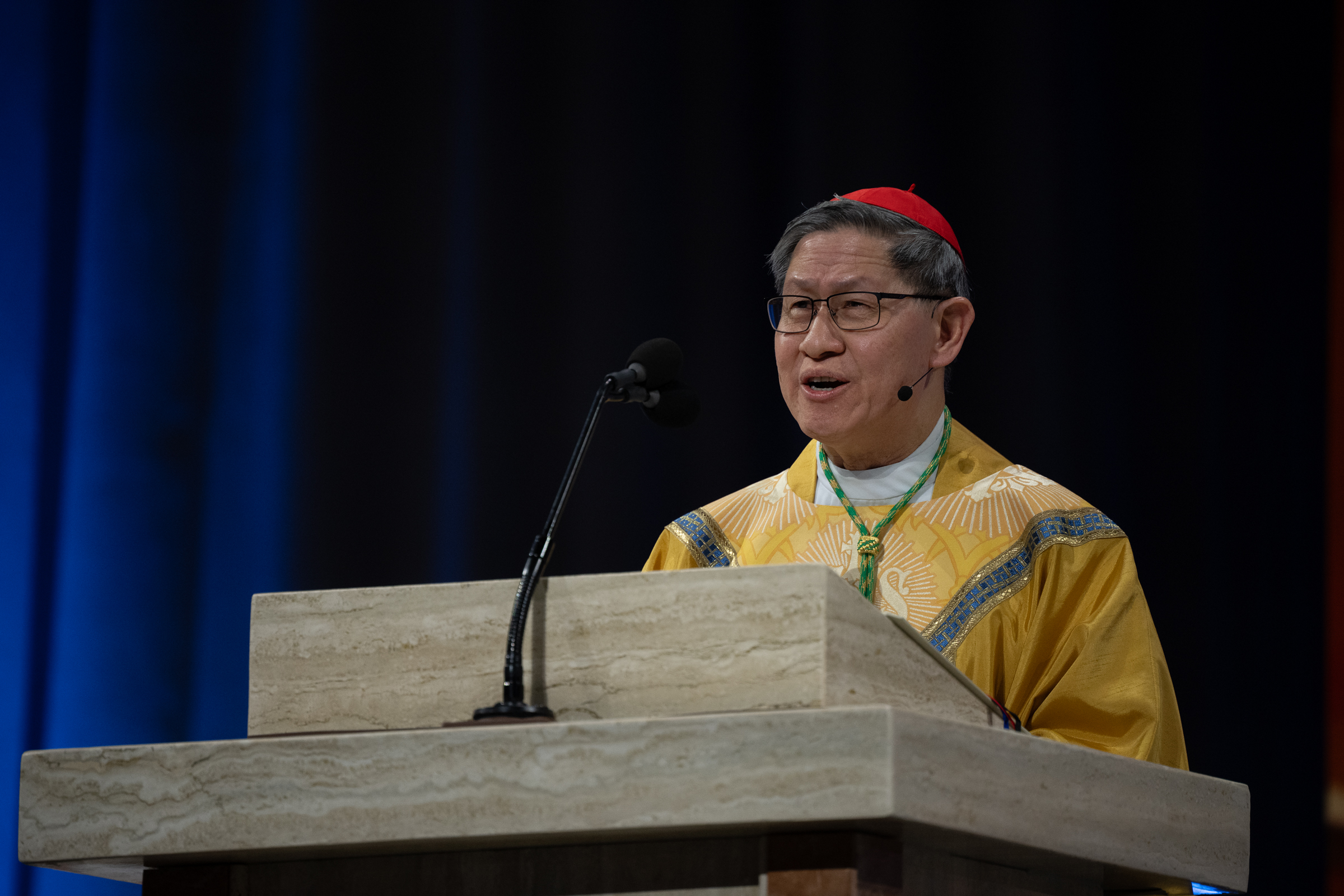
After lengthy negotiations, the Church and the Spanish government established a system in order to compensate victims of abuse within the Catholic Church.

The Catholic Church, the Spanish government, and the people's ombudsman have agreed upon a protocol for compensating abuse victims following arduous negotiations that began last January.

The agreement does not establish specific parameters for financial compensation — neither minimums nor maximums — because it is not intended to be the sole avenue for reparation. Furthermore, as agreed upon by the signatories, the aim is to address each case on an individualized basis.

The signing of the new protocol, which will enter into force on April 15, took place at the ombudsman's office on March 30. Present at the ceremony were the president of the Spanish Bishops' Conference (CEE, by its Spanish acronym), Archbishop Luis Argüello; the president of the Spanish Confederation of Religious (CONFER, by its Spanish acronym), Dominican Father Jesús Díaz Sariego; the minister of the Presidency, Justice, and Relations with the Cortes (legislature), Félix Bolaños; and the people's ombudsman, Ángel Gabilondo.

Alluding to the liturgical season, Argüello expressed at the beginning of his remarks the hope that the agreement would serve to "alleviate the passion (suffering) of so many victims of abuse," specifically those whose cases have passed the statute of limitations or whose abusers have died.

The prelate underscored that this new system is an extension of the efforts undertaken for years by ecclesiastical institutions, efforts that more than a year ago took concrete form in the PRIVA plan for the comprehensive reparation of abuse victims. This plan has already resolved over a hundred cases, offering, among other measures, financial compensation to more than 80 individuals, totaling 2.5 million euros ($2.86 million).

Under this new protocol, the system implemented by the Catholic Church "is never replaced; rather, it is complemented by collaboration with the public authorities," an arrangement whose concrete realization has been delayed beyond initial expectations, yet which Argüello views as "an opportunity for collaboration, while naturally respecting the scope and jurisdiction" of each signatory institution.

Sariego remarked that "an agreement — even an imperfect one — is preferable to no agreement at all" and expressed the hope that this day would "serve to alleviate that pain and suffering which we know is immense and runs deep."

Bolaños noted that this constitutes a model "that involves the victims," in which "comprehensive reparation is guaranteed" and which is structured as "a collaborative effort"; however, he underscored that "the final say will rest with the state" in the event of a disagreement between the experts from the Catholic Church's PRIVA Plan and the team appointed by the people's ombudsman.

Bolaños also commended and acknowledged the work of the experts appointed by the Catholic Church, "even though the PRIVA Plan contained an 'original sin,'" namely, that it was the Church itself that determined what compensation victims of abuse within its own ranks would receive, a factor that led "many victims to lack confidence" in the system.

During his remarks, Gabilondo stated that the signatories had debated "every comma" of the 14-page protocol. "I cannot recall anything that was not complicated, nor anything that proved insurmountable," he stated when asked about the difficulties encountered during this process.

End of a phase

The signing of the protocol marks the conclusion of a phase that began in March 2022, when the legislature tasked the ombudsman with investigating abuses within the Catholic Church. In October 2023, the ombudsman presented his report, which included a recommendation to establish a state-run reparations system.

In April 2024, the executive branch approved an implementation plan for measures proposed by the ombudsman, a plan that the CEE rejected on the grounds that it was based on "a condemnatory judgment of the entire Church, rendered without any form of legal safeguards," and amounted to "the state publicly targeting the Church in a discriminatory manner."

Despite this rejection, a preliminary agreement was reached in January 2026, an agreement in which the Vatican secretariat of state was reportedly involved, as acknowledged by both Argüello and Bolaños. The minister confirmed on March 30 that on March 20 he held a further meeting at the Vatican Secretariat of State while in Rome accompanying the king and queen of Spain, who were received by Pope Leo XIV.

How the system will work

Effective April 15, any victim of abuse within the Church may contact an office established for this purpose within the Ministry of the Presidency, Justice, and Relations with the Cortes, which will forward the information to the ombudsman.

The Ombudsman's Victims Unit will review the case within a maximum period of three months — extendable by one additional month if necessary. If the case is accepted, the Ombudsman's Victims Unit will submit a proposal for redress to the PRIVA Plan Advisory Commission, which will have a maximum of two months to evaluate and respond to it.

The ombudsman will then have 15 days to convey these assessments to the victim.

If all parties are in agreement, the decision shall be deemed final. Otherwise, the dispute is referred to a joint body comprising representatives from the ombudsman, the CEE, and CONFER as well as associations of abuse victims, which will have an additional 15 days to reach a resolution.

If an agreement is still not reached, "the ombudsman and the representatives of the ecclesiastical institutions will make a final attempt to reach a consensus within a maximum period of one month."

Ultimately, it would be the Ombudsman's Victims Unit that makes the decision, which the Catholic Church must abide by.

This story was first published by ACI Prensa, the Spanish-language sister service of EWTN News. It has been translated and adapted by EWTN News English.

Full Article
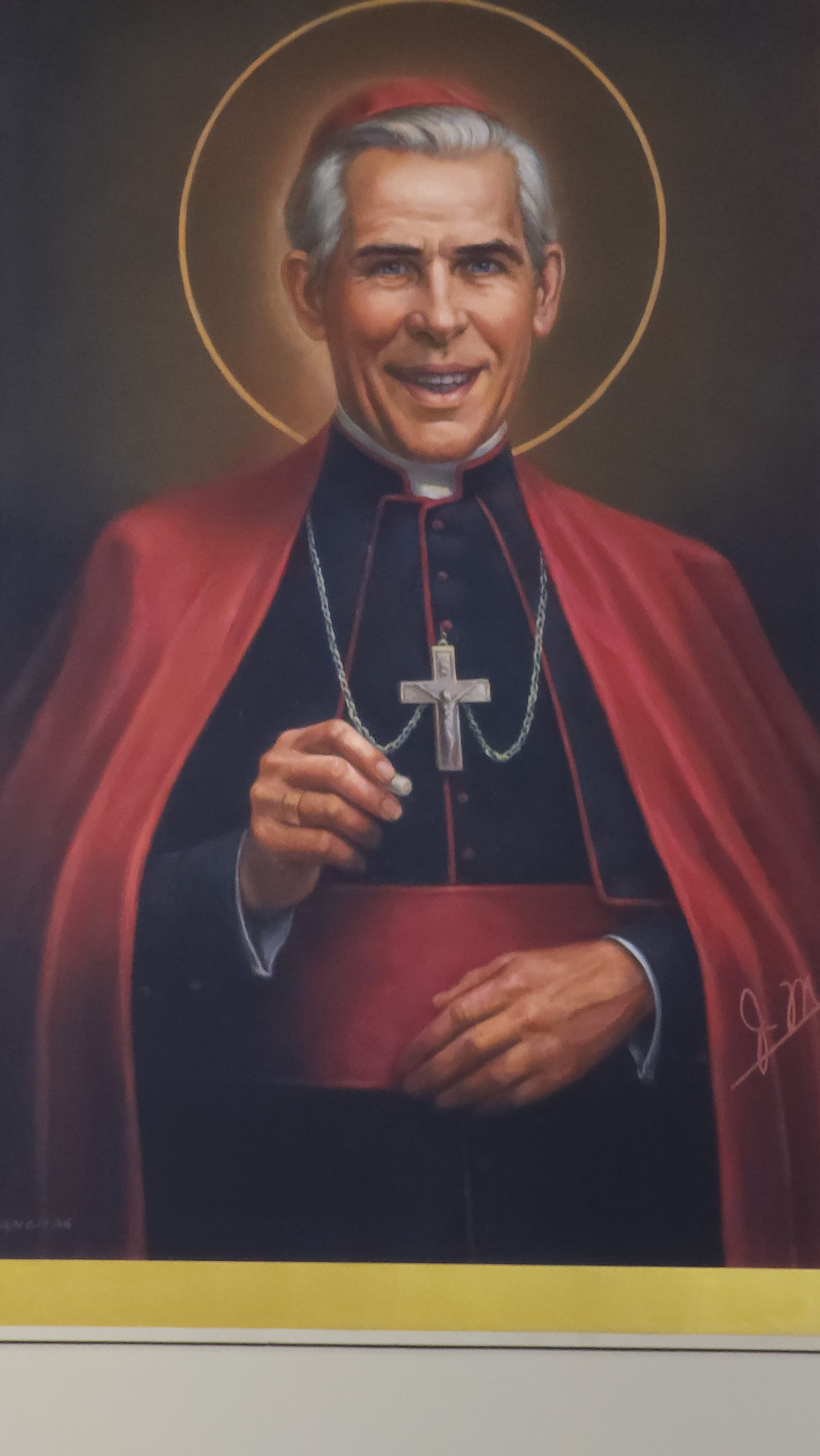
Members of the National Episcopal Conference of Congo have pledged not to remain silent in the face of the worsening security and humanitarian crisis in the Democratic Republic of Congo.

KINSHASA, Democratic Republic of Congo — Members of the National Episcopal Conference of Congo (CENCO) have reaffirmed their prophetic mission, pledging not to remain silent in the face of the worsening security and humanitarian crisis in the Democratic Republic of Congo (DRC).

In a statement issued following their March 23–25 extraordinary Plenary Assembly in the Catholic Archdiocese of Kinshasa, CENCO members emphasized their unwavering commitment to speaking out against injustice.

"Our goal is to contribute, among other things, to the promotion of the inalienable dignity of the human person and to the well-being of the Congolese people. Therefore, in the face of the degrading security and humanitarian situation of our country, we will not be silent," the Catholic leaders said in their message issued March 26.

Referencing the message of the late Pope Francis during his apostolic visit to the DRC, the bishops recalled the moral obligation of the Church to speak out.

"As Pope Francis said during his apostolic journey in our country, the Church cannot remain indifferent or silent in the face of the injustices and the pain that strike the populations," CENCO members said.

They reaffirmed the autonomy of both the Church and the political community while highlighting their shared responsibility in serving society.

"Certainly, the political community and the Church are independent from each other and autonomous in the domain that is theirs, but they are called to collaborate, because both are at the service of the personal and social vocation of the same men," the bishops said.

They insisted on the Church's right to address moral issues, including those related to politics, when human dignity is at stake.

"The Church therefore has the right to preach faith in all freedom, to teach social doctrine without any hindrance, to make a moral judgment, even on matters that concern political order, when the fundamental rights of the human person and the salvation of souls require it," they said.

Amid ongoing instability in the country, the bishops called for peaceful solutions grounded in dialogue.

"Concerned with peace and the sacredness of human life, we are convinced that dialogue is superior to war," they said.

Quoting Pope Francis, they added: "War is always a failure of politics and humanity, a shameful capitulation."

The bishops also underscored the importance of initiatives that promote peaceful coexistence.

"Thus, let us remember the relevance of the Social Pact for Peace and Living Together in DRC and in the Great Lakes region, not to be confused with a dialogue aimed at sharing power," they said.

They cautioned against efforts to undermine the Church's unity and mission, saying: "We are well aware that some people turn to discrediting our mission, to sow discord between us, or to engage us in some kind of religious war."

They urged Catholics and all people of goodwill to remain vigilant and guided by virtue.

"We exhort our faithful Catholics, women and men of goodwill, to discernment, to prudence, and to benevolence," they said.

As Christians prepare for Easter, the bishops extended a message of hope and prayer, saying: "As Easter approaches, may the Lord, through the intercession of the Blessed Virgin Mary, Queen of Peace, bless the DRC and its people."

This story was first published by ACI Africa, the sister service of EWTN News in Africa, and has been adapted by EWTN News.

Full Article
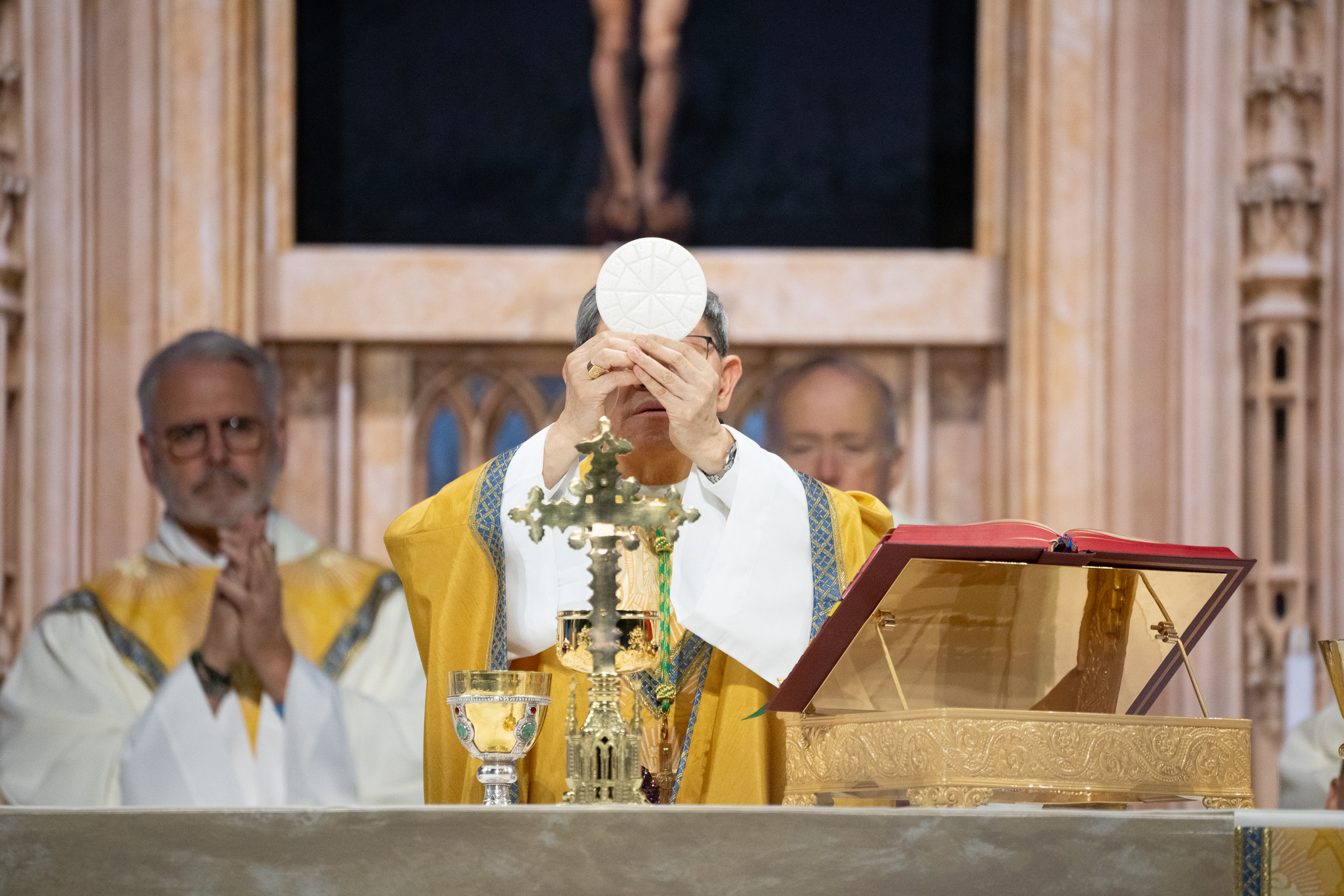
Rome event set for Sept. 25–27 is scrapped as the Vatican says children's pastoral initiatives should instead be held locally with families.

VATICAN CITY — The Vatican has canceled the second World Children's Day, which had been scheduled to take place in Rome Sept. 25–27, about six weeks after Pope Leo XIV dissolved the commission responsible for its organization.

The Dicastery for the Laity, the Family, and Life announced the decision March 27, saying it had "considered it appropriate to cancel the celebration of the Second World Children's Day, initially scheduled to take place in Rome from Sept. 25 to 27, 2026."

According to the official statement, the dicastery opted not to hold the international gathering in Rome and instead pointed to a more decentralized approach rooted in local communities.

"All initiatives aimed at the pastoral care of children may be celebrated, at the discretion of the ordinaries, at a diocesan or parish level and with the involvement of families, the proper place for the human and spiritual growth of every child," the statement said, adding that the decision was made "after careful consideration and in agreement with the Holy Father."

The text underscores the role of the family as central to the human and spiritual development of children, in keeping with the pastoral emphasis of the current pontificate.

The Dicastery for the Laity, the Family, and Life also reaffirmed that it continues "its commitment to promoting the pastoral care of the family in all its components."

The cancellation of the second World Children's Day follows another decision made in February that brought a structural change by placing the initiative under the integrated management of the Roman Curia. Leo XIV dissolved the Pontifical Commission for World Children's Day, a body created in 2024 by his predecessor, Pope Francis, for organizational matters.

As a result, the president, vice president, and all members of the body — including Father Enzo Fortunato, who had served as president of the committee — automatically ceased their functions.

Full responsibility then passed to the dicastery led by Cardinal Kevin Farrell, whom the pope entrusted with general coordination, resolving pending matters, and presenting the final liquidation balance to the Secretariat for the Economy.

This story was first published by ACI Prensa, the Spanish-language sister service of EWTN News. It has been translated and adapted by EWTN News English.

Full Article
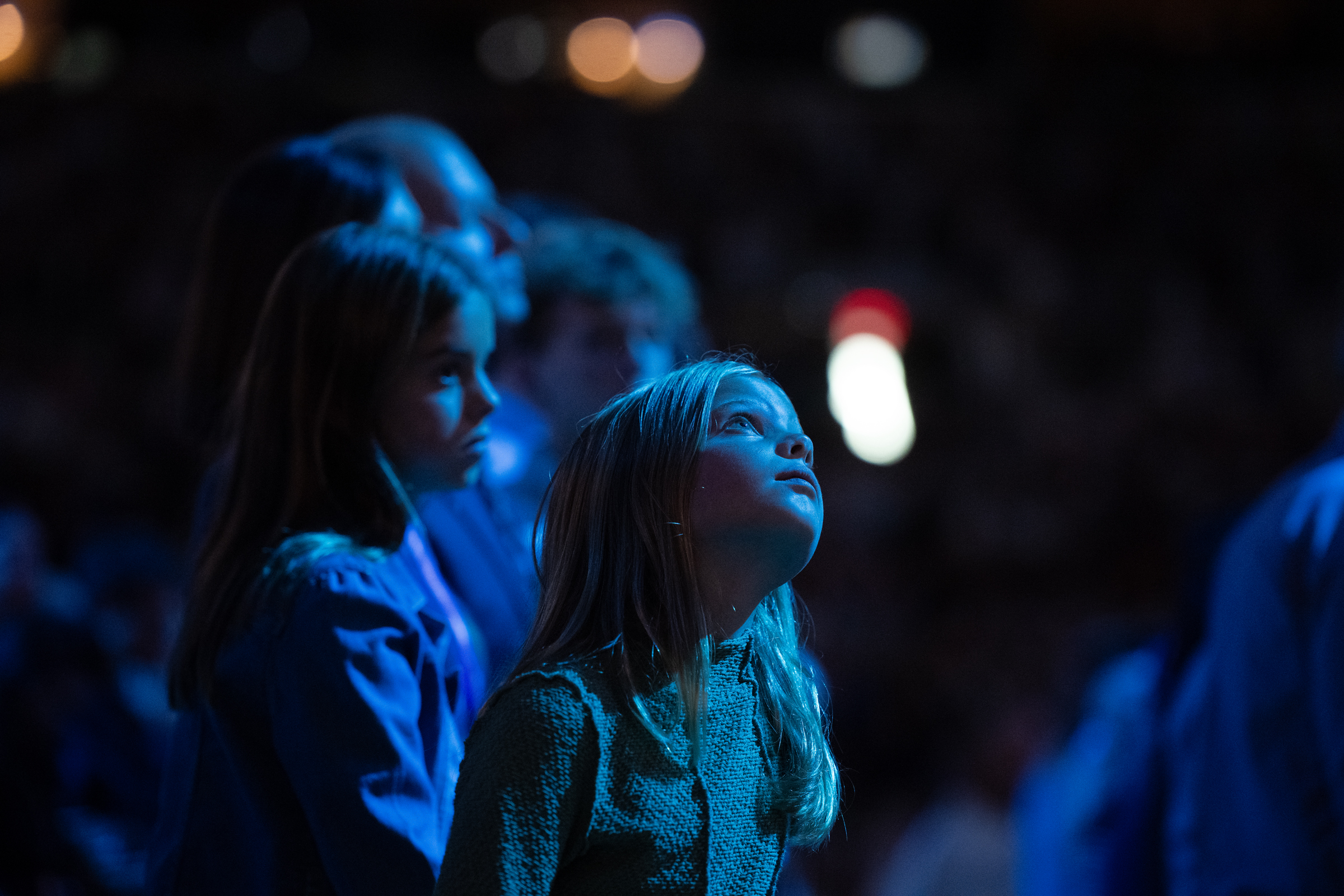
The state's strict law runs afoul of the First Amendment, the high court said in a near-unanimous ruling.

Colorado violated the First Amendment by telling therapists that they could not help young people struggling with unwanted same-sex attraction, the U.S. Supreme Court said in a March 31 ruling.

The high court said in an 8-1 decision that Colorado's law banning "conversion therapy" for minors runs afoul of free speech protections and does not qualify as a "permissible" exception to the First Amendment.

"The First Amendment stands as a bulwark against any effort to prescribe an orthodoxy of views, reflecting a belief that each American enjoys an inalienable right to speak his mind and a faith in the free marketplace of ideas as the best means for finding truth," the ruling said.

"Laws like Colorado's, which suppress speech based on viewpoint, represent an egregious assault on both commitments," the justices said.

Justice Ketanji Brown Jackson was the lone dissent from the ruling.

Colorado's law defined "conversion therapy" as "any practice or treatment" that attempts to change a person's "sexual orientation or gender identity."

In its ban the state included efforts to change a person's "behaviors or gender expressions or to eliminate or reduce sexual or romantic attraction or feelings toward individuals of the same sex."

Christian counselor Kaley Chiles filed a lawsuit to challenge the ban in 2022, arguing that her clients come to her for faith-based counseling, and some are referred by churches or word of mouth.

The lawsuit asserted that the Colorado rule constituted viewpoint discrimination because it expressly permitted therapy that is supportive of gender transitions but prohibited therapy that is rooted in "a religious viewpoint that aligns with [Chiles'] religious beliefs and those of her clients."

In its March 31 ruling, the Supreme Court acknowledged that the decision was a "narrow one," insofar as it did not address broader prohibitions on "conversion therapy" practices such as "physical interventions."

Chiles herself argued that she "provides only talk therapy" to her clients, the court noted. She said the law "strikes at the heart of the First Amendment's protections for free speech."

The state's law "censors speech based on its viewpoint," the justices said, describing the ban as an "egregious" assault on free speech.

"Colorado may regard its policy as essential to public health and safety," the ruling said. "Certainly, censorious governments throughout history have believed the same."

In her dissent, Jackson argued that the First Amendment has "far less salience" where medical regulations are concerned.

She alleged that the majority opinion was "unprincipled and unworkable" and "will eventually prove untenable."

Jim Campbell, lead attorney with the legal group Alliance Defending Freedom, which represented Chiles in the case, said in a press release that the ruling was "a significant win for free speech, common sense, and families desperate to help their children."

"States cannot silence voluntary conversations that help young people seeking to grow comfortable with their bodies," he said.

Full Article
Dr. Aaron Kheriaty spoke with EWTN News about the precedent-setting outcome of the Missouri v. Biden case, which restricts government agencies from censoring the plaintiffs' free speech.

In an exclusive interview with EWTN News, Dr. Aaron Kheriaty, a plaintiff in last week's landmark settlement in the Missouri v. Biden case, described it as a hard-fought victory that sets an important legal precedent against federal government pressure on social media platforms to censor constitutionally protected speech.

The settlement agreement, reached in the form of a consent decree and approved by U.S. District Judge Terry Doughty on March 26, bars the U.S. surgeon general, the Centers for Disease Control and Prevention, and the Cybersecurity and Infrastructure Security Agency from threatening or directing major platforms — including Facebook, Instagram, X, LinkedIn, and YouTube — to suppress constitutionally protected content.

Kheriaty, who is a Catholic bioethicist and psychiatrist and one of the named plaintiffs in the case, told EWTN News the outcome, while narrower than he hoped, still delivers a meaningful blow to what he called "the largest government-sponsored censorship effort in the digital age."

"It would have been nice to bar all the other agencies named in the consent decree from censorship," he said. "People should bring other lawsuits and keep fighting this machinery."

Among others, the White House, the FBI, and the U.S. Department of Homeland Security were also accused of involvement in the alleged censorship efforts, but only the three named agencies are barred from censorship subject to the specific permanent injunction in last week's decree.

The high-profile Missouri v. Biden case centered on the Biden administration's alleged campaign to silence and suppress on social media viewpoints it opposed.

The case, originally filed in Louisiana federal court, gained national attention after it advanced to the U.S. Supreme Court under the name Murthy v. Missouri.

In June 2024, however, the Supreme Court ruled that the individual plaintiffs — who along with Kheriaty included Jill Hines, Jim Hoft, Missouri and Louisiana state accounts (as well as former co-plaintiffs Drs. Jayanta Bhattacharya and Martin Kulldorff, who later joined the Trump administration) — lacked standing to pursue the preliminary injunction. Despite that setback, the plaintiffs continued litigating in district court, leading to last week's settlement.

'An important precedent'

The decree set what Kheriaty called an "important precedent" in a case that, with its "massive level of censorship," is the "first of its kind during the digital age."

The settlement agreement was negotiated on behalf of individual plaintiffs alone and does not apply to all Americans or all speech, and it does not prevent other agencies (like the FBI or State Department) from the types of actions alleged in the original lawsuit.

"Unfortunately, we had to negotiate the settlement agreement so that it only applies to us, the plaintiffs, not to everyone in the country," Kheriaty said. "So what about everyone else? Are we the only citizens whose free speech is protected?"

Not exactly, he said. "While the settlement is limited to the plaintiffs, it functions like a court ruling, which means it's now a precedent in federal court, which is the main thing we wanted."

"There were no precedents before this. Having a legal precedent isn't trivial," he said.

The consent decree explicitly recognizes that simply labeling speech as "misinformation" or "disinformation" does not strip it of constitutional protection.

Kheriaty said it was important to win the case in court, as well as in the court of public opinion. "The main thing our case accomplished was to help the public learn what the Biden administration was doing," he said. "There were 20,000 pages of discovery. Our case and the Twitter files put this on the map for the American people," he said. "Elon Musk got involved. Americans learned of the public-private partnerships, nonprofits, and universities involved in the government's censorship."

"It even became an issue in the presidential election," he said, citing Vice President JD Vance's response during the vice presidential debate, where Vance said the censorship engaged in by the Biden administration was a "threat to democracy" on "an industrial scale."

Kheriaty also lauded President Donald Trump's executive order stating that the Biden administration had "infringed on the constitutionally protected speech rights of American citizens across the United States in a manner that advanced the government's preferred narrative about significant matters of public debate."

Kheriaty said discovery from the Missouri v. Biden case led to Meta CEO Mark Zuckerberg, in a letter to Jim Jordan and in an appearance on the Joe Rogan podcast, to admit "to what we were alleging in our case," Kheriaty said. "Zuckerberg said censorship was happening at Facebook because the government pressured them. He apologized, said it was a mistake."

"That's a big deal."

'Plenty of evidence' to show censorship

Kheriaty's successful suit against the federal government stemmed from the censorship of his social media posts regarding an earlier lawsuit he filed against his employer, which gained national attention in 2021. In the suit, he publicly opposed the COVID-19 vaccine mandate at the university, challenging it on the constitutional grounds of equal protection and due process.

He argued at that time that his prior infection with COVID-19 (contracted in July 2020) provided robust natural immunity, making the vaccine requirement unnecessary and discriminatory for him and others in similar situations.

The university, where he directed the Medical Ethics Program and chaired the hospital ethics committee, first placed him on investigatory leave, then unpaid suspension, "and then eventually fired me," he said.

"I didn't really have a Plan B if I got fired," Kheriaty said. "It was a wild ride."

"God took care of us," he continued. "My wife was supportive. She didn't tell me what to do, but she told me now that lots of people were watching my case, I should 'strongly consider finishing' what I started.

"That was all I needed. Immediately I knew, I'm not going to back out of this fight."

According to Kheriaty, the university was, without saying it, hoping he would file a religious exemption, which he never did. "It would have made the case go away, and I would not have gotten fired. But then I would not have had standing to bring the case," he said.

He said he was "wavering at the end. I asked myself, 'Is this responsible? I have five kids in private school, two of those in college. I won't be able to get a job in another hospital having just sued my employer," he said with a laugh.

Although he lost his case, the university eventually stopped enforcing its vaccine mandate policy.

"I don't regret it. I would do it again," said Kheriaty, who is now director of the Bioethics, Technology, and Human Flourishing program at the Ethics and Public Policy Center and in private practice.

In the meantime, however, "I had plenty of evidence to show censorship was happening. People told me they couldn't see things I had just posted on social media [about the vaccine mandates]."

The New Civil Liberties Alliance, which represented Hines and Kheriaty, noted in a press release that two related censorship lawsuits remain ongoing: one against the U.S. State Department on behalf of The Federalist and The Daily Wire, and another concerning vaccine-injured individuals censored on Facebook.

Full Article

Facebook Twitter Instagram YouTube Soundcloud

Public Inspection File | EEO

© 2015 - 2021 Spirit FM 90.5 - All Rights Reserved.