The text will be titled Venite ad Me, Latin for "Come to Me."
The Vatican's Dicastery for the Doctrine of the Faith will publish a new document on the transmission of the faith, titled Venite ad Me, in mid-October.
According to a source from the dicastery with direct knowledge of its content, who confirmed the information to ACI Prensa, the Spanish-language sister service of EWTN News, the text "addresses various paths and different possibilities to encourage reflection within each diocese on the difficulties and new opportunities we have for transmitting faith in Jesus Christ to our brothers and sisters."
Venite ad Me, which means "Come to Me" in Latin, responds to a request made by Pope Francis and embraced by Leo XIV, aimed at stimulating debate and reflection within the Catholic community.
"Given that in many parts of the world the faith is transmitted with increasing difficulty, the question is how we can successfully pass on the faith to others in the world in which we live," the same source added.
In preparing the document, the Vatican consulted bishops' conferences from around the world. According to the Vatican source, 70% of them responded.
"This gives the text a strongly universal character that reflects a wide variety of concerns and contexts regarding the transmission of the faith," the source noted.
This story was first published by ACI Prensa, the Spanish-language sister service of EWTN News. It has been translated and adapted by EWTN News English.
Following years of rigorous formation in the U.S. and Rome, new deacons prepare to bring their ministry and service back to parishes across North America.
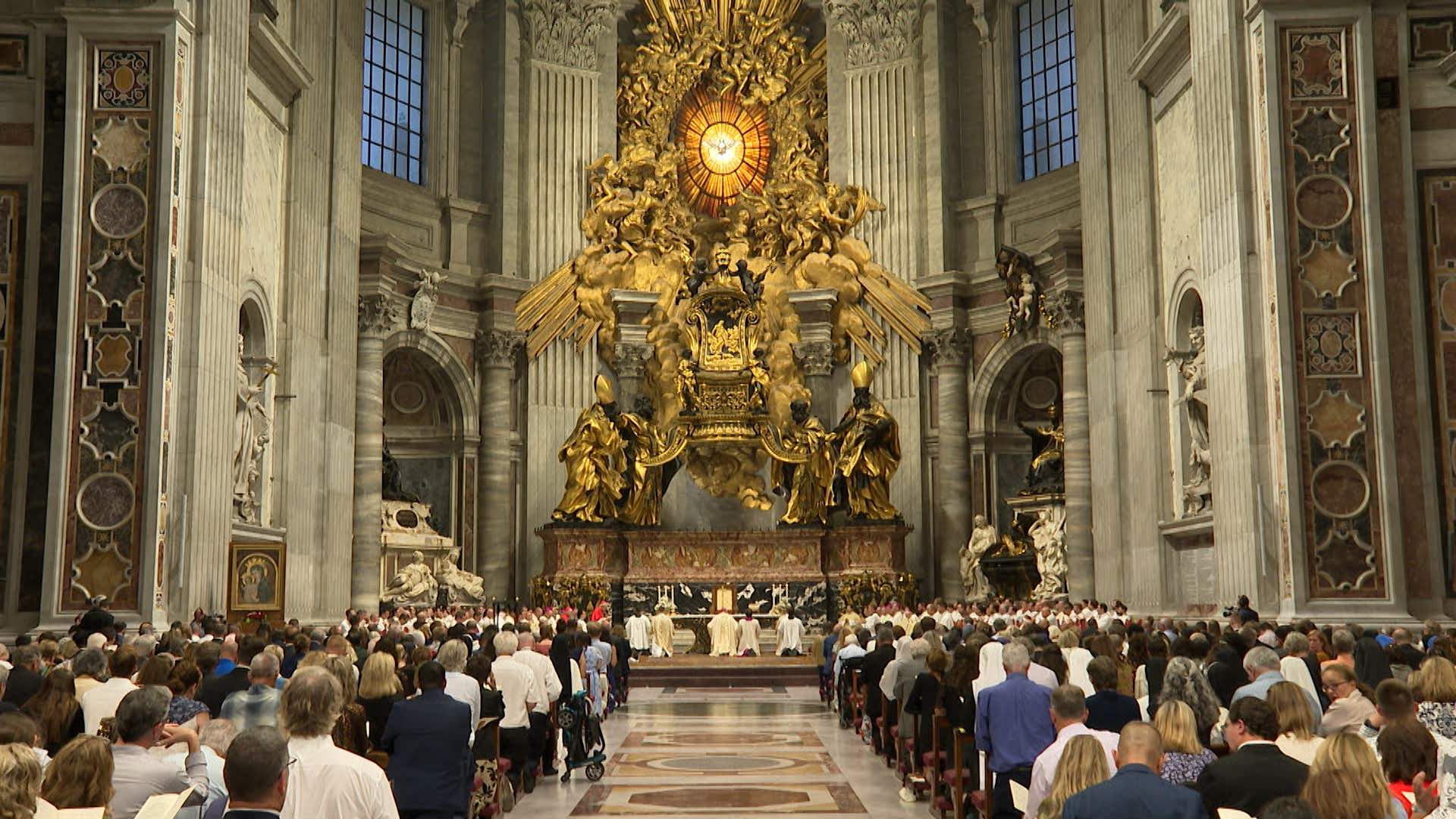
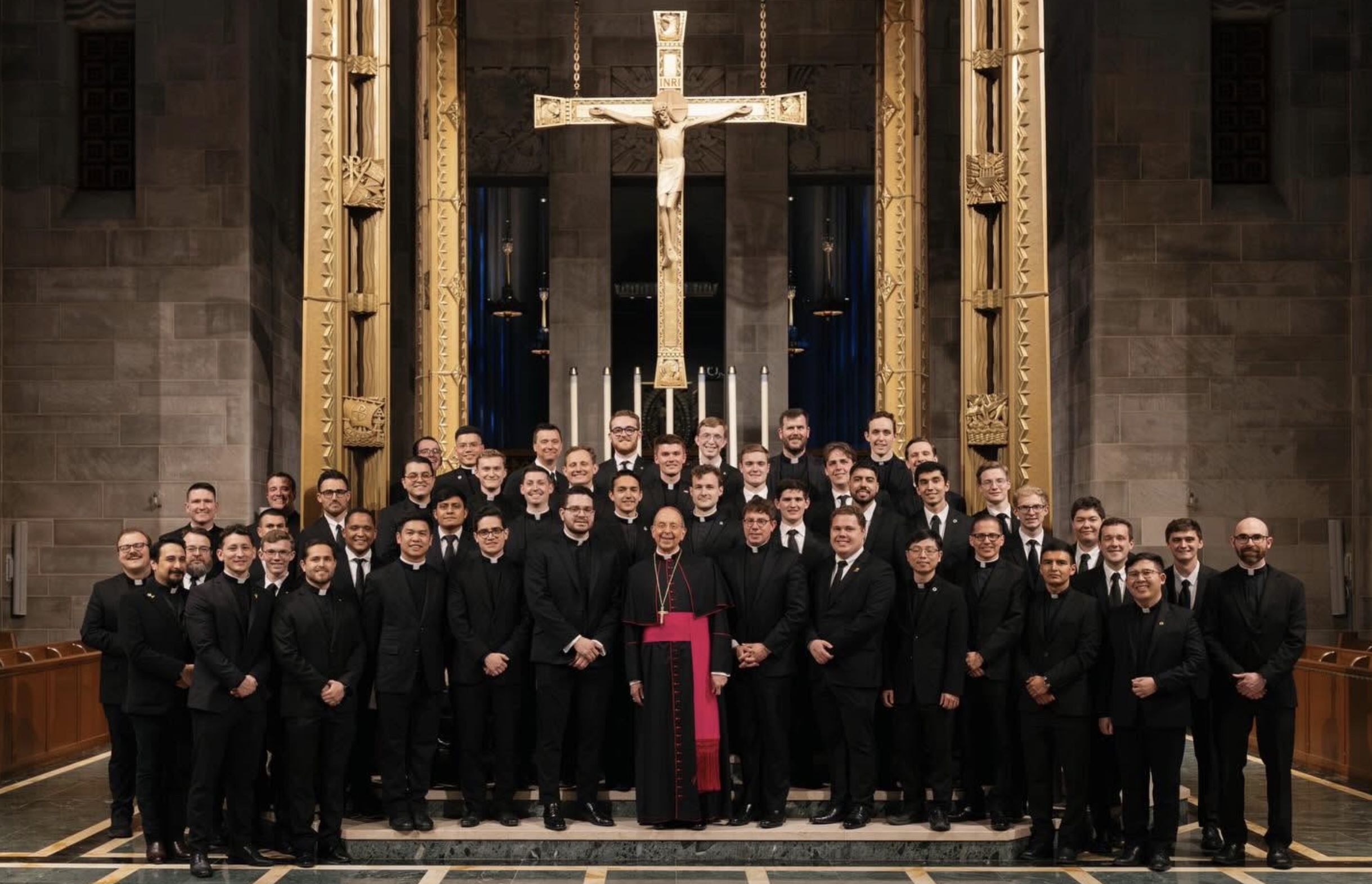
VATICAN CITY — Bishop Robert Barron of the Diocese of Winona-Rochester, Minnesota, ordained 18 men from the North American College in Rome as transitional deacons in St. Peter's Basilica on Thursday.
The Oct. 1 celebration came after approximately seven years of rigorous spiritual, academic, and pastoral formation, marking a pivotal step for the men in the journey toward becoming fully ordained Catholic priests.
Transitional deacons are in their final stage of ministry as seminarians before their priestly ordination. For each candidate, the milestone signifies a lifelong commitment to humble service, preaching the Gospel, and assisting at the altar as they step into their ultimate calling as shepherds of the faith.
Reflecting on the weight and grace of the moment, candidate Nicholas Vande Hey of Green Bay, Wisconsin, told EWTN News that he "feels humbled and I feel hungry at the same time ... for what [the Lord is] going to do in the future." Vande Hey is joined by peers representing dioceses across the United States, all of whom have spent years preparing in the heart of the Church.
In his homily, Barron, founder of the Catholic ministry Word on Fire, reminded the candidates of their fundamental and seminal role as preachers of the word.
Friends and family join a Mass for the ordination to the transitional diaconate of 18 men from the North American College in Rome on Oct. 1, 2026, in St. Peter's Basilica. | Credit: Fabio Gonnella/EWTN News
Drawing on sacred tradition, he emphasized that the young deacons must bear Christ's mission in mind as they complete their studies in Rome and prepare to take what they learned back home to their local parishes.
Christ himself said, "You are Peter, and on this rock I will build my Church," Barron said.
The bishop went on to say that "when Christ's words resonate through you to his people, things change. Hearts are set on fire."
Graham Fassero of the Diocese of Richmond, Virginia, on the eve of his ordination, said: "Rome has been able to give me this habit of thinking as a pilgrim, and I would love to bring some glimmer of that to the people back home too."
For new deacon Brendan Finnegan of the Archdiocese of Hartford, Connecticut, this ordination is "a fulfillment" as he continues to "learn to be a man in service," leaning on his experiences in Rome to effectively govern and sanctify the people of his parish.
As the 18 men complete their final year of preparation, they carry with them the unique grace of having been ordained in the spiritual center of the universal Church.
Barron closed his homily with this phrase: "Believe what you read. Teach what you believe. Practice what you preach."
The pontiff said the Catholic Church wishes to renew its alliance with artists.
VATICAN CITY — There is a fundamental difference between the art humans create and what artificial intelligence can make based on the work of others, Pope Leo XIV told a group of artists on Friday.
"The Church needs you," the pontiff said at the Oct. 2 encounter at the Vatican. "This is especially true in this age of artificial intelligence, in which we urgently need to distinguish human art from what is produced by machines."
"There is an ontological difference — even before an aesthetic one — between art and what a machine can generate through statistical calculation based on millions of images created by others. Algorithms lack the spark of the human, whereas 'authentic culture and art preserve this spark,'" Leo said, quoting from his encyclical on AI, Magnifica Humanitas.
The pope said this is the reason why the Catholic Church wishes to renew its alliance with artists and cultural institutions.
Leo's address to artists and curators in the Apostolic Palace was part of a meeting on "The Art of Possibility: Weaving Together," organized by the Dicastery for Culture and Education.
The pope pointed to St. Augustine and his testimony of the "restlessness of the human heart in search of truth."
"Art, when it is authentic, is also animated by this restlessness. For this reason, the Church has never considered art to be merely decorative. Instead, for the Church, art nurtures the fundamental posture of listening, through which we can learn about humanity's aspirations and wounds, our thirst for beauty, justice and peace, and our search for meaning," he said.
In the age of search engines and their endless, instantaneous answers that only "give us what we already want," art is different, he noted.
Art "does not proceed by indexing but by inquiry," the pontiff said. "Indeed, its inquiry is a focused attention that is not satisfied with the mere sum of facts, for it never ceases to dig deeper, seeking the thread that unites them. Your art, when it resists homogenization, when it draws our gaze, when it compels us to pause before that which cannot be consumed, is a form of cultural and spiritual regeneration."
Leo cited the homily of his predecessor St. Paul VI from a Mass with artists in 1964.
"St. Paul VI spoke words that remain a landmark for the Church's relationship with artists: 'We need you,' he said. 'Our ministry needs your collaboration. For, as you know, our ministry is to preach and to make the world of the spirit, of the invisible, of the ineffable, of God, accessible and understandable — indeed, inspiring. And in this task, which translates the invisible world into accessible, intelligible forms, you are masters,'" Pope Leo quoted.
Bishop Johan Bonny said he discussed his proposal to ordain married men with Vatican officials. The Holy See has announced no approval or change to the Latin Church's discipline.
A Belgian bishop has renewed his push to ordain married men as priests in his diocese by 2028, despite no public Vatican authorization for the proposal.
In an interview in the October issue of Herder Korrespondenz, Bishop Johan Bonny of Antwerp said he traveled to Rome in June to present the matter to the Dicastery for the Clergy and the General Secretariat of the Synod.
Bonny linked a possible arrangement to the Synod on Synodality's implementation phase. "I trust that an appropriate arrangement can be found by the end of the synodal process in the fall of 2028," Bonny said according to CNA Deutsch, the German-language sister service of EWTN News. "It would be a fatal blow to the credibility and implementation of the entire synodal process if no arrangement were reached by then."
Bonny first outlined his plans in March. He also participated in the German Synodal Way as an observer.
At the German bishops' plenary assembly in 2022, Bonny said that "Rome must learn to live with a healthy dose of Germanic culture." He referred to an open style of consultation and discussion, not the ordination of married men; the address was also released as a podcast.
Confidence in Pope Leo
The Vatican has not publicly commented on Bonny's most recent remarks or announced any decision concerning his proposal.
Bonny told the German magazine he was continuing discussions within the Belgian bishops' conference and holding conversations with potential candidates about further formation.
He said the Flemish dioceses faced a serious shortage of priests and that any step toward ordaining married men would need the agreement of both the Belgian bishops' conference and the Vatican.
"How this step could take place with the agreement of the bishops' conference and the Vatican is a question for the coming months," Bonny said.
Bonny said canonists had told him canon law offered various lawful ways to address the question, but he did not identify a specific canonical mechanism or say Vatican officials had endorsed one.
He also said his confidence rested partly on Pope Leo XIV's exercise of his office as a bridge-builder and on conversations with bishops in several countries and continents whom he said faced similar circumstances.
Under Canon 1042 of the Code of Canon Law, a man who has a wife is impeded from receiving sacred orders except when he is legitimately destined for the permanent diaconate. A diocesan bishop cannot unilaterally set aside that impediment or introduce a different priestly-ordination discipline in his diocese.
David Long, director of the Institute for Policy Research and Catholic Studies at The Catholic University of America and a canonist, told EWTN News in March that the question of ordaining married men "does not lie within the authority of a diocesan bishop acting on his own."
"Any current change in practice in a Latin diocese would require action by the Holy See and could not be accomplished by a unilateral decision by a diocesan bishop, no matter how pastorally urgent the circumstances may be," he said.
Here is a roundup of recent pro-life and abortion-related news.
An aborted baby from New Mexico has won a wrongful death lawsuit against an abortionist.
The estate of a child killed in utero during the third trimester collected $200,000 under New Mexico's wrongful death law.
The case, Wabbington v. Boyd, argued by Albuquerque medical malpractice attorney Mike Seibel, described the unborn baby as a "person" who was "entitled to equal protection under the law." Seibel advocates for women who have been injured by abortion.
The baby's mother had been under the influence of methamphetamine when she went to an abortion clinic in 2020 and was thus unable to give valid informed consent, but the abortion was provided anyway.
The lawsuit said that abortionists also failed to inform her of support available to her in the state or refer her to the New Mexico Children, Youth, and Families Department.
Seibel told Live Action News that the case was the first time an abortionist was ever sued for the wrongful death of a baby.
3 states file lawsuit against telehealth abortion
Louisiana, Arkansas, and Alabama have filed lawsuits against providers who ship abortion drugs into their states and against California, Massachusetts, and New York over their laws shielding abortion pill providers.
The states' Sept. 30 lawsuit against abortion providers calls mail-order abortion "one of the most dramatic and sweeping interstate conflicts in modern history."
"If state sovereignty means anything, it means that states like Louisiana, Arkansas, and Alabama cannot be forced to endure open violations of their laws, deaths of their babies, and harms to their women and girls simply because an out-of-state actor disagrees with their sovereign prerogative to choose life within their borders," the lawsuit says.
The lawsuit names as defendants several abortion pill providers, including Cambridge Reproductive Health Consultants Inc. in Massachusetts and A Safe Choice Network Inc. in California.
A separate lawsuit brought by the states asks the U.S. Supreme Court to rule the abortion shield laws of California, Massachusetts, and New York unconstitutional.
Poland opens first abortion pill delivery locker
Activist groups in Poland have launched a locker to distribute abortion pills, which they say is the first of its kind in the world.
Women Help Women, a global group that provides abortion pills without physicians, and the Polish abortion activism group Abortion Dream Team put the locker across from Parliament in Warsaw.
The organization gives women who are seeking abortion a six-digit code to open one of 22 numbered lockers.
Abortion is legal in Poland in cases of rape or incest or if there is risk to the mother's life or health.
Respect Life Month prioritizes abortion pill
As Respect Life Month kicks off in October, the U.S. Catholic bishops are emphasizing the importance of opposing abortion pills.
Toledo Bishop Daniel Thomas, the chairman of the U.S. Conference of Catholic Bishops' pro-life committee, released a statement on Sept. 29 describing the risks of injury and exploitation from abortion pills as "affronts to human dignity."
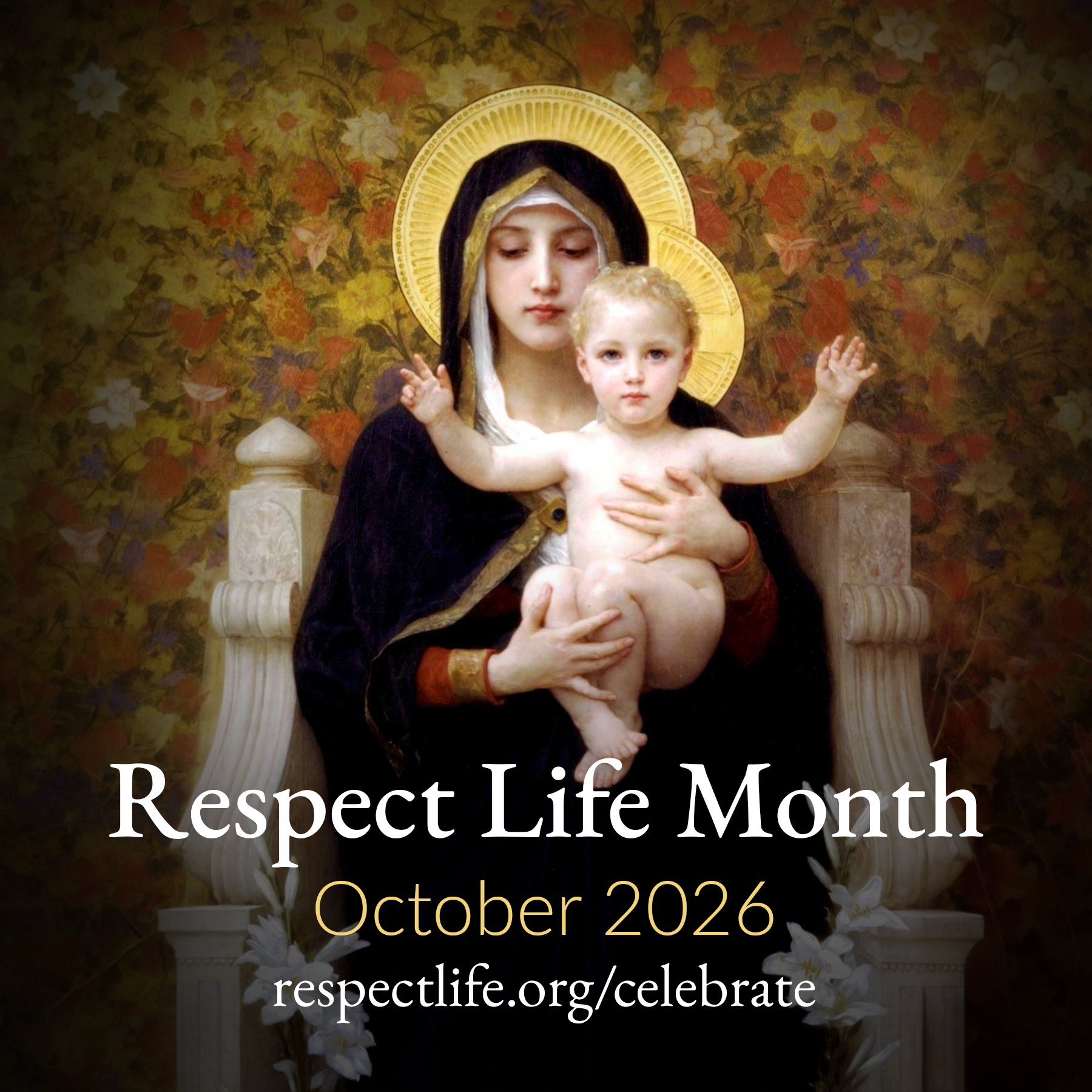
Catholics across the United States celebrate Respect Life Month each year in October. | Credit: United States Conference of Catholic Bishops, Washington, D.C.
"Today, with easier access to abortion pills, the abortion rate is tragically climbing, along with increased health risks," Thomas said. "This means that more women, many of whom have been misinformed about the nature and risks of the abortion pill, will have an abortion alone at home, without any medical supervision. It also sets up additional opportunities for exploitation by violent partners or human traffickers."
"Our Blessed Mother is our model for upholding the sanctity of all human life in every stage and circumstance," Thomas continued. "We entrust all our efforts to protect mothers and babies to her motherly care, which we greatly need at this time."
"I thank the many thousands of Catholics across the country who have embraced the nationwide invitation to prayer and action on abortion pills, and I ask that we continue our prayers and advocacy throughout the month of October," Thomas said.
Bishop Burbidge calls for weekly fasting, rosary against abortion amendment
As Virginians prepare to vote on an amendment that could create a right to abortion in the state's constitution, Bishop Michael Burbidge of Arlington is calling on the faithful to take up weekly fasting and prayer throughout October.
The "Catholics Vote No" campaign urges Catholics to vote no on the Virginia Right to Reproductive Freedom Amendment along with the Virginia Remove Constitutional Same-Sex Marriage Ban Amendment.
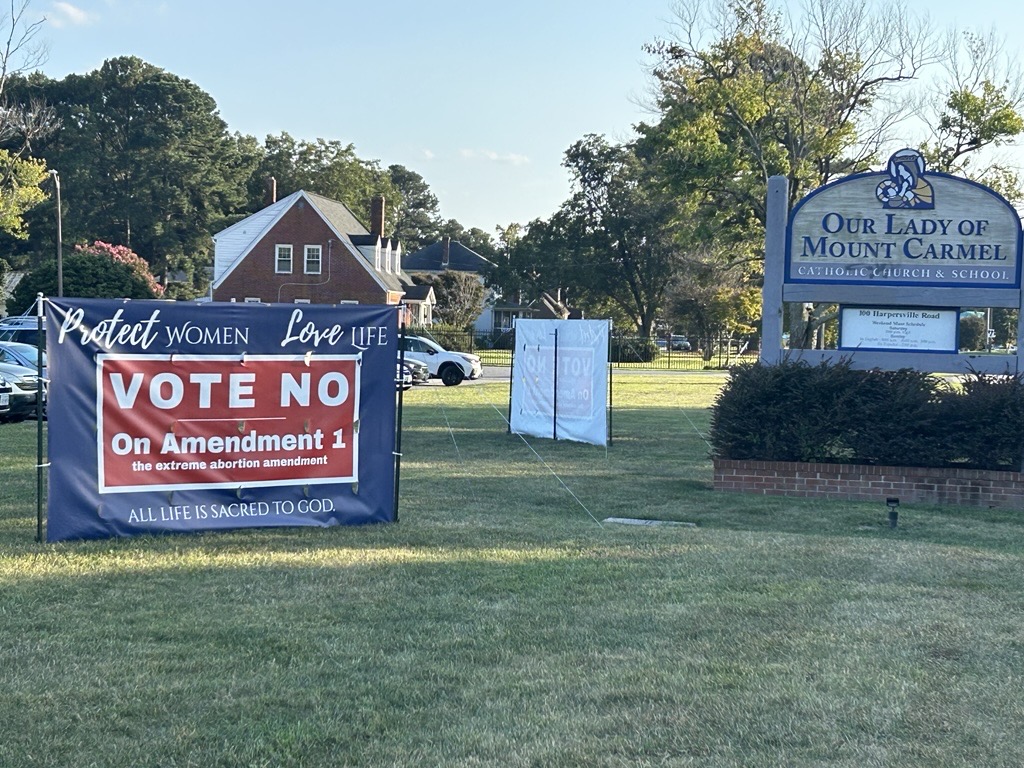
Virginian Catholics are opposing a pro-abortion ballot measure. Our Lady of Mount Carmel Parish in Newport News, Virginia, has posted a sign urging Catholics to vote no on the ballot amendment. | Credit: Ken Oliver/EWTN News
Burbidge asked Catholics to fast every Friday and pray the rosary each Sunday this October.
"Our Catholics Vote No campaign is rooted in prayer and fasting," Burbidge said in a statement. "Therefore, On Fridays, I ask that you pray the Stations of the Cross. And fast—which means eating only one full meal and no meat."
"On Sundays, I ask that you pray the Rosary and fast from social media for at least a few hours—especially before and after Mass," he said.
"It would be a powerful force if all in the Diocese of Arlington were united in these efforts," Burbidge continued. "We entrust them to the Lord's amazing grace, so all that is just, right, and true will be done in this election."
Overall, the numbers have grown from 28 seminarians in 2007, 52 in 2020, and 66 this year — the largest single-year class in half a century.
The Archdiocese of Baltimore expects to ordain its largest single-year class in more than 50 years as the number of men in priestly formation continues to rise.
The archdiocese said it will ordain 12 priests in 2027, one in January and 11 in June. Overall, the numbers have grown from 28 seminarians in 2007, 52 in 2020, and 66 this year. In 2026, 14 men, ranging in age from 17 to 36, entered formation from 14 different parishes.
"This has not been sudden," Archbishop William E. Lori said. "It's been building every year, and this is due to a lot of people praying before the Blessed Sacrament. It's due to a good vocations team. It's also due to pastors who are encouraging vocations in their parishes — and to parents who are generously open to the possibility that their son might have a priestly vocation."
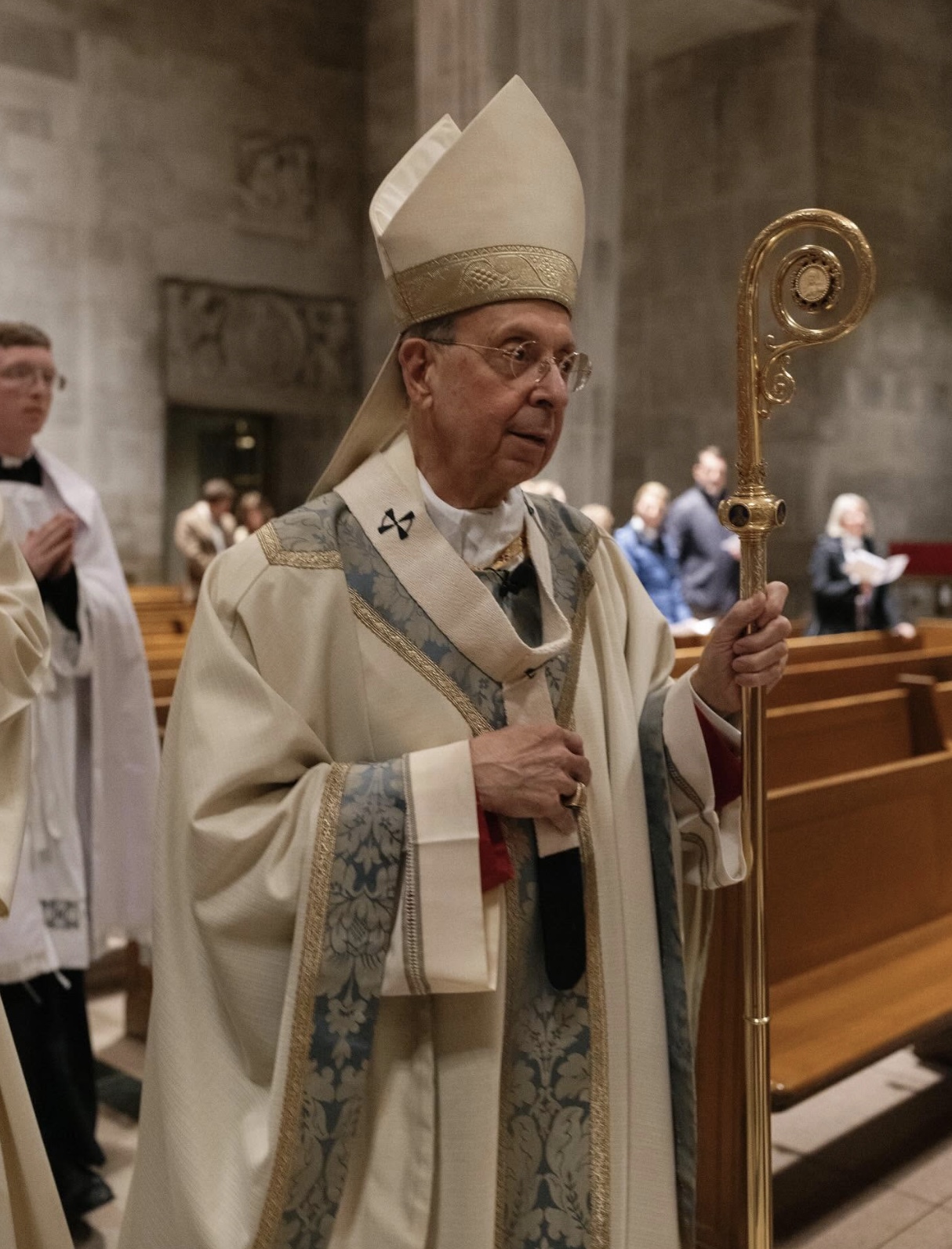
Archbishop William E. Lori of Baltimore in May 2026. | Credit: Photo courtesy of Archdiocese of Baltimore
Father Steven Roth, vocations director and associate vicar for clergy, told EWTN News that when Lori came to Baltimore, the archbishop was given staggering statistics on the declining number of clergy there, and "from the start, he was determined to reverse that trend."
Lori ordained five priests and 12 transitional deacons at the Cathedral of Mary Our Queen in May 2026.
"We did the counterintuitive," Roth said. "We raised the bar for the application process. Because of that, we now have 66 vocations directors," he said of the 66 current seminarians.
"Our success is based on the men who have said yes. They're the best advertisement for us," he said, recounting a scenario where a man was on the fence about applying to seminary, but a seminarian on a summer assignment at a parish helped the man decide to apply.
Archbishop William E. Lori of Baltimore with seminarians in April 2026. | Credit: Photo courtesy of the Archdiocese of Baltimore
Newly ordained priests are filling positions that have been empty for years: hospital, high school and college chaplaincies, and parishes that have not had an associate pastor in decades.
Roth said they are already seeing the positive effects: at one parish in particular, he said, there has been "a drastic difference" since the arrival of a young priest who is assisting the pastor: "To have a young priest with vigor, it just energizes the community; it excites everyone to continue this work … there are more people now, and the energy in the parish is different."
What brought the initial increase, Roth said, were efforts to get parish leadership to see there was a need for more vocations. "They've run with it," he said. "Pastors have been huge supporters of the archbishop's push and the key to the rising numbers."
Many parishes have created a culture of vocation awareness, encouraging Eucharistic adoration and welcoming him and Father Lenin Suarez, the associate director of vocations, to speak. Pastors have personally invited young men to go to attend discernment retreats such as Quo Vadis, and Quo Vadis Beyond, directed toward high school-aged men.
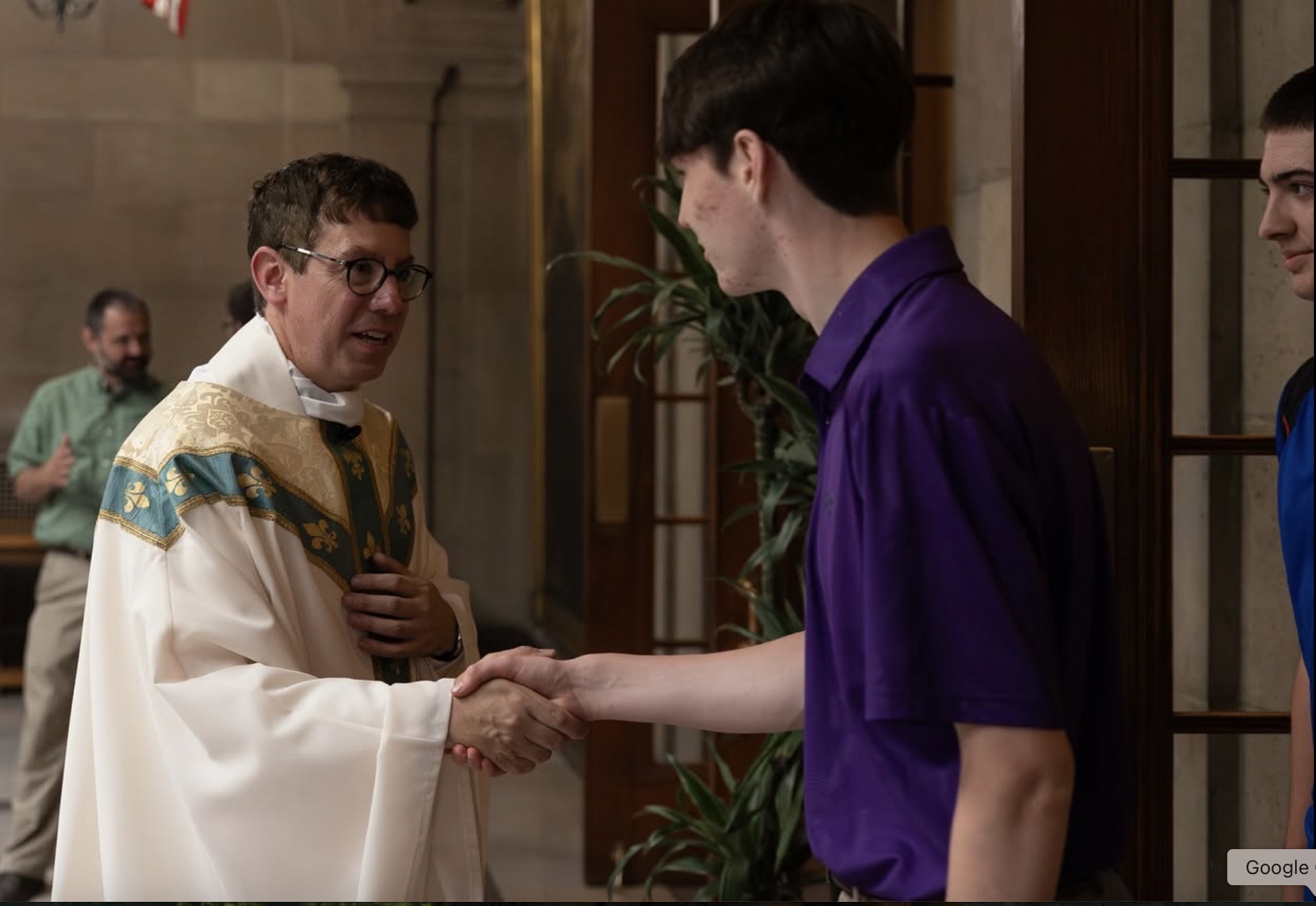
Father Stephen Roth, left, vocations director for the Archdiocese of Baltimore, greets a young man at St. Mary's Seminary and University in July 2025. | Credit: Photo courtesy of Archdiocese of Baltimore
Both of the archdiocese's propaedeutic houses, in Emmitsburg and Baltimore, are full. Three of this year's new seminarians will spend that first year, the propaedeutic year — a period of prayer, discernment, and human formation — at the Basilica of the National Shrine of the Assumption of the Blessed Virgin Mary instead, working with the Source of All Hope program among the homeless.
Formation can last up to nine years, which Roth said is intended to be a time of healthy discernment in which the men have the opportunity to reflect on their experiences.
In addition to academics, seminarians undergo background checks, meet with priests and formators, attend spiritual direction, and work at various parish ministries as they discern and before they are formally accepted.
"We have an intense process, once we think they're capable of formation, then we give them the application" to the seminary, Roth said. "We don't just send an application to everyone."
While there are men who leave, Roth said it's a small number. "We do have men who discern out and become wonderful husbands and fathers," he said.
Roth said the quality of the candidates is impressive.
"I'm impressed with them all the time," he said. He described how some have a charism for working with the poor in Baltimore City, spending time with the drug addicted and the homeless. "They're not afraid at all," Roth said.
He also described the fraternity among the seminarians, calling it "incredible."
"When a man is accepted as a seminarian, the other guys immediately start emailing him, inviting him to events," Roth said. "If a man is sick, or if a family member of his is sick or dies, they all rally around" and care for him.
A few years ago, a man in a college seminary broke his leg in a football game. The other seminarians reconfigured the seminary so he could come back sooner while he was still in a wheelchair. "It was inspiring to me," Roth said. "They were all cheering him on."
The vocations director said that while "we celebrate not only the number as well as the caliber" of the young men, "the work is not done. There is so much more opportunity for evangelization. That is why we have to keep praying for vocations."
"Our priests work so hard, they are stretched to the limits. We hope to start expanding our evangelization efforts," Roth said. "We've envisioned journeying with families who've lost a loved one. What usually happens when someone dies is the parish works with the family though the funeral, and that's it. At best you get an invite to an All Souls liturgy later in the year. Imagine if a priest had the time to walk with the family in the months and years after a death, or facilitate a group of laypeople to support the family?"
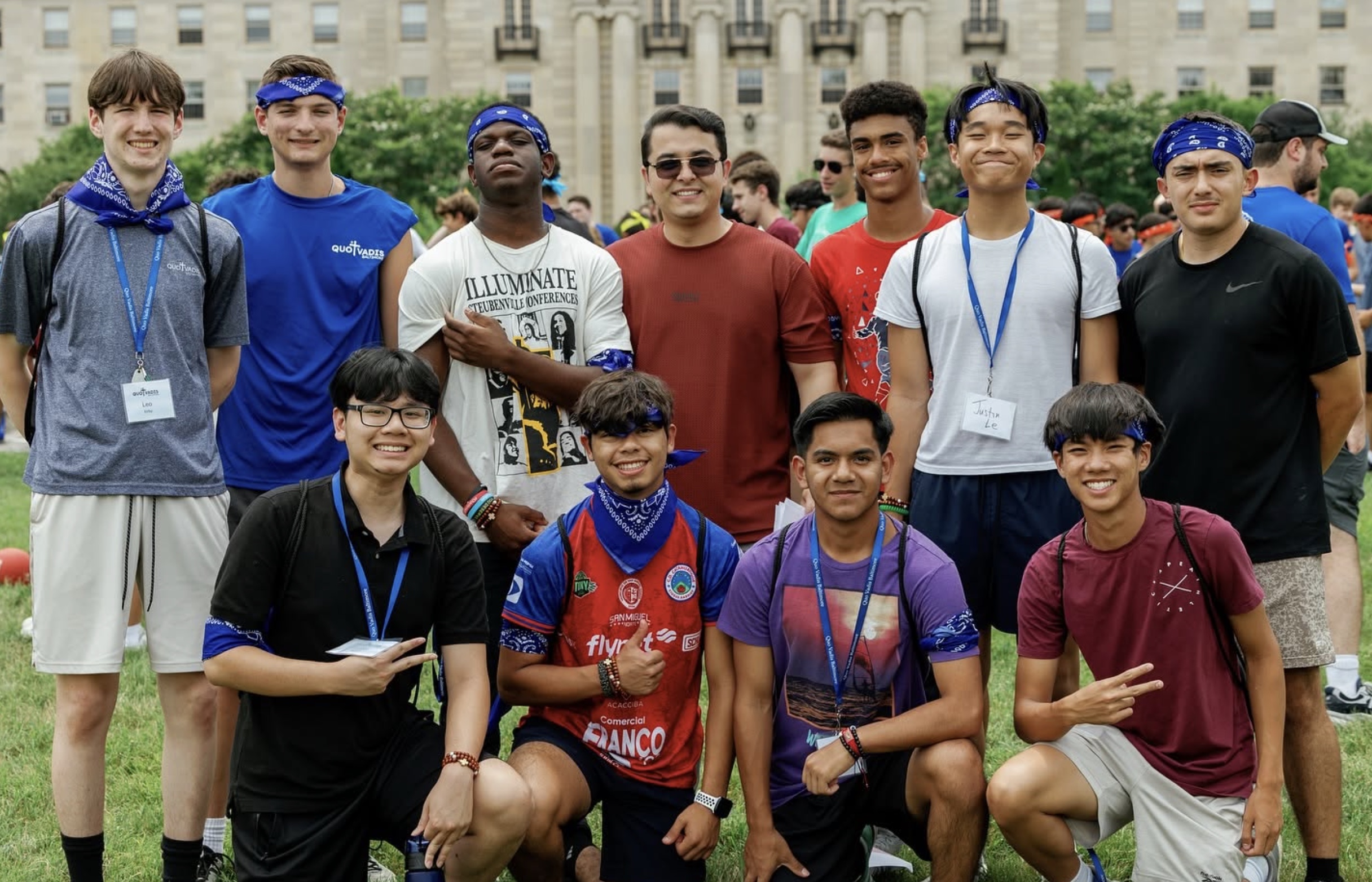
Young men at a Quo Vadis discernment retreat in July 2025. | Credit: Photo courtesy of the Archdiocese of Baltimore
Regarding the sacraments, Roth said while the Church is good at providing them, it is not great with the follow-up. He would like to see priests supporting young married couples through the first years of marriage and after the baptism of their children. He'd also like to see priests and lay members reach out to fallen away Catholics, showing care and inviting them back to the Church.
Roth said he hopes publicity about the rising numbers of seminarians doesn't mean people will stop praying for more priests. On the contrary, he said, "the archbishop says this is the time for more prayers, for more men to say yes. We are asking for more vocations in every realm: more marriages; for more young women to enter religious communities."
"This is a very broad project. This does not mean the job is done, it's just the beginning," he said.
Video messages ahead of the 2026 midterm elections asked voters to approach civic life with prayer, charity, and a commitment to the common good.
Louisville, Kentucky, Archbishop Shelton Fabre says Catholics must form their consciences through Church teaching and place faith ahead of political identity in two videos released Oct. 1.
Fabre reminded Catholics of their "responsibility to vote" and to "form our consciences according to the Gospel and Church teaching" in the video messages produced by the U.S. Conference of Catholic Bishops (USCCB). The bishops released the videos as U.S. voters prepare for the 2026 midterm elections Nov. 3 that will decide control of Congress, dozens of governorships, and hundreds of state-level offices nationwide.
Our identity in Christ must come before any political identity."
Bishop Shelton Fabre of Louisville
Chair of the U.S. bishops' Committee on Domestic Justice and Human Development
Fabre said voting is a moral act rooted in the dignity of human life, charity toward others, and the pursuit of the common good.
"We discern and we pray, and we participate in public life by voting, but also in many other ways, by advocating for the human dignity of each and every person, and also always reminding political structures and political groups that our concern is for the common good," Fabre said in the video "Forming Our Consciences and Voting."
"At the center of my decision is my desire to be the best disciple of Jesus Christ that I can be," Fabre said in the video "The Call to Put Faith Before Politics."
Clergy training
Another USCCB video titled "Preaching Faithful Citizenship and the Call to Put Faith Before Politics," released last month, features Bishop Daniel E. Flores of Brownsville, Texas; Archbishop William E. Lori of Baltimore; and Archbishop Alexander K. Sample of Portland, Oregon. Catholics must witness to Christ's love in how they speak, act, and engage politically — not only in what positions they hold, the prelates say in the 16-minute video.
"We need to be agents that promote unity among people, dialogue among people, meaningful conversations among people, respecting the dignity of each and every person who is my neighbor," Sample said in the video. "This is the whole surrounding question around the story of the good Samaritan. And Jesus teaches us in that parable, and we can instruct our people to look there, because that whole parable of the good Samaritan begins with the question, 'And who is my neighbor?'"
Lori said: "I think that that is one of the things that we have to learn to do continually in the life of the Church is to encounter one another, not because we agree on everything, but precisely in those things where we might disagree, but looking at the other person, not as a position to be disagreed with, but a person made in God's image and likeness and called to eternal life."
A written guide for clergy offers a structured training plan to help them teach Catholics how to engage in political life with a well-formed conscience rooted in Church teaching.
Two neighbors objected to the shrine and filed suit. Lawyers for the Missionaries of St. John the Baptist say federal religious liberty protections guarantee their right to construct the shrine.
The U.S. Supreme Court has agreed to hear a religious liberty case about a local zoning dispute that pitted two residents of a northern Kentucky city against a Catholic chapel that wants to build a Marian shrine.
Missionaries of St. John the Baptist, a Catholic religious association that runs the Our Lady of Lourdes Chapel in Park Hills, Kentucky — just south of Cincinnati, Ohio — faces a lawsuit that seeks to block its construction of a grotto shrine that pays homage to the Marian apparitions in 1858 in Lourdes, France.
The city board initially approved the chapel's request to construct the shrine by granting it a variance from a zoning ordinance that would have typically prevented construction in that location, but two neighbors objected to the shrine and filed a lawsuit.
The case went up to the Kentucky Supreme Court, which ruled against the chapel, finding that the city board exceeded its authority when it gave the chapel a variance from the ordinance.
Joel and Elizabeth Frederic, the neighbors, expressed concerns about traffic and parking if the shrine were to become a pilgrimage site. The chapel argued the shrine would simply include a statue of Mary inside a grotto, a statue of St. Bernadette — who witnessed the apparitions — and a patio and walkway.
The Catholic association that operates the chapel argues that blocking the construction of the shrine would violate the federal Religious Land Use and Institutionalized Persons Act, which states that zoning laws cannot substantially burden a church's exercise of religion. This is also the law cited by the city council as its reason for approving the chapel's variance.
"Telling a church it can't build a modest place for prayer and reflection on its own property is outrageous," Kelly Shackelford, president, CEO, and chief counsel at the First Liberty Institute, which is providing legal representation to the chapel, said in a statement.
"Federal law provides clear protections for how faith-based organizations can use their property to support their mission," she said. "This is an important case for religious freedom."
Oral arguments have not yet been scheduled. The case could set nationwide precedent for how cities are expected to handle zoning laws that could impose burdens on religious practice.
Defense Secretary Pete Hegseth said the new office is meant to give chaplains a direct line to the secretary, to bypass red tape from the secular bureaucracy.
The Roman Catholic Archdiocese for the Military Services, USA, said it "appreciates" Defense Secretary Pete Hegseth's announcement of a new Pentagon office dedicated to supporting religious members of the military.
Hegseth introduced the Office of Religious Affairs at the Department of Defense (DOD) in his Sept. 30 State of the Force Address at Marine Corps Base Quantico, Virginia, which was attended by 600 officers and service members.
In his speech, Hegseth said the office will report directly to him and to the secretaries who serve after him. He said there will be "no staff filters" and "no bureaucratic dilution" but rather a "direct line to the secretary" for the chaplains.
"This won't be a paper-pushing shop," he said. "It will have real teeth. It will protect budgets, demand infrastructure, and strengthen religious support. The experts, our chaplains, will finally have an advocate at the highest levels. Policy and resources will serve the mission, not smother the mission."
In a statement to EWTN News, the Catholic military archdiocese said it hopes the new office "will enhance and strengthen the support offered to the men, women and their families who serve in the military, and to the chaplain corps who strive to accompany our soldiers, sailors, and airmen across all service branches."
"Placing spiritual readiness alongside other departmental priorities, and shortening the timeline between identified field needs and senior decisions can have the practical effect of resolving legacy constraints that historically limited chaplaincy support," the statement said. "This Archdiocese appreciates the initiative and welcomes its implementation."
Structural change
Hegseth explained the new structure is meant to ensure chaplains do not need to go through secular bureaucracy.
The secretary said, under the old system, "we let people with no expertise in faith or religion dictate the spiritual life of our warriors," and the chaplains "were buried echelons deep, waiting for permission."
"Decisions about faith and religion were made by secular careerists in cubicles and lawyers running around with red tape," he said.
The secretary blamed the previous structure for budget cuts, failures to adequately meet needs for resourcing and manpower, and a lack of support for chapels on bases. He said faith had been treated as "an afterthought" even though only 5% of the military is nonreligious.
"Our department therefore has a sacred duty — first-class religious support wherever we send our warriors," Hegseth said. "... For far too long, you know, we didn't prioritize that duty at all."
Archbishop Timothy Broglio of the Archdiocese for the Military Services, USA, has supported some of Hegseth's other reforms of the chaplaincy as well.
Broglio celebrated Hegseth's removal of the official spiritual fitness guide, which the secretary said was "pushing secular humanism" and treating chaplains like "emotional support officers" rather than as chaplains.
The archbishop said the change allowed chaplains to focus on spiritual ministry "above and beyond everything else that they might ask the chaplains to do."
Broglio also spoke positively of Hegseth's decision to change the chaplain insignia on uniforms to reflect the faith role instead of the military rank.
"If the decision to eliminate the rank insignia for chaplains so as to favor the insignia indicating religious affiliation contributes to making chaplains more approachable, the archdiocese favors it," the archbishop said in March.
Alternatively, the archdiocese faced problems with the Army in 2025 amid canceled religious contracts, which the DOD ultimately worked to restore.
Apart from the chaplaincy, Broglio has criticized some military decisions from President Donald Trump's administration. In April, he echoed the concerns of Pope Leo XIV, saying it was "hard" to see how the Iran war could be justified under Catholic just war doctrine.
The archbishop was also critical of earlier threats to annex Greenland, along with attacks on alleged drug boats off the coast of Venezuela that killed more than 100 people.
Catholic Mobilizing Network offered prayers for both condemned murderer Christa Pike and the family of her victim.
A prominent Catholic anti-death penalty group is criticizing Tennessee for its botched execution attempt of convicted murderer Christa Pike, describing the incident as "horrifying" and "unprecedented."
Pike, who was convicted in 1996 of the brutal 1995 torture and killing of Colleen Slemmer in Knoxville, was scheduled to be executed on Sept. 30 by lethal injection.
Yet officials said she survived the administration of two syringes of lethal pentobarbital, after which she was transported to a medical facility for treatment.
Tennessee Gov. Bill Lee subsequently suspended executions in the state for the remainder of the year and ordered an investigation into the state's capital punishment procedures.
In a statement on Oct. 1, Krisanne Vaillancourt Murphy, executive director of Catholic Mobilizing Network, said the group was "stunned and bewildered" by the "unprecedented" incident.
Valliancourt Murphy said the group, which works to oppose the death penalty across the U.S., was praying for both Pike and for Slemmer's family; it acknowledged that the situation "must surely be retraumatizing" for the latter.
"There is nothing normal about taking a life, and last night's horrifying events reminds us of that," she said.
The group in its statement referenced Tennessee's botched execution of Tony Carruthers earlier in the year. The medical team overseeing that execution had failed to find a vein when attempting to set up a backup IV line for the lethal drugs. The state ultimately suspended Carruthers' execution for a year.
"For Tennessee to have two botched executions in a matter of months is beyond alarming. It is the epitome of 'cruel and unusual punishment' under the Eighth Amendment," Valliancourt Murphy said.
"We pray this is the needed wake up call for Gov. Lee — in fact, for everyone — to recognize the barbarism of capital punishment," she added.
Had she been successfully executed by the state, Pike would have been the first woman subject to capital punishment there in 200 years.
The Death Penalty Information Center says the state has executed 17 convicted criminals since 2000, the vast majority with lethal injection, though several have been electrocuted to death.